Category: Healthylife® QuitWell™

  • Carry & Store In A New Place

    Healthylife® QuitWell™

    Part 3

    Image of man with thumbs up.

    Change where you keep your tobacco/nicotine products. For example, instead of keeping them in your desk or in a locker, keep them in your car. Better yet, put that pack or can in the trunk of your car. When reaching in the usual place without thinking, coming up empty will be a reminder of what you are working on. If you have always kept a pack in your right pocket, switch to your left.

    This pause allows you to be more mindful and deliberate, instead of acting without thinking. This is another way to put a speedbump in your usual way of doing things every day.

    © American Institute for Preventive Medicine

  • Day 7

    Healthylife® QuitWell™

    Part 6

    Women who's depressed.

    Post-Quitting Depression

    Some people feel mildly depressed after they have quit. You may feel a letdown when such a major goal has been reached. You may also find that the people around you are taking less notice of the fact you’ve quit. This is why self-rewards are more long-lasting than those given to you by others.

    *  Acknowledge that you had a relationship with cigarettes, dip, or your e-cig. It may have been long or short, but due to the nature of nicotine and the habits that form, it was probably a powerful relationship for you.

    *  Try to see your experiences through a different perspective:

    – Missing out on times with family & friends while going outside to use

    – Worrying about the smell on your clothes or breath

    – The mess of cigarette butts or a spit bottle

    – The nagging cough that took weeks to go away (if at all)

    – Guilt, fear, anxiety, or other negative emotions using tobacco/nicotine stirred up in the moment or right after

    – The cost that just kept going up

    *  Look at the gains you’ve already made

    – More free time

    – Easier to breathe

    – Money saved

    – Freedom to go anywhere not worrying about when the next opportunity to smoke, dip or vape might be

    Be cautious of the nostalgia that may come with old, unhealthy habits. It may have felt like a friend, but tobacco/nicotine products are like a friend that stabs you in the back down the road. The tobacco companies are not trying to be your friend-they just want your money.

    Today’s Affirmation:

    Tobacco is a bad friend I have left behind.

    © American Institute for Preventive Medicine

  • Keep What Is Truly Calming

    Healthylife® QuitWell™

    Part 4

    Image of smiling man.

    Removing tobacco/nicotine doesn’t mean your entire strategy for managing stress has to go away. Many things you are doing ARE healthy and genuinely calming to your body and mind.

    Reasons why you may feel calmer after taking a smoke break at work:

    *  Getting away from your work area

    *  Getting away from the people that you work with (that may be contributing to your stress)

    *  Fresh air/being outside

    *  Movement-walking from place to place or pacing around outside

    *  Deep breathing as you inhale

    *  Looking off into the distance, versus looking at something right in front of you or at a screen

    *  Talking to co-workers outside of the office (maybe even venting a bit!)

    *  More open space, especially if you work in a crowded, noisy environment

    Why else do you feel taking a smoke break is calming for you?

    Modified smoke break strategy ideas:

    *  Plan to step away from your work for 5-10 minutes.

    *  Walk to a drinking fountain or bathroom far away from your desk to get in extra movement.

    How can you practice taking a tobacco-free break today or tomorrow?

    © American Institute for Preventive Medicine

  • Non-Smoking Zones

    Healthylife® QuitWell™

    Part 4

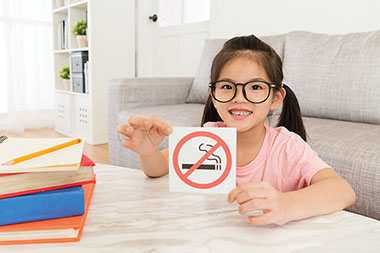
    Child holding no smoking sign.

    Go to the places where you usually did not smoke/use tobacco-or where tobacco/nicotine is not allowed. Spend time with people who don’t use tobacco/nicotine.

    *  Go to the movies

    *  Visit a non-smoking friend

    *  Spend time with children

    *  Volunteer

    List places that are easier for you to be tobacco/nicotine free.

    © American Institute for Preventive Medicine

  • Practice Change

    Healthylife® QuitWell™

    Part 4

    Image of hand refusing a cigarette.

    There are many ways to practice quitting before getting all the way there. You can improve your health even before you feel “all in”.

    *  Leave your pack, can, or vape pen home when you go out for short errands. Try leaving products home when you go to work one day.

    *  If you are a smoker, put a certain number of cigarettes in a pack for the day. Try to put one or two less in the pack than you’d normally smoke. If you usually smoke a full pack, take a few out at the beginning of the day so “finishing the pack” means smoking 18 instead of 20 cigarettes. After a few days, cut out one or two more.

    *  Put your cigarettes, can, or vape pen out of reach in your car. Maybe keep them in the trunk of your car, or in the backseat. When you want to have one, you will need to pull over to the side of the road to safely get it. When you do, just take one. This makes your habit a lot less convenient. Practice working through an urge while you are deciding if you want to pull over or keep going.

    What are some other ways you can practice change?

    © American Institute for Preventive Medicine

  • Take Small Steps To Get Started

    Healthylife® QuitWell™

    Part 3

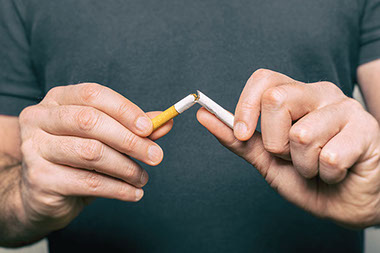
    Close up of hands, breaking a cigarette in half.

    Taking small steps can help build confidence. Seeing the “wins” right away can show you how strong and capable of change you are. The activities in this section may not feel very exciting, but they are small on purpose. Once you get going, taking bigger steps will feel easier and you will be more successful with them.

    These activities can also help you learn more about what causes your urges and what you do without thinking. These activities can start weakening your old habits and strengthening new, healthy habits.

    © American Institute for Preventive Medicine

  • Clean Your Environment

    Healthylife® QuitWell™

    Part 4

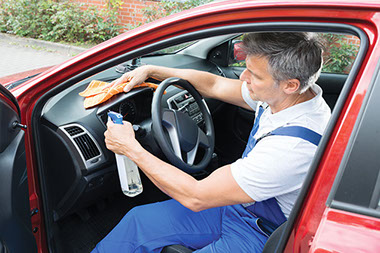
    Man cleaning the inside of his car.

    Go around your house, car, workplace, and other places you have stored tobacco products. Gather all your tobacco, lighters, matches, and other items related to your habit. Don’t forget to check your coats, purses, and drawers.

    If you have quit, throw these products away. Seeing these items will not be helpful to staying quit. If you are still working on quitting, having all these items out of sight will also reduce the unhelpful reminders of your habits. You will be more ready for the day you quit completely.

    © American Institute for Preventive Medicine

  • Day 8

    Healthylife® QuitWell™

    Part 6

    Man drinking a glass of water.

    Shake a Stale Feeling

    Smoking, dipping, vaping, or whatever habit you left behind may have given you something to do when you were bored. Perhaps it filled the gap between activities and responsibilities.

    In the next ten minutes, pick one of the following to do:

    *  Get up and move. Stretch, go for a short walk, do bodyweight squats, or walk up and down a flight of stairs.

    *  Get a drink of water.

    *  Eat a healthy snack, if you are hungry.

    *  Close your eyes and take a few deep breaths. The next few moments belong to you.

    *  Call a friend or write a card.

    *  Find something funny and laugh.

    A few minutes may seem like a really small part of your life. However, success is built on what you do in short amounts of time-or right now. Don’t take the present for granted.

    Today’s Affirmation:

    I choose my own adventure, even in the small parts of the day.

    © American Institute for Preventive Medicine

  • Know Your Triggers

    Healthylife® QuitWell™

    Part 5

    Group of teens.

    Relapse triggers can be placed into one of four groups:

    1. Emotional relapse triggers

    2. Interpersonal relapse triggers

    3. Internal relapse triggers

    4. Environmental relapse triggers

    Emotional Relapse Triggers

    These are events in which either uncomfortable feelings, such as boredom, sadness and worry or positive feelings, such as joy, happiness, or being relaxed increase the chances you might use tobacco/nicotine. Which of the following have been triggers for you in the past?

    *  When I am happy and celebrating

    *  When I am relaxed

    *  When I feel tired

    *  When I am bored or have nothing to do

    *  When I am alone and feeling sad

    *  When I am frustrated or angry about something

    *  When I feel unsure and rejected by someone

    *  When I am worried about a loved one

    *  When I am afraid

    *  When I am tense and restless

    *  When I am put under pressure at my job

    Interpersonal Relapse Triggers

    These are events in which you may feel either direct or indirect pressure from other people. Which of the following have been triggers for you in the past?

    *  When other people around me are using tobacco/nicotine

    *  When someone offers me tobacco/nicotine

    *  When I want to show how tough, sophisticated, or liberated I am

    *  When I want to fit in with others who are using tobacco/nicotine

    *  When I want to feel different from other people

    *  When I become angry with someone

    *  When my friend or spouse goes back to using tobacco/nicotine after quitting

    *  When I want to avoid talking to a friend or spouse

    *  When I feel “trapped” in a relationship

    *  When I am upset that I cannot solve a problem with another person

    Internal Relapse Triggers

    These are times when you may have an urge without having a clear-cut reason. Which of the following have been triggers for you in the past?

    *  When I get a strong craving

    *  When I have intense withdrawal signals

    *  When I have a feeling of emptiness

    *  When I want to test my willpower by smoking just one cigarette (or having just one dip, etc.)

    *  When I am curious about the taste of a cigarette, e-cigarette, or chew

    *  When I have a difficult time paying attention

    *  When I think smoking/vaping/chewing is going to make a situation more fun

    *  When I’ve had too much to drink

    *  When I am hungry

    *  When I have trouble falling asleep

    *  When I wake up at night and can’t get back to sleep

    *  When I’m having pain in my body (back pain, headache, cramps, etc.)

    Environmental Relapse Triggers

    Certain times, places, and activities may be linked with your tobacco/nicotine habit. Which of the following have been triggers for you in the past?

    *  When I come across a pack of cigarettes, can of chewing tobacco, or discarded e-cigarette

    *  When I’m in a store where I used to buy tobacco/nicotine

    *  When I take a break from work

    *  When I drink coffee

    *  When I finish a meal

    *  After sex

    *  When I first get up in the morning

    *  When having fun/doing activities that were triggers in the past (e.g. playing cards, during a concert intermission, fishing, hunting, golfing)

    *  When driving

    *  When partying

    *  When I’m on vacation

    *  When I put off an unpleasant task

    © American Institute for Preventive Medicine

  • I’M Not Ready To Quit

    Healthylife® QuitWell™

    Part 1

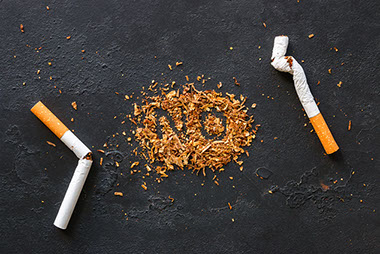
    Broken cigarettes with an inscription "no" on tobacco.

    You may be reading this book because someone else wants you to. Maybe your spouse or other family member is worried about your health. Or maybe your employer is worried about rising healthcare costs. Maybe you’re just checking out some facts to decide if you want to quit.

    Whatever brought you here, we’re glad it did. Even if you’re here for somebody else’s reasons, maybe we can give you something to think about,  for your family, your employer, and for yourself.

    How do you feel about tobacco/nicotine?

    Tobacco/nicotine may have been part of your life for a long time. It may have even helped you get through some stressful times.

    There are many common reasons for continuing to use tobacco/nicotine. Can you relate to some of these?

    *  Quitting is just not a priority for me right now.

    *  My friends all do it, so quitting would affect my social life.

    *  The ritual is familiar and comfortable.

    *  I don’t like how my body feels when I stop.

    *  Tobacco is like a “friend.” It’s always there when I need it.

    *  I tried before and failed – I don’t want to fail again.

    Understanding why you aren’t ready to start can help you know what to think about or work on for a future quit attempt. You can learn different ways to think about these barriers and ways to break them down.

    It is important to understand what comes with using tobacco/nicotine. While it may be easier to deny the health issues that can come with tobacco/nicotine use, you owe it to yourself to know what you’re getting into.

    Many people start in this stage, but over time move to thinking about quitting. However, change truly is your choice.

    © American Institute for Preventive Medicine