Category: Healthylife® QuitWell™

  • What Holds You Back?

    Healthylife® QuitWell™

    Part 2

    Image of man thinking.

    Many people want to quit, but don’t. When people are asked why they don’t quit, the main reasons tend to be:

    *  Fear of gaining weight

    *  Worry about feeling more anxious

    *  Thinking that it’s too difficult to quit

    *  The thought that “it’s too late to quit”

    Star any of the above that are holding you back. Write your own reasons for why you have not quit yet. What are your biggest worries or fears about quitting? Avoid judging yourself for these reasons. It is important to understand your own barriers. If you do not want to quit, list those reasons.

    QuitWell™ can help you work through these issues. The more honest you are with yourself, the better this program will work for you.
    © American Institute for Preventive Medicine

  • Altering Triggers

    Healthylife® QuitWell™

    Part 4

    A morning cup of coffee.

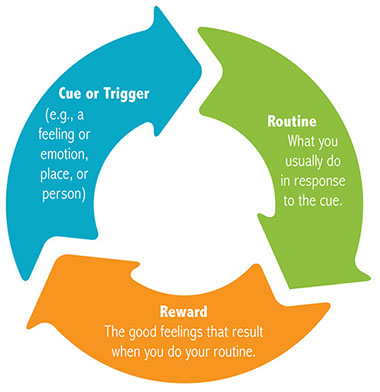
    Actions, especially habits, are linked. For example, you may light up a cigarette without thinking when you start your car, end a meal, drink coffee, or hear your alarm clock. If you dip or use other forms of tobacco/nicotine, you may have similar triggers.

    Altering triggers can help you break your automatic habits.

    Scrambling

    Scramble your routine to stop the triggers before they happen.

    1. Change your morning routine.

    2. Change your work area and the times of the day you do things.

    3. Change the route you take to work.

    4. Change the way you talk on the phone.

    5. Take a walk with a water bottle instead of a coffee break.

    6. Sit in a new place at the dining room or kitchen table.

    7. What other ways can you change your routines?

    © American Institute for Preventive Medicine
  • Day 14

    Healthylife® QuitWell™

    Part 6

    Two friends high-fiving while sitting at a cafe.

    A Day to Remember

    Recall the day you quit as a special day. Treat it like you would a birthday or anniversary. Celebrate this day every month for the first 6 months and once a year after that. In a way, it is a re-birth for your body-or a personal “Independence Day!”

    As you probably have seen already, getting to this point does not mean you are “done” with quitting. The maintenance phase of quitting means you are working to maintain the change. A really big step has been completed-getting to your first tobacco/nicotine-free day. However, you will need to stay alert for relapse triggers and continue to improve how you respond to stress if you want to stay quit for good.

    The maintenance phase of quitting is usually at least 6 months long, but it can take 5 years or longer to truly feel no temptation to go back. You may never feel like you are at 0% temptation, but it will get easier over time. Remember, the time will pass anyway-you choose how you want to spend it.

    Today’s Affirmation:

    Quitting is freedom. I choose how I want to live my life.

    © American Institute for Preventive Medicine

  • I Am Quitting!

    Healthylife® QuitWell™

    Part 1

    Women putting on a patch on arm.

    Maybe you have started this program in the action phase-you are already quitting or have just quit. While you may have a quit date in mind, this phase is more than just one day. This phase usually lasts about six months for any behavior change. It starts when you start putting your plan into place and continues as you go through challenges and practice your new way of living.

    In a few words, describe your current quit plan.

    Who is supporting you?

    Remember, you may be moving back and forth between stages during your quitting process. Some days may be easier than others. It is important to stay very alert during the active phase, as slip-ups are very common. You will probably face many new challenges, from new stressors to different times of the year and holidays.

    Even if you have started this program in the action phase, work through the guide in order. Building a strong foundation will help you get through the first few months of quitting-and beyond.

    © American Institute for Preventive Medicine
  • Money Talks

    Healthylife® QuitWell™

    Part 1

    Image of 2 piggy banks.

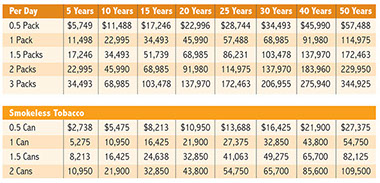
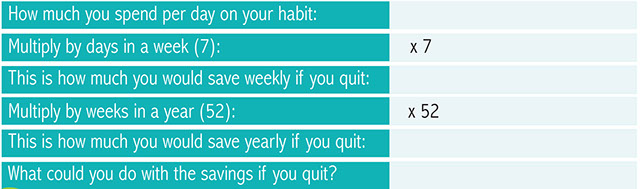
    In 2020, the average price of a pack of cigarettes in the United States was $6.30. In some states, the average price was over $10 per pack. A pack-a-day smoker in those states spends $70 per week on cigarettes. That could buy a week’s worth of groceries, two to three tanks of gas, or pay a month’s utility bill. Over months and years, the possibilities go even further.

    A can of chewing tobacco costs an average of nearly $3. A two can-a-week habit costs over $300 per year. A can-a-day habit costs nearly $1,100 per year. Think of all the things you could do with the money instead of dipping or chewing. It adds up.

    Find out how much money you will save when you quit. The chart below is based on U.S. averages.

    Calculate Your Savings from Quitting:

    © American Institute for Preventive Medicine

  • Taking Off

    Healthylife® QuitWell™

    Part 4

    Family mealtime at home.

    This section adds to the Skill Development phase of quitting. You have already learned a few “Urge Tamers,” skills and techniques to help you be successful at quitting. You will learn many more in this section.

    The following “Urge Tamers” can help stop urges before you have them and help you deal with the urges you may have. QuitWell™ teaches you a lot of “Urge Tamers.” That’s because there are a lot of things you can do to make quitting easier. The more “Urge Tamers” you learn, the better the program will work for you and the easier it will be for you to quit.

    HealthyLife® QuitWell™

    QUICK LINKS: PART 4

    Altering Triggers

    Non-Smoking Zones

    Clean Your Environment

    Fill in the Void

    Smokeless Inhalation

    Positive Reinforcement

    Negative Reinforcement

    A Strategy for Stress

    Cleaning up Mind Pollution

    Thinking Differently

    Keep What is Truly Calming

    Practice Relaxation Techniques

    Relaxation Techniques

    Relaxation Reflex

    Mental Imagery

    Deep Natural Breathing

    Spend Time with Animals

    Cutting Back

    Practice Change

    Action Planning

    Recovery Signals

    Review & Prepare

    © American Institute for Preventive Medicine
  • Separate Tobacco/Nicotine From Situations

    Healthylife® QuitWell™

    Part 2

    Image of couple walking.

    Many times you may feel that you want to smoke, dip, or vape when what you really want is something else. When uncomfortable feelings arise, such as anger, sadness, boredom, or frustration, you may reach for a cigarette (or can or vape pen) without even pausing. You have worn a deep groove in your mind, creating a habit that can happen without much thought.

    Chart showing how to separate nicotine from situations.

    Tobacco/nicotine does not clear up or change these feelings. If nothing else, it simply creates a “smoke screen.” When the smoke clears, your problems are still there. The next time you get an urge, ask yourself, “What do I really want?” or “What do I need to figure out?” Use the mindfulness tools to help you think logically.

    © American Institute for Preventive Medicine

  • What Motivates You?

    Healthylife® QuitWell™

    Part 1

    Image of women with no smoking sign.

    You’ve probably heard a lot of reasons why you should quit, but the best reasons are your own. Making lifestyle changes to fit with your own values and reasons makes your successes more meaningful. It can also be easier to overcome challenges along the way.

    You can do this activity at all stages of change, even if you aren’t planning to quit right now or have already quit. If you don’t feel like anything is motivating you right now, that is OK. You can return to this activity in the future. If you have already quit, think about why you want to stay quit.

    Here are some common reasons for quitting. Start a ‘Why Quit’ list. If any of these ring true for you, add them to your list.

    *  Avoid major health problems in the future

    *  Be able to breathe more easily

    *  Better circulation, especially to fingers and toes

    *  Easier, deeper sleep

    *  Good feeling when waking up

    *  A younger, brighter, more lively look

    *  In order to have surgery (many surgeons require you to quit first)

    *  Pregnancy/new baby (as a mother, partner, or grandparent)

    *  Keep new home or car clean

    *  Be healthier for loved ones

    *  Save money

    *  Smoking/chewing/vaping no longer fits a current or desired lifestyle

    *  Worried about known and unknown long term risks

    *  More healthy years with family & friends

    *  Pride in accomplishing something you set out to do

    *  Freedom from being “owned” by an addiction and a tobacco company

    *  Better sense of taste & smell

    *  More energy

    © American Institute for Preventive Medicine
  • Balance Of Choice 2

    Healthylife® QuitWell™

    Part 2

    Man's hand touching an abstract no smoking.

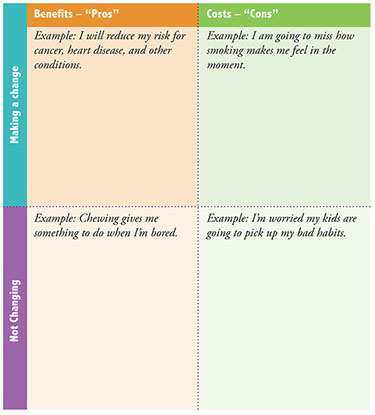
    Learn what is pulling you toward your goal and what is holding you back. All thoughts and feelings are valid. Is your goal more important to you than the challenges to achieve it? Are you pursuing this goal just because someone said you “should” do it? Complete the chart below as well as you can. If you think of something later, come back to this page to add another point to one of the boxes.

    Chart to fill out your choices.

    © American Institute for Preventive Medicine
  • Day 2

    Healthylife® QuitWell™

    Part 6

    Man smiling with a cup of coffee and his phone.

    Unscramble Slowly

    If you enjoy your new tobacco-free routines, keep doing them. If you want to go back to your old triggers, do so slowly, one trigger at a time. For example, if it has been awhile since you went out to the bar with smoking friends, plan to go briefly and only drink a little.

    Events in your life that you linked with tobacco may trigger new urges: meeting a deadline, having a few drinks, golfing, a hunting trip, or coping with loss.

    What new triggers have already arisen since you started quitting?

    What new triggers do you anticipate in the coming weeks or months?

    Use creative imagination to picture yourself going through these situations without your old habit. If this trigger involves others, make sure at least one person knows you have quit and you can count on them to help you.

    Today’s Affirmation:

    I don’t have to do this alone- others will support me, if I ask them to.

    © American Institute for Preventive Medicine