Category: Healthylife® Weigh

  • Create A Helpful Environment

    Healthylife® Weigh

    Part 4
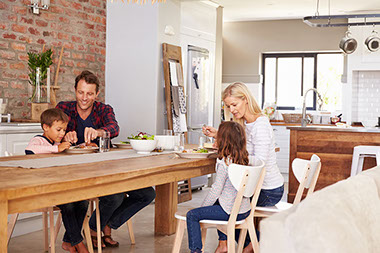
    Family mealtime at home.

    This section begins with a closer look at changing habits. Many of your actions each day-if not most of them-are controlled by habits. In times of stress or other times when your goals are not a top priority, you are likely to go back to old habits. Thus, establishing healthy habits is important for long-term success.

    Your environment cues many behaviors. This section will help you set up your environment to be helpful.

    *  Physical Environment. This includes your kitchen, dining area, desk drawer, and other places you store and eat food.

    *  Social Environment. This includes the people around you, people important to you (near and far), and social media. This section will also help you talk to others about your goals.

    *  Mental Environment. This includes the things you say to yourself. This also includes changing the unhelpful thoughts that get in the way of taking action.

    HealthyLife® Weigh

    QUICK LINKS: PART 4

    Build on Current Habits

    Keep Habits Rewarding

    Make Your Kitchen a Healthy Eating Zone

    Help Your Refrigerator Health You

    Join the Team: The Rest of Your Kitchen

    Alter Your Eating Cues

    Scramble Daily Behaviors

    The “Everything in Moderation” Trap

    When “Just a Little” Doesn’t Work

    Make Unhealthy Habits Less Convenient

    It Takes a Village

    Build Support at Home

    Build Support at Work

    Social Media for Support

    Support Isn’t Supportive

    Be Assertive

    Use the L.A.D.D.E.R. Technique

    Practice Assertiveness

    Unsupportive Situations

    Say Nice Things to Yourself

    Dispute Unhelpful Thoughts

    Rational Thinking

    Banish Black & White Thoughts

    Control Catastrophic Thinking

    Create Self-Enhancing Feelings

    The Power of a Phrase

    Review and Prepare
    © American Institute for Preventive Medicine
  • Plan Your Week

    Healthylife® Weigh

    Part 3

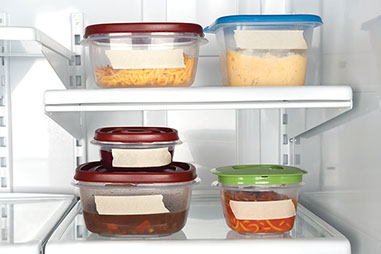
    Leftovers in the refrigerator.

    Plan about a half hour for writing your weekly meal plan and grocery list the first time. The more you plan, the easier it will become and the less time it will take.

    1. Check what you have at home. See what needs to be used up in your pantry, refrigerator, or freezer.

    2. Write down ideas, rather than specific recipes. (For example, “chicken and vegetables” or “broccoli soup.”) Find recipes after you have finished your plan. Some meals, like breakfast, may be easier to keep the same every day.

    3. Plan for meals to have leftovers. Plan to make extra food items that can be used for another meal. For example, make a double batch of quinoa to use in a casserole one day and a soup two days later.

    *  Have dinner leftovers at lunch the next day to further save on time.

    *  Freeze extra dinner servings in individual-serving freezer bags. Thaw and cook or microwave for a quick meal.

    © American Institute for Preventive Medicine
  • Scramble Your Daily Behaviors

    Healthylife® Weigh

    Part 4

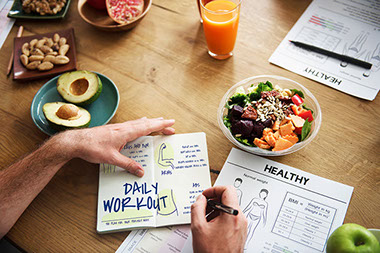
    Person writing in fitness notebook with healthy snacks on table.

    Changing how you go about your day can help get rid of eating cues and prepare you to establish new, healthy habits. Examples:

    *  Change the order of morning events: get up, shower, brush hair, eat breakfast, brush teeth, read paper, walk dog.

    *  Change the order of work events: take off coat, talk with co-workers, organize desk, review appointments or assignments, open email,  make calls.

    *  Alter driving routine: wear gloves, turn on/off radio, raise/lower volume, try listening to a new station, open/close windows, take a new route to work.

    *  Develop new telephone behavior. Stand instead of sit, hold phone with your opposite hand to your opposite ear, talk in a different room, walk as you talk.

    Be realistic.Allow time to establish a new habit. Some new habits are picked up quickly. Others may take several weeks or months of practice.

    Be consistent.Practice your new behaviors every day. This is how your new behavior will become a reliable habit.

    © American Institute for Preventive Medicine
  • Take Responsibility For Change

    Healthylife® Weigh

    Part 5

    Determined female jogging along road in the rain.

    Recognize your role in making changes. Other factors may have a role in your ability to do something. However, name something that IS in your power to change. Take control of your goals. Don’t wait for someone else to do it for you.

    Depending on someone or something else for change:

    *  I will meet my daily recommendation for vegetables when my kids start liking them more at meals.

    *  I will start a daily exercise routine when summer and warmer temperatures arrive.

    *  I will drink enough water every day when my office fixes the drinking fountain.

    Actively taking responsibility for change:

    *  I will meet my daily recommendation for vegetables when I swap my afternoon crackers for carrots and try a new vegetable at dinner each week.

    *  I will start a daily exercise routine when I set my alarm for an hour earlier and go for a brisk stroll in the morning before work.

    *  I will drink enough water every day when I fill up my water bottle one more time each day.

    Find a statement you wrote that doesn’t start with “I.” Re-write this statement to name something within your control.

    If you wait for perfect conditions, you’ll never get anything done.

    © American Institute for Preventive Medicine

  • What Values Do You Display?

    Healthylife® Weigh

    Part 1

    Very happy women taking a selfie.

    Imagine you are “sponsored” by your values. These values are displayed on a shirt like a NASCAR® driver has logos painted on a race car. You walk into a store that sells shirts with values written across the front. You try on a shirt that says “Feeling My Best” and stand in front of a mirror. How does it feel to have this value on display for others to see? Does this value fit you? Your values are personal. Don’t pick a value just because you think someone else wants you to be that way.

    Answer the Following Questions:

    *  From the values you identified, which three values are most important to you?

    *  What are you doing now that displays these values?

    *  What do you need to change in order to live these values more often?

    © American Institute for Preventive Medicine
  • Address Anxiety

    Healthylife® Weigh

    Part 6

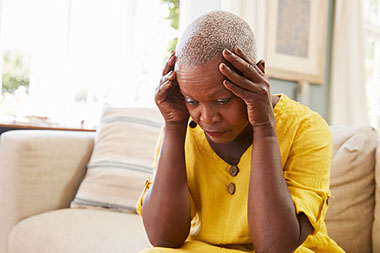
    Women at home coping with anxiety.

    Anxiety is a feeling of dread, fear, or distress over a real or imagined threat to your mental or physical well-being. Avoid eating as a way to cope with anxiety. Try the strategies listed below.

    Strategy

    *  Take a long, warm bath or shower. Or, go for a swim.

    *  Focus on relaxing through exercise, soothing music, helping others, etc.

    *  Connect with people. Visit or call someone who will listen to you and support you.

    *  Drink a warm cup of decaf coffee or tea – avoid caffeine, which can make anxiety worse.

    *  Practice mindfulness and other relaxation techniques.

    Wash, Peel & Chop Away Anxiety

    Get your meal prep done and work away anxious feelings at the same time!

    Gently wash fruits and vegetables. Chop foods slowly and evenly. Prepare all of the ingredients for a meal neatly before starting to cook.

    Take your time to cook. Clean as you go, keeping your space tidy. Slowly wash and dry dishes by hand. Take breaks if you need to.

    Other Causes of Anxiety

    Anxiety could be a symptom of low blood sugar. Other symptoms of low blood sugar include shakiness, feeling faint, headache, rapid heartbeat, and sweating. In this case, you will need to have something to drink or eat, such as orange juice, a piece of hard candy, or crackers. Anxiety can also be a symptom of an anxiety disorder or other health condition. Check with your doctor if the symptoms above happen often.

    Take a Step Back

    Write down what you are anxious about. Step back and look at your concern from an outsider’s point of view. Imagine how others might handle these issues. You can also use this technique to look at your job or family duties. Ask yourself these questions:

    *  What can I expect of myself in this situation?

    *  Are my expectations realistic, given my abilities, strengths, and weaknesses?

    *  What do others expect of me?

    *  What ideas would others have for me? When you imagine how someone else might respond to a situation, you may come up with helpful ideas!

    If you struggle to answer these questions, wait at least an hour or sleep on it. When you come back to this worry, you may see things in a different way and feel more ready to address the issue.

    © American Institute for Preventive Medicine

  • Build Support At Home

    Healthylife® Weigh

    Part 4

    Mature couple talking together on sofa.

    Talk to the people you live with about what you are doing. Let them know why you are making these changes. Ask for their support and say “thank you” for things they do that help you.

    *  Set food rules for everyone in the family to follow. This may include eating together at the table and keeping the TV off. Keep phones in another room.

    *  Keep unhealthy snacks in dark containers, out of plain sight.

    *  Encourage positive talk about new meals and snacks in the house. If a new food is disliked, talk about why. A food can be prepared in a different way.

    *  Involve others in meal planning, especially if everyone will be eating the same meals.

    *  Prepare meals together. Adults and children can learn valuable lessons in the kitchen, from math skills to building self-confidence.

    *  Be active together. Make this time more about shared family joys than weight loss. Stretch together in the morning or go for a walk after dinner. Plan family picnics that involve a hike or bike ride.

    © American Institute for Preventive Medicine
  • Dispute Unhelpful Thoughts

    Healthylife® Weigh

    Part 4

    Man thinking in front of black chalk board with arrows pointing.

    Thinking in all-or-nothing terms using words like “always,” “never,” and “every” can make it difficult to see options. Avoid thinking about people or situations using absolute terms. Logical thinking looks at more than one option. People can act in different ways. Situations can have many outcomes.

    Have you had any of the unhelpful thoughts below:

    *  Gaining weight and moving less is just part of getting older.

    *  Taking care of myself is selfish.

    *  I weigh less than those around me. At least I am doing better than they are.

    *  My spouse does the grocery shopping and cooking so I have very little control over what I eat.

    *  Eating healthy is too expensive.

    Question your unhelpful thoughts. The strategies on the following pages help to break down thoughts that you may be using as excuses not to change. If you notice you are thinking in absolutes, identify alternatives to your black and white thoughts.

    © American Institute for Preventive Medicine
  • Fruits & Vegetables

    Healthylife® Weigh

    Part 2

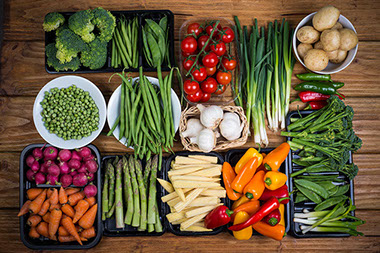
    A variety of vegerables.

    Fruits & vegetables make up the biggest part of MyPlate.

    Why should I eat fruits & vegetables?

    1. Fruits & vegetables are packed with nutrients. They provide essential vitamins and minerals, fiber, and a variety of phytochemicals (plant chemicals) that may play a role in preventing certain diseases.

    2. Fruits & vegetables contain water that helps you stay hydrated.

    3. Fruits & vegetables are high in fiber, which improves digestion and helps you feel full. Fiber also helps you use the energy from your food for a longer period of time, reducing feelings of hunger.

    4. Fruits & vegetables are tasty and can be prepared in many ways. They can add color, crunch, and flavor to your meals and snacks!

    Aim for variety

    Fruit: Choose a variety of whole fruits. The skin contains many unique nutrients and a lot of heart-healthy fiber. Choose fresh, frozen, canned (in juice to avoid added sugars), or dried fruits. ½ cup of fruit counts as:

    *  ½ cup raw or cooked fruit

    *  1 small banana, peach, or orange

    *  1 large plum or 16 seedless grapes

    *  ½ cup of chopped, cooked, or canned fruit

    *  4 tablespoons or 1/4 cup of raisins, prunes or dates

    *  ½ cup 100% fruit juice

    Vegetables: Include a variety of choices during your day. Choices can be fresh, frozen, or canned (choose low-sodium options). 1 cup of vegetables counts as:

    *  2 cups raw leafy vegetables

    *  1 cup of other vegetables; cooked or chopped raw

    *  1 cup 100% vegetable juice (choose juices less often)

    © American Institute for Preventive Medicine
  • Identify Disordered Eating

    Healthylife® Weigh

    Part 5

    Sad young women.

    Disordered eating can be hard on your body and your mind. Follow the guidelines in this book to develop a realistic, patient approach to managing weight. Be self-kind, not   self-critical.

    Eating Disorders

    If you are concerned that you may have an eating disorder (e.g., anorexia nervosa, bulimia nervosa, or a binge eating disorder), contact your doctor immediately, as these are serious medical conditions. You can also find more information here:

    National Eating Disorders Association (NEDA)

    www.nationaleatingdisorders.org

    Helpline: 800-931-2237

    National Institute of Mental Health

    www.nimh.nih.gov/health/topics/eating-disorders/index.shtml

    © American Institute for Preventive Medicine