Category: Healthylife® Weigh

  • Keep Habits Rewarding

    Healthylife® Weigh

    Part 4

    Happy, young woman cooking dinner with grandmother.

    When you are rewarded for an action, you are more likely to repeat it. If you eat a piece of chocolate and enjoy the taste and how you feel afterwards, you are probably going to eat chocolate again.

    Managing your weight does not mean giving up rewarding feelings. If it did, it would be VERY hard for you to stick with it. People are wired to seek rewards and to stick to habits that give rewards. There are two types of rewards:

    Intrinsic Rewards

    *  Something intangible (you can’t touch it)

    *  Arise from within you

    *  Examples: a feeling or emotion, such as joy, pride, or satisfaction

    *  Feeling like you are living your values

    *  Are strong motivators

    Extrinsic Rewards

    *  Something tangible (you can touch it)

    *  Are physically received from someone else

    *  Examples: money, a trophy

    *  Get weaker over time

    Your habit change plan starts with two basic questions:

    1. What is the reward for my current habit?

    2. How can I still get the reward with a healthier habit? You may need to learn a new skill, such as time management. Or, you may need help from others.

    Example: My morning habit of rushing out the door with a cup of coffee-no breakfast-helps me be on time for work. Every time I am on time for work, I feel relieved and proud of myself. (Feeling relieved and proud is the reward for being on time for work.)

    Ideas to Keep Rewards: I could make a breakfast-to-go snack the night before and keep it next to my coffee maker. Or, I could wake up earlier to prepare a breakfast. Or, I could keep a breakfast snack at work to have once I get there.

    Plan to Keep Rewards:

    Pick a habit that is part of your everyday routine and that you want to change.

    *  Planning Step 1: What is the reward for this habit?

    *  Planning Step 2: How can I still get the reward with a healthier habit?

    Try this again for another habit.

    *  Planning Step 1: What is the reward for this habit?

    *  Planning Step 2: How can I still get the reward with a healthier habit?

    Use this tool often to change how you think about adopting healthy habits.
    © American Institute for Preventive Medicine

  • Massage

    Healthylife® Weigh

    Part 5

    Man getting a chair massage.

    Massage can be a form of recovery for your muscles. Massage, especially deep compression massage, can help relax tight muscles and knots that have formed between muscle layers. This can help with normal blood flow, keep your muscles flexible, and reduce pain.

    A professional massage therapist or a friend can assist you with massage.  Or, you can give yourself a massage.

    Self-Massage

    Use a foam roller, tennis ball, Thera Cane®, or muscle roller stick. These items are fairly inexpensive and can be purchased from major retailers and sporting goods stores. Or, using your fingers is free! Apply pressure to specific parts of your body. Go slowly. If you purchase a self-massage tool, follow package instructions.

    © American Institute for Preventive Medicine
  • Choose Your Fuel

    Healthylife® Weigh

    Part 2

    Top view of food on the dinner table with people sitting around the table eating.

    In this section, you will learn about the food groups that make up a healthy diet. Understanding the parts of a healthy diet can help you make nutritious choices for your meals and snacks. You don’t need to count calories or grams of nutrients to eat a balanced meal. In Part 2, you will learn:

    *  How to identify nutrient-dense foods that provide more nutrients per calorie (more bang for your buck!).

    *  How you can plan a snack or meal to help you feel full, satisfied, and help you get enough nutrients.

    *  How you can make healthy eating fun and tasty, even if vegetables or whole grains are not “your thing” yet.

    *  How you can make your favorite foods more nutritious.

    Remember, guidelines in this book are most effective if you practice them. Do the activities to apply what you learn to your daily life.

    Continue tracking. Studies have shown that people who keep a daily food log lose twice as much weight as those who keep no records.

    HealthyLife® Weigh

    QUICK LINKS: PART 2

    Choose a Variety of Foods

    How Much Energy Do I Need?

    MyPlate

    Plan a Balanced Day

    Tips for MyPlate

    Fruits & Vegetables

    Eat the Rainbow!

    Choose Fresh, Frozen, Canned, or Dried

    Add Fruits and Vegetables to Your Current Foods

    Have Fun with Fruits and Vegetables

    What’s in a Name?

    Variety BINGO

    Power of Perception

    Grains and Starches

    Protein

    Dairy

    Befriend Healthy Fats

    Limit Sodium

    Limit Added Sugars

    Estimate Serving Sizes

    Review and Prepare

    © American Institute for Preventive Medicine

  • Plan Myplate 2

    Healthylife® Weigh

    Part 3

    Woman reading shopping list, next to her on the kitchen counter is a burlap sac with a variety of fruits.

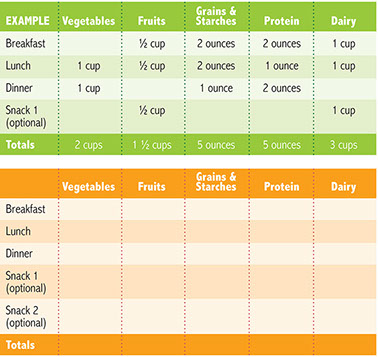
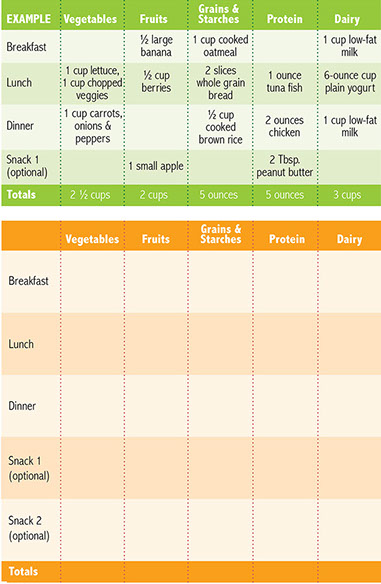
    1. Write your daily goals for each food group.

    *  Vegetables (cups)

    *  Fruits (cups)

    *  Grains/Starches (ounces)

    *  Protein (ounces)

    *  Dairy (cups)

    2. Plan how much of each food group you want to have at a meal. Make sure the total for each group meets, but doesn’t go over, your daily goal.

    3. Select foods for each meal or snack. Refer to what counts as an ounce or a cup for each food group. Choose foods that you like to eat and that are convenient for you.

    © American Institute for Preventive Medicine
  • Reduce Sit-Time

    Healthylife® Weigh

    Part 5

    Business team with folders walking along office building and talking.

    Find ways to move more throughout the day.

    *  Set an alarm on your watch or phone to get up every hour, if sitting.

    *  Stretch and walk for a few minutes to get more oxygen flowing through your body.

    *  Drink water regularly so you need to use the bathroom at least once every few hours.

    *  Get up to use a drinking fountain.

    *  Get up during commercial breaks on TV to tidy up a room or dust.

    *  Walk outside for a few minutes. Take a deep breath of fresh air.

    *  Have walking meetings with co-workers and friends. Walk and talk.

    *  Walk to get lunch.

    © American Institute for Preventive Medicine

  • Supplements

    Healthylife® Weigh

    Part 7

    Doctor and patient talking.

    The term “dietary supplement” can be used for anything that you take orally to enhance your usual food intake. Dietary supplements include vitamins, minerals, amino acids, protein powders, and herbal products. Supplements do not have to be approved by the FDA.

    Reasons to Take a Supplement:

    *  Females who are pregnant or breastfeeding need more iron, folic acid, and calcium.

    *  Females with excessive menstrual bleeding may need to take an iron supplement.

    *  Some vegetarians may not get enough calcium, iron, zinc, and vitamin B12.

    *  Older adults and people with little exposure to sunlight may need a vitamin D supplement.

    *  People with certain disorders or diseases and people who take some medications may need a supplement. For example, people with high blood pressure who take a water pill may need to take a potassium supplement.

    Ask your doctor if you need any vitamin and/or mineral supplement due to a medical condition or any medication(s) you take. Supplements can interact with food and other medications.

    HealthyLife® Weigh Guidelines:

    1. Healthy adults and children can get the nutrients they need by choosing a variety of foods rather than taking supplements. This reduces the risk of deficiencies, as well as excesses.

    a. Do not take supplements that contain more than 10 times the Recommended Daily Intake (RDI) for a nutrient, particularly fat soluble vitamins (A, D, E, and K). The mineral selenium can also be harmful if taken in large amounts.

    b. The maximum value of vitamins is in food rather than supplements. It’s much better to get your vitamins and minerals from food rather than from pills. Unlike supplements, fruits, vegetables, and grains have dietary fiber that is beneficial, promotes regularity, and aids in the prevention of disease.

    2. Some supplement ingredients can be seriously harmful. Examples include high potency doses of some vitamins, such as niacin, amino acids (e.g., L-tryptophan) and herbs (e.g., chaparral, comfrey, and germander).

    3. Supplements may not be pure. If you have allergies, be sure to follow recommendations from your doctor or allergist before taking a supplement.

    Bottom Line: You should eat healthy foods to get needed nutrients. Consult your doctor or registered dietitian if you think taking vitamin/mineral supplements could benefit you.

    Resources for Supplement Information:

    Center for Food Safety and Applied Nutrition

    www.fda.gov/about-fda/fda-organization/center-food-safety-and-applied-nutrition-cfsan

    Food and Nutrition Information Center

    www.nal.usda.gov/fnic

    National Center for Complementary and Integrative Health (NCCIH)

    www.nccih.nih.gov

    National Institute of Health: Office of Dietary Supplements

    https://ods.od.nih.gov

    © American Institute for Preventive Medicine
  • Weight Loss & Metabolism

    Healthylife® Weigh

    Part 7

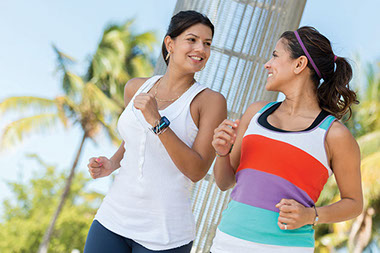
    Two women power walking together.

    As you have learned throughout this guide, losing weight can result in many positive changes for your body. One change, however, can make it tougher to maintain weight loss. When you lose weight, the body’s natural reaction is to conserve energy by slowing your metabolism.

    Your metabolism may be slower than before you lost weight.

    *  Your body changes to make it difficult to lose more weight.

    *  Your body changes to make it easier to put on weight.

    Without changing your habits and lifestyle around food and exercise, being overweight can become a chronically relapsing condition. You may feel caught in a cycle of gaining and losing weight repeatedly. This pattern can be very hard on the body and mind.

    You are not doomed to gain weight once you have worked hard to lose it. While a slower metabolism can make it harder, you have built many strengths to make this challenge easier.

    *  Easier to exercise (e.g., less joint pain, improved heart and lung function, more energy)

    *  More muscle tissue (this increases your metabolism)

    *  Enjoy an increased variety of healthy foods

    *  Stronger social support

    *  Kinder view of self and body image

    *  Strengthened values

    © American Institute for Preventive Medicine
  • A Changing Food Label

    Healthylife® Weigh

    Part 3

    Man reading food label.

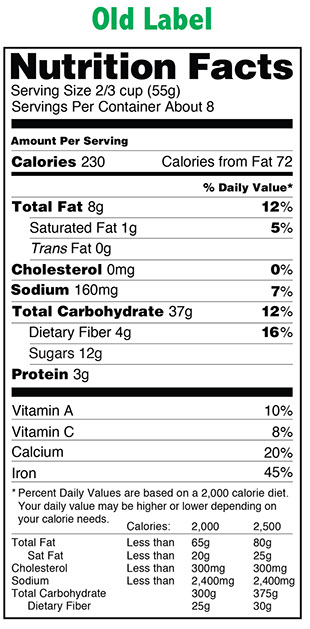
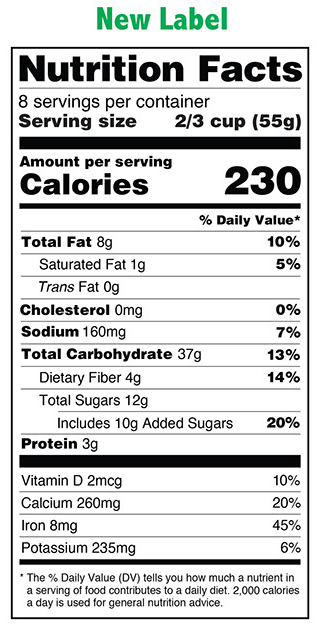
    In 2016, the FDA approved a new food label. The new food label is already on many foods. By mid-2021, all food labels will look like the new label. The new label will help you make more informed choices about what you eat. The changes are shown in the graphic below.

    Graphic of old and new food labels.
    Graphic of old and new food labels.

    © American Institute for Preventive Medicine
  • Be A Wary Weight Loss Consumer

    Healthylife® Weigh

    Part 7

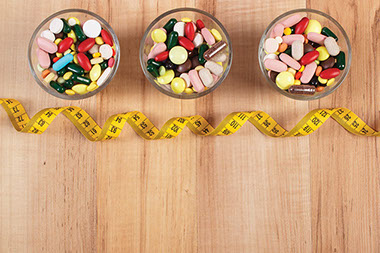
    Pills in glasses with tape measure.

    Be wary of miracle pills and quick fixes, even if offered by a “doctor” or someone claiming to be an expert. At many commercial weight loss centers, the staff may not have medical credentials or any advanced training in nutrition. They are often salespeople calling themselves “counselors,” without any medical training. Be wary of any center that pushes products and supplements over real food.

    Avoid injections or pills that advertise being able to block certain nutrients, like fat or carbohydrates. Avoid “fat burners” and anything claiming to target specific parts of your body for fat loss. These are likely a waste of money and can be dangerous.

    Having someone create your meal plan for you may help you get started, but be sure to learn how to do it yourself. Learn to make your own healthy choices. Avoid weight loss programs and schemes that encourage dependence on special products.

    © American Institute for Preventive Medicine

  • Create Self-Enhancing Feelings

    Healthylife® Weigh

    Part 4

    Man thinking.

    Take responsibility for your thoughts, feelings, and actions. You will feel better about yourself and your life. Blaming others is a natural, child-like reaction. It is more adult-like to figure out the amount of control you have in a given situation and respond to it in a mature way. You may not have control in every situation, but you can choose how to respond to others.

    One reason to become more accountable for your responses is that a “victim” response forms negative, draining feelings. Self-responsibility creates positive energy. With it you can manage every event in a more positive, self-nurturing manner. One way to do this is to look at your language and see if you use “victim” or “accountability” phrases.

    Example “victim” phrase:I can’t lose weight until my family also tries to lose weight.

    Example “accountability” phrase:I can talk with my family about how they can be supportive of my efforts. I can help with family meal planning so I have more control over the foods kept in the house and served during meals.

    Complete the chart on the next page to practice taking responsibility for your thoughts, feelings, and actions.

    © American Institute for Preventive Medicine