Category: SleepWell® Program

  • How Much Sleep Do I Need?

    SleepWell® Program

    Week 2

    Image of man sleeping.

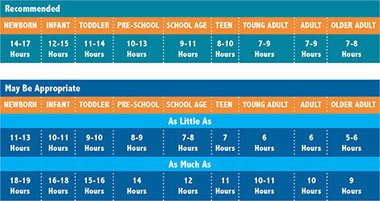
    There is no “one size fits all” sleep guideline. The National Sleep Foundation (NSF) has defined ranges that are adequate for most people (see chart below). However, the best indicator of how much sleep you need is your daytime energy and alertness. If you are meeting the NSF guideline, but you need caffeine to get through your day and are falling asleep at the wheel, you may need more quality sleep.

    For most adults, seven to nine hours is a good amount of sleep. Older adults may not need as much and children need much more.

    Sleep Length Guidelines

    Sleep length guidelines chart.

    © American Institute for Preventive Medicine

  • Seek Downtime Daily 2

    SleepWell® Program

    Week 4

    Image of man sitting on couch.

    Downtime is idle time between activities. Examples are the moments you have waiting at a red light, the time spent riding in an elevator, and the extra time during a lunch break.

    Idle time allows your brain to rest and process and store information (how you learn and form memories). If you’ve ever had a great idea come to you in the shower, you know how creative your mind is during this time.

    Often, multi-tasking steals this time away. The resulting “addiction to activity” does not let your mind rest during the day. The result can be a feeling of being busy all the time. You may feel like you need “time to think.” If you go all day without downtime, it can be harder to quiet your mind at night and go to sleep.

    Practice letting your mind rest every day. If you are used to filling your time with multiple tasks at once, the following exercise may be eye-opening!

    Try this: Sit in a room for 15 minutes and do nothing. Don’t look at your phone or seek any other distractions. Let thoughts enter your mind.

    Reflect:

    How did you feel at the end of 15 minutes?

    Natural Ways to Include Downtime Daily

    *  Turn off notifications on your phone. Set aside time for social media during the day-and avoid it at other times.

    *  Listen to music instead of the news or talk radio while driving. Or, sit in silence and let your mind wander.

    *  Set an alarm on your phone to remind you to take five minutes of “blank space” time in your day.

    © American Institute for Preventive Medicine

  • Review & Prepare 5

    SleepWell® Program

    Week 2

    Image of women on computer.

    Answer the following.

    *  How did your sleep this week compare to the first week?

    *  What changes did you made to my sleep environment?

    *  What changes did you make to your eating habits?

    *  What Changes did you make to your exercise habits?

    *  What changes will you continue?

    *  What is one S.M.A.R.T. goal you have for next week?

    © American Institute for Preventive Medicine

  • Basics Of Sleep

    SleepWell® Program

    Week 1

    Image of women sleeping.

    You move through several stages during sleep. Each stage has an important role. The first REM sleep cycle is reached about 90 minutes after falling asleep.

    Stage 1

    Your muscle activity decreases and your eyes move slowly. It is easy to wake someone in this stage.

    Stage 2

    Your body temperature and heart rate decrease as your body prepares for deep sleep. Your brain waves slow.

    Stage 3

    Deep sleep with slow brain waves occurs. Your body repairs damaged cells.

    Stage 4

    Deep sleep with very slow brain waves takes place. You have no muscle activity. It is difficult to wake someone in this stage.

    REM Sleep

    Your breathing rate increases, brain waves speed up, and your eyes move rapidly. Your heart rate, blood pressure, and body temperature rise. Dreams occur in this stage. REM sleep helps you to feel refreshed and energetic upon waking.

    © American Institute for Preventive Medicine

  • Improve Sleep Step-By-Step

    SleepWell® Program

    Week 2

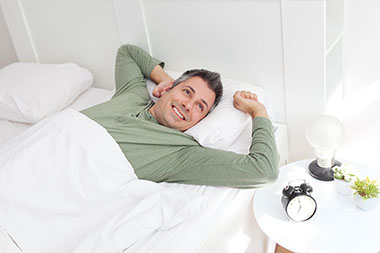
    Image of man waking up happy.

    Take your big goal and break it into small, measurable steps. Each small step should follow the S.M.A.R.T. guidelines. Try making one change at a time, like changing the time you eat dinner in the evening. Follow the chart below, starting with number 1.

    Chart showing how to make a change to help improve sleep.

    For example:

    1. Change: I dimmed the lights an hour before bed.

    2. Continue: I did this every day for a week.

    3. Reflect: After one week, I felt sleepier when I got into bed. I fell asleep in 20 minutes instead of 30.

    4. Continue: I will keep this new habit. I will also find a new change to continue to improve my sleep.

    © American Institute for Preventive Medicine

  • Self-Assessment Of Sleep Quality

    SleepWell® Program

    Week 2

    Image of women writing.

    There are probably many reasons for your poor sleep. This guide will take you through factors that you can modify to improve the likelihood of getting quality sleep. Even if you have a medical issue or take medication that impairs your sleep, addressing these lifestyle factors may help improve your sleep.

    Download the pdf file to the left to take the Self-Assessment. These questions are designed to get you thinking about factors that may impact your sleep. Be honest with yourself. Each part of this survey will be discussed throughout the guide. If you are working with a coach, these questions can help guide your coach and help him or her tailor the SleepWell®program to your specific needs and goals.

    This assessment is not intended to diagnose a serious sleep problem and does not take the place of expert medical assessment or treatment. This is a guide to determine if poor sleep may be a problem for you and if addressing lifestyle factors and certain behaviors could improve your quality of sleep. If you have insomnia for three weeks or longer, consult your health care provider.

    © American Institute for Preventive Medicine

  • Self-Assessment And Sleep Hygiene

    SleepWell® Program

    Week 2

    Image of man smiling.

    Review Your Current Sleep Habits

    Review your SleepWell® Tracker from the previous week. Complete the “Sleep Trends” chart in your tracker. At this point, you may not know what needs to change. This section explores the following:

    1. Self-assessment of sleep quality, including your sleep environment and lifestyle habits

    2. Sleep hygiene and creating an environment that promotes sleep

    3. Goal-setting and planning successful changes

    SleepWell® Program

    QUICK LINKS: WEEK 2

    Self-Assessment of Sleep Quality

    Avoid Drowsy Driving

    How Much Sleep Do I Need?

    Plan Your Sleep Environment

    Sensory Factors

    Blue Light & Electronics

    Plan to Promote Sleep: Eating and Exercise

    Effects of Caffeine, Nicotine and Alcohol

    Medication and Sleep Aids

    Set Goals

    Improve Sleep Step-by-Step

    Create “If, Then” Plans

    Review and Prepare

    © American Institute for Preventive Medicine

  • Be Assertive 3

    SleepWell® Program

    Week 5

    Image of man practicing speech in mirror.

    Passive

    *  You lack expression for yourself.

    *  You do not stand up for your rights and needs.

    Result: You usually do not achieve your goal.

    Aggressive

    *  You stand up for your rights and needs, but at the expense of someone else.

    Result: You usually put down or hurt someone else. You gain no respect.

    Assertive

    *  You stand up for your rights and needs without putting down or hurting someone else.

    *  You increase the chance of achieving your goals.

    *  You express your feelings without becoming victim to them.

    Result: You build self-respect and feel good about yourself.

    What Assertive Looks Like

    Body Posture: Be relaxed and natural. Avoid slouching, putting your hands in your pockets, and facing away from the person you are speaking with.

    Eye Contact: Good eye contact is vital to convey self-confidence and interest. Don’t stare at the other person; this comes across as a challenge.

    Voice, Tone, and Quality: Use a strong, varied tone. Speak clearly and firmly. Don’t shout or speak too softly. Don’t whine.

    Distance from the Person: Don’t position yourself too far or too close.

    Facial Expression: Let your face convey the same message as what you are saying.

    Content: Use short sentences. Be specific, clear, and firm.

    Benefits of Being Assertive

    *  You can feel comfortable saying “no.”

    *  You have more confidence to ask others for help.

    *  You gain more respect from others.

    *  You feel less angry with yourself and with others.

    *  You feel justified to say what you want to say.

    *  You feel comfortable to request clarification.

    *  You accept compliments graciously.

    *  You can change your mind without feeling guilty.

    Practice First

    Plan or write down what you want to say. Have responses ready ahead of time to deal with questions and comments. Reinforce your remarks by saying what positive outcomes will occur for you and the other person. Practice in front of a mirror or with a friend.

    Use the L.A.D.D.E.R. Technique

    This is a step-by-step way to be more assertive.

    *Look at your needs, wants, rights, and feelings about the situation.

    *Arrange a meeting that is convenient for you and the other person to talk.

    *Define the problem or issue clearly to the other person.

    *Describe your feelings using “I messages.” I messages let you take charge of your feelings.

    *Express your needs and desires in an assertive manner using a few clear sentences. Be aware of your eye contact, hand gestures, posture, voice and facial expression.

    *Reinforce your remarks by saying what positive outcomes will occur for you and the other person.

    Example:

    L – I wish my partner would help with household chores so I don’t stay up so late at night finishing what needs to get done.

    A – I’ll plan to talk with him or her after dinner tomorrow.

    D – Tell your partner, “When I stay up late doing household chores, I do not get enough sleep at night. I don’t have enough energy to be alert and productive at work the next day.”

    D – “I feel I could get more sleep with your help.”

    E – “I would like to divvy up household to-dos between us. I know we are each better at different tasks.

    R – “This change would help me get more sleep at night and I will have more energy when we spend time together.”
    © American Institute for Preventive Medicine

  • Insomnia 3

    SleepWell® Program

    Week 1

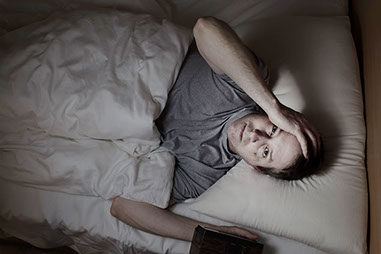
    Image of male in bed awake.

    Insomnia includes problems falling asleep, staying asleep, or waking up too early. It is normal to have a bad night of sleep every now and then. Occasional poor sleep becomes insomnia when this pattern continues for several weeks AND fatigue or feeling drowsy during the day occurs due to lack of sleep.

    There are many causes of insomnia. Too much caffeine, travel, taking care of an ill loved one, or stress can affect your sleep. Quite often, insomnia is a result of conditioning your body to be awake in bed, even if you feel tired or know you need sleep. Having trouble sleeping over several nights may lead to worrying about being able to fall asleep or expecting to lie awake for hours.

    Whether your sleep issues are transient (come and go) or chronic (occur all the time), this guide can help to improve your ability to fall asleep and stay asleep.

    Sleep Problems & Health Conditions

    If you have trouble sleeping or have daytime sleepiness for longer than three weeks, consult your doctor.

    Any condition, illness, injury, or surgery that interrupts sleep due to pain, discomfort, or waking to urinate can cause sleep problems. Health conditions that affect sleep include: arthritis, asthma, COPD, fibromyalgia, narcolepsy, and thyroid disorders. Sleep problems are also linked to many mental illnesses. These include anxiety, depression, bipolar disorder, PTSD, and substance abuse. Over-the-counter medicines, such as decongestants and diet pills can affect sleep, too.

    Sleep Apnea Signs:

    *  Loud snorting sounds while sleeping on the back

    *  Repeated periods when breathing stops for 10 or more seconds during sleep

    *  Waking up many times during the night and excessive daytime sleepiness

    *  Exhaustion and having a hard time concentrating during the day

    Periodic Limb Movements in Sleep (PLMS) and Restless Leg Syndrome Signs:

    *  Creeping, crawling, pulling and/or painful feelings in one or both legs

    *  Jerking or bending leg movements that you can’t control during sleep

    © American Institute for Preventive Medicine

  • Sensory Factors

    SleepWell® Program

    Week 2

    Image of women drinking hot tea.

    Bed

    1. Have a Comfortable Bed

    *  To soften the mattress, use a mattress topper that adds a layer of cushion or support for less than the cost of a mattress.

    *  To firm the mattress, add a board between the box springs and mattress for a firmer support layer.

    *  Rotate or flip the mattress every few months.

    _____ Yes, this is an area I need to make changes.

    2. Use Clean Sheets & Pillowcases

    *  Wash sheets, mattress covers, pillows, and comforters regularly to reduce dust and mold that can make breathing more difficult.

    *  Use hypoallergenic linens if allergies are a problem for you.

    _____ Yes, this is an area I need to make changes.

    3. Choose the Right Pillow

    *  Different pillows are designed for different types of sleepers. Test pillows to find one that is best suited for your needs.

    *  You may need more than one pillow to sleep comfortably.

    *  If you are a side sleeper, put a pillow between your legs to help keep your back aligned.

    *  Use a pillow to divide bed space between you and your bed partner if your bed partner’s movement wakes you during sleep.

    _____ Yes, this is an area I need to make changes.

    4. Decrease Clutter

    *  Clear the floor and bedside tables of clutter.

    *  Keep work materials, laptops, and a TV out of the bedroom.

    _____ Yes, this is an area I need to make changes.

    5. Make the Bed

    *  Make the bed when you get out of bed to start your day. This helps to create a more welcoming space when you return for bedtime.

    _____ Yes, this is an area I need to make changes.

    6. Turn the Clock Face Away

    *  Set an alarm, but turn the bright clock face or digital numbers away from your view.

    _____ Yes, this is an area I need to make changes.

    Sound

    Some people like complete silence while others find nature or traffic sounds soothing. Try different background sounds to find out how you sleep the best.  A quiet room is most commonly advised for sleep.

    A sound machine with white noise or nature sounds may help to muffle noises in the environment. A fan set on low can also create a rhythmic, soothing sound.

    If you are trying to sleep when others are awake, a sound machine may be helpful. Close your door and add a “Do Not Disturb” sign. Wear ear plugs to reduce sounds.

    Temperature

    Keep the room at a temperature that is not too warm or too cool. Keep a window slightly open or turn a fan on low to help lower the temperature. Use lighter bedding in the summer and warmer bedding in the winter months. A slightly cool room is most helpful for sleep.

    Smell

    The room should smell fresh and free of odors. Try aromatherapy, such as lavender, that promotes sleep. Keep dirty clothes in a closet, a closed laundry bin, or another room. Keep carpets vacuumed to reduce dust and other odors. Consider having your carpets cleaned periodically. Shower, bathe, or sponge bath your body before sleep to remove any dirt, perfume, or other odors.

    Light

    Keep your bedroom dark to alert your body that it is time to rest. Your circadian rhythm uses light and dark to signal certain hormones in your body. Dim the lights in the house an hour or two before you go to bed. This helps to let your body know that you will be going to sleep soon.

    If you are sleeping during daytime hours, cover the windows in the room you are sleeping with dark fabric, garbage bags, or other light-blocking materials. Wear an eye mask to block light from your eyes. An eye mask gives your body a sense of darkness. If you must keep a light on for safety reasons or prefer a night light, wear an eye mask to block the light when you are in bed.

    © American Institute for Preventive Medicine