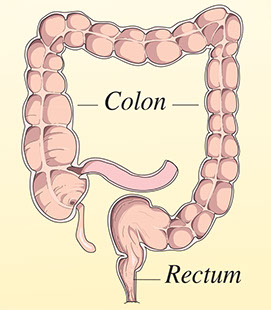
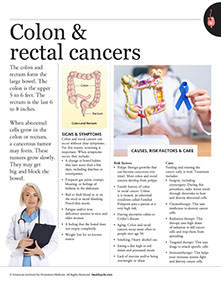
Category: Abdominal & Urinary Conditions

  • Gout: Relief At Last

    Abdominal & Urinary Conditions

    If you wake up in the middle of the night with excruciating pain in your big toe, you could have gout. Or perhaps your instep, heel, ankle, or knee hurts. How about your wrists and elbows? Your joints can become so inflamed that even rubbing against the bed sheet can be torture. You may even experience fever and chills.

    Gout is a form of arthritis most common in men in their fifties. It is caused by increased blood levels of uric acid, produced by the breakdown of protein in the body. When blood levels of uric acid rise above a critical level, thousands of hard, tiny uric acid crystals collect in the joints. These crystals act like tiny, hot, jagged shards of glass, resulting in pain and inflammation. Crystals can collect in the tendons and cartilage, in the kidneys (as kidney stones), and in the fatty tissues beneath the skin.

    A gout attack can last several hours to a few days and can be triggered by:

    *  Mild trauma or blow to the joint.

    *  Drinking alcohol (beer and wine more so than distilled alcohol).

    *  Eating a diet rich in red meat (especially organ meats such as liver, kidney, or tongue).

    *  Eating sardines or anchovies.

    *  Taking certain drugs, such as diuretics.

    Illustration of gout.

    Don’t assume you have gout without consulting a physician. Many conditions can mimic an acute attack of gout (including infection, injury, or rheumatoid arthritis). A doctor can accurately diagnose your problem.

    If you do have gout, treatment will depend on why your uric acid levels are high. Your doctor can conduct a simple test to determine whether your kidneys aren’t clearing uric acid from the blood the way they should, or whether your body simply produces too much uric acid.

    The first goal, then, is to relieve the acute gout attack. The second goal is to normalize the uric acid levels to prevent a recurrence.

    *  For immediate relief, your doctor may prescribe colchicine or a nonsteroidal anti-inflammatory drug and tell you to rest the affected joint.

    *  For long-term relief, your doctor will probably recommend that you lose excess weight, limit your intake of alcohol and red meat, drink lots of liquids, and take medication (if necessary).

    A Year of Health Hints book by the American Institute for Preventive Medicine. www.HealthyLife.com. All rights reserved.

    © American Institute for Preventive Medicine

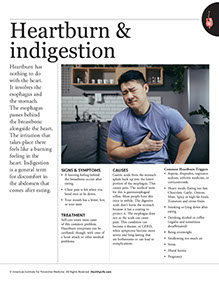
  • Heartburn & Indigestion

    Abdominal & Urinary Conditions

    Heartburn has nothing to do with the heart. It involves the esophagus and the stomach. The esophagus passes behind the breastbone alongside the heart. The irritation that takes place there feels like a burning feeling in the heart. Indigestion is a general term for discomfort in the abdomen that comes after eating.

    Signs & Symptoms

    *  A burning feeling behind the breastbone occurs after eating.

    *  Chest pain is felt when you bend over or lie down.

    *  Your mouth has a bitter, hot, or sour taste.

    Causes

    Gastric acids from the stomach splash back up into the lower portion of the esophagus. This causes pain. The medical term for this is gastroesophageal reflex disease (GERD). The digestive acids don’t harm the stomach. It has a coating to protect it. The esophagus doesn’t. Acids there cause pain.

    Common Heartburn Triggers

    *  Aspirin, ibuprofen, naproxen sodium, arthritis medicine, or corticosteroids.

    *  Heavy meals. Eating too fast. Chocolate. Garlic. Onions. Peppermint. Tomatoes and citrus fruits.

    *  Smoking or lying down after eating.

    *  Drinking alcohol or coffee (regular or decaffeinated).

    *  Being very overweight.

    *  Wearing tight clothing.

    *  Swallowing too much air.

    *  Stress.

    *  Hiatal hernia.

    *  Pregnancy.

    Treatment

    Self-care treats most cases of this common problem. Heartburn symptoms can be confused, though, with ones of a heart attack or other medical problems.

    Questions to Ask

    Self-Care / Prevention

    *  Sit straight while you eat. Stand up or walk around after you eat. Bending over or lying down after you eat makes it too easy for stomach acids to move up to the esophagus.

    *  Don’t smoke.

    *  Lose weight if you are overweight.

    *  If heartburn bothers you at night, raise the head of the bed. Put the head of your bed up on 6-inch blocks. You can also buy a special wedge that is made to be placed between the mattress and box spring. Don’t just prop your head up with pillows. This makes the problem worse by putting pressure on your stomach.

    *  Don’t wear garments that fit tight around the abdomen.

    *  Eat small meals. Limit alcohol.

    *  Limit foods and drinks with air. Examples are whipped cream and carbonated drinks.

    *  Don’t eat or drink for 2 to 3 hours before bedtime.

    *  If you take aspirin, ibuprofen, naproxen sodium, or arthritis medicines, take them with food.

    *  If other treatments fail, take antacids, such as Tums. If these don’t bring relief, take an over-the-counter acid controller, such as Pepcid AC, Tagamet HB, etc. These prevent and relieve heartburn. {Note: Read labels before taking antacids or acid controllers. Check with your doctor, too. Adverse side effects are more likely and more severe in older persons who take some acid controllers, such as Tagamet HB.}

    *  Don’t take baking soda. It is high in sodium and is not effective.

    Resources

    National Institute of Diabetes and Digestive and Kidney Diseases (NIDDK)
    www.niddk.nih.gov

    Healthier at Home book by the American Institute for Preventive Medicine. www.HealthyLife.com. All rights reserved.

    © American Institute for Preventive Medicine
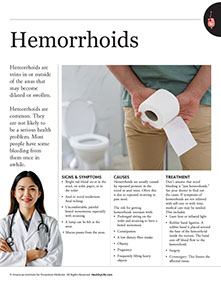
  • Hemorrhoids

    Abdominal & Urinary Conditions

    Hemorrhoids are veins in or outside of the anus that may become dilated or swollen.

    Signs & Symptoms

    *  Bright red blood on or in the stool, on toilet paper, or in the toilet.

    *  Anal or rectal tenderness. Anal itching.

    *  Uncomfortable, painful bowel movements, especially with straining.

    *  A lump can be felt at the anus.

    *  Mucus passes from the anus.

    Causes

    Hemorrhoids are usually caused by repeated pressure in the rectal or anal veins. Often this is due to repeated straining to pass stool. The risk for getting hemorrhoids increases with:

    *  Prolonged sitting on the toilet and straining to have a bowel movement.

    *  Constipation.

    *  A low dietary fiber intake.

    *  Obesity.

    *  Pregnancy.

    Treatment

    Hemorrhoids are common. They are not likely to be a serious health problem. Most people have some bleeding from them once in a while.

    Don’t assume that rectal bleeding is “just hemorrhoids.” See your doctor to find out the cause.

    If symptoms of hemorrhoids are not relieved with self-care or with time, medical care may be needed. This includes:

    *  Laser heat or infrared light.

    *  Rubber band ligation. A rubber band is placed around the base of the hemorrhoid inside the rectum. The band cuts off blood flow to the hemorrhoid.

    *  Surgery.

    *  Cryosurgery. This freezes the affected tissue.

    Questions to Ask

    Self-Care / Prevention

    *  Drink at least 6 to 8 cups of fluid per day.

    *  Eat foods with good sources of dietary fiber, such as bran, whole- grain breads and cereals, vegetables, and fruits.

    *  Add bran to your foods. Add about 3 to 4 tablespoons per day.

    *  Eat prunes. Drink prune juice.

    *  Lose weight if you are overweight.

    *  Get regular exercise.

    *  Pass stool as soon as you feel the urge. If you wait and the urge goes away, your stool could become dry and hard. This makes it harder to pass.

    *  Don’t strain to pass stool.

    *  Don’t hold your breath when trying to pass stool.

    *  Keep the anal area clean. Use moist towelettes or wet (not dry) toilet paper after you pass stool.

    *  Don’t sit too much. This can restrict blood flow around the anal area. Don’t sit too long on the toilet. Don’t read while on the toilet.

    *  For itching or pain, put a cold compress on the anus for 10 minutes at a time. Do this up to 4 times a day.

    *  Take warm baths or use a sitz bath with hot water. A sitz bath is a basin that fits over the toilet. Get one at a medical supply or drug store.

    *  Check with your doctor about using over-the-counter products, such as:

    – Stool softeners.

    – Zinc oxide or anesthetic (numbing) products, such as Preparation H.

    – Medicated wipes, such as Tucks.

    – Suppositories.

    Resources

    National Institute of Diabetes and Digestive and Kidney Diseases (NIDDK)

    www.niddk.nih.gov

    Healthier at Home book by the American Institute for Preventive Medicine. www.HealthyLife.com. All rights reserved.

    © American Institute for Preventive Medicine
  • Hernias

    Abdominal & Urinary Conditions

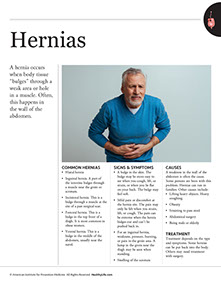
    A hernia occurs when body tissue “bulges” through a weak area or hole in a muscle. Often, this happens in the wall of the abdomen.

    Signs & Symptoms

    *  A bulge in the skin. The bulge may be more easy to see when you cough, lift, or strain, or when you lie flat on your back. The bulge may feel soft.

    *  Mild pain or discomfort at the hernia site. The pain may only be felt when you strain, lift, or cough. The pain can be extreme when the hernia bulges out and can’t be pushed back in.

    *  For an inguinal hernia, weakness, pressure, burning, or pain in the groin area. A lump in the groin near the thigh may be seen when standing.

    *  Swelling of the scrotum.

    Causes

    A weakness in the wall of the abdomen is often the cause. Some persons are born with this problem. Hernias can run in families. Other causes include:

    *  Lifting heavy objects. Heavy coughing.

    *  Obesity.

    *  Straining to pass stool.

    *  Abdominal surgery.

    *  Being male or elderly.

    Treatment

    Treatment depends on the type and symptoms. Some hernias can be put back into the body. Others may need treatment with surgery.

    Questions to Ask

    Self-Care / Prevention

    *  Don’t smoke. If you smoke, quit. Avoid secondhand smoke.

    *  Maintain a healthy diet. Lose weight if you are overweight.

    *  Avoid constipation. Don’t strain to pass stool.

    *  Exercise to keep abdominal muscles strong. Follow your doctor’s advice.

    *  When you do sit ups, keep your knees bent and your feet flat on the floor.

    *  Follow proper lifting techniques.

    *  Wear a weight lifting belt to support the back when lifting.

    *  Wear a truss. This is a device that holds a hernia in place.

    *  For mild pain, take an over-the-counter medicine for pain. If even mild pain lasts longer than a week, see your doctor.

    Common Hernias Include

    *  Hiatal hernia.

    *  Inguinal hernia. A part of the intestine bulges through a muscle near the groin or scrotum.

    *  Incisional hernia. This is a bulge through a muscle at the site of a past surgical scar.

    *  Femoral hernia. This is a bulge in the top front of a thigh. It is most common in obese women.

    *  Ventral hernia. This is a bulge in the middle of the abdomen, usually near the navel.

    Healthier at Home book by the American Institute for Preventive Medicine. www.HealthyLife.com. All rights reserved.

    © American Institute for Preventive Medicine
  • Hiatal Hernia

    Abdominal & Urinary Conditions

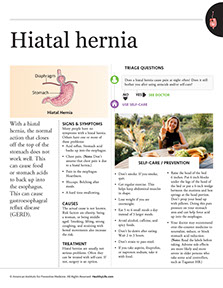
    With a hiatal hernia, the normal action that closes off the top of the stomach does not work well. Food or stomach acids back up into the esophagus. This is known as Gastroesophageal reflux disease (GERD).

    Signs & Symptoms

    Many people have no symptoms with a hiatal hernia. Others have one or more of these problems:

    *  Acid reflux. Stomach acid backs up into the esophagus.

    *  Chest pain. {Note: Don’t assume that chest pain is due to a hiatal hernia.}

    *  Pain in the esophagus. Heartburn.

    *  Hiccups. Belching after meals.

    *  A hard time swallowing.

    Causes

    The actual cause is not known. Risk factors are obesity, being a woman, or being middle aged. Smoking, lifting, strong coughing, and straining with bowel movements also increase the risk.

    Treatment

    Hiatal hernias are usually not serious problems. Often they can be treated with self-care. If not, surgery is an option.

    Questions to Ask

    Self-Care / Prevention

    *  Don’t smoke. If you smoke, quit.

    *  Get regular exercise. This helps keep abdominal muscles in shape.

    *  Lose weight if you are overweight.

    *  Eat 5 to 6 small meals a day instead of 3 larger meals.

    *  Avoid alcohol, caffeine, and spicy foods.

    *  Don’t lie down after eating. Wait 2 to 3 hours.

    *  Raise the head of the bed 6 inches. Put 6 inch blocks under the legs of the head of the bed or put a 6 inch wedge between the mattress and box springs at the head portion. Don’t prop your head up with pillows. Doing this puts pressure on your stomach area and can help force acid up into the esophagus.

    *  Don’t strain to pass stool.

    *  Take over-the-counter antacids or acid controllers, such as Pepcid AC or Tagamet HB. {Note: Read the labels before taking. Check with your doctor, too. Adverse side effects are more likely and more severe in older persons who take some acid controllers, such as Tagamet HB.}

    *  If you take aspirin, ibuprofen, or naproxen sodium, take it with food.

    Healthier at Home book by the American Institute for Preventive Medicine. www.HealthyLife.com. All rights reserved.

    © American Institute for Preventive Medicine

  • How Aging Affects Digestion

    Abdominal & Urinary Conditions

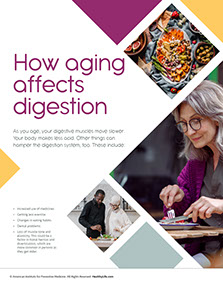
    Image of elderly man.

    As you age, your digestive muscles move slower. Your body makes less acid. Other things can hamper the digestive system, too. These include:

    *  Increased use of medicines

    *  Getting less exercise

    *  Changes in eating habits

    *  Dental problems

    *  Loss of muscle tone and elasticity. This could be a factor in hiatal hernias and diverticulosis, which are common in persons as they get older.

    Health at Home Lifetime book by the American Institute for Preventive Medicine. www.HealthyLife.com. All rights reserved.

    © American Institute for Preventive Medicine
  • Abdominal Pain

    Abdominal & Urinary Conditions

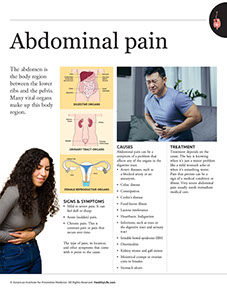
    The abdomen is the body region between the lower ribs and the pelvis. Many vital organs make up this body region.

    Signs & Symptoms

    The type of pain, its location, and other symptoms that come with it point to the cause.

    *  Mild to severe pain. It can feel dull or sharp.

    *  Acute (sudden) pain.

    *  Chronic pain. This is constant pain or pain that recurs over time.

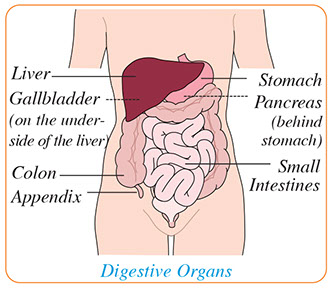
    Illustration of digestive organs.
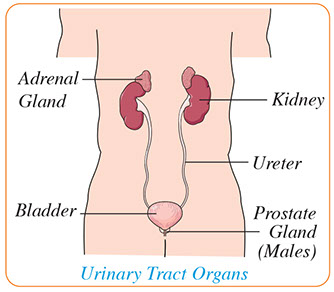
    Illustraion of urinary tract organs.
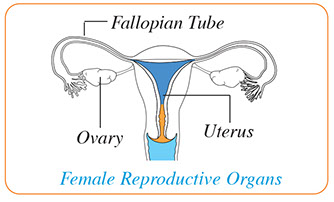
    Illustration of female reproductive organs.

    Causes

    Abdominal pain can be a symptom of a problem that affects any of the organs. Causes of abdominal pain include:

    *  Artery diseases, such as a blocked artery or an aneurysm.

    *  Celiac disease.

    *  Constipation.

    *  Crohn’s disease.

    *  Food poisoning.

    *  Gallstones.

    *  Heartburn. Indigestion.

    *  Infections, such as ones in the digestive tract and urinary tract.

    *  Irritable bowel syndrome (IBS).

    *  Kidney stones.

    *  Menstrual cramps or ovarian cysts in females.

    *  Reflux.

    *  Stomach ulcers.

    Treatment

    Treatment depends on the cause. The key is knowing when it’s just a minor problem like a mild stomach ache or when it’s something worse. Pain that persists can be a sign of a medical condition or illness. Very severe abdominal pain usually needs immediate medical care.

    Questions to Ask

    Self-Care / Prevention

    *  Find a comfortable position. Relax.

    *  Take an over-the-counter pain medicine as directed on the label.

    *  Apply a heating pad set on low (adults only).

    *  Don’t wear clothes that fit tight.

    *  Don’t exercise too hard.

    *  Use a hot water bottle on the area that aches.

    Crohn’s Disease

    Crohn’s Disease is a chronic problem that can cause abdominal pain and diarrhea. Other symptoms are fever, fatigue, and, at times, rectal bleeding or drainage. Symptoms occur when the disease flares up. This is followed by periods when symptoms go away or lessen.

    With Crohn’s disease, any part of the GI tract, from the mouth to the anus, can be inflamed. Usually, the colon and the last part of the small intestine, the ileum, are affected.

    Treatment for Crohn’s disease includes medicines, nutrition supplements, and surgery.

    Resources

    Crohn’s & Colitis Foundation of America

    www.ccfa.org

    Healthier at Home book by the American Institute for Preventive Medicine. www.HealthyLife.com. All rights reserved.

    © American Institute for Preventive Medicine
  • Irritable Bowel Syndrome (Ibs)

    Abdominal & Urinary Conditions

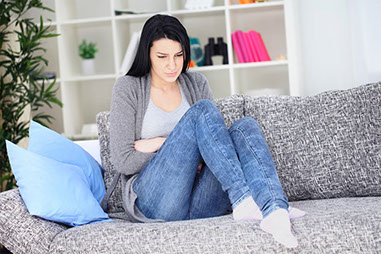
    Image of women sitting holding stomach in pain.

    Irritable bowel syndrome (IBS) is a problem that mostly affects the bowel (the large intestine) and is not caused by any other bowel disease. It can be painful, does not damage the colon or lead to other health problems.

    Signs & Symptoms

    *  Gas, bloating, pain, or discomfort in the abdomen.

    *  Chronic diarrhea, constipation (or both).

    *  Mucus in the stool.

    Causes

    The cause is not known. A person with IBS has an extra sensitive colon. Muscles in the intestines go into spasm, causing symptoms.

    Treatment

    Changes in eating habits, stress relief, and medications treat IBS.

    Questions to Ask

    Self-Care / Prevention

    *  Don’t smoke. If you smoke, quit. Avoid secondhand smoke.

    *  Maintain a healthy diet. Lose weight if you are overweight.

    *  Avoid constipation. Don’t strain to pass stool.

    *  Exercise to keep abdominal muscles strong. Follow your doctor’s advice.

    *  When you do sit ups, keep your knees bent and your feet flat on the floor.

    *  Follow proper lifting techniques.

    *  Wear a weight lifting belt to support the back when lifting.

    *  Wear a truss. This is a device that holds a hernia in place.

    *  For mild pain, take an over-the-counter medicine for pain. If even mild pain lasts longer than a week, see your doctor.

    Resources

    National Institute of Diabetes and Digestive and Kidney Diseases (NIDDK)

    www.niddk.nih.gov

    Healthier at Home book by the American Institute for Preventive Medicine. www.HealthyLife.com. All rights reserved.

    © American Institute for Preventive Medicine
  • Cirrhosis: Be Kind To Your Liver

    Abdominal & Urinary Conditions

    The liver is probably the most versatile organ you’ve got. It performs many tasks, including:

    *  Producing bile (a substance that aids digestion of fats).

    *  Producing blood proteins.

    *  Helping blood clot.

    *  Metabolizing cholesterol.

    *  Maintaining normal blood sugar levels.

    *  Forming and storing glycogen (the body’s short-term energy source).

    *  Manufacturing more than 1,000 enzymes necessary for various bodily functions.

    *  Detoxifying substances such as alcohol and many drugs.

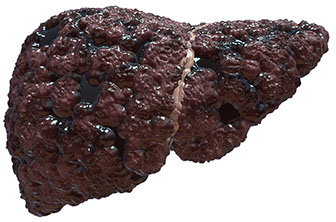
    Image of liver with cirrhosis.

    Liver with Cirrhosis

    The liver is equipped to handle a certain amount of alcohol without much difficulty. But drink too much alcohol, too often, for too long, and the vital tissues in the liver break down. Fatty deposits accumulate and scarring occurs. This is known as cirrhosis. It’s most commonly found in men over 45, yet the number of women developing cirrhosis is steadily increasing.

    To make matters worse, people who drink too much generally have poor nutritional habits. Since alcohol replaces food, essential vitamins and minerals are missing from the diet. Malnutrition aggravates cirrhosis.

    While alcohol abuse is the most common cause of cirrhosis, hepatitis, taking certain drugs, or exposure to certain chemicals can also produce this condition.

    Doctors recognize the following as signs of advanced cirrhosis.

    *  Enlarged liver.

    *  Yellowish eyes and skin, and tea-colored urine (indicating jaundice). Bleeding from the gastrointestinal tract.

    *  Itching.

    *  Hair loss.

    *  Swelling in the legs and stomach (indicating fluid accumulation).

    *  Tendency to bruise easily.

    *  Mental confusion.

    Cirrhosis can be life threatening, so get medical attention if you suspect your drinking habits may have gotten out of hand or you have any of the above symptoms. And needless to say, you (or anyone you suspect of having cirrhosis) should abstain from alcohol.

    A Year of Health Hints book by the American Institute for Preventive Medicine. www.HealthyLife.com. All rights reserved.

    © American Institute for Preventive Medicine