Category: Dental & Mouth Concerns

  • Seal Out Tooth Decay

    Dental & Mouth Concerns

    Image of older women smiling and pointing to her mouth.

    Even if you brush, floss, rinse with fluoride, and never eat a sticky sweet, decay-causing bacteria can invade the tiny pits and crevices in your molars, or chewing teeth. To head off that kind of decay, researchers have developed sealants-special plastic coatings that form an effective barrier between bacteria and the chewing surfaces of your teeth, where fluoride is less effective.

    Approximately 90 percent of the cavities in school-age children occur in crevices in the back teeth, so sealants are best applied when the permanent molars first emerge. (The American Dental Association reports a significant decrease in cavities in children who have sealants applied to their teeth.) But that doesn’t mean sealants aren’t useful or appropriate for adults who have cavity-prone teeth. So ask your dentist or dental hygienist about sealants the next time you have a dental checkup.

    The procedure is simple, pain-free, and won’t interfere with later dental work. Sealed teeth may need to be touched up periodically, though.

    A Year of Health Hints book by the American Institute for Preventive Medicine. www.HealthyLife.com. All rights reserved.

    © American Institute for Preventive Medicine

  • Toothaches

    Dental & Mouth Concerns

    Signs & Symptoms

    *  Pain in or around a tooth that throbs or occurs with a fever and/or general ill feeling. Tooth pain occurs after you eat or drink or have something hot, cold, or sweet.

    *  Gums are red, swollen, and/or bleed.

    *  Earache and/or swollen glands on one side of the face or neck.

    Causes

    *  A food particle, such as a popcorn hull, gets stuck between the gum and a tooth.

    *  Tooth grinding (bruxism). This can wear down teeth and cause cracks in them.

    *  A cavity or infection is beneath or around the gum of a tooth.

    *  Tooth abscess. This is swelling and/or infection in the bone and/or the tooth’s canals.

    *  Gum (periodontal) disease.

    *  Impacted teeth. Teeth may not fully erupt or can grow at odd angles.

    *  Temporary pain from recent dental work.

    *  TMJ.

    *  An injury to a tooth.

    *  A symptom of a sinus infection.

    *  A symptom of angina and a heart attack.

    Treatment

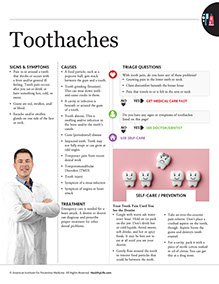
    Emergency care is needed for a heart attack. A dentist or doctor can diagnose and prescribe proper treatment for other problems.

    Questions to Ask

    Self-Care / Prevention

    To Treat Tooth Pain Until You See the Dentist

    *  Gargle with warm salt water every hour. Hold an ice pack on the jaw. Don’t drink hot or cold liquids. Avoid sweets, soft drinks, and hot or spicy foods. It may be best not to eat at all until you see your dentist.

    *  Gently floss around the tooth to remove food particles that could be between the teeth.

    *  Take an over-the-counter pain reliever. Don’t place a crushed aspirin on the tooth, though. Aspirin burns the gums and destroys tooth enamel.

    *  For a cavity, pack it with a piece of sterile cotton soaked in oil of cloves. You can get this at a drug store.
    Healthier at Home book by the American Institute for Preventive Medicine. www.HealthyLife.com. All rights reserved.

    © American Institute for Preventive Medicine

  • Ways To Relieve Dental Anxiety

    Dental & Mouth Concerns

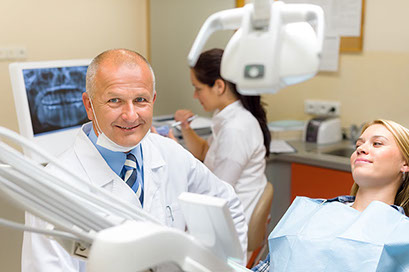
    Image of smiling dentist.

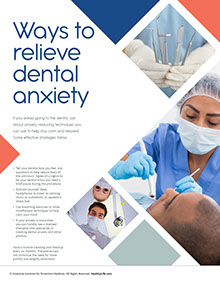
    If you dread going to the dentist, ask about anxiety-reducing techniques you can use to help stay calm and relaxed. Some effective strategies follow.

    *  Tell your dentist how you feel. Some dentists are trained in helping anxious patients overcome fear of dental procedures.

    *  Ask if you can listen to soothing music or relaxation CDs played on a stereo headset. Ask if the dentist offers a hand-held device that allows you to press a button to stop the dentist’s drill.

    *  If your dentist is skilled at hypnosis, consider being hypnotized.

    *  If your anxiety is more than you can handle, see a psychotherapist who specializes in treating dental anxiety and other phobias.

    Have a routine cleaning and checkup every six months. Preventive care will minimize the need for more painful and lengthy treatment.

    A Year of Health Hints book by the American Institute for Preventive Medicine. www.HealthyLife.com. All rights reserved.

    © American Institute for Preventive Medicine
  • When To Consider Crowns

    Dental & Mouth Concerns

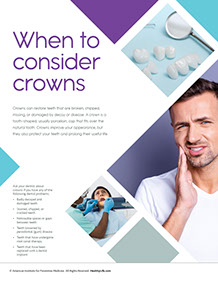
    Crowns can restore teeth that are broken, chipped, missing, or damaged by decay or disease. A crown is a tooth-shaped porcelain cap that fits over the natural tooth. Crowns improve your appearance, but they also protect your teeth and prolong their useful life.

    Ask your dentist about crowns if you have any of the following dental problems.

    *  Badly decayed and damaged teeth.

    *  Stained, chipped, or cracked teeth.

    *  Noticeable spaces or gaps between teeth.

    *  Teeth loosened by periodontal (gum) disease.

    *  Teeth that have undergone root canal therapy.

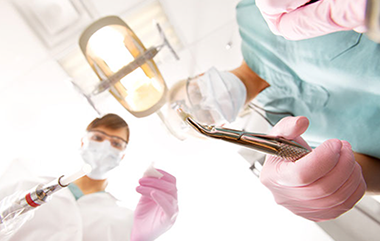
    image of dentist with patient.
    A Year of Health Hints book by the American Institute for Preventive Medicine. www.HealthyLife.com. All rights reserved.

    © American Institute for Preventive Medicine
  • Dental Hygiene

    Dental & Mouth Concerns

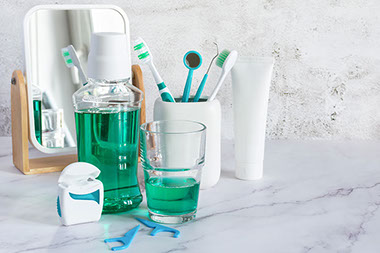
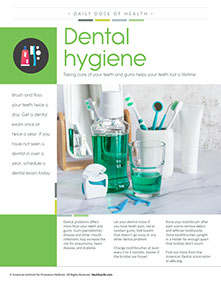
    Dental hygiene products, tooth brush, tooth paste, mouth wash, etc.

    Taking care of your teeth and gums helps your teeth last a lifetime.

    Brush and floss your teeth twice a day. Get a dental exam once or twice a year. If you have not seen a dentist in over a year, schedule a dental exam today.

    Dental problems affect more than your teeth and gums. Gum (periodontal) disease and other mouth infections may increase the risk for pneumonia, heart disease, and diabetes.

    Let your dentist know if you have tooth pain, red or swollen gums, bad breath that doesn’t go away or any other dental problem.

    Change toothbrushes at least every 3 to 4 months; sooner if the bristles are frayed.

    Rinse your toothbrush after each use to remove debris and leftover toothpaste. Store toothbrushes upright in a holder far enough apart that bristles don’t touch.

    Find out more from the American Dental Association atada.org.

    Health at Home Lifetime book by the American Institute for Preventive Medicine. www.HealthyLife.com. All rights reserved.

    © American Institute for Preventive Medicine