Category: Work Life

  • Avoiding The Afternoon Slump

    WORK LIFE

    Image of a group of co-workers smiling and laughing.

    Do you often feel tired and worn out after lunch? It can be hard to stay productive and get through the workday if you’re fighting fatigue and exhaustion. Often times, this afternoon slump can be avoided by making a few simple changes:

    *Use caffeine sparingly.A cup of coffee or tea can give you a boost in the morning, but drinking too much can cause an energy crash after it wears off. Finish your last caffeinated drink before noon, and limit intake to four 8 oz. cups of coffee.

    *Include lean protein and healthy fats in your lunch.This can help stabilize blood sugar levels and fight fatigue. Examples include turkey, low-fat dairy, avocado, nuts and fish.

    *Drink plenty of water.Even mild dehydration can make you tired. Aim for eight 8 oz. glasses per day.

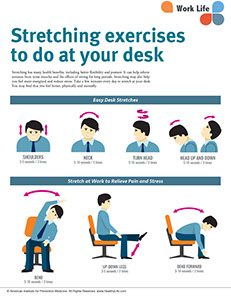
    *Get moving.If you can, walk outside at lunch and get fresh air, even for just 10 minutes. This can energize and relax you. But even walking indoors or stretching in your office can be helpful. Sitting at a desk for hours without getting up can make you feel tired. Do alternative activities and walk around when you can.

    *Having more energy starts the day before.If you find that you’re tired every day despite these tips, you may need more sleep. Aim for 7 to 9 hours a night.

    Sometimes, ongoing fatigue can be a sign of a health issue. If you find that your energy levels are always low despite making healthy choices, talk to your doctor. Problems such as sleep disorders, anemia, depression, diabetes, and many other conditions can cause energy levels to sag. Certain medications can also cause sleepiness. You and your doctor can discuss your health history and make a plan to address any issues to get you feeling better again.

    © American Institute for Preventive Medicine

  • Poor Behavior At Office Parties May Hurt Your Career

    WORK LIFE

    Image of a group of co-workers drinking after hours.

    Too many drinks combined with poor behavior at an office holiday party could signal the demise of employment for some employees, warned Lynne Richardson, dean of the Ball State University Miller College of Business. She said employees should be on their best behavior and treat the annual holiday office party as an extension of work. Supervisors can and will hold employees accountable for inappropriate actions at such events. Avoid excessive alcohol consumption, dress appropriately, abstain from discussing sensitive work-related issues and bring a date only if told it is proper.

    © American Institute for Preventive Medicine

  • 4 “S”S For A Super Workday

    WORK LIFE

    Image of happy co-workers.

    1.  Stress less on your commute. Avoid the news, emails or other stressful activities on your way to work. Instead, listen to an uplifting audio book or your favorite music.

    2.  Say something positive. When someone asks how you’re doing, avoid saying things like, “just okay,” or “could be better.” Instead, say, “great,” or “I’m going to make it a good day!” Even if you don’t feel that way, saying it out loud can help.

    3.  Smile. Research has shown that simply smiling can improve your mood and lower stress, even if you don’t feel happy at the moment.

    4.  SET your priority. Decide upon the most important task on your list today. Then, get to work on completing it before doing anything else. Getting important things done can boost your confidence.

    © American Institute for Preventive Medicine

  • Beat Procrastination At Work

    WORK LIFE

    Illustration of man with head down on messy desk.

    Do you put off doing tasks and find yourself scrambling at the last minute? You could be procrastinating. Try the tips below to break the habit.

    Break large tasks down into smaller pieces.

    Rather than trying to do the entire project, start with one piece. This can make a large project less overwhelming and more realistic.

    Get motivated.

    Think about how pleased you’ll be when it’s done. Focus on the positive aspects of your job, and why you do what you do. This may help you get the energy to tackle difficult tasks.

    Try rewards.

    Commit to getting the project done a few days early. When you do, treat yourself after work. Examples of positive rewards may be your favorite meal or a fun activity you enjoy.

    Source: American Psychological Association

    © American Institute for Preventive Medicine

  • Preparing For A Vacation From Work

    WORK LIFE

    Image of family looking out of an airport window.

    To help make the most of your time off, be sure you’ve prepared for your absence at work. These steps can help you get ready for your well-deserved break:

    *Give people advance notice.As soon as you have plans, tell your supervisor and colleagues. If you have key clients or customers, be sure to tell them too.

    *Set up an out-of-office reply and voicemail.These basics let everyone know when you’ll get back with them. If possible, list a colleague’s name and number for urgent needs, but ask them first if this is okay.

    *Make a list of important tasks to complete before you leave.Then, stick to the list and make sure you get it done. This will help your colleagues and you’ll be able to rest easier on vacation.

    *Decide how you can be reached and let people know.If you don’t want phone calls or emails, let co-workers know. Some people want to take a complete break from work, while others like checking in. Or, you may tell people to call only if it’s urgent. It may depend on your job responsibilities and your preference.

    Traveling and spending

    In 2016, people in the U.S. spent $836.6 billion on domestic travel. This made up 84 percent of all travel expenditures. The money spent on travel in the U.S. directly supported over 7 million American jobs.

    Travelers spent $248.5 billion on food services. This accounted for 25 percent of travel expenses. It surpassed lodging expenses, which were 21.3 percent, or $210.8 billion, of total travel expenses.

    Source: U.S. Travel Association

    © American Institute for Preventive Medicine

  • 4 Tips For Lunchtime Walking

    WORK LIFE

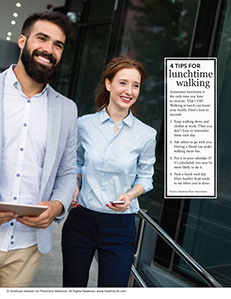
    Coworkers walking outside.

    Sometimes lunchtime is the only time you have to exercise. That’s OK! Walking at lunch can boost your health. Here’s how to succeed:

    1.  Keep walking shoes and clothes at work. Then you don’t have to remember them each day.

    2.  Ask others to go with you. Having a friend can make walking more fun.

    3.  Put it in your calendar. If it’s scheduled, you may be more likely to do it.

    4.  Pack a lunch each day. Have healthy food ready to eat when you’re done.

    Source: American Heart Association

    © American Institute for Preventive Medicine

  • Difficult People In The Workplace

    WORK LIFE

    Image of a business man looking off the distance.

    A manager rushes into his employee’s office at 4:30 p.m., drops a pile of papers on her desk, and barks, “I need these read, edited, and finalized by 8:30 a.m.”

    A woman calls in sick. She is shivering, coughing, and has a fever.  Her supervisor screams, “I don’t care what illness you have. If you’re not in the office today, I’ll take it as your resignation!”

    These are real examples of workplace bullying that cause stress, depression, and anxiety. The National Mental Health Association estimates that each year more than one billion sick days can be due to mental health disorders caused by work stress. That’s $193 billion a year in lost earnings.

    Psychology Professor Katerina Bezrukova studies the psychological effect of workplace injustices and intergroup relations at Santa Clara University.

    She says there are 4 kinds of co-workers and supervisors to look out for:

    1.Narcissistic.These types have fragile self-esteem. They may become outraged when someone challenges them. Bezrukova says avoid criticizing them. Document your own work, too, so you have a record of everything you do.

    2.Aggressive.To them, everyone is a predator or prey. That’s why they like to intimidate others and even bully them. They also tend to act frantic when a project comes in or a deadline is fast approaching. Bezrukova advises victims to stay out of the way. If they can, show them how management-by-hysteria can be inefficient.

    3.Rigid.These types won’t try anything new. They manage with viewpoint of “It’s my way or the highway.” This stems from fears of being pushed around. Bezrukova says let them feel like they are a part of the decision.

    4.Impaired.These people have ADD, anxiety, depression, burnout, or substance abuse issues. They need professional help. Employee Assistance Programs or other kinds of intervention are best.

    “People, who suffer from a workplace injustice of some sort, develop anger, frustration, anxiety, insomnia, headaches. These relationships, coupled with the connection between long-term, chronic psychological distress and increased risk of physical health problems such as cardiovascular disease, make this a crucial dollars and cents issue for business,” says Bezrukova.

    © American Institute for Preventive Medicine

  • Sick Days: When To Stay Home

    WORK LIFE

    Image of young women in bed sick.

    You’re feeling under the weather, but you don’t want to miss work. What should you do? In some cases, it may be okay to go to work when you’re not feeling 100 percent. But other times, you should make your wellness a priority. These guidelines can help you decide if you’re well enough to work:

    Fever:

    The CDC recommends you stay home for 24 hours after your fever is gone. This helps minimize the spread of illness to others. You should also skip social gatherings, shopping, and other outings.

    Sniffles and sneezing:

    Many people simply can’t miss work every time they have a minor cold. Let your symptoms be your guide. If you’re feeling well enough to work and don’t have other symptoms, such as a fever or body aches, you can go to work if necessary. But, if you have fatigue or feel that you won’t be able to safely do your job, consider using sick time.

    Vomiting or diarrhea:

    Stomach-related illnesses such as norovirus are highly contagious. Even after you stop vomiting, you could get other people sick. If you serve or prepare food as part of your job, the CDC says you should stay home for at least 48 hours after your symptoms stop.

    Remember that staying home from work may help you to recover more quickly, as your body needs rest to fight an illness. In addition, staying home will help avoid spreading illness to co-workers, customers, and others you encounter.

    Choosing to stay home may also depend on your employer’s sick day policies. Make sure you are familiar with these and abide by them.

    © American Institute for Preventive Medicine

  • 6 Ways To Boost Productivity

    WORK LIFE

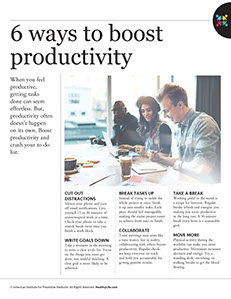
    Three co-workers sitting at table working.

    When you feel productive, getting tasks done can seem effortless. But, productivity often doesn’t happen on its own. Boost productivity and crush your to-do list.

    Cut out distractions

    Silence your phone and turn off email notifications. Give yourself 15 to 30 minutes of uninterrupted work at a time. Check your phone or take a stretch break every time you finish a work block.

    Write goals down

    Take a moment in the morning to write a clear to-do list. Focus on the things you must get done, not wishful thinking. A clear goal is more likely to be achieved.

    Break tasks up

    Instead of trying to tackle the whole project at once, break it up into smaller tasks. Each piece should feel manageable, making the entire project easier to achieve from start to finish.

    Collaborate

    Team meetings may seem like a time-waster, but in reality, collaborating with others boosts productivity. Regular check-ins keep everyone on track and hold you accountable for getting positive results.

    Take a break

    Working pedal to the metal is a recipe for burnout. Regular breaks refresh and energize you making you more productive in the long run. A 10-minute break every hour is a reasonable goal.

    Move more

    Physical activity during the workday can make you more productive. Movement increases alertness and energy. Try a standing desk, stretching, or walking breaks to get the blood flowing.

    © American Institute for Preventive Medicine

  • Eap Is At Your Service

    WORK LIFE

    Image of 2 business women shaking hands.

    In an edition of Psychology Today, Steve Albrecht, doctor of business administration, encourages employees to find out about the many services available from their Employee Assistance Program (EAP) and reach out for help if needed. Dr. Albrecht has written or co-written 15 books, including Ticking Bombs: Defusing Violence in the Workplace, and Fear and Violence on the Job. He is also a former police officer and domestic violence investigator with the San Diego Police Department.

    Dr. Albrecht gave four reasons why employees do not use their EAP services:

    1. They do not think what they say or do will be held in confidence.

    2. They see reaching out for help as a weakness. This is especially true  for men.

    3. They think they need to get permission from their boss or Human Resources to seek services from their EAP.

    4. They do not know their EAP exists.

    First, according to Dr. Albrecht, services and discussions between employees and EAP providers are kept confidential. There is an exception-an EAP counselor has a duty to warn or intervene if the employee wants to harm himself or herself or others. The company gets no reports or records of employee use of EAP services.

    Second, employees need to be reassured that EAP offers help for many very common issues that affect most people. Examples are money worries, marital issues, raising children or step-children, blended families, sick kids, and dealing with parents with Alzheimer’s disease.

    Employees can also get help for financial problems, burnout, stress-related illnesses, cancer and mental health issues. These include substance abuse, workplace conflicts, depression and suicidal thoughts.

    Third, employees simply need to call the EAP phone number and make an appointment. They do not have to tell coworkers, their boss or Human Resources.

    Lastly, Dr. Albrecht is puzzled why employees do not know about their EAP. Companies with EAP programs list their services and contact numbers on posters and brochures in lunch rooms and break rooms. New employees receive EAP information.

    To find out if your company offers EAP services, check your benefits manual or website or ask your human resources manager. Help is just a phone call away.

    © American Institute for Preventive Medicine