Category: Work Life

  • Stretching Exercises To Do At Your Desk

    WORK LIFE

    Image of office with employees working on computers.

    Stretching has many health benefits, including better flexibility and posture. It can help relieve soreness from tense muscles and the effects of sitting for long periods. Stretching may also help you feel more energized and reduce stress. Take a few minutes every day to stretch at your desk. You may find that you feel better, physically and mentally.

    Illustration showing different desk stretches.

    © American Institute for Preventive Medicine

  • Balancing Work & Caregiving

    WORK LIFE

    Women pushing man in wheelchair through the lawn.

    Many people have to care for a loved one and work outside the home. Doing both of these things can be challenging. If you’re having trouble with your dual role, you’re not alone. There are some things you can do to help make things easier.

    First, try to take care of yourself. Find time for exercise, relaxation or getting out. Self-care is important for caregivers!

    Be open with your supervisor

    Having a talk with your supervisor may help relieve stress. You can get your challenges out in the open.

    Find out if they have suggestions that could help you. Maybe you have some ideas of how you can get your job done while still meeting your caregiving responsibilities. If so, share them!

    Check into policies and programs

    Your workplace may have some policies or programs that can help you. Some examples include:

    *Employee assistance programs.Many employers have resources to help their employees deal with challenges. They may have counseling services or can help you find services in your community.

    *Flexibility with hours.Depending on your job, you may be able to work different hours. Talk with your supervisor or human resources department if this would work for you.

    *Family and Medical Leave Act (FMLA).Under FMLA, some employees are able to take up to 12 weeks of unpaid leave to care for a loved one. You have to meet certain qualifications for this, so ask your human resources department about the details.

    Consider other options

    Caregiving can be difficult. Some people find that they need to use some caregiving services. These services can be life-changing if you work and need some extra help. You may want to check out:

    *Local Area Agency on Aging.This organization can help you locate programs and services that can help you. Go towww.acl.govto learn about U.S. programs for aging people.

    *Adult day care.These centers can provide social interaction for your loved one while you work. Some of them may also provide meals, personal care and medical care.

    *Help from others.Some people ask for caregiving help from a neighbor, family member or friend. You may also hire a nurse or home care aide to come in and help when needed.

    Source: American Academy of Family Physicians

    © American Institute for Preventive Medicine

  • Foods For Better Sleep

    WORK LIFE

    Try these before-bed snacks to help you drift off to dreamland. Each of them contains natural chemicals that may help you wind down. Don’t eat too much: a heavy snack may actually keep you awake.

    Source: National Sleep Foundation

    Chart of different foods to help sleep better.

    © American Institute for Preventive Medicine

  • The Right Work Posture For You

    WORK LIFE

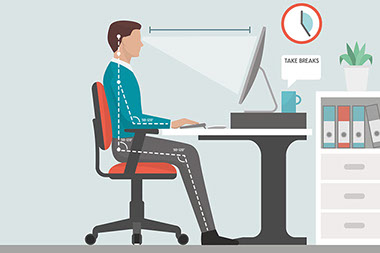
    Illustration of correct posture while sitting at a desk.

    Many people sit at a computer as part of their daily job. If a chair, desk or workstation isn’t working for you, it can cause sore muscles and joints and even an injury. To stay safe and healthy at the computer, follow these ergonomics guidelines.

    Remember to get up and move whenever possible! A walk during your lunch break, taking the stairs or doing stretches at your desk can help you feel energized and burn a few extra calories. Look for ways to get your body moving, even if it’s only for five to 10 minutes. A little exercise is better than none at all.

    Monitor:Monitor should be at eye level or slightly below. Monitor to eye distance:  20 to 40 inches

    Arms:Armrests should allow shoulders to relax. Elbows should be close to the body. Minimal bend at the wrist.

    Chair:Backrest should conform to the spine. Chair should have lumbar (lower back) support.

    Legs:Thighs parallel to the floor.

    Feet:Feet should be flat on the floor. Use a footrest if needed.

    Take breaks:Every 20-25 minutes

    Source: Occupational Safety and Health Administration

    © American Institute for Preventive Medicine

  • 3 Ways To Be A Positive Force At Work

    WORK LIFE

    Image of co-workers talking.

    *Give – or share – the credit.If you are recognized for a job well done, accept it graciously, but don’t forget about those who may have helped. If a co-worker or team had a hand in your achievement, be sure to mention them.

    *Always use “please” and “thank you.”We often forget these simple words when we’re busy and trying to get through a long to-do list. But they can have a big impact on how others respond to you. A (genuine) smile also helps.

    *Don’t take feedback personally.As hard as it may be, try to accept constructive criticism gracefully. Remember it’s not a personal attack, and consider the other person’s point of view before responding or getting upset.

    © American Institute for Preventive Medicine

  • Germs: Just Don’T Share Them

    WORK LIFE

    Image of hands being wash with soap and water.

    If you must go to work or do necessary errands with a minor illness, follow these tips from the CDC to help prevent the spread of germs:

    *  Wash your hands often with soap and running water. Wash your hands after blowing your nose and using the bathroom.

    *  Cough or sneeze into a tissue and throw it away. If you do not have a tissue, cough or sneeze into your elbow, not your hand.

    *  Avoid touching your eyes, nose, or mouth.

    © American Institute for Preventive Medicine

  • Thinking About A New Job?

    WORK LIFE

    Concept image of women writing a career outline.

    Boredom. Anxiety. Restlessness. If these terms describe your feelings at work, don’t be afraid to make a change, said Amy Gregor, coordinator of career services at Indiana University.

    “Career change is a natural life progression. Most studies show that the average job seeker will change careers-not just jobs-several times over the course of his or her lifetime,” she said.

    But before you turn in your resignation, take some time to carefully assess the situation. It is very difficult to find satisfaction if you don’t know what you need. Gregor offers the following suggestions:

    *  Take a hard look. Start with a self-assessment of likes and dislikes about your current position. Are there certain aspects that you do enjoy? Get specific about your list of grievances. Are the hours too long? Are you bored? Is the pay too low? Do you wish you had a healthier balance between work and family life? You might find that some of the negatives can be addressed within your current position. “It is possible that your boss has no idea you are unhappy and would be perfectly willing to change things if you propose a new plan,”  Gregor said.

    *  Bad habits? Certain habits tend to make people unhappy at their jobs regardless of the circumstances. “If you never take a lunch, have poor time management skills, and never use your vacation time, most people will burn out. If you bring that approach to another job or career you may continue to have the same levels of dissatisfaction,” she said.

    *  Don’t put it off. Once you’re certain you need to leave, start taking steps to transition as soon as possible, Gregor said. “Don’t wait until you are at the point where you are so frustrated you’re willing to burn bridges,” she said.

    *  Rediscover your passion. Think of times when you felt most successful. Ask yourself what you really love to do. What do you do for fun? Answering these questions can help you get a sense of what career path to pursue.

    *  Still not sure? “If you’ve analyzed your likes and dislikes, but you’re still not sure what career path to take, consider taking a career assessment. The key is investing in the time to rediscover yourself, and using your self-assessment to steer your new career search,” Gregor said.

    *  Network. Don’t just dive into the help wanted ads. Test the waters by talking with people who work in various career fields. Talk about your dreams. “During this time it may be helpful to talk about your plan with the people you trust most, such as your family, friends, alumni contacts, pastor, trusted counselor, financial advisors, and maybe even your doctor,” Gregor said. “It will be important to gain support during any times of transition.”

    © American Institute for Preventive Medicine

  • 3 Ways To Find Joy At Work

    WORK LIFE

    Image of co-workers talking and smiling.

    Your job is a part of your life. But if you’re less than happy with it, your health could take a hit. The U.S. Surgeon General states that mental and emotional well-being are critical to your overall health. Not to mention, if you find ways to be happy at work, you may find more success and satisfaction with your career. Here are a few ways to make work more enjoyable each day:

    1.Think about your motivation.Write down two reasons why you go to work each day. Look at those reasons each day to remind yourself why you’re doing it.

    2.Take note of daily progress.Big or small, think about something good that you did at work each day. Congratulate yourself for achievements or ways you’ve improved in certain areas or abilities.

    3.Find healthy outlets.Sometimes work stress can’t be avoided. If you can accept the fact that stress will happen, the next step is to find a way to cope. Find a fun new hobby, take a class, go for a walk, or try meditation.

    © American Institute for Preventive Medicine

  • Going Back To Work After A Leave

    WORK LIFE

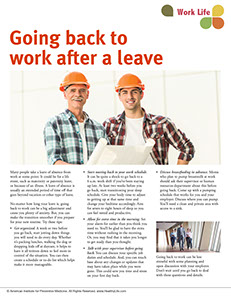
    Image of 2 construction workers.

    Many people take a leave of absence from work at some point. It could be for a life event, such as maternity or paternity leave, or because of an illness. A leave of absence is usually an extended period of time off that goes beyond vacation or other type of leave.

    No matter how long your leave is, going back to work can be a big adjustment and cause you plenty of anxiety. But, you can make the transition smoother if you prepare for your new routine. Try these tips:

    *  Get organized. A week or two before you go back, start jotting down things you will need to do every day. Whether it’s packing lunches, walking the dog or dropping kids off at daycare, it helps to have it all written down to feel more in control of the situation. You can then create a schedule or to-do list which helps make it more manageable.

    *  Start moving back to your work schedule. It can be quite a shock to go back to a 6 a.m. work shift if you’ve been staying up late. At least two weeks before you go back, start transitioning your sleep schedule. Give your body time to adjust to getting up at that same time and change your bedtime accordingly. Aim for seven to eight hours of sleep so you can feel rested and productive.

    *  Allow for extra time in the morning. Set your alarm for earlier than you think you need to. You’ll be glad to have the extra time without rushing in the morning. Or, you may find that it takes you longer to get ready than you thought.

    *  Talk with your supervisor before going back. You can discuss your specific job duties and schedule. And, you can touch base about any changes or updates that may have taken place while you were gone. This could save you time and stress on your first day back.

    *  Discuss breastfeeding in advance. Moms who plan to pump breastmilk at work should ask their supervisor or human resources department about this before going back. Come up with a pumping schedule that works for you and your employer. Discuss where you can pump. You’ll need a clean and private area with access to a sink.

    Going back to work can be less stressful with some planning and open discussion with your employer. Don’t wait until you go back to deal with these questions and details.

    © American Institute for Preventive Medicine

  • Tips For Work Gift-Giving

    WORK LIFE

    Image of 2 wrapped gifts.

    If you’re considering buying presents for people at your workplace, it’s important to know how to do it right:

    *Be discreet.If you are buying gifts for just a friend or two, consider giving them outside of work so others don’t feel excluded.

    *Keep it professional.Work-related items, such as a nice pen or a coffee mug (if the person drinks coffee), are appropriate options. Personal items, such as perfume or clothing, should generally be avoided.

    *Be careful about supervisors.Many companies frown upon giving gifts to the boss. Although your intentions may be good, co-workers may see it as a way to buy into your boss’s good graces. And, it could make your boss uncomfortable.

    *Don’t go overboard.Spending more than you can afford isn’t necessary and may make the recipient feel uncomfortable.

    *Consider different religions and beliefs.Remember that not everyone celebrates the same holidays.

    Hands-free etiquette

    Whether you’re in a work meeting or at the office holiday party, you may want to put down your smart phone. Checking your email and posting to social media during work activities may give others the impression you are bored or would rather be somewhere else. If you must have it on for emergency calls, silence the dinging emails and text messages to minimize distractions.

    © American Institute for Preventive Medicine