Category: Be Fit

  • Getting Fit In Less Time

    BE FIT

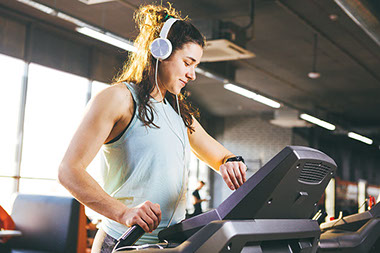
    Women on treadmill looking at watch.

    Have you heard of interval training for exercise? You may have assumed this type of exercise is only for athletes. However, people of almost all fitness levels can use it.

    Interval training means you add short bursts of more intense activities into your regular exercise routine. How fast and how long you do your intervals is completely up to you. This can be as simple as 10 seconds of running and then 4 minutes of walking. If that’s not possible, alternate brisk walking with slower walking.

    Intervals don’t have to be more than a few seconds. One of the biggest advantages is that you don’t need any special equipment to get started!

    Why should I do it?

    The American College of Sports Medicine (ACSM) says interval training has several benefits, including:

    *  Burn more calories: Even if you can only do short intervals, you’re still burning more calories than if you hadn’t done the intervals at all.

    *  Most of your time: Many people can’t find time for longer workouts. Instead, use the time you have to work harder with intervals.

    *  Boost mood: Exercise releases endorphins. These are feel-good chemicals in the brain. More vigorous exercise may release more endorphins than only doing light exercise.

    *  Fight boredom: Doing the same exercises all the time can lead to boredom. But, mixing it up with intervals can help keep you interested.

    *  More aerobic fitness: Higher intensity will improve your cardio fitness. With time and practice, you’ll be able to exercise harder and longer.

    For beginners

    *  Choose a distance if you don’t want to count or use a stopwatch. For instance, jog or walk briskly to the next tree or driveway.

    *  If using equipment like an elliptical machine or bike, alternate faster bouts of that exercise with your usual pace.

    Interval training can be done at your fitness level. But, don’t be too aggressive at first because you could get an injury. While you want to get your heart pumping, you don’t want to make it so hard that you can’t stick with it.

    Studies suggest that interval training can be safe and helpful to most people. Ask your doctor before starting a new exercise plan to be sure it’s right for you.

    Source: American College of Sports Medicine

    © American Institute for Preventive Medicine
  • Too Tired To Exercise?

    BE FIT

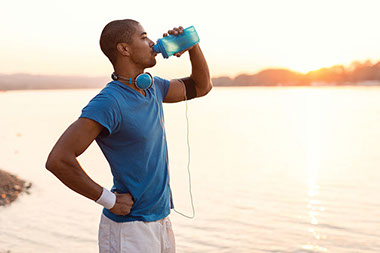
    Man standing by a body of water drinking out of a water bottle.

    Let’s face it: exercise takes some energy. And after work and other life responsibilities, many people are tired. This makes it hard to get up and start moving. But there are some ways to “trick” your body into thinking it has more energy, so you might have just enough to go for that walk or stop by the gym for a class. Here’s how to do it.

    Hydrate early

    Don’t wait until an hour or two before exercise to start drinking water. Do it at the start of the day, and continue all day long. Then, when it’s time to exercise, you won’t have to worry about dehydration and that sluggish feeling.

    Eat healthy carbs

    Carbs don’t have to be the enemy. Eat plenty of fruits, vegetables and whole grains. These give you energy right away, so try eating them about an hour before exercise.

    Don’t sit too long

    When you can, get up and stand or walk – even for a few minutes. Sitting all day can make you feel drained.

    Deep breaths

    A quick break for deep breathing or meditation can relieve stress and give you a mood boost. It also helps send more oxygen to your muscles and organs. This can help you feel refreshed and ready for the rest of your day.

    Plan for it

    If you can, go straight to the gym after work instead of stopping at home. Or schedule your exercise time – even just 30 minutes – in your calendar with a reminder to prompt you.

    Source: American Heart Association

    © American Institute for Preventive Medicine
  • Choose An Exercise That Suits Your Body Type

    Fitness

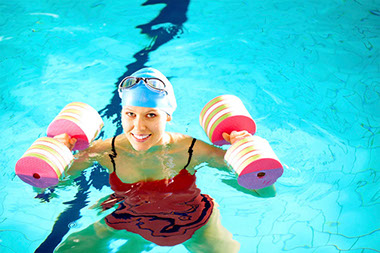
    Image of women doing water aerobics.

    Exercise can do wonders to get rid of unwanted pounds and tone up flabby muscles. But it can’t turn a short, stocky person into a tall, willowy reed, or a slightly built person into a brawny bruiser. However, your body type may make you better suited to some activities than to others. Most people fall into one of three categories: endomorphs, mesomorphs, or ectomorphs, based on their overall build, distribution of body fat, muscle tone, and height. (Some people show characteristics of more than one type.)

    Endomorphs may be described as:

    *  Chubby, round, or soft looking.

    *  Broader at the hips than at the shoulders.

    *  Small-boned.

    *  Not very muscular.

    *  Carrying a higher-than-average amount of body fat.

    Endomorphs are poor candidates for jogging or any activity that calls for high impact with the ground. They’re good candidates for low-impact or nonimpact activities like biking, walking, or swimming, which minimize strain on the body frame.

    Mesomorphs are usually described as:

    *  Big-boned, with a strong, muscular physique.

    *  Broad-shouldered, with a narrow waist.

    *  Rugged looking.

    Mesomorphs are good candidates for walking, and short-distance running (like 5-kilometer races) but not marathons, martial arts, or sports requiring balance, power, and agility (like power lifting, tennis, or boardsailing).

    Ectomorphs are usually described as:

    *  Tall, with a long, slender neck.

    *  Having narrow shoulders, chests, and hips.

    *  Relatively long limbed.

    *  Having small wrists and ankles.

    *  Having little body fat.

    *  Having difficulty developing powerful muscles.

    Ectomorphs are poor candidates for swimming (since they have so little body fat for buoyancy) and sprinting. They’re good candidates for jogging, skipping rope, basketball, tennis and other racquet sports, and cross-country skiing.

    Page image from A Year of Health Hints book by the American Institute for Preventive Medicine. www.HealthyLife.com. All rights reserved.

    © American Institute for Preventive Medicine
  • Get Flexible!

    Fitness

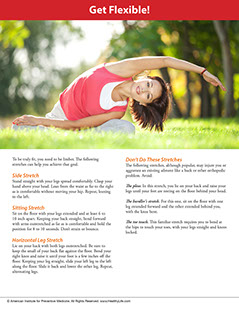
    To be truly fit, you need to be limber. The following stretches can help you achieve that goal.

    Side Stretch

    Stand straight with your legs spread comfortably. Clasp your hand above your head. Lean from the waist as far to the right as is comfortable without  moving your hip. Repeat, leaning to the left.

    Sitting Stretch

    Sit on the floor with your legs extended and at least 6 to 10 inch apart. Keeping your back straight, bend forward with arms outstretched as far as is comfortable and hold the position for 8 to 10 seconds. Don’t strain or bounce.

    Horizontal Leg Stretch

    Lie on your back with both legs outstretched. Be sure to keep the small of your back flat against the floor. Bend your right knee and raise it until your foot is a few inches off the floor. Keeping your leg straight, slide your left leg to the left along the floor. Slide it back and lower the other leg. Repeat, alternating legs.

    Don’t Do These Stretches

    The following stretches, although popular, may injure you or aggravate an existing ailment like a back or other orthopedic problem. Avoid:

    The plow. In this stretch, you lie on your back and raise your legs until your feet are resting on the floor behind your head.

    The hurdler’s stretch. For this one, sit on the floor with one leg extended forward and the other extended behind you, with the knee bent.

    The toe touch. This familiar stretch requires you to bend at the hips to touch your toes, with your legs straight and knees locked.

    Page image from A Year of Health Hints book by the American Institute for Preventive Medicine. www.HealthyLife.com. All rights reserved.

    © American Institute for Preventive Medicine
  • Stop Making Excuses

    Fitness

    Take control of your health.

    The Centers for Disease Control and Prevention says that more than 50 percent of adults in the U.S. don’t exercise enough. Of those, 25 percent are not active at all. Combined, they probably have a million and one excuses – 99.9 percent of which are probably not valid.

    Excuse No. 1 – I don’t have time to exercise.

    Excuse zappers:

    *  Write down what you do in a day. How much time do you spend in front of the TV? Exercise while you watch TV.

    *  Get up half an hour earlier to work out.

    *  Split up your workouts. Do two 30-minute sessions or three 10-minute sessions.

    Excuse No. 2 – I’m too tired to exercise.

    Excuse zappers:

    *  Exercise can relieve sluggish feelings and a general lack of energy.

    *  Something as easy as a brisk walk may do the trick.

    *  Do yoga or tai chi to feel physically and mentally refreshed.

    Excuse No. 3 – I’m too heavy to exercise.

    Excuse zappers:

    *  Ask your doctor for the top five reasons you need to lose some weight.

    *  Start slowly, even if it means walking in 10-minute spurts.

    *  Work out at home with dumbbells and a stability ball. Go online for information on how to use them.

    Excuse No. 4 – Exercise is boring.

    Excuse zappers:

    *  Choose activities you enjoy and look forward to.

    *  Set up a walking program with a friend or coworker you like to be with.

    *  Enjoy a sunny day and fresh air with outdoor activities.

    Action Step

    Make a list of all the reasons you aren’t working out. Then come up with solutions that fit your schedule, your lifestyle, and your interests.

    Page image from the Ways to Well-Being book by the American Institute for Preventive Medicine. www.HealthyLife.com. All rights reserved.

    © American Institute for Preventive Medicine
  • Crossfit Faq

    BE FIT

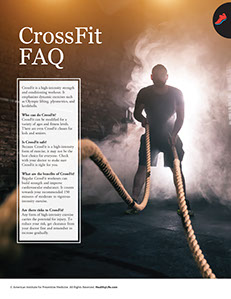
    Man in gym working out.

    CrossFit is a high-intensity strength and conditioning workout. It emphasizes dynamic exercises such as Olympic lifting, plyometrics, and kettlebells.

    Who can do CrossFit?

    CrossFit can be modified for a variety of ages and fitness levels. There are even CrossFit classes for kids and seniors.

    Is CrossFit safe?

    Because CrossFit is a high-intensity form of exercise, it may not be the best choice for everyone. Check with your doctor to make sure CrossFit is right for you.

    What are the benefits of CrossFit?

    Regular CrossFit workouts can build strength and improve cardiovascular endurance. It counts towards your recommended 150 minutes of moderate to vigorous-intensity exercise.

    Are there risks to CrossFit?

    Any form of high-intensity exercise carries the potential for injury. To reduce your risk, get clearance from your doctor first and remember to increase gradually.

    © American Institute for Preventive Medicine
  • How Much Exercise Kids Need

    BE FIT

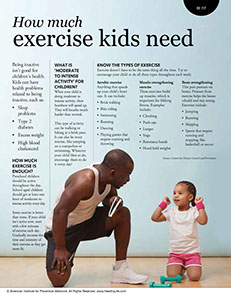
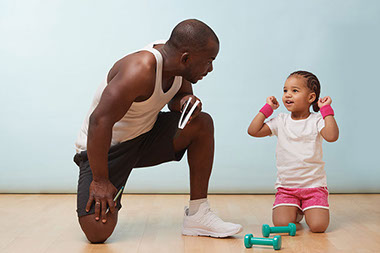
    Father and young daughter about to exercise.

    Being inactive isn’t good for children’s health. Kids can have health problems related to being inactive, such as:

    *  Sleep problems

    *  Type 2 diabetes

    *  Excess weight

    *  High blood cholesterol

    How much exercise is enough?

    Preschool children should be active throughout the day. School aged children should get at least one hour of moderate to intense activity every day. Some exercise is better than none. If your child isn’t active now, start with a few minutes of exercise each day. Gradually increase the time and intensity of their exercise as they get more fit.

    What is ‘moderate to intense activity’ for children?

    When your child is doing moderate to intense activity, their heartbeat will speed up. They will breathe much harder than normal.

    This type of activity can be walking or biking at a brisk pace. It can also be more intense, like jumping on a trampoline or swimming. Whatever your child likes to do, encourage them to do it every day!

    Know the types of exercise

    Exercise doesn’t have to be the same thing all the time. Try to encourage your child to do all three types throughout each week:

    Aerobic exercise

    Anything that speeds up your child’s heart rate. It can include:

    *  Brisk walking

    *  Bike riding

    *  Swimming

    *  Running

    *  Dancing

    *  Playing games that require running and throwing

    Muscle-strengthening exercise

    These exercises build up muscles, which is important for lifelong fitness. Examples include:

    *  Climbing

    *  Push-ups

    *  Lunges

    *  Yoga

    *  Resistance bands

    *  Hand-held weights

    Bone-strengthening

    This puts pressure on bones. Pressure from exercise helps the bones rebuild and stay strong. Exercises include:

    *  Jumping

    *  Running

    *  Skipping

    *  Sports that require running and stopping, like basketball or soccer

    Source: Centers for Disease Control and Prevention

    © American Institute for Preventive Medicine

  • Workout Wear 101

    BE FIT

    Women riding stationary bike.

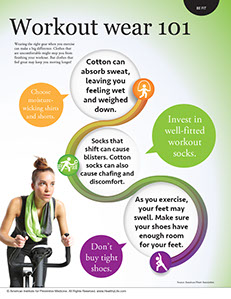
    Wearing the right gear when you exercise can make a big difference. Clothes that are uncomfortable might stop you from finishing your workout. But clothes that feel great may keep you moving longer!

    *  Choose moisture-wicking shirts and shorts. Cotton can absorb sweat, leaving you feeling wet and weighed down.

    *  Invest in well-fitted workout socks. Socks that shift can cause blisters. Cotton socks can also cause chafing and discomfort.

    *  Don’t buy tight shoes. As you exercise, your feet may swell. Make sure your shoes have enough room for your feet.

    Source: American Heart Association

    © American Institute for Preventive Medicine
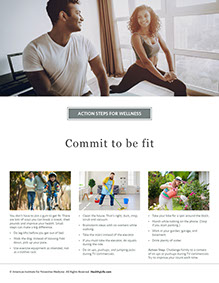
  • Commit To Be Fit 2

    Fitness

    Couple stretching.

    You don’t have to join a gym to get fit. There are lots of ways you can break a sweat, shed pounds and improve your health. Small steps can make a big difference.

    *  Do leg lifts before you get out of bed.

    *  Walk the dog. Instead of slowing Fido down, pick up your pace.

    *  Use exercise equipment as intended, not as a clothes rack.

    *  Clean the house. That’s right, dust, mop, scrub and vacuum.

    *  Brainstorm ideas with co-workers while walking.

    *  Take the stairs instead of the elevator.

    *  If you must take the elevator, do squats during the ride.

    *  Do sit ups, pushups, and jumping jacks during TV commercials.

    *  Take your bike for a spin around the block.

    *  March while talking on the phone. (Stop if you start panting.)

    *  Work in your garden, garage, and basement.

    *  Drink plenty of water.

    Action Step:Challenge family to a contest of sit ups or pushups during TV commercials. Try to improve your count each time.

    Page from HealthyLife Weigh book by the American Institute for Preventive Medicine. www.HealthyLife.com. All rights reserved.

    © American Institute for Preventive Medicine
  • Give Water Exercise A Try

    Fitness

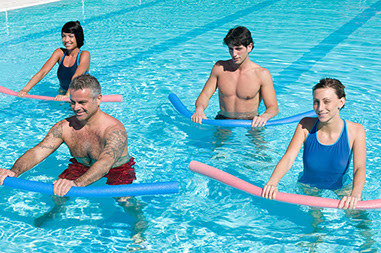
    Water exercise class in session.

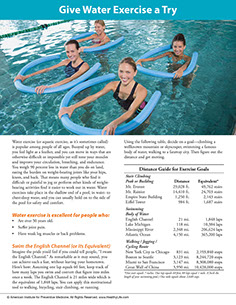
    Water exercise (or aquatic exercise, as it’s sometimes called) is popular among people of all ages. Buoyed up by water, you feel light as a feather, and you can move in ways that are otherwise difficult or impossible yet still tone your muscles and improve your circulation, breathing, and endurance. You weigh 90 percent less in water than you do on land, easing the burden on weight-bearing joints like your hips, knees, and back. That means many people who find it difficult or painful to jog or perform other kinds of weight-bearing activities find it easier to work out in water. Water exercises take place in the shallow end of a pool, in waist- to chest-deep water, and you can usually hold on to the side of the pool for safety and comfort.

    Swim the English Channel (or Its Equivalent)

    Imagine the pride you’d feel if you could tell people, “I swam the English Channel.” As remarkable as it may sound, you can achieve such a feat, without leaving your hometown. Here’s how: Assuming one lap equals 60 feet, keep track of how many laps you swim and convert that figure into miles once a week. The English Channel is 21 miles wide which is the equivalent of 1,848 laps. You can apply this motivational tool to walking, bicycling, stair climbing, or running. Using the following table, decide on a goal-climbing a well-known mountain or skyscraper, swimming a famous body of water, walking to a faraway city. Then figure out the distance and get moving.

    Water exercise is excellent for people who:

    *  Are over 50 years old.

    *  Suffer joint pain.

    *  Have weak leg muscles or back problems.

    Page image from A Year of Health Hints book by the American Institute for Preventive Medicine. www.HealthyLife.com. All rights reserved.

    © American Institute for Preventive Medicine