Category: Be Fit

  • Exercise: What’S Holding You Back?

    BE FIT

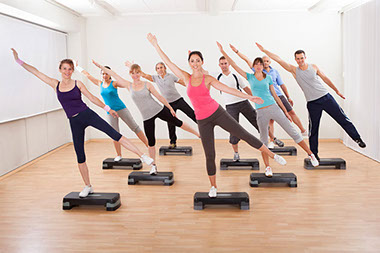
    Smiling women ready to exercise, holding a water bottle.

    Are you struggling to get active? Here are some ways to work on overcoming those exercise barriers.

    Problem:I haven’t exercised in a long time.

    Solution:Start simple. Try walking for a few minutes. Slowly increase the time and intensity of your walk or other exercise.

    Problem:I don’t have enough time.

    Solution:Even 10 minutes of exercise is better than none. Find short breaks in your day to dance or walk.

    Problem:It’s expensive.

    Solution:You don’t need to spend money. You only need a comfortable pair of shoes to start walking. Or, exercise in your home with a smartphone app or video from the library.

    Source: U.S. Office of Disease Prevention and Health Promotion

    © American Institute for Preventive Medicine
  • Move Outside The Exercise Box

    BE FIT

    Family dancing around.

    The more you move, the stronger your body will be and the better your heart, lungs, and other organs function. Any movement that gets your heart rate up counts as physical activity.

    At home

    *  Walk the dog.

    *  Play a family game of catch or frisbee.

    *  Add in some squats or lunges while you work in the kitchen.

    *  Do some light bodyweight exercises while you watch TV.

    At work

    *  Park farther away to get more walking time.

    *  Take the stairs.

    *  Set a timer for a five-minute movement break every 30 to 90 minutes.

    *  Walk at lunch or go up and down the stairs a few times.

    The weekend

    *  Choose a hobby that gets you moving, like an outdoor activity.

    *  Plan social gatherings that include movements like hiking or active games.

    *  Put on some music and make chore time fun and full of movement.

    *  Go sightseeing or choose a family outing that includes a long walk or hike.

    © American Institute for Preventive Medicine
  • Move For Mental Health

    BE FIT

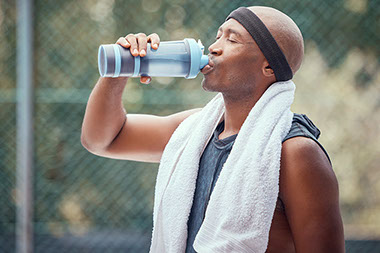
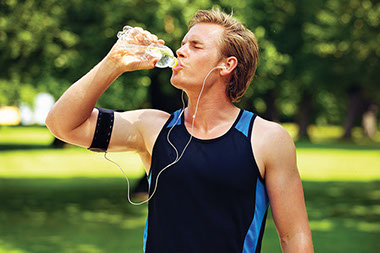
    Man in workout clothes, drinking water with headphones on.

    Movement doesn’t just strengthen your body. Your mental health and well-being benefit from regular exercise, too. When you move your body, every part of you feels better. This includes your thoughts, feelings, and emotions. What’s good for the body is good for the brain. While exercise is not a replacement for mental health treatment, it is a tangible way to impact your mind for the better.

    Reduced stress

    We all experience stress on a regular basis. It’s a normal and unavoidable part of life. But how we manage stress can mean the difference between a peaceful mind or one in turmoil.

    Exercise is a great stress management tool. When you get your blood pumping, it releases feel-good hormones called endorphins that counteract the effects of stress. Exercising also reduces tension and fatigue, giving you more energy to manage stressful situations.

    Better sleep

    When you don’t sleep well, it’s challenging to manage your body’s stress response. And when you don’t manage stress levels well, your body’s stress response makes it difficult to sleep.

    Exercise can interrupt this frustrating cycle. By positively influencing your natural circadian rhythm, movement makes it easier to fall asleep and sleep deeply. And a healthy dose of movement helps you feel comfortably tired at the end of the day.

    Improved mood

    Most people report they feel happier and in a better mood after exercise. And you don’t have to be a runner to feel the benefits. Whether you lift weights or take a brisk walk, the benefits are the same. Even getting up to do some chores can shake off the “blahs.”

    By increasing blood flow and alertness, movement helps you feel more confident, capable, and positive. In turn, this boost in mood supports your overall sense of well-being.

    Brain Health

    Mental health is directly related to brain health. A well-functioning, healthy brain thinks, feels, and copes better.

    Regularly getting your heart pumping is good for the blood vessels in the brain. Exercise also protects against the build-up of plaque in the vessel walls. This helps protect the brain from damage and declining function.

    © American Institute for Preventive Medicine
  • Eating & Exercise Tracker™

    Fitness

    Learn by Logging

    Each day, for 45 days, simply:

    1.  Record the date, your weight, and the hours of sleep you get per night.

    2.  Write down what you eat and drink for meals and snacks and times you have them. List calories for each. Studies have shown that people who write down what they eat and drink lose more weight than people who don’t.

    3.  Check off how many 8 oz. glasses of water you drink a day. Include fluids from other beverages.

    4.  Cross off your mood for each meal and snack.

    5.  Identify times that you eat too much or too many unhealthy foods. Doing this can help you make healthy changes, such as avoiding mindless snacking.

    6.  List physical activities you do and for how long (or how many steps you take). Writing down the activities you do helps you make physical activity a priority.

    See the “Tracking” on this page or download the “Print on Demand” for a tracking journal.

    Health Goals

    Check the healthy changes you want to make.

    *  Eat more fruits and veggies. Aim for 5-9 servings/day.

    *  Lose weight. Start with a goal of losing 10% of your current weight. Aim for a slow, steady weight loss (1-2 lbs. / week).

    *  Whittle your waist. General health goals: < 40 inches for men; < 35 inches for women

    *  Drink at least 6-8 glasses of water a day. Drinking water instead of one 12 oz. soft drink/day could help you lose 15 lbs. in a year!

    *  Get more sleep. Aim for 7-8 hours of sleep/ night.

    *  Exercise more.

    Healthy Eating Choices

    *  Lots of vegetables and fruit

    *  Less high calorie, high fat, high sugar foods

    *  Lean meat, chicken, turkey, and fish

    *  Low-fat and nonfat dairy foods

    *  Limit portion sizes for meals and snacks. Little piece or serving

    *  Labels. Read the “Nutrition Facts” on food labels. Choose foods that give dietary fiber, vitamins A and C, calcium, and iron. Choose foods that are low sugar and fat, especially trans fat and saturated fat.

    *  Limit sodium to 1,500-2,400 mgs. /day.

    *  Start the day with a healthy breakfast.

    *  Eat at regular times during the day.

    *  Eat when you are truly hungry, not as a response to boredom, stress, and emotions.

    Tip the Scales in Your Favor

    One pound of body fat is worth 3,500 calories. To lose one pound of body fat per week:

    *  Eat 500 fewer calories a day.

    *  Burn an extra 500 calories a day.

    *  Eat 250 fewer calories and burn an extra 250 calories a day (or any other combination of 3,500 calories per week).

    My Healthy Eating Plan

    Use ChooseMyPlate to help you make healthy food choices and proper serving sizes. Find out more about this and get a custom eating plan fromwww.choosemyplate.gov.

    What is a Serving?

    Grains (1 oz. serving)

    – 1 slice of bread; ½ English muffin

    – 1 cup dry cereal

    – ½ cup cooked cereal, pasta, or rice

    Veggies (1 cup serving)

    – 1 cup raw or cooked veggies

    – 2 cups raw, leafy veggies

    – 1 medium baked potato

    Fruits (1 cup serving)

    – 1 large banana, orange, or peach

    – 1 small or ½ large apple

    – 1 cup berries or 100% fruit juice

    – ½ cup dried fruit

    Milk

    – 1 cup fat-free or low-fat milk or yogurt

    – 1½ oz. hard cheese

    – 2 oz. processed cheese

    Meats & Beans (1 oz. serving)

    – 1 oz. cooked lean meats or poultry

    – 1 egg

    – ½ oz. nuts or seeds; 2 Tbsp. hummus

    – ¼ cup chickpeas, lentils, or tofu

    – 1 Tbsp. peanut butter

    Oils

    – 1 tsp. oil or trans fat-free margarine

    – 1 Tbsp. salad dressing

    Serving Size Matters

    People tend to think they eat less than what they actually do. One way to find out how much you eat is to use measuring cups and spoons and a food scale. Do this for everything you eat and drink for at least one day. You can also use common objects to estimate serving sizes.

    1 cup = 2 hands cupped or clenched fist

    ½ cup = Computer mouse

    1 oz. = Domino

    3 oz. =  Deck of cards

    1 Tbsp. = One die

    2 Tbsp. = 1 ping-pong ball

    1½ oz. low-fat cheese =  4 dice

    Physical Activity Guidelines

    Each week, adults should do at least  2 hrs. and 30 min. of moderate-intensity physical activity, such as walking, gardening, and water aerobics or 1 hr. and 15 min. of vigorous-intensity physical activity, such as jogging, race walking, and swimming laps.

    To lose and control your weight, you may need to increase these times. Start slowly. Build gradually. Consult your health care provider before beginning an exercise program.

    Source: http://whatscookingamerica.net/Information/CalorieBurnChart.htm

    Cover image to the Eating and Exercise Tracker book by the American Institute for Preventive Medicine. www.HealthyLife.com. All rights reserved.

    © American Institute for Preventive Medicine
  • If You’re Sick, Rest

    Fitness

    Image of person blowing nose with a tissue.

    Some exercise enthusiasts find it difficult to suspend their fitness activities even when they’re sick with a cold, flu, sore throat, or fever. Give your body a break. The risks of exercising at this time outweigh the benefits.

    A fever is a stress to the body. Some studies have shown that adding to that stress by exercising may prolong the illness. So let your body recover and repair itself before resuming exercise.

    If you have a cold but not a temperature, you should still avoid exercise. Exercise increases blood circulation and by doing so, may spread the virus or bacteria responsible for your misery to areas it wouldn’t ordinarily reach. Also, your lungs may not be working efficiently when you have a cold, so your exercise capacity drops.

    A day or two of rest will do you more good than sticking to your workout schedule.

    Page image from A Year of Health Hints book by the American Institute for Preventive Medicine. www.HealthyLife.com. All rights reserved.

    © American Institute for Preventive Medicine
  • Walk For Well-Being

    Fitness

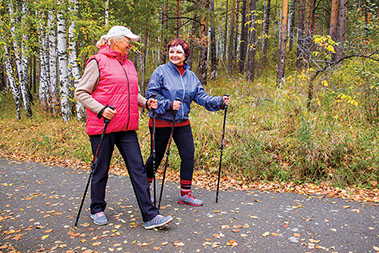
    Mother and daughter walking.

    You already know that walking and other physical activities help prevent and manage arthritis, diabetes, heart disease, and high blood pressure. Get these benefits from walking, too:

    *  Relieve tension and stress.

    *  Get more energy.

    *  Improve balance and lower the risk for falling.

    *  Get better sleep.

    *  Boost you overall mood.

    Walking briskly at 3 miles per hour is a great way for adults to get 150 minutes of moderate-intensity physical activity a week (30 minutes a day). Children need 60 minutes of physical activity a day.

    *  Plan walking into your daily / weekly schedules. Split 30 minutes into two 15-minute or three 10-minute sessions.

    *  Wear a good pair of walking shoes that fit well and absorb shock. Look straight ahead when you walk.

    *  Don’t make the excuse that you have no time to exercise.

    *  Don’t text while you are walking. Don’t listen to music if it hinders hearing sounds around you.

    Page from HealthyLife Weigh book by the American Institute for Preventive Medicine. www.HealthyLife.com. All rights reserved.

    © American Institute for Preventive Medicine
  • Exercise When You Travel

    BE FIT

    Group of people hiking.

    How you exercise may look different when traveling, but it’s still worthwhile. In fact, mixing things up when you’re away from home keeps your workouts fresh and interesting. Try these tips:

    *Bring resistance bands along.Easily packable and super lightweight, resistance bands give you the flexibility to exercise anywhere. Bring a few different types for the most exercise options.

    *Book a hotel with a gym.Many hotels offer fitness rooms. The equipment is often fairly basic, but you can usually depend on a treadmill or bike and a set of free weights.

    *Use your bodyweight.All you really need for a good sweat session is your body! Movements like push-ups, tricep dips, squats, and lunges can be combined in a challenging circuit.

    *Get outside.What better way to get the most out of your travel than to explore on foot. And all that walking counts as exercise!

    © American Institute for Preventive Medicine
  • You’re Never Too Old To Exercise

    BE FIT

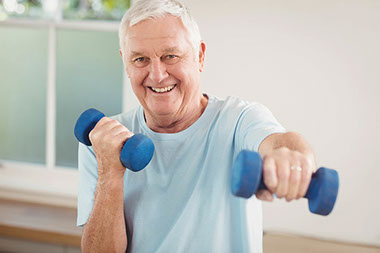
    Older man smiling while holding out a basketball.

    Older adults might find it hard to exercise. But exercise is great for older adults and may even help relieve joint pain and increase energy. It can help you sleep better, maintain a healthy weight and  relieve stress.

    See your doctor first.

    Talk to your doctor before starting an exercise plan if you have any health conditions or take medications.

    Stay hydrated.

    Drink water before, during and after your workout.

    Perform all types of exercise.

    This includes flexibility (stretching), strength (weights or resistance) and endurance (walking, biking or other activities).

    © American Institute for Preventive Medicine
  • Rucking For Beginners

    BE FIT

    Rucking is an excellent cardiovascular exercise and builds strength and stamina. It simply means to walk while carrying weight. All you need is a backpack to hold some weight and a safe place to walk. Here’s how to get started:

    *  Plan a walking path. Depending on your fitness level, beginners should plan to walk 2 miles or less. Over time, up your mileage as your strength and endurance increase.

    *  Choose a sack. You don’t need a special rucksack. Any pack can work, but backpacks with a hip belt will be most comfortable as you carry more weight.

    *  Start with light weights. Adding 10-15% of your body weight is a good starting point. You can use any weight, such as gym weight plates, heavy books, or water bottles.

    *  Wear comfortable walking shoes. And don’t forget to hydrate!

    *  Aim for 2-3 weekly rucking sessions. You should begin to see gains in strength and endurance.

    © American Institute for Preventive Medicine
  • Eating For Peak Performance

    Fitness

    Image of oat cereal with fresh fruit.

    No pill or magic formula can instantly turn you into a super-athlete. But eating right can help you perform at your best.

    Carbohydrates-from bread, pasta, potatoes, and fruit-provide energy for vigorous activity. So active people need to replenish this fuel frequently.  Don’t expect to get a quick energy boost from a snack you eat just before starting out, though.  Instead, consuming a high-carbohydrate food like skim milk and a banana, whole wheat bread, or an orange an hour or two before a workout acts like a time-release capsule of energy.

    Because you lose electrolytes (potassium, sodium, magnesium, and calcium) in sweat during vigorous activity, drink plenty of water and eat foods that are rich in these minerals. Almost all fruits and vegetables are rich in potassium, but potatoes, bananas, orange juice, winter squash, cantaloupe, sweet potatoes, and cooked beans are especially high. Sodium is rarely lost in quantities greater than amounts you would normally consume, so you don’t need to worry about getting extra.

    Page image from the A Year of Health Hints book by the American Institute for Preventive Medicine. www.HealthyLife.com. All rights reserved.

    © American Institute for Preventive Medicine