Category: Be Fit

  • Figure Out Your Target Heart Rate

    Fitness

    Image of man checking heart rate.

    Exercise physiologists have come up with a formula called the target heart rate to help you determine how fast your heart should beat in order to maximize health benefits without overexerting yourself. The basic idea is to exercise about 60 to 80 percent of your maximum capability for at least 20 or 30 minutes three or four times a week. This safety zone is called the target heart rate zone. (It may be dangerous to run your heart at its maximum attainable rate for a prolonged period.)

    Here’s a simple way to determine your target heart rate.

    1.  Before you start to exercise, take your pulse. Place your first two fingers (not your thumb) over the arteries of the opposite wrist, over the area where your skin creases when you flex your wrist and in line with your thumb.

    2.  Count the number of beats you feel for 10 seconds and multiply by six. (This number represents your resting heart rate.)

    3.  Take your pulse after warming up, midway through your workout, immediately after stopping exercise, and again after cooling down.

    Using the table below, determine whether or not you’re within your target heart rate zone, based on your age. If your fastest pulse falls below the range for your age, you might need to exert yourself more while exercising. However, the exercise should never seem more than “somewhat hard.” If your pulse exceeds this range, slow down and exercise less intensely.

    Note: If your peak pulse rate falls below your target heart rate and your legs feel weak, work on developing endurance-by walking more, perhaps-while you try to increase your heart rate. This can help reduce the risk of musculoskeletal injuries like tendinitis or muscle strain in novice exercisers.

    Chart showing Target Heart Rate Zones.
    Page image from A Year of Health Hints book by the American Institute for Preventive Medicine. www.HealthyLife.com. All rights reserved.

    © American Institute for Preventive Medicine

  • Pedal For Fitness

    Fitness

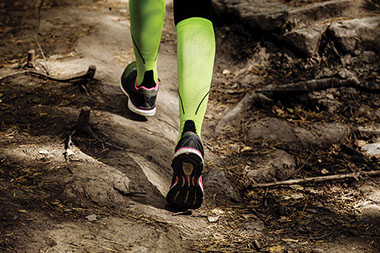
    A closeup image of a bike tire while a cyclist rides through a trail.

    Riding a bicycle is good for body and soul. Cycling gets you out in the fresh air, leaves you feeling invigorated, and can do wonders for cardiovascular health. And you don’t have to ride fast and furiously to benefit from cycling.

    Here’s what to do to avoid undue muscle aches when you cycle.

    *  To avoid back and knee problems, take your bike to a bike shop and have the handlebars and seat adjusted to fit you properly. The seat should be adjusted so that when one leg is extended and bent slightly, the ball of your foot contacts the pedal at the lowest point of its revolution. Handlebars should be positioned no lower than your seat.

    *  Stretch your shoulders, back, and legs slowly and gently before and after biking.

    Page image from A Year of Health Hints book by the American Institute for Preventive Medicine. www.HealthyLife.com. All rights reserved.

    © American Institute for Preventive Medicine

  • Warm Up & Cool Down Properly

    Fitness

    No exercise session should begin without a warm-up-a few minutes of light activity to get your muscles primed for real exertion. Warming up increases the benefits of exercise and reduces your risk of injury.

    And the body does warm up in the true sense of the word-increased activity increases blood flow to the muscles, and the body gradually begins to shift gears from relative inactivity to higher performance.

    The Stretch

    Stretching should take 5 to 10 minutes. Always stretch slowly, gently, and gradually. (Don’t bounce!) Breathe normally-don’t hold your breath when you stretch. And don’t stretch to the point of pain or discomfort. Rather, stretch to the point where you can feel some tension, but not pain. If you feel any pain or discomfort, stop immediately.

    To stretch your arms: Hold one arm straight out from your side, level with the shoulder. Make an arc by raising your arm straight up, then lowering it to your side. Hold your arm out again. Swing it across your chest as far as is comfortable. Swing it toward your back as far as it will comfortably go. Now hold your arm straight out in front of you, bending your elbow in a right angle with the palm toward the floor. Without moving your upper arm, move your forearm straight up and then straight down. Alternate arms.

    To stretch your back: Stand with your feet spread apart. Clasp your hands high above your head. Lean your head back and look up. Stretch your shoulder muscles as if you were reaching for the sky. Hold for 5 seconds. Relax. Repeat two to four times.

    To stretch your legs: Stand erect and balance yourself with your hand against a wall or chair. Bend one knee, grasp that ankle, and draw the leg up and back. Hold. Pull your foot gently until you feel tension (not pain) in your upper front thigh. Hold for 5 seconds or longer. Repeat with your other leg.

    The Quick Warm-Up

    Spend 5 minutes performing a less intense form of your exercise of choice-like taking a brisk walk before you run. This raises your heart rate  slightly and leaves you sweating lightly.

    Follow Up with a Cool-Down

    Cooling down is the reverse of warming up, and it helps your body recover from exercise in three ways. A 5-minute cool-down:

    *  Allows the heart rate to slow down gradually.

    *  Prevents blood from pooling in the legs.

    *  Reduces the likelihood that your muscles will feel stiff after exercise because it reduces the buildup of lactic acid.

    As with the warm-up, cool down slowly. Perform the activity at a slower pace, and/or stretch.

    Page image from A Year of Health Hints book by the American Institute for Preventive Medicine. www.HealthyLife.com. All rights reserved.

    © American Institute for Preventive Medicine

  • Bike Safety

    BE FIT

    Bike up against a yellow wall.

    Bike sales have increased during the COVID-19 pandemic. Bicycling is great exercise! However, it’s important to keep yourself safe while on two wheels. Collisions can and do occur, and some can be serious.

    To minimize your risk of injury while riding a bicycle:

    *Wear a helmet.Studies show that a helmet lowers your risk of serious head and brain injuries by 85%. Make sure it is snug on your head. It should have a chin strap that stays in place.

    *Ride right.Use the right shoulder of the road and follow traffic signs and signals. Signal your turns with your arm so drivers know what you’re doing.

    *Use a bike lane if there is one.If not, try to choose wide roads with less traffic and lower speed limits. When a lane is too narrow for a car and bike to safely ride side by side, you will need to ride toward the middle of the road.

    *Be aware.Sometimes drivers don’t see you. Be careful at intersections and when riding next to parked cars and in parking lots.

    *Don’t use headphones.It’s important to be able to hear cars coming from behind you so you can react safely and move over if needed.

    *Wear bright colors and use reflectors.This will make it easier for drivers to see you.

    *Don’t ride.It is dangerous to cycle if you’ve been drinking alcohol or using drugs.

    *Cover your toes.Don’t wear sandals or flip flops while riding.

    *Bring water.Most bikes have a water bottle holder. Drink often to avoid dehydration, especially on longer rides.

    *Keep kids safe.Children should not ride on roads with traffic. Keep young bike riders in areas that are away from cars.

    Source: American Academy of Orthopaedic Surgeons

    © American Institute for Preventive Medicine

  • Find The Energy To Exercise

    BE FIT

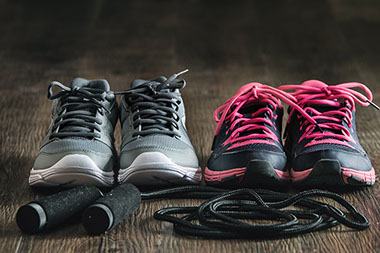
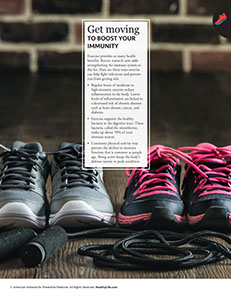
    Image of athletic shoes and a bottle of water.

    Too tired to work out? Try these tips to boost energy and get moving.

    1.  Move around. At work, try to switch between sitting and standing. Doing too much of one or the other may leave you feeling drained.

    2.  Sip lots of water. Starting in the morning, drink water and keep drinking it throughout the day. This can keep energy levels from sinking in the afternoon.

    3.  Eat healthy carbs. Choose whole grains, fruits and vegetables, such as carrots.

    4.  Watch your breathing. Slow, deep breaths can relax and energize you throughout the day.

    © American Institute for Preventive Medicine

  • Stay Fit For Life By Getting Flexible

    BE FIT

    Two women stretching legs on bench.

    Flexibility is your range of motion throughout the joints of your body. A rigid joint may not function well and can limit your ability to move with ease.

    A healthy range of motion allows you to bend down to tie your shoes or reach up high to get something out of a cabinet. If you want to move well, you need to be flexible!

    Tips to improve flexibility

    *  Stretch your muscles daily.

    *  Take regular stretch breaks, especially after long periods of inactivity.

    *  Make time to stretch after you exercise when your muscles are warm.

    *  Hold each stretch for about 90 seconds.

    *  Only stretch to the point of “comfortable discomfort,” never pain.

    *  Breathe deeply and relax while stretching.

    © American Institute for Preventive Medicine

  • 5 Reasons To Be Active

    Fitness

    Grandparents playing with their grandchildren.

    1.  Physical health: Regular physical activity lowers your risk of many chronic diseases.

    2.  Mental health: Doing aerobic or a mix of aerobic and muscle-strengthening activities 3 to 5 times a week for 30 to 60 minutes can:

    –  Lower your risk of depression and help treat it

    –  Help keep your thinking, learning, and judgment skills sharp as you age

    3.  Social health: Exercise with others to be social and build healthy relationships.

    4.  Spiritual health: Yoga and tai chi help promote a sense of inner peace and connection to your environment.

    5.  Fiscal health: Build a stronger immune system to avoid the medical costs of getting sick and having to take time off from work.

    Take Action: Be Active Weekly Guidelines

    1.  Do at least 2 hours and 30 minutes of moderate aerobic activity, such as brisk walkingOR

    2.  1 hour and 15 minutes of vigorous activity, such as joggingAND

    3.  Muscle strengthening exercises using all major muscle groups on 2 or more days.

    Page from HealthyLife Weigh book by the American Institute for Preventive Medicine. www.HealthyLife.com. All rights reserved.

    © American Institute for Preventive Medicine

  • Find The Fun In Fitness

    Fitness

    Older couple hula hooping.

    Chances are if you enjoy the physical activities you do, you will do them more often.

    *  Do activities you had fun with in your youth. Did you like to swim? Play soccer? Hula hoop? Jump rope? Play hopscotch? Do these with your kids and grandkids. Do them on your own.

    *  Get fit with a friend or family member. Walk together. Take a yoga class together.

    *  Join a dance or other class or sports team. People count on you to show up.

    *  Take part in an awareness event, such as Susan G. Komen 3-Day for the Cure™!

    *  Walk the dog! If you don’t have one, walk with your neighbor when he or she walks the dog.

    *  Work outdoors doing activities you enjoy. Garden. Wash the car.

    *  Walk or pedal indoors while you watch your favorite TV show.

    *  For birthdays or special rewards, ask for gifts that will help make it fun for you to exercise, such as new workout clothes.

    Page from HealthyLife Weigh book by the American Institute for Preventive Medicine. www.HealthyLife.com. All rights reserved.

    © American Institute for Preventive Medicine

  • Rate Your Aerobics Class

    Fitness

    Image of an aerobic class.

    Use this handy ten-point checklist to figure out whether an aerobics class is right for you. (You may have to take a class or two on a trial basis to answer all the questions.)

    1.  Is the instructor well-qualified? (He or she should be certified by the American College of Sports Medicine or by a national aerobics association.)

    2.  Is the floor firm yet resilient? (It should be made of either wood, with an airspace or a spring cushion underneath, or polyvinylchloride / urethane. Avoid mats. They can throw you off balance.)

    3.  Is the room air-conditioned?

    4.  Is there enough space for each participant to move freely, without crowding?

    5.  Does the routine include a warm-up and cool-down period?

    6.  Does the aerobic portion of the class last at least 20 minutes? (Your heart rate should reach but not exceed your target heart rate.)

    7.  Are you told how to check your pulse before, during, and after the aerobic portion of the class?

    8.  Does the routine allow participants to adjust the pace to their individual ability? (You should be able to step up the pace or ease off if you need to.)

    9.  Does the instructor introduce new routines or music from time to time?

    10. Do you feel relaxed or invigorated after class? If you feel sore and exhausted, something’s wrong.

    “Yes” answers mean you’ve probably found a class that will suit your needs.

    Page image from A Year of Health Hints book by the American Institute for Preventive Medicine. www.HealthyLife.com. All rights reserved.

    © American Institute for Preventive Medicine

  • When To Eat If You’re Going To Exercise

    Fitness

    Is it better to exercise and then eat, or eat and then exercise? Follow these guidelines.

    Image of varity of fruits and nuts ready to eat.

    *  Don’t eat much right before a workout, because your body will divert blood to your muscles and away from your digestive organs, disrupting the process of digestion. In general, eat a light meal about 60 to 90 minutes before your workout.

    *  Always eat breakfast. If you exercise before breakfast, you may reduce fatigue if you eat a small amount of food-like a small glass of juice or a piece of toast-15 or 20 minutes before you work out.

    *  If you exercise before dinner or late in the day, make breakfast and lunch your main meals. To boost energy levels, have a late-afternoon snack.

    Page image from A Year of Health Hints book by the American Institute for Preventive Medicine. www.HealthyLife.com. All rights reserved.

    © American Institute for Preventive Medicine