
Category: Sleep Well

  • Sleep Well, Be Well

    Sleep Well

    A cup of tea and an eye mask with the word "Good Night!"

    Poor sleep habits affect memory and mood. Adults need about seven to eight hours of sleep nightly to be at their best physically and mentally during waking hours.

    Action Step: Set up a bedtime routine. Take a warm bath or shower. Choose your outfit for the next day. Brush and floss your teeth.

    © American Institute for Preventive Medicine

  • Sweet Slumber

    Sleep Well

    Dream catcher.

    A good night’s sleep repairs your body and recharges your brain. Getting enough quality sleep is essential to your physical health and emotional well-being. Without it, you’re at risk for chronic disease, problems thinking, mental health issues, and obesity. If you’re not getting enough sleep, even 1-2 hours more per night can make a difference in your day-to-day functioning.

    The right amount of good quality sleep (7 to 9 hours for most adults) helps you be your best self.

    © American Institute for Preventive Medicine

  • You’re Built For Dreaming

    Sleep Well

    small glass jar with rolled up paper and label with the word "dreams."

    Success starts with knowing what makes you tick, then mastering that passion. Ask yourself: What captivates me? What am I meant for?

    What do you dream of accomplishing in the next 5, 10 or 20 years? A new home? A new career? Financial freedom? We all aspire to greater things. How do you plan to get where you want to go? Start with these three steps.

    1. Write it down, and tell someone about it. You may be more likely to accomplish your goal.

    2. Do your homework and consult an expert. Learn about what it will take to get where you want to go.

    3. Identify any obstacles that stand in the way of your dreams. Then, take steps to remove them.

    © American Institute for Preventive Medicine

  • You’re Built For Rest

    Sleep Well

    Man resting in circle chair.

    Stress and anxiety can make life hectic and harder to keep a consistent sleep schedule. Try keeping a daily journal. Note how stress in life may impact your sleep at night.

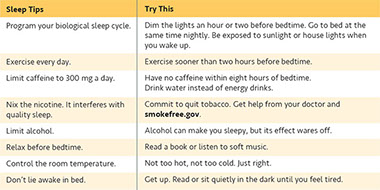
    You can’t hope to succeed in other areas of health, if you neglect your nightly rest. Most adults need 7-9 hours of quality sleep each night. That means your body should move through the various sleep stages, including REM sleep. Here are four tips to get started:

    1. Maintain a consistent sleep and wake schedule – even on weekends.

    2. Make sure your mattress supports you well. Replace your pillow every year.

    3. Remove all electronic devices from your room. That includes your phone. Use an old-school alarm clock to wake up.

    4. Talk to your doctor about any sleep issues you have. They may point to other health problems.

    © American Institute for Preventive Medicine