Category: Weight Control

  • Weight Loss Tips

    Weight Control

    Women using a treadmill.

    Make being active a priority every day.

    Try not to focus on the number on the scale. Instead, focus on healthy food choices, watching portion sizes, and getting regular physical activity.

    Muscle burns more calories than fat. To build muscle, do strengthening exercises. Use weights, a stretch band, etc.

    Walking just 2 flights of stairs every day for a year burns enough calories to lose almost 2 pounds of body fat.

    Make wise choices when you eat out. Eat at places that offer healthy food choices. Limit portions.

    Having just two 12 ounce regular soft drinks a day could add 30 pounds of weight in one year. Limit regular soda. Drink water instead.

    Fat-free and reduced fat foods are not calorie free. Some of these products may have as many calories as their regular counterparts. Read food labels. Find out the number of calories the food item has per serving.

    Page from HealthyLife Weigh book by the American Institute for Preventive Medicine. www.HealthyLife.com. All rights reserved.

    © American Institute for Preventive Medicine

  • Don’T Crash Diet

    Weight Control

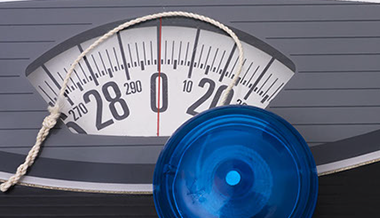
    Image of a yo-yo on a scale.

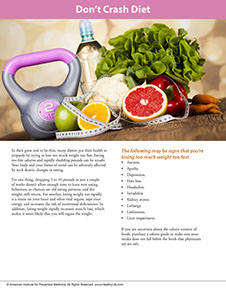
    In their great zeal to be thin, many dieters put their health in jeopardy by trying to lose too much weight too fast. Eating too few calories and rapidly shedding pounds can be unsafe. Your body and your frame of mind can be adversely affected by such drastic changes in eating.

    For one thing, dropping 5 to 10 pounds in just a couple of weeks doesn’t allow enough time to learn new eating behaviors, so chances are old eating patterns-and the weight-will return. For another, losing weight too rapidly is a strain on your heart and other vital organs, zaps your energy, and increases the risk of nutritional deficiencies. In addition, losing weight rapidly increases muscle loss, which makes it more likely that you will regain the weight.

    The following may be signs that you’re losing too much weight too fast.

    *  Anemia.

    *  Apathy.

    *  Depression.

    *  Hair loss.

    *  Headaches.

    *  Irritability.

    *  Kidney stones.

    *  Lethargy.

    *  Listlessness.

    *  Liver impairment.

    If you are uncertain about the calorie content of foods, purchase a calorie guide to make sure your intake does not fall below the levels that physicians say are safe.

    Page from A Year of Health Hints book by the American Institute for Preventive Medicine. www.HealthyLife.com. All rights reserved.

    © American Institute for Preventive Medicine

  • Move More. Eat Fewer Calories.

    Weight Control

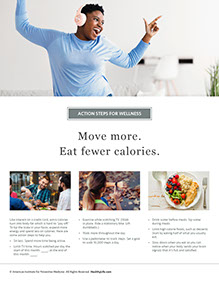
    Women with headphones on, singing and dancing.

    Like interest on a credit card, extra calories turn into body fat which is hard to “pay off.” To tip the scale in your favor, expend more energy and spend less on calories. Here are some action steps to help you.

    *  Sit less. Spend more time being active.

    *  Limit TV time. Hours watched per day the start of this month: _____; at the end of this month: _____.

    *  Exercise while watching TV. (Walk in place. Ride a stationary bike. Lift dumbbells.)

    *  Walk more throughout the day.

    *  Use a pedometer to track steps. Set a goal to walk 10,000 steps a day.

    *  Drink water before meals. Sip water during meals.

    *  Limit high calorie foods, such as desserts. Start by eating half of what you usually eat.

    *  Slow down when you eat so you can notice when your body sends your brain signals that it’s full and satisfied.

    Page from HealthyLife Weigh book by the American Institute for Preventive Medicine. www.HealthyLife.com. All rights reserved.

    © American Institute for Preventive Medicine

  • Whittle Your Waist

    Weight Control

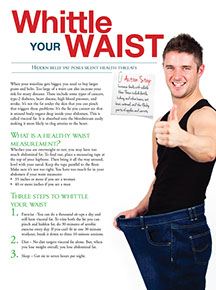
    Hidden belly fat poses silent health threats.

    When your waistline gets bigger, you need to buy larger pants and belts. Too large of a waist can also increase your risk for many diseases. These include some types of cancers, type-2 diabetes, heart disease, high blood pressure, and stroke. It’s not the fat under the skin that you can pinch that triggers these problems. It’s the fat you cannot see that is around body organs deep inside your abdomen. This is called visceral fat. It is absorbed into the bloodstream easily making it more likely to clog arteries to the heart.

    What is a healthy waist measurement?

    Whether you are overweight or not, you may have too much abdominal fat. To find out, place a measuring tape at the top of your hipbone. Then bring it all the way around, level with your naval. Keep the tape parallel to the floor. Make sure it’s not too tight. You have too much fat in your abdomen if your waist measures:

    *  35 inches or more if you are a woman

    *  40 or more inches if you are a man

    Three steps to whittle your waist:

    1.  Exercise −You can do a thousand sit-ups a day and still have visceral fat. To trim both the fat you can pinch and hidden fat, do 30 minutes of aerobic exercise every day. If you can’t fit in one 30 minute workout, break it down to three 10-minute sessions.

    2.  Diet − No diet targets visceral fat alone. But, when you lose weight overall, you lose abdominal fat.

    3.  Sleep – Get six to seven hours per night.

    Action Step

    Increase foods with soluble fiber. These include lentils, kidney and other beans, oat bran, oatmeal, and the fleshy parts of apples and carrots.
    Page from Ways to Well-Being book by the American Institute for Preventive Medicine. www.HealthyLife.com. All rights reserved.

    © American Institute for Preventive Medicine
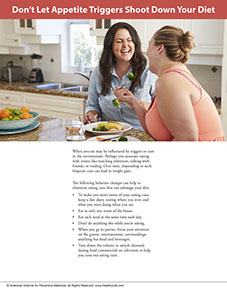
  • Don’T Let Appetite Triggers Shoot Down Your Diet

    Weight Control

    Image of friends eating out.

    When you eat may be influenced by triggers or cues in the environment. Perhaps you associate eating with events like watching television, talking with friends, or reading. Over time, responding to such frequent cues can lead to weight gain.

    The following behavior changes can help to eliminate eating cues that can sabotage your diet.

    *  To make you more aware of your eating cues, keep a diet diary, noting where you were and what you were doing when you ate.

    *  Eat in only one room of the house.

    *  Eat each meal at the same time each day.

    *  Don’t do anything else while you’re eating,

    *  When you go to parties, focus your attention on the guests, entertainment, surroundings-anything but food and beverages.

    *  Turn down the volume or switch channels during food commercials on television to help you tune out eating cues.

    Page from A Year of Health Hints book by the American Institute for Preventive Medicine. www.HealthyLife.com. All rights reserved.

    © American Institute for Preventive Medicine
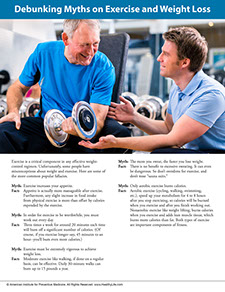
  • Debunking Myths On Exercise And Weight Loss

    Weight Control

    Exercise is a critical component in any effective weight-control regimen. Unfortunately, some people have misconceptions about weight and exercise. Here are some of the more common popular fallacies.

    Myth: Exercise increases your appetite.

    Fact: Appetite is actually more manageable after exercise. Furthermore, any slight increase in food intake from physical exercise is more than offset by calories expended by the exercise.

    Myth: In order for exercise to be worthwhile, you must work out every day.

    Fact: Three times a week for around 20 minutes each time will burn off a significant number of calories. (Of course, if you exercise longer-say, 45 minutes to an hour–you’ll bum even more calories.)

    Myth: Exercise must be extremely vigorous to achieve weight loss.

    Fact: Moderate exercise like walking, if done on a regular basis, can be effective. Daily 30-minute walks can burn up to 15 pounds a year.

    Myth: Only aerobic exercise burns calories.

    Fact: Aerobic exercise (cycling, walking, swimming, etc.), speed up your metabolism for 4 to 8 hours after you stop exercising, so calories will be burned when you exercise and after you finish working out. Nonaerobic exercise like weight lifting, burns calories when you exercise and adds lean muscle tissue, which burns more calories than fat. Both types of exercise are important components of fitness.

    Myth: The more you sweat, the faster you lose weight.

    Fact: There is no benefit to excessive sweating. It can even be dangerous. So don’t overdress for exercise, and don’t wear “sauna suits.”

    Page from A Year of Health Hints book by the American Institute for Preventive Medicine. www.HealthyLife.com. All rights reserved.

    © American Institute for Preventive Medicine

  • The “Write” Way To Healthy Habits

    Weight Control

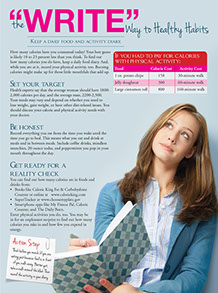
    Keep a daily food and activity diary.

    How many calories have you consumed today? Your best guess is likely 10 to 25 percent less than you think. To find out how many calories you do have, keep a daily food diary. And, while you are at it, record your physical activity, too. Burning calories might make up for those little mouthfuls that add up.

    Set your target.

    Health experts say that the average woman should have 1800-2,000 calories per day, and the average man, 2200-2,500. Your needs may vary and depend on whether you need to lose weight, gain weight, or have other diet-related issues. You should discuss your caloric and physical activity needs with your doctor.

    Be honest.

    Record everything you eat from the time you wake until the time you go to bed. This means what you eat and drink at meals and in between meals. Include coffee drinks, mindless munchies, 20-ounce sodas, and peppermints you pop in your mouth throughout the day.

    Get ready for a reality check.

    You can find out how many calories are in foods and drinks from:

    *  Books like Calorie King Fat & Carbohydrate Counter or online atwww.calorieking.com

    *  SuperTracker atwww.choosemyplate.gov

    *  Smartphone apps like My Fitness Pal, Calorie Counter, and The Daily Burn.

    Enter physical activities you do, too. You may be in for an unpleasant surprise to find out how many calories you take in and how few you expend in energy.

    If you had to pay for calories with physical activity:

    Food

    1 oz. potato chips

    Jelly doughnut

    Large cinnamon roll

    Calorie Cost

    150

    300

    800

    Activity Cost

    30-minute walk

    60-minute walk

    160-minute walk

    Action Step

    Think before you munch. If you are eating just because food is in front of you, walk away. Better yet, take a walk around the block. Then record the activity in your diary.

    Page from Ways to Well-Being book by the American Institute for Preventive Medicine. www.HealthyLife.com. All rights reserved.

    © American Institute for Preventive Medicine
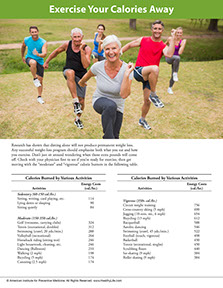
  • Exercise Your Calories Away

    Weight Control

    Research has shown that dieting alone will not produce permanent weight loss. Any successful weight-loss program should emphasize both what you eat and how you exercise. Don’t just sit around wondering when those extra pounds will come off. Check with your physician first to see if you’re ready for exercise, then get moving with the “moderate” and “vigorous” calorie burners in the following table.

    Page from A Year of Health Hints book by the American Institute for Preventive Medicine. www.HealthyLife.com. All rights reserved.

    © American Institute for Preventive Medicine
  • New Year, New You

    Weight Control

    Smiling man.

    Take action now to reach your resolution to lose weight.

    *  Set an exercise goal you can reach. For example, by the end of this month, I will walk at least 20 minutes a day, five days a week.

    *  When you reach a goal, give yourself a nonfood reward, such as a new workout video or a new lunch bag.

    *  Substitute water for sweetened beverages.

    *  Eat fruits and veggies for snacks instead of candy, chips, and cookies.

    Action Step:Chew food slowly to give your body time to send a signal to your brain that you’ve had enough. You’ll enjoy your food more and eat less.

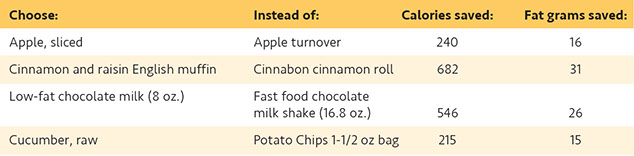
    Choose foods that won’t sabotage your goals.

    Page from HealthyLife Weigh book by the American Institute for Preventive Medicine. www.HealthyLife.com. All rights reserved.

    © American Institute for Preventive Medicine

  • Good Cheer For Holiday Dieting 2

    Weight Control

    Image of holiday inspired strawberries.

    Big holiday coming up? Don’t panic. With a good game plan and strategic planning you and your diet can not only survive holidays but you can actually thrive on them. Holidays do not have to be a time of feast or famine-you can strike a happy balance between gorging and self-sacrifice.

    *  Review your eating habits from the previous year’s celebration. Does food take center stage at Thanksgiving, Christmas, Fourth of July, and other big holidays? Do you genuinely enjoy foods like fruitcake, for example, or do you just eat them out of custom and tradition?

    *  Decide which customary holiday food habits you could easily change. (If you like to cook out for the Fourth of July, for example, consider barbecued chicken without skin instead of hot dogs.)

    *  Before digging in at a big holiday feast, imagine how you will feel after eating it. Visualize the bloated, uncomfortable, and guilty feelings you’ve experienced on past occasions.

    *  Forget about being “perfect” on holidays. Stringent dieting may be unrealistic and you could sabotage your efforts by setting standards that are too high. Don’t set yourself up for failure by only thinking of what you can’t have. Concentrate instead on what is available on your diet plan.

    *  Learn to be festive without depending on alcohol. A drink here, a toast there-the calories of alcohol can add up. Substitute club soda or mineral water for alcohol.

    *  If you’re invited to someone’s home for dinner, ask if you can contribute a dish, then make it low-calorie. (And be sure to make plenty. Low-calorie foods are usually very popular.)

    *  Remember that the major purpose of the holidays is to enjoy family and friends. Food and alcohol are secondary factors.

    Page from A Year of Health Hints book by the American Institute for Preventive Medicine. www.HealthyLife.com. All rights reserved.

    © American Institute for Preventive Medicine