Category: Social Health

  • You’re Built For Kindness

    Social Health

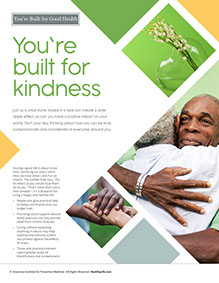
    Heart shape vase with flowers.

    Just as a small stone tossed in a lake can create a wide ripple effect, so can you have a positive impact on your world. Start your day thinking about how you can be kind, compassionate and considerate of everyone around you.

    Having a good life is about more than satisfying our every whim. How we treat others also has an impact. The Golden Rule says, “Do to others as you would have them do to you.” That’s more than just a nice concept – it’s a blueprint for living a happy and healthy life.

    *  People who give practical help to family and friends may live longer lives.

    *  Providing social support reduces blood pressure and may provide relief from chronic illnesses.

    *  Giving without expecting anything in return may help stabilize the immune system and protect against the effects of stress.

    *  Those who practice kindness report greater levels of thankfulness and contentment.

    ays to Well-Being book by the American Institute for Preventive Medicine. www.HealthyLife.com. All rights reserved.

    © American Institute for Preventive Medicine

  • 9 Ways To Improve Social Health

    Social Health

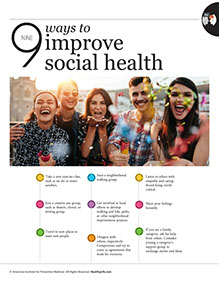
    Group of friends popping confetti.

    1.  Take a new exercise class, such as tai chi or water aerobics.

    2.  Join a creative arts group, such as theater, choral, or writing group.

    3.  Travel to new places to meet new people.

    4.  Start a neighborhood walking group.

    5.  Get involved in local efforts to develop walking and bike paths, or other neighborhood improvement projects.

    6.  Disagree with others, respectively. Compromise and try to come to agreements that work for everyone.

    7.  Listen to others with empathy and caring. Avoid being overly critical.

    8.  Share your feelings honestly.

    9.  If you are a family caregiver, ask for help from others. Consider joining a caregiver’s support group to exchange stories and ideas.

    ays to Well-Being book by the American Institute for Preventive Medicine. www.HealthyLife.com. All rights reserved.

    © American Institute for Preventive Medicine

  • Be Mindful Of…Kindness By Example

    Social Health

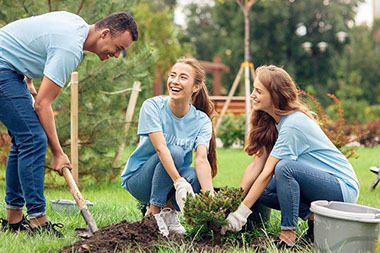
    Man wearing volunteer shirt with dog.

    Creating more kindness in the world starts with each of us. For instance, consider how you could show more kindness to coworkers. Also, be sure your kids or grandkids observe you being kind to others. When you take the kindness lead, others will surely follow. Like a ripple effect, kindness inspires kindness.

    ays to Well-Being book by the American Institute for Preventive Medicine. www.HealthyLife.com. All rights reserved.

    © American Institute for Preventive Medicine

  • Be Mindful Of…Listening Well

    Social Health

    Granddaughter helping grandfather on the computer.

    A big part of being a good communicator is being a good listener. Hearing the words and understanding what the other person means and feels are vital skills in nurturing healthy relationships. This starts by truly focusing on what is being said. Try not to interrupt and don’t appear judgmental or critical. Also, keep eye contact, nod, smile, and maintain an open and inviting posture.

    ays to Well-Being book by the American Institute for Preventive Medicine. www.HealthyLife.com. All rights reserved.

    © American Institute for Preventive Medicine

  • Family Matters 2

    Social Health

    Well-being relates to relatives.

    Your family is where you learn who you are and how to relate to others. It plays a vital role in fulfilling the human need to belong and have close, long-term relationships. Whether you are a child, teen, or adult, family experiences can promote or hinder your well-being.

    Tips to foster family well-being:

    *  Live a healthy lifestyle together.

    – Plan for, shop, and eat healthy foods.

    – Exercise as a family if you can. Or, promote physical activity suited for each family member.

    – Get enough sleep.

    *  Plan to eat at least one meal a day together. Have each person talk about his or her day, such as stating the best part and worst part.

    *  Spend time together. Attend important events for each family member.

    *  Express care and concern. Be available to help each other out. Listen, listen, listen.

    *  Practice good manners. Say, “Thank you” and “You’re welcome.” Make it a practice to send thank you calls, notes, letters, or emails to others for gifts and other acts of kindness.

    *  Express affection. Say, “I love you,” “I care about you,” and “You mean a lot to me.”

    *  Discuss the value of the family as a whole. Encourage individual expression and development.

    *  Define clear, yet flexible roles for family members. Assign family chores.

    *  Keep the house as organized as possible.

    *  Discuss the need to adapt to changes and deal with stressful events.

    *  Seek professional help for problems the family cannot deal with on its own.

    Factors that promote well-being:

    *  Being well cared for and feeling secure

    *  Receiving trust, love, support, and hugs

    *  Spending quality time together

    *  Listening well to each other

    *  Solving problems in a positive way

    *  Positive mood of family members

    *  Satisfaction with job and/or being a parent

    *  Being involved with partner and children

    *  Higher income and/or financial security

    Action Step

    This week, let at least two family members know how much you love them. Visit or call a relative who is alone or would be happy to hear from you.

    ays to Well-Being book by the American Institute for Preventive Medicine. www.HealthyLife.com. All rights reserved.

    © American Institute for Preventive Medicine