Social Health
Be smart using cellphones and smartphones.
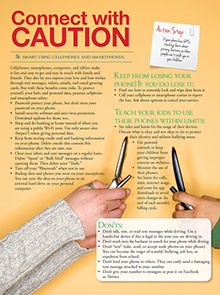
Cellphones, smartphones, computers, and tablets make it fast and easy to get and stay in touch with family and friends. They also let you express your love and best wishes through text messages, videos, emails, and email greeting cards. But with these benefits come risks. To protect yourself, your kids, and personal data, practice cellphone and smartphone safety:
* Password-protect your phone, but don’t store your password on your phone.
* Install security software and anti-virus protection. Download updates for these, too.
* Shop and do banking at home instead of when you are using a public Wi-Fi zone. Use only secure sites (https://) when giving personal data.
* Keep from storing credit card and banking information on your phone. Delete emails that contain this information after they are sent, too.
* Clear your inbox and sent messages on a regular basis. Delete “Spam” or “Bulk Mail” messages without opening them. Then delete your “Trash.”
* Turn off your “Bluetooth” when not in use.
* Backup data and photos you store on your smartphone. You can sync the data on your phone to an external hard drive on your personal computer.
Keep from losing your phone! If you do lose it:
* Find out how to remotely lock and wipe data from it.
* Call your cellphone or smartphone carrier to report the loss. Ask about options to cancel your service.
Teach your kids to use their phones within limits:
* Set rules and limits for the usage of their devices. Discuss what is okay and not okay to do to protect their identity and address bullying issues.
* Use parental controls to keep your children from getting improper content on websites.
* Monitor the use of their phones.
* Set limits for calls, texts, internet usage, and costs for app downloads to avoid extra charges at the end of each month’s billing cycle.
Don’ts:
* Don’t talk, text, or read text messages while driving. Use a hands-free device if this is legal in the state you are driving in.
* Don’t reach into the backseat to search for your phone while driving.
* Don’t “sext” (take, send, or accept nude photos on your phone). You can become the target of scandal, bullying, job loss, or expulsion from school.
* Don’t lend your phone to others. They can easily send a damaging text message attached to your number.
* Don’t give your number to strangers or post it on Facebook or Twitter.
Action Step
If your phone has GPS tracking, learn about privacy features so other people can’t stalk you or your children.
© American Institute for Preventive Medicine