Category: Skin Conditions

  • Ten Ways To Get Rid Of Winter Itch

    Skin Conditions

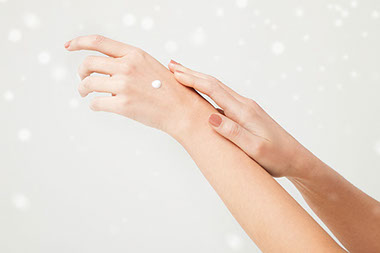
    Image of lotion on hand.

    Oh, that winter itch! Your skin feels as rough and dry as sandpaper. If your skin is chapped, cracked, and inflamed during the coldest months of the year, take heart. Relief is a simple matter of water conservation.

    The basic problem is lack of moisture. Anything that steals moisture from the skin will result in dryness and chapping. The drier the air, the more rapidly moisture evaporates. (In winter, heated indoor air tends to be dry.) Also, soap and excessive bathing or showering strips the skin of its natural oils making the problem worse. Add it up and the dehydrated cells begin to shrink and separate like caked mud in a dry lake bed and a network of painful cracks appear on your skin.

    Dry skin affects everyone, but older people have it worse because oil production gradually declines with age.

    Since you can’t change the weather or your age, try these suggestions if you want to prevent winter itch.

    *  Drink 8 or more glasses of water a day.

    *  Don’t scratch or rub your skin. Do apply moisturizer to your skin daily. Use an oil-based lotion.

    *  Don’t overexpose your skin to water, such as with washing dishes. Wear rubber gloves when you wash dishes.

    *  Right after washing your hands, put hand cream on to seal in moisture.

    *  Use petroleum jelly on very dry skin areas.

    *  Take a shower instead of a bath. Use warm (not hot) water. Pat your skin dry, but not all the way. Apply a moisturizing cream while your skin is damp. Use products with lanolin. If you prefer to bathe, bathe for only 15 to 20 minutes in lukewarm water. Pat yourself dry. Do not rub. Use a bath oil on your skin after bathing. Try sponge baths. Use a washcloth instead of soaping the skin directly. Use a mild liquid cleanser like Cetaphil brand, or use a fatted soap. Avoid deodorant, medicated, or alkaline soaps.

    *  Don’t use moisturizers with fragrances, preservatives, or alcohol.

    *  Use a night cream for the face. Stay out of the strong sun. Do not use tanning salons. Use a sunblock with a sun protection factor (SPF) of at least 15.

    *  Lower the setting on your heating thermostat so you’re comfortable, not toasty.

    *  Use a humidifier to add moisture to the air in a room or have a humidifier connected to your furnace. Also, don’t sit too close to fireplace heat – it’s drying.
    A Year of Health Hints book by the American Institute for Preventive Medicine. www.HealthyLife.com. All rights reserved.

    © American Institute for Preventive Medicine
  • What Your Fingernails Reveal About Your Health

    Skin Conditions

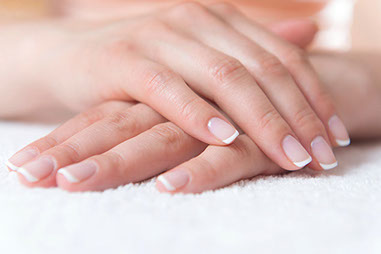
    Image of fingernails.

    You may see your hands hundreds of times a day, but do you ever examine them? Probably not. Yet taking a closer look – especially at our fingernails – may not be a bad idea. They’re a good indicator of overall health.

    Spoon-shaped nails, for example, may simply be an inherited trait – or they can be a clue to a thyroid deficiency or iron deficiency anemia. Nails that have no “moon” or white crescent at the base and are thin and brittle might indicate an underactive thyroid. Still other changes – like brittleness or pitting – may be signs of other nutritional deficiencies or injury to the nail bed. While no one can diagnose a health problem on the basis of nail irregularities only, the table on next page may tip you off to possible health problems. (Consult your doctor if you see any significant changes in your nails.)

    Barring any medical explanation for nail problems, the following tips can help your nails look healthier and more attractive.

    *  Eat a well-balanced diet that includes plenty of fresh fruits and vegetables, whole grains, lean meats, and low-fat dairy products.

    *  Wear gloves when you do household chores or hobbies to avoid contact with detergents or harsh chemicals that can dry or damage nails.

    *  Clean nails with a nail brush, especially if you garden or work with messy materials. Clip cuticles and rough skin to prevent tears. File nails in one direction only. Use an emery board, not a metal nail file.

    *  Don’t use your nails as tools, such as to remove staples. If you polish your nails, use polish remover sparingly.

    Nail Symptoms and What They Could Mean

    Brittleness: Frequent immersion in hot water; generally poor health; impaired circulation; possible deficiency of vitamins A, C, B6, or niacin, deficiency of calcium or iron; thyroid deficiency

    Clubbing: Chronic lung disease or lung cancer; congenital heart disease; congenital or hereditary defect

    Pitting (may be normal): Eczema; psoriasis; trauma

    Ridges: Emphysema; heredity; kidney failure; old age; rheumatoid arthritis, traumas

    Separation (when nail plate lifts off nail bed): Allergy to nail lacquer and hardeners; fungal infection; iron deficiency anemia; pregnancy; psoriasis; trauma

    Splitting at top edge: Immersion in water for long periods, nail polish removers

    Spoon shaped: Thyroid deficiency; iron deficiency anemia

    A Year of Health Hints book by the American Institute for Preventive Medicine. www.HealthyLife.com. All rights reserved.

    © American Institute for Preventive Medicine
  • Warts

    Skin Conditions

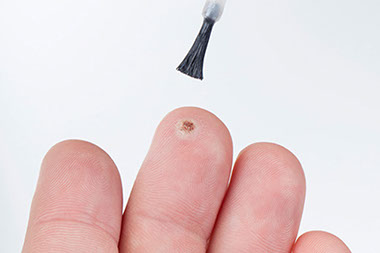
    Image of medication being applied to wart on finger.

    Warts are small skin growths. Most are harmless and painless. They can appear on any part of the body.

    Signs & Symptoms

    *  Common warts. These are firm and often have a rough surface. They are round or have an irregular shape. They are found on places subject to injury, such as the hands, fingers, and knees. Common warts are flesh-colored to brown. They may spread, but are not cancer.

    *  Flat warts. These are smooth and flesh-colored. They are found mainly on the hands and face and may itch.

    *  Plantar warts. These occur on the soles of the feet. They look like corns or calluses and may have little black dots in the center. They can be painful.

    *  Digitate warts. These threadlike warts grow on the scalp.

    *  Filiform warts. These are long, narrow, small growths. They appear mainly on the neck, eyelids, or armpits.

    *  Genital warts. SeeSexually Transmitted Infections (STIs) – Human Papillomavirus (HPV).

    Causes

    Warts are caused by human papillomaviruses. One of these viruses may enter the body through a cut or nick in the skin. Scratching or picking at warts may spread them to other sites. Some persons are more prone to getting warts than others. People who cannot fight off disease are also more at risk for warts. You cannot get warts from frogs or toads.

    Treatment

    Treatment for warts depends on their location, type, and severity and how long they have been on the skin. About 50% of warts go away in 6 to 12 months without treatment.

    Self-care measures can be used for warts not on the face or genitals. Medical treatment includes liquid nitrogen, chemical injections, topical medicines, laser surgery, and minor surgery.

    Questions to Ask

    Self-Care / Prevention

    *  Don’t touch, scratch, or pick at warts.

    *  Never cut or burn a wart off.

    *  Try an over-the-counter wart remover with salicylic acid. This can be a liquid or it can be in a medicated wart pad or patch. {Note: Do not use these wart removers on the face or genitals.} Follow package directions. A pumice stone helps remove the dead skin during this treatment.

    *  Ask your doctor about Retin A for flat warts.

    *  During treatment for plantar warts, put pads or cushions in your shoes. This can help relieve the pain when you walk.

    To Prevent Warts

    *  Don’t touch, scratch, or pick at warts.

    *  Wear plastic sandals or shower shoes in locker rooms and public swimming pool areas.

    *  Change shoes often to air them out.

    Resources

    Skinsight

    www.skinsight.com

    Healthier at Home book by the American Institute for Preventive Medicine. www.HealthyLife.com. All rights reserved.

    © American Institute for Preventive Medicine
  • Abc’S Of Skin Care

    Skin Conditions

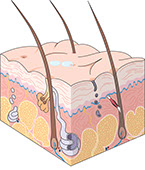
    The skin has two basic layers. The outer, protective layer is the epidermis. The thicker, inner layer is the dermis.

    Illustration of the skin.

    About Your Skin

    The skin is the body’s largest organ.

    *  It protects tissues inside the body from injury.

    *  It serves as a barrier against chemicals, germs, hot and cold weather, pollution, the sun, etc.

    *  It helps regulate body temperature. It seals in moisture.

    Basic Skin Care

    *  Protect your skin from the sun’s harmful ultraviolet (UV) rays.

    – Limit exposure to the sun, especially between 10:00 a.m. and 4:00 p.m. standard time; 11:00 a.m. to 5:00 p.m. daylight savings time.

    – When outdoors, wear a broad-spectrum sunscreen that has a sun protection factor (SPF) number of at least 15. Use one that protects you from both UVA and UVB rays. Apply sunscreen about 30 minutes before going outside. Use sunscreen as directed on the label.

    – Wear protective clothing, such as long sleeves and a wide brimmed hat.

    *  Don’t use tanning beds and heat lamps.

    *  Don’t smoke. If you smoke, quit. Smoking can cause premature wrinkles.

    *  Eat healthy foods. Drink plenty of water and other fluids.

    *  Clean your skin daily. Clean it when it gets dirty, too.

    *  Wash your hands often to avoid picking up germs.

    *  Wash your skin with warm (not hot) water. Hot water dries the skin.

    *  Use mild or gentle soaps and cleaning products to prevent dry, irritated skin.

    *  Moisturize your skin daily and/or when it is dry. Dry, cracked skin lets harmful germs and other irritants in. Use moisturizers that don’t have alcohol.

    *  Protect your skin from the wind and cold weather. Wear gloves, a hat, a scarf, etc.

    *  Protect your skin from injury. Wear gloves when you garden, work with chemicals, etc. When shaving, soften the beard with a warm washcloth. Use plenty of shaving cream. With a sharp blade, shave in the direction of hair growth. Using a back and forth motion causes skin irritation.

    *  Avoid items that cause allergic reactions and/or irritate the skin.

    Cosmetic Safety

    With so many products to choose from, how do you know which ones are safe to use? How do you know if they give the results they promote?

    *  If you have skin concerns or problems, consult your primary care doctor or a dermatologist.

    *  Before using a cosmetic, read the label. The label must give directions for safe use and/or warning statements. Heed the warnings. For example, products with an alpha hydroxy acid (AHA) may list the following on the label: “Sunburn alert: This product contains an alpha hydroxy acid (AHA) that may increase your skin’s sensitivity to the sun and the possibility of sunburn. Use a sunscreen and limit sun exposure while using this product and for a week afterwards.”

    *  Follow directions on the label.

    *  Test a small amount of a new product on your skin to find out how your skin reacts to it.

    *  When sampling a cosmetic at a store’s cosmetic counter, test it with a new, unused cotton swab.

    *  Keep make-up containers tightly closed when not in use.

    *  Throw away any cosmetic that has developed an odor or changed color.

    *  If you have an eye infection, such as pink eye, don’t use eye cosmetics. Throw away the ones you were using when you first noticed the infection.

    *  Use products for your skin type (dry, normal, oily, or sensitive, etc.). If you have dry skin, don’t use astringents and products with alcohol. They take moisture away from the skin.

    Resources

    American Academy of Dermatology

    866.503.SKIN (503.7546)

    www.aad.org

    Skinsight

    www.skinsight.com

    Skin Condition Finder

    www.skinsight.com

    Healthier at Home book by the American Institute for Preventive Medicine. www.HealthyLife.com. All rights reserved.

    © American Institute for Preventive Medicine
  • Hair Loss

    Skin Conditions

    Most men have some degree of baldness by age 60. After age 60, 50% of women do.

    Signs & Symptoms

    *  Thinning of hair on the temples and crown.

    *  Receding hair line.

    *  Bald spot on back of head.

    *  Areas of patchy hair loss.

    Causes

    *  Normal aging. Family history of hair loss. Hormonal changes, such as with menopause.

    *  A side effect of some medicines, chemotherapy, and radiation therapy. Crash dieting.

    *  A prolonged or serious illness. Major surgery. Thyroid disease.

    *  Areata. This causes areas of patchy hair loss. It improves quickly when treated, but can go away within 18 months without treatment.

    Treatment

    *  Medications. These include over-the- counter Rogaine and prescribed ones.

    *  Hair transplant with surgery.

    Questions to Ask

    Self-Care / Prevention

    *  Try the over-the-counter medication, Rogaine.

    *  Avoid (or don’t use often) hair care practices of bleaching, braiding, cornrowing, dyeing, perming, etc. Avoid hot curling irons and/or hot rollers. Use gentle hair care products.

    *  Air dry or towel dry your hair. If you use a hairdryer, set it on low.

    *  Keep your hair cut short. It will look fuller.

    *  Don’t be taken in by claims for products that promise to cure baldness.

    Resources

    American Academy of Dermatology

    866.503.SKIN (503.7546)

    www.aad.org

    Healthier at Home book by the American Institute for Preventive Medicine. www.HealthyLife.com. All rights reserved.

    © American Institute for Preventive Medicine
  • Acne

    Skin Conditions

    Acne is a common skin condition. It occurs most often in teenagers and young adults, but can persist into adulthood.

    Signs & Symptoms

    *  Whiteheads and/or blackheads.

    *  Red and painful pimples.

    *  Deeper lumps (cysts or nodules).

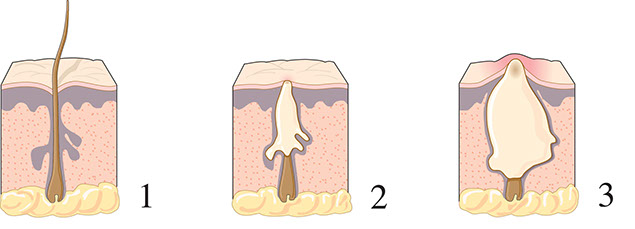
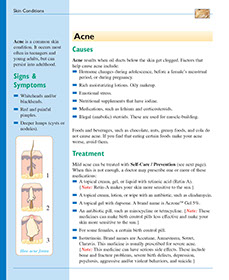
    How acne forms.

    Illustration of acne forming.

    Causes

    Foods and beverages, such as chocolate, nuts, greasy foods, and cola do not cause acne. If you find that eating certain foods make your acne worse, avoid them.

    Acne results when oil ducts below the skin get clogged. Factors that help cause acne include:

    *  Hormone changes during adolescence, before a female’s menstrual period, or during pregnancy.

    *  Rich moisturizing lotions. Oily makeup.

    *  Emotional stress.

    *  Nutritional supplements that have iodine.

    *  Medications, such as lithium and corticosteroids.

    *  Illegal (anabolic) steroids. These are used for muscle-building.

    Treatment

    Mild acne can be treated with Self-Care / Prevention. When this is not enough, a doctor may prescribe one or more of these 1 medications:

    *  A topical cream, gel, or liquid with retinoic acid (Retin-A). {Note: Retin-A makes your skin more sensitive to the sun.}

    *  A topical cream, lotion, or wipe with an antibiotic, such as clindamycin.

    *  A topical gel with dapsone. A brand name is AczoneTM Gel 5%.

    *  An antibiotic pill, such as minocycline or tetracycline. {Note: These medicines can make birth control pills less effective and make your skin more sensitive to the sun.}

    *  For some females, a certain birth control pill.

    *  Isotretinoin. Brand names are Accutane, Amnesteem, Sotret, Claravis. This medicine is usually prescribed for severe acne. {Note: This medicine can have serious side effects. These include bone and fracture problems, severe birth defects, depression, psychosis, aggressive and/or violent behaviors, and suicide.}

    Treatments Other Than Medications

    *  Chemical peels.

    *  Laser treatments.

    *  Surgery for acne scarring.

    Questions to Ask

    Self-Care / Prevention

    *  Keep your skin clean. Gently wash your skin, where the acne appears, twice a day. Use a mild soap, such as Neutrogena. Use a clean washcloth every time. Work the soap into your skin gently for 1 to 2 minutes and rinse well. Don’t scrub.

    *  Don’t squeeze, scratch, or poke at pimples. They can get infected and leave scars.

    *  Wash after you exercise or sweat.

    *  Use an over-the- counter lotion or cream that has benzoyl peroxide. (Some people are allergic to benzoyl peroxide. Try a little on your arm first to make sure it doesn’t hurt your skin.) Follow the directions as listed.

    *  Use only oil-free and water-based makeups. Don’t use greasy or oil-based creams, lotions, or makeups.

    *  For males, wrap a warm towel around your face before you shave. Shave along the natural grain of the beard.

    *  Don’t spend too much time in the sun especially if you take antibiotics for acne. Don’t use sun lamps.

    Resources

    American Academy of Dermatology

    866.503.SKIN (503.7546)

    www.aad.org

    National Institute of Arthritis and Musculoskeletal and Skin Diseases (NIAMS)

    www.niams.nih.gov

    Healthier at Home book by the American Institute for Preventive Medicine. www.HealthyLife.com. All rights reserved.

    © American Institute for Preventive Medicine
  • Have Fun While Staying Safe In The Sun

    Skin Conditions

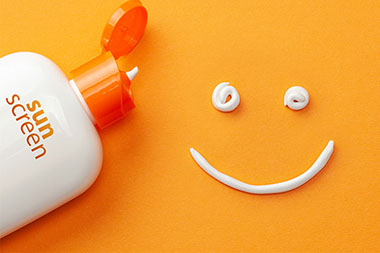
    Open bottle of sun screen with lotion making smiling face.

    *  Wear sunscreen with a sun protection factor (SPF) of 30 or higher that blocks both UVB and UVA radiation.

    *  Limit your time in the sun, especially during peak sunlight hours. These are 10 a.m. to 3 p.m. standard time, and 11 a.m. to 4 p.m. daylight saving time.

    *  Wear long sleeves, pants, and wide-brimmed hats to help block the sun’s harmful rays.

    *  Wear clothing with sunscreen protection.

    *  Spend outdoor time in shaded areas, such as under a large umbrella or a pavilion.

    *  Wear sunglasses that protect against both UVB and UVA rays.

    *  Ask your doctor if any medicines you take make your skin more sensitive when you are in the sun.

    *  Drink plenty of water. Limit alcohol. Be sober when you drive a boat or other vehicle.

    *  Find out and follow safety rules for water activities you plan to take part in. Wear personal flotation devices.

    *  Take CPR and water safety courses. Learn about these from theamericanheart.organdredcross.org.

    Health at Home Lifetime book by the American Institute for Preventive Medicine. www.HealthyLife.com. All rights reserved.

    © American Institute for Preventive Medicine
  • Age Spots

    Skin Conditions

    Age spots are skin blemishes that come with aging. All age spots are generally harmless. They are more a cosmetic issue than a medical one. It is important, though, to distinguish them from skin cancer.

    Signs & Symptoms

    *  Small or large, flat, freckle-like marks that are different shades of brown (liver spots). These most often appear on the arms, backs of hands, back, face, or shoulders.

    *  Brown or yellow slightly raised spots (seborrheic warts)

    *  Red, pinpoint blemishes (cherry angiomas)

    Causes

    Aging skin is thinner and more sensitive to the sun’s rays. Small, dark patches appear in response.

    In general, age spots do not need medical treatment. A doctor can freeze an age spot with liquid nitrogen or remove it in a minor surgical procedure, if skin cancer is suspected.

    Prevention

    Reduce exposure to the sun. When you are outdoors, use a sunscreen with a sun protection factor (SPF) of 15 or higher.

    Self-Care

    To Help Make Age Spots Less Noticeable:

    *  Avoid sun exposure.

    *  Try a bleaching cream.

    *  Apply lemon juice twice a day to age spots.

    *  Dab buttermilk on spots and lightly pat dry.

    *  Use fresh aloe gel on spots. Do this twice a day for a month.

    *  Use a mild, moisturizing make-up.

    When to Seek Medical Care

    Contact Doctor When:

    *  You suspect the spots are skin cancer.

    *  An age spot bleeds, itches, or tingles.

    *  You have bothersome age spots that resist fading after using self-care.

    *  You want advice on removing age spots; on creams with the medicine Retin-A; or on chemical peels.

    Health at Home Lifetime book by the American Institute for Preventive Medicine. www.HealthyLife.com. All rights reserved.

    © American Institute for Preventive Medicine
  • Hives

    Skin Conditions

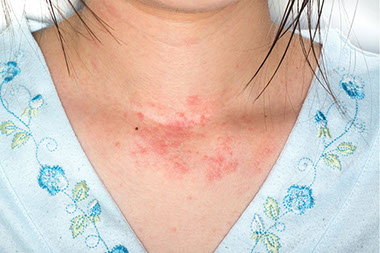
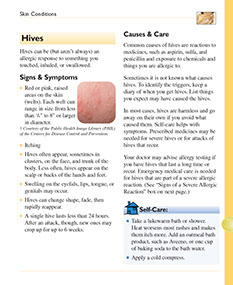
    Image of a hive rash below neck.

    Hives can be (but aren’t always) an allergic response to something you touched, inhaled, or swallowed.

    Signs & Symptoms

    *  Red or pink, raised areas on the skin (welts). Each welt can range in size from less than 1/8″ to 8″ or larger in diameter.

    *  Itching

    *  Hives often appear, sometimes in clusters, on the face, and trunk of the body. Less often, hives appear on the scalp or backs of the hands and feet.

    *  Swelling on the eyelids, lips, tongue, or genitals may occur.

    *  Hives can change shape, fade, then rapidly reappear.

    *  A single hive lasts less than 24 hours. After an attack, though, new ones may crop up for up to 6 weeks.

    Causes & Care

    Common causes of hives are reactions to medicines, such as aspirin, sulfa, and penicillin and exposure to chemicals and things you are allergic to.

    Sometimes it is not known what causes hives. To identify the triggers, keep a diary of when you get hives. List things you expect may have caused the hives.

    In most cases, hives are harmless and go away on their own if you avoid what caused them. Self-care helps with symptoms. Prescribed medicines may be needed for severe hives or for attacks of hives that recur.

    Your doctor may advise allergy testing if you have hives that last a long time or recur. Emergency medical care is needed for hives that are part of a severe allergic reaction.

    Self-Care

    *  Take a lukewarm bath or shower. Heat worsens most rashes and makes them itch more. Add an oatmeal bath product, such as Aveeno, or one cup of baking soda to the bath water.

    *  Apply a cold compress.

    *  Wear loose-fitting clothes.

    *  Relax as much as you can. Relaxation therapy may help ease the itching and discomfort of hives.

    *  Ask your doctor whether or not you should take an antihistamine and to recommend one. Antihistamines can help relieve itching and suppress hives. Take as directed by your doctor or by directions on the label.

    *  Use calamine lotion on itchy areas.

    *  Don’t take aspirin, ibuprofen, ketoprofen, or naproxen sodium. These may make hives worse.

    When to Seek Medical Care

    Contact Doctor When:

    *  You have constant and severe itching, and/or a fever with hives.

    *  Hives last for more than 6 weeks.

    *  Hives started after taking medicine.

    Get Immediate Care When:

    Hives are present with signs of a severe allergic reaction (anaphylactic shock).

    Signs of a Severe Allergic Reaction

    *  A hard time breathing or swallowing

    *  Severe swelling all over, or of the face, lips, tongue, and/or throat n Obstructed airway

    *  Wheezing

    *  Dizziness, weakness

    *  “Signs & Symptoms” of shock

    Health at Home Lifetime book by the American Institute for Preventive Medicine. www.HealthyLife.com. All rights reserved.

    © American Institute for Preventive Medicine
  • Athlete’S Foot

    Skin Conditions

    Athlete’s foot is a fungal infection. It usually affects the skin between the toes.

    Signs & Symptoms

    *  Moist, soft, red or gray- white scales on the feet, especially between the toes.

    *  Cracked, peeling, dead skin areas.

    *  Itching.

    *  Sometimes small blisters on the feet.

    Causes

    People usually pick up the fungus from walking barefoot over wet floors, around swimming pools and locker rooms, and in public showers.

    Treatment

    Self-care treats most cases of athlete’s foot.

    Questions to Ask

    Self-Care / Prevention

    *  Wash your feet twice a day, especially between your toes. Dry the area thoroughly. Don’t use antibacterial soaps.

    *  Use an over-the-counter antifungal powder, cream, or spray between your toes and inside your socks and shoes.

    *  Wear clean socks made of natural fibers (cotton or wool). Change your socks during the day to help your feet stay dry. Wear shoes, such as sandals or canvas loafers, that allow ventilation.

    *  Alternate shoes daily to let each pair dry out.

    Resources

    American Academy of Dermatology

    866.503.SKIN (503.7546)

    www.aad.org

    Healthier at Home book by the American Institute for Preventive Medicine. www.HealthyLife.com. All rights reserved.

    © American Institute for Preventive Medicine