Category: Skin Conditions

  • Ingrown Toenails

    Skin Conditions

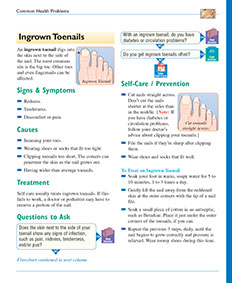
    An ingrown toenail digs into the skin next to the side of the nail. The most common site is the big toe. Other toes and even fingernails can be affected.

    Signs & Symptoms

    *  Redness.

    *  Tenderness.

    *  Discomfort or pain.
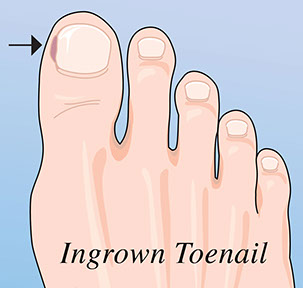
    Illustration of an ingrown toenail.

    Causes

    *  Jamming your toes.

    *  Wearing shoes or socks that fit too tight.

    *  Clipping toenails too short. The corners can penetrate the skin as the nail grows out.

    *  Having wider-than-average toenails.

    Treatment

    Self-care usually treats ingrown toenails. If this fails to work, a doctor or podiatrist may have to remove a portion of the nail.

    Questions to Ask

    Self-Care / Prevention

    *  Cut nails straight across. Don’t cut the nails shorter at the sides than in the middle. {Note: If you have diabetes or circulation problems, follow your doctor’s advice about clipping your toenails.}

    *  File the nails if they’re sharp after clipping them.

    *  Wear shoes and socks that fit well.

    To Treat an Ingrown Toenail

    *  Soak your foot in warm, soapy water for 5 to 10 minutes, 1 to 3 times a day.

    *  Gently lift the nail away from the reddened skin at the outer corners with the tip of a nail file.

    *  Soak a small piece of cotton in an antiseptic, such as Betadine. Place it just under the outer corners of the toenails, if you can.

    *  Repeat the previous 3 steps, daily, until the nail begins to grow correctly and pressure is relieved. Wear roomy shoes during this time.
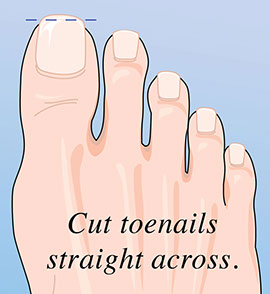
    Illustration on cutting toenails straight across to prevent ingrown toenails.

    Resources

    American Academy of Dermatology

    866.503.SKIN (503.7546)

    www.aad.org

    Healthier at Home book by the American Institute for Preventive Medicine. www.HealthyLife.com. All rights reserved.

    © American Institute for Preventive Medicine

  • Bedsores

    Skin Conditions

    Image of older man sitting on bed.

    Bedsores, also called pressure ulcers, are painful ulcers on the skin. Common sites are the head, back, buttocks, tailbone, knees, and ankles.

    Signs & Symptoms

    *  The skin may feel sore in areas where a bone is close to the skin. There may be no feeling at all.

    *  The skin gets irritated and red and then turns purple.

    *  The skin cracks and an open sore appears. The skin area can become infected.

    Causes & Risk Factors

    Bedsores are caused by constant pressure on the skin or frequent rubbing in one area. Factors that increase the risk of bedsores include:

    *  Being confined to a bed or chair

    *  Urinary incontinence; poor bowel control

    *  Poor blood circulation and loss of sensation due to a stroke or spinal cord injury

    Infected sores require antibiotics. Chronic or deep sores may also require antibiotics. If infected sores are left untreated too long, a blood infection that threatens life can result. This is rare, though. Bedsores may also need special dressings.

    Self-Care / Prevention

    A caregiver may need to assist with these.

    *  Change position every 2 hours if confined to a bed and every hour if confined to a chair or as often as advised by your health care provider.

    *  Check the skin daily for early signs of bedsores. Use mirrors for hard to see places. {Note: Redness is usually the earliest sign. Once the skin cracks or breaks down, seek medical care.}

    *  Use a foam or sheepskin mattress cover.

    *  Use a waterbed or a bed with an air filled mattress, such as a ripple bed. This type of airbed has a small motor that creates a rippling effect by pumping air in and out of the mattress.

    *  If incontinent, wear absorbent pads or briefs.

    *  Keep the skin clean and dry. Clean it right away if there is contact with urine or stool. Use soft cloths, sponges, and mild soaps. Avoid hot water. Do not rub the skin.

    *  Apply cornstarch to the skin.

    *  Lift (do not drag or slide) an immobile person.

    *  Don’t sit on donut-shaped cushions.

    *  Put pillows between knees and ankles so they don’t touch.

    *  Use sheepskin under heels and buttocks.

    *  Don’t massage bony body parts.

    *  Eat well and get adequate fluids.

    *  Ask your doctor about taking a vitamin C supplement.

    *  Handle a person with bedsores gently.

    *  Apply topical medication, as advised.

    When to Seek Medical Care

    Contact Doctor When:

    *  The skin is cracked.

    *  Sores show signs of infection (fever; redness; pain; heat; pus; swelling).

    *  Sores have not improved after 2 weeks of self-care.

    Health at Home Lifetime book by the American Institute for Preventive Medicine. www.HealthyLife.com. All rights reserved.

    © American Institute for Preventive Medicine
  • Insect Stings

    Skin Conditions

    Signs & Symptoms

    *  Quick, sharp pain.

    *  Swelling.

    *  Itching.

    *  Redness at the sting site.

    *  Hives.

    Insect stings can even result in a severe allergic reaction.

    Causes

    Insect stings come from bumblebees, honeybees, hornets, wasps, yellow jackets, and fire ants.

    Treatment

    Self-care treats mild reactions to insect stings. A severe allergic reaction needs immediate care. Symptoms of a severe allergic reaction usually happen soon after or within an hour of the sting.

    If you have had a severe allergic reaction to an insect sting, you should carry an emergency insect sting kit, prescribed by your doctor. You should also wear a medical alert tag that lets others know that you are allergic to insect stings. Persons who have had severe reactions to bee or wasp stings should ask their doctor about allergy shots.

    Questions to Ask

    Self-Care / Prevention

    To Avoid Insect Stings

    *  Keep food and drink containers tightly covered. (Bees love sweet things, like soft drinks.)

    *  Don’t wear perfume, colognes, or hair spray when you are outdoors.

    *  Don’t wear bright colors, like white or yellow. Choose neutral colors, like tan or khaki. Wear snug clothing that covers your arms and legs.

    *  Don’t go barefoot. If camping, look for insects in your shoes before you put them on.

    *  Wear an insect repellent, especially if you are sensitive to insect stings.

    *  Be careful when you work outdoors, pull weeds, mow tall grass, and work around shutters. Bees often build hives behind shutters.

    *  If an insect that stings gets in your car, stop the car. Put the windows down. Once the insect leaves, resume driving.

    *  Check for and repair openings in your window screens.

    To Treat an Insect Sting Without a Severe Allergic Reaction

    *  For a bee sting, gently scrape out the stinger as soon as possible. Use a blunt knife, credit card, or a fingernail. Yellow jackets, wasps, and hornets don’t lose their stingers.

    *  Don’t pull the stinger out with your fingers or tweezers. Don’t squeeze the stinger. It contains venom. You could re-sting yourself.

    *  Clean the sting area with soapy water.

    *  Remove jewelry from bitten fingers, wrists, etc. It may be difficult to remove jewelry once swelling occurs.

    *  Put a cold compress (ice in a cloth, etc.) on the sting. Don’t put ice directly on the skin. Hold the cold compress on the site for 10 to 15 minutes.

    *  Keep the sting area lower than heart level.

    *  Take an over-the-counter medicine for pain as directed on the label.

    *  For itching and swelling, apply a topical 1% hydrocortisone cream and/or take an over- the-counter antihistamine, such as Benadryl, if okay with your doctor. Follow directions on the labels.

    Signs of Severe Allergic Reaction

    *  Fainting or decreasing level of consciousness.

    *  Shortness of breath or difficulty breathing or swallowing.

    *  Severe swelling all over or of the face, lips, tongue, and/or throat.

    *  Pale or bluish lips, skin, and/or fingernails.

    *  Wheezing.

    *  Dizziness, weakness, and/or numbness.

    *  Cool, moist skin or sudden onset of pale skin and sweating.

    Healthier at Home book by the American Institute for Preventive Medicine. www.HealthyLife.com. All rights reserved.

    © American Institute for Preventive Medicine
  • Blisters

    Skin Conditions

    Signs & Symptoms

    *  Sore bump on the skin that may be filled with fluid. Swelling.

    *  Pain and tenderness to the touch.

    Causes

    *  Friction on the skin. This is the main cause.

    *  Skin rashes, frostbite, and second-degree burns.

    *  Herpes simplex viruses.

    *  Allergic reaction to medicine.

    *  Epidermolysis bullosa (EB). This is a group of blistering skin conditions. With these, the skin is so fragile, even minor rubbing can cause blisters. Blisters can occur inside the body, too.

    Treatment

    Self-care treats most blisters. Medical care may be needed for blisters that get infected and for ones caused by a skin disorder.

    Questions to Ask

    Self-Care / Prevention

    To Prevent Blisters

    *  Wear shoes and socks that fit well. Wear moleskin pads on areas where socks or shoes rub the skin.

    *  Apply an antiperspirant to the bottom of your feet before an athletic activity.

    *  Wear gloves for activities that put friction on the hands, such as raking leaves.

    To Treat Blisters

    *  Protect a blister from more friction. Cover it with a loose bandage or a moleskin pad. The skin over the blister protects it from infection.

    *  If the blister is very painful, drain it. Clean the area with alcohol. Sterilize a needle. Gently, pierce an edge of the blister. Let it drain. If no dirt or pus is under the skin flap, pat it down to protect the skin below it. Wash the area well with soap and water. Apply an antibiotic ointment and cover it with a bandage or gauze and tape. Change this daily. Change it more often if it gets dirty or wet.

    Healthier at Home book by the American Institute for Preventive Medicine. www.HealthyLife.com. All rights reserved.

    © American Institute for Preventive Medicine
  • Get Vaccines To Prevent Measles

    Skin Conditions

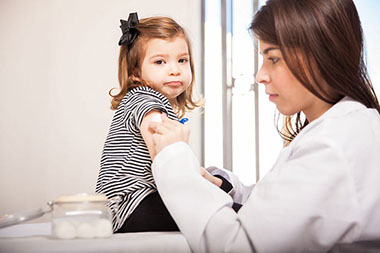
    Image of toddler getting a shot by a doctor.

    In January 2015, CDC issued a health advisory to notify public health departments and healthcare facilities about a multi-state outbreak of measles. The outbreak started at Disneyland in Dec., 2014. During that entire year, the CDC reported a record number of measles in the U.S. with 644 cases from 27 states. This is the greatest number of cases since measles was eliminated in the U.S. in 2000.

    Why the rise in measles?

    *  The majority of the people who got measles did not receive vaccines.

    *  Measles is still common in many parts of the world including some countries in Europe, Asia, the Pacific, and Africa.

    *  Travelers with measles continue to bring the disease into the U.S.

    Measles is a highly contagious respiratory disease caused by a virus. Coughs and sneezes spread the virus through the air. Measles starts with a fever, runny nose, cough, red eyes, and sore throat. A rash that spreads all over the body follows. About three out of 10 people who get measles will develop one or more serious problems including pneumonia, ear infections, or diarrhea. These problems are more common in adults and young children.

    Guidelines for measles vaccines

    Children should get 2 doses of measles, mumps, and rubella (MMR) vaccine:

    *  First Dose: 12-15 months of age. Some infants younger than 12 months should get a dose of MMR if they are traveling out of the country.

    *  Second Dose: 4-6 years of age

    *  If not given at these times, a two-dose series is needed for all school-age children and adolescents.

    Adults born after 1956 should get at least one dose of MMR vaccine, unless they can show that they have either been vaccinated or had all three diseases.

    Health News by the American Institute for Preventive Medicine. www.HealthyLife.com. All rights reserved.

    © American Institute for Preventive Medicine
  • Boils

    Skin Conditions

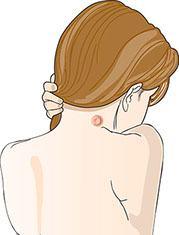
    Boils are common, but usually minor, skin problems. Most often, they occur in areas where the skin becomes chaffed and where there are hair follicles. This includes the neck, buttocks, armpits, and genitals. A boil can range in size from that of a pea to a ping pong ball.

    Signs & Symptoms

    *  A round or cone-shaped lump or pimple that is red, tender, painful, or throbs.

    *  Pus may be visible under the skin’s surface after several days.

    *  The boil usually bursts open on its own after 10 to 14 days.

    Illustration of a boil.

    Causes

    Boils are caused when a hair follicle or oil gland becomes infected with staph bacteria. Boils can be very contagious. Risk factors that make them more likely to occur include:

    *  Poor hygiene.

    *  Overuse of corticosteroid medicine.

    *  Diabetes.

    *  Short, curly hair that has a tendency to grow back down into the skin.

    Treatment

    Self-care treats boils. If this is not enough, your doctor may need to lance and drain the boil and prescribe an antibiotic.

    Questions to Ask

    Self-Care / Prevention

    *  Don’t scratch, squeeze, or lance boils.

    *  Put a hot water bottle over a damp washcloth and place it on the boil.

    *  Soak in a warm tub. Use an antibacterial soap. If boil is ready to burst open, take warm showers instead.

    *  Take an over-the-counter medicine for pain and swelling as directed.

    *  Wash your hands after contact with a boil. Keep clothing and other items that were in contact with the boil away from others.

    *  Once the boil begins to drain, keep it dry and clean. Loosely cover the boil with a sterile gauze dressing. Use first-aid tape to keep it in place. Replace the dressing if it gets moist.

    *  Wash bed linens, towels, and clothing in hot water. Do not share towels, sports equipment, etc.

    *  Don’t wear tight-fitting clothes over a boil.

    Healthier at Home book by the American Institute for Preventive Medicine. www.HealthyLife.com. All rights reserved.

    © American Institute for Preventive Medicine
  • Poison Ivy, Oak & Sumac

    Skin Conditions

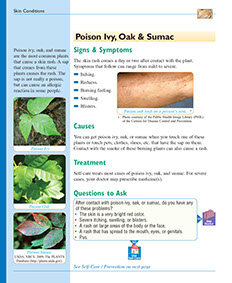
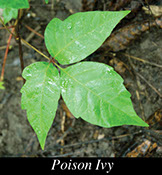
    Poison ivy, oak, and sumac are the most common plants that cause a skin rash. A sap that comes from these plants causes the rash. The sap is not really a poison, but can cause an allergic reaction in some people.

    Image of posion ivy leaf.
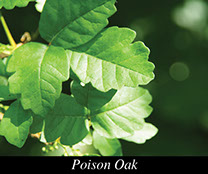
    Image of poison oak leaf.
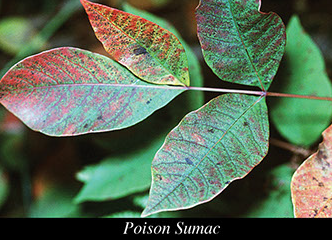
    Image of poison sumac.

    Signs & Symptoms

    The skin rash comes a day or two after contact with the plant. Symptoms that follow can range from mild to severe.

    *  Itching.

    *  Redness.

    *  Burning feeling.

    *  Swelling.

    *  Blisters.

    Causes

    You can get poison ivy, oak, or sumac when you touch one of these plants or touch pets, clothes, shoes, etc. that have the sap on them. Contact with the smoke of these burning plants can also cause a rash.

    Treatment

    Self-care treats most cases of poison ivy, oak, and sumac. For severe cases, your doctor may prescribe medicine(s).

    Questions to Ask

    Self-Care / Prevention

    To Prevent Getting a Rash

    *  Know what these plants look like and avoid them.

    – Poison ivy and poison oak both have 3 leaflets per stem. This is why you may have heard the saying, “Leaflets three, let them be.”

    – Each branch of poison sumac has 7 to 13 leaflets on a reddish stem. A single leaf is on the end of the stem. The others are paired along each side of the stem. Poison sumac grows in wetlands.

    *  Use an over-the-counter lotion (IvyBlock), which blocks skin contact with the sap. Use it as directed.

    *  Wear pants and long-sleeved shirts.

    *  Use an over-the-counter product (e.g., Tecnu) that removes poison ivy sap.

    *  Rinse the affected area with water.

    *  To help prevent an allergic reaction, do the things listed below. Do them within 6 hours of contact with one of the plants.

    – Remove all clothes and shoes that have touched the plant.

    – Wash the skin area well with soap and water.

    – Use an over-the-counter product (e.g., Tecnu) that removes poison ivy sap.

    To Treat Poison Ivy, Oak, or Sumac

    *  Take a cold shower, put the rash area in cold water, or pour cold water over it. Use soap when you shower.

    *  To relieve itching, take an over-the-counter antihistamine, such as Benadryl. Follow the label’s directions.

    *  For weeping blisters, mix 2 teaspoons of baking soda in 4 cups of water. Dip squares of gauze in this mixture. Cover the blisters with wet gauze for 10 minutes, 4 times a day. Do not apply this to the eyes.

    *  Wash all clothes and shoes with hot water and a strong soap. Bathe pets that have come in contact with the plant. The sap can stay on pets for many days. Clean items used to wash clothing and pets. Wear rubber gloves when you do all these things.

    *  Keep your hands away from your eyes, mouth, and face.

    *  Do not scratch or rub the rash.

    *  Take baths with lukewarm water. Add an over- the-counter product called Aveeno colloidal oatmeal.

    *  Apply any of these to the skin rash:

    – Calamine (not Caladryl) lotion.

    – Over-the-counter hydrocortisone cream. Follow the directions on the label.

    – A paste of 3 teaspoons of baking soda and 1 teaspoon of water.

    Healthier at Home book by the American Institute for Preventive Medicine. www.HealthyLife.com. All rights reserved.

    © American Institute for Preventive Medicine
  • Bruises

    Skin Conditions

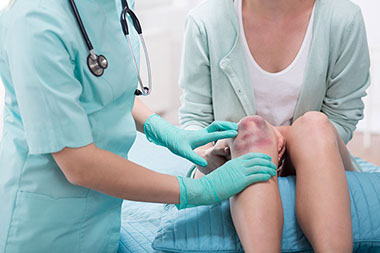
    Image of nurse examing patient bruise on knee.

    Bruises are broken blood vessels under the skin. In areas where the skin is thin, like around the eyes, the bruise will show up more. Bruises on the head or shin tend to swell the most because the bones in these areas are very close to the skin.

    Signs & Symptoms

    *  Black and blue or red skin. As it heals, the skin turns greenish-yellow.

    *  Pain or tenderness

    *  Possible swelling

    *  A bruise usually lasts less than 2 weeks.

    Causes, Risk Factors & Care

    Bruises are common. Most often, they occur after a fall or being hit by some force. They can, though, occur for no apparent reason. The risk of getting bruises increases with:

    *  Taking certain medications, such as aspirin, blood thinners, corticosteroids, water pills, and drugs for arthritis

    *  Being female, middle aged, or elderly

    *  Being an alcoholic or drug user

    *  Having certain medical conditions. Examples are anemia, a blood platelet disorder, liver disease, and lupus.

    Most small bruises need no treatment and will go away on their own. For some larger bruises, especially if there is pain or swelling, self-care can help. If bruises result from a medical condition, the medical condition needs to be treated.

    Self-Care

    *  Apply a cold pack to the bruised area within 15 minutes of the injury. Keep the cold pack on for 10 minutes at a time. Apply pressure to the cold pack. Take it off for 30 to 60 minutes. Repeat several times for 2 days.

    *  Rest the bruised area.

    *  Raise the bruised area above the level of the heart, if practical.

    *  Two days after the injury, use warm compresses. Do this for 20 minutes at a time.

    *  Do not bandage a bruise.

    When to Seek Medical Care

    Contact Doctor When:

    *  You have any of these problems with a bruise:

    – Vision problems with a bruise near the eye

    – Signs of infection (fever; increased pain; redness, and/or swelling; pus)

    – Nosebleeds or excessive bleeding from cuts

    – Loss of weight and appetite

    – Joint pain, fever, or swollen lymph nodes

    *  You have any of these problems:

    – Bruising on the hip after a fall

    – Bruises appear often and easily.

    – Bruises take longer than 2 weeks to go away.

    – Over a year’s time, more than 2 or 3 bruises appear for no apparent reason.

    Health at Home Lifetime book by the American Institute for Preventive Medicine. www.HealthyLife.com. All rights reserved.

    © American Institute for Preventive Medicine
  • A Simple Remedy For Prickly Heat

    Skin Conditions

    Image of women sitting in grass field on sunny summer day.

    Feeling hot and sticky is bad enough. A visible sign of discomfort only makes it worse. Such is the case with prickly heat (also known as heat rash), identified by clusters of small blisters that itch and appear where you perspire the heaviest – the armpits, neck, back, or creases in the elbows (but not the face).

    Hot, humid weather, sensitive skin, and excess weight all aggravate prickly heat. Here are some simple ways to find relief:

    *  Wear loose, lightweight clothing.

    *  Dust the affected area with cornstarch.

    *  Take cool baths to reduce itching.

    *  Avoid hot, humid environments and stay in air-conditioned places, if possible.

    The key to managing prickly heat is to avoid sweating by staying in a cool environment. The rash will disappear in a couple of days.

    A Year of Health Hints book by the American Institute for Preventive Medicine. www.HealthyLife.com. All rights reserved.

    © American Institute for Preventive Medicine
  • Cellulitis

    Skin Conditions

    Cellulitis is an infection of the skin and tissues below it. Most often, cellulitis occurs on the arms and legs or on the face.

    Signs & Symptoms

    *  Red, swollen, painful, tender, and warm skin.

    *  Red lines that spread from the wound.

    *  Swollen lymph nodes near the wound.

    *  Chills and fever.

    Causes

    Cellulitis is caused by several types of bacteria. These usually enter the body through minor skin breaks (cuts, burns, other wounds). One cause for cellulitis that recurs is community-acquired MRSA (Methicillin- resistant Staphylococcus aureus.)

    Treatment

    Oral, topical, and/or IV antibiotics are given. The type(s) used depend on how serious the infection is. Medicine to relieve pain may be needed.

    Questions to Ask

    Self-Care / Prevention

    To Prevent Cellulitis

    *  Keep your skin clean and protect it from injury.

    *  Clean cuts, scrapes, and other skin wounds and injuries, thoroughly, with soap and water. Keep wounds and sores clean, dry, and covered until healed.

    *  To help prevent community-acquired MRSA, avoid contact with other people’s wounds or bandages in schools, health care settings and sports. Do not share towels, washcloths, razors, clothing, or uniforms that may have had contact with an infected wound or bandage. Shower right after sporting events, workouts, etc.

    To Treat Cellulitis

    *  Follow your treatment plan. Take all of your prescribed antibiotic(s).

    *  Take pain relievers as directed.

    *  Rest the affected area. Elevate it to reduce swelling.

    Healthier at Home book by the American Institute for Preventive Medicine. www.HealthyLife.com. All rights reserved.

    © American Institute for Preventive Medicine