Category: Medical Care

  • Use Your Benefits Before The Year Runs Out

    Medical Care

    Smiling female doctor.

    *  Schedule office visits, tests, and exams that you need, but have not yet had this year, especially if they are covered expenses or if you have met your deductible.

    *  If you have a flexible spending account (FSA), make sure to use it all by the yearly deadline date. You lose what you do not spend. Find out what your FSA covers. You may be able to use it for:

    –  Over-the-counter medications

    –  Contact lenses and solution

    –  Batteries for hearing aids

    –  A quit tobacco program

    *  Put timing for medical expenses on your side. For example, if the expected costs for dental care exceed your yearly limit, get as many visits this month that this year’s limit will cover. Schedule the rest for the beginning of next year when a new year of dental coverage begins.

    A Year of Health Hints book by the American Institute for Preventive Medicine. www.HealthyLife.com. All rights reserved.

    © American Institute for Preventive Medicine

  • Blood Donation

    Medical Care

    Hands cupped together holding a red paper shaped as a blood drop.

    Giving blood is very safe.

    Every 2 seconds, someone in the U.S. needs blood. Approximately 29,000 blood donations are needed every day.

    To donate blood, you must be at least 17 years old, weigh more than 110 pounds and be in good health. Find out about other guidelines for donating blood fromredcross.org.

    Giving blood is very safe. Sterile procedures are followed. When you donate blood, you cannot get HIV, the virus that causes AIDS.

    If you are going to have surgery and may need blood, you can give your own blood ahead of time. This is called autologous blood transfusion.

    A Year of Health Hints book by the American Institute for Preventive Medicine. www.HealthyLife.com. All rights reserved.

    © American Institute for Preventive Medicine

  • Major Illness Warning Signs

    Medical Care

    It is better to prevent an illness than to get it. The next best thing is to detect and treat an illness early.

    Prevention

    *  Maintain a healthy body weight.

    *  Do regular exercise.

    *  Eat healthy.

    – Eat 5 or more servings of fruits and vegetables a day. Eat whole-grain breads, cereals, and bran. Eat kidney and other beans, peas, and soy foods, such as tofu.

    – Have 20 to 35 grams of dietary fiber a day.

    – Follow a low saturated fat diet. Strictly limit trans fats.

    – Limit cholesterol to 300 milligrams per day.

    – Eat salt-cured, salt-pickled, and smoked foods only once in a while, if at all.

    *  Limit alcohol to 2 drinks per day for men; 1 drink per day for women and persons age 65 and older.

    *  Don’t smoke or use tobacco products. Avoid secondhand smoke.

    *  Limit exposure to cancer causing agents, such as asbestos, pesticides, etc.

    *  Have X-rays only when needed.

    *  Limit your exposure to the sun, sun lamps, and tanning booths. When you are in the sun, protect your skin.

    *  Manage stress.

    *  Take the medicines your doctor prescribes.

    *  Talk to your doctor about taking vitamins, minerals, and other supplements.

    *  Have regular health screenings.

    *  Ask your doctor if there are other things you can do to lower your risk for health problems, especially if you are at a high risk for them. Examples include:

    – Breast cancer

    – Diabetes

    – Heart disease

    – High blood pressure

    – Osteoporosis

    – Stroke

    * Adults should also be screened for alcohol misuse, depression, obesity, and tobacco use. If you are at an increased risk for an illness, tests may need to be done sooner. Extra tests, such as screenings for diabetes, may also be needed. Follow your doctor’s advice.

    1. Screening guidelines vary with different health groups. For ages 40-49 and 75+, discuss your risk for breast cancer and the pros and cons of screening with your doctor. If you are at a high risk for breast cancer, seek expert medical advice about screening and prevention.

    2. Prostate-specific antigen (PSA) blood test screening guidelines vary with different health groups. Ask your doctor if and at what age you should start discussing the benefits and risks of getting PSA blood tests.

    Cancer

    When cancer first develops, there may be no pain or other signs. That’s why screening tests are important. As different types of cancers grow, warning signs may be present. These signs may be due to problems other than cancer, too. See your doctor to find out. In many cases, the sooner cancer is found and treated, the better the chances for a full recovery.

    For Bladder Cancer

    *  Blood in the urine. The color of the urine can be deep red or it can be a faint rust or smokey color.

    *  Pain when you urinate.

    *  The need to urinate often or urgently.

    For Breast Cancer

    *  A lump or thickening: In the breast; in the surrounding area; along the collar bone and below the breast; or in the underarm area.

    *  A change in the size or shape of the breast.

    *  A nonmilky or bloody discharge from the nipple.

    *  A change in the color or feel of the skin of the breast, nipple, or areola (the brown or pink area around the nipple). Dimpled, puckered, or scaly skin.

    For Colon and Rectal Cancers

    *  A change in bowel habits.

    *  Constipation. Having stools more often and/or loose stools.

    *  A feeling that the bowel does not empty all the way.

    *  Blood in or on the stool. This can be bright red or very dark in color.

    *  Stools that are more narrow than usual.

    *  Stomach bloating, fullness, and/or cramps.

    *  Frequent gas pains.

    *  Weight loss for no known reason.

    *  Constant tiredness.

    For Kidney Cancer

    *  Blood in the urine.

    *  A lump or mass that can be felt in the kidney area.

    *  A dull ache or pain in the back or side.

    *  An unexplained cough for more than 3 weeks.

    For Lung Cancer

    *  A cough that doesn’t go away. This could be a “smoker’s cough” that gets worse.

    *  Constant chest pain. Back pain in some persons.

    *  Hoarseness.

    *  Shortness of breath and wheezing.

    *  Recurring pneumonia or bronchitis.

    *  Coughing up blood.

    *  Fatigue, appetite loss and weight loss.

    *  Weakness in your shoulder, arm, or hand.

    For Ovarian Cancer

    Often, there are no early symptoms. When symptoms appear, they include:

    *  Swelling, bloated feeling, or discomfort in the lower abdomen.

    *  Feeling full even after a light meal. Loss of appetite and weight.

    *  Gas. Indigestion. Nausea.

    *  Diarrhea, constipation, or frequent urination.

    *  Bleeding from the vagina.

    Often, the cancer has spread by the time it is found.

    For Prostate Cancer

    Early prostate cancer often does not cause symptoms. When symptoms occur, they may include:

    *  A need to pass urine often, especially at night.

    *  A hard time starting to urinate, holding back urine, or not being able to pass urine.

    *  Weak or interrupted flow of urine.

    *  Pain or burning feeling when you pass urine.

    *  Pain when you ejaculate.

    *  Blood in the urine or semen.

    *  Frequent pain or stiffness in the lower back, hips, or upper thighs.

    For Testicular Cancer

    *  A lump in a testicle

    *  A feeling of heaviness in the scrotum

    *  A dull ache in the lower abdomen or groin

    *  A sudden build up of fluid in the scrotum

    *  Pain or discomfort in a testicle or the scrotum

    *  Enlarged or tender breasts

    Males aged 15 and older should do a testicular self-exam (TSE) if and as often as advised by their doctors to look for any lumps or changes in the size or shape of a testicle.

    For Throat Cancer

    *  Hoarseness or other changes in the voice

    *  A lump on the neck or feeling of a lump in the throat

    *  A cough that doesn’t go away

    *  A hard time swallowing. A feeling of fullness, pressure, or burning when swallowing.

    *  Repeated cases of indigestion and heartburn. Frequent vomiting or choking on food.

    *  Pain behind the breastbone or in the throat

    Basal and Squamous Cell Cancers

    *  Basal cell. More than 90% of all skin cancers in the U.S. are this type. It grows slowly. It seldom spreads to other parts of the body.

    *  Squamous cell. This type of skin cancer spreads more often than the basal cell type. It is still rare for it to spread, though.

    Basal and squamous cell cancers are found mainly on areas of the skin that are exposed to the sun, like the head, face, neck, hands, and arms. These skin cancers can occur anywhere, though.

    Early Warning Signs of Basal and Squamous Cell Cancers

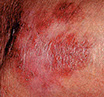
    Small, smooth, shiny, pale, or waxy lump.

    Firm red lump.

    A lump that bleeds or develops a crust.

    A flat, red spot that is rough, dry, or scaly.

    Warning Signs of Melanoma

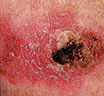
    The first sign can be a change in an existing mole or a new or “ugly-looking” mole. The letters “ABCDE” can identify signs.

    Skin Self-Exam

    *  Do an exam monthly, after a shower or bath. To check your skin, use:

    – A well-lit room

    – A full-length mirror

    – A hand-held mirror

    *  Locate your birthmarks, moles, and blemishes. Check for a change in the size, texture, or color of a mole. Check for a sore that does not heal.

    Check all areas.

    1.  Look at the front and back of your body in the mirror. Raise your arms and look at your left and right sides.

    2.  Bend your elbows and look carefully at the palms of your hands. Look at both sides of your forearms and upper arms.

    3.  Look at the back and front of your legs. Look between the buttocks and around the genital area.

    4.  Sit and closely examine your feet. Look at the soles and between the toes.

    5.  Look at your face, neck, and scalp. Use a comb to move your hair so you can see your scalp.

    See your doctor if you find anything unusual.

    Diabetes

    One in three people who have diabetes do not know they have it. See your doctor if you have one or more of the signs listed below.

    Signs of Diabetes:

    * Frequent urination

    * Excessive thirst

    * Extreme hunger

    * Unusual weight loss

    * Increased fatigue

    * Irritability

    * Blurry vision

    In type 1 diabetes, symptoms tend to come on quickly. With this type, the body either makes no insulin or only very small amounts.

    In type 2 diabetes, symptoms tend to come on more slowly. The body does not make enough insulin or can’t use it the right way. This type most often occurs in persons who are over age 40, are overweight, and who don’t exercise.

    Pre-diabetes occurs before type 2 diabetes. Getting diagnosed and treated for this can keep you from getting type 2 diabetes.

    Diabetes can be present without symptoms. Follow your doctor’s advice to screen for diabetes. Early detection and treatment lower the chances of diabetes complications.

    Heart Attack

    Heart Attack Warning Signs

    If heart attack warning signs occur, call 9-1-1 or your local rescue squad right away!

    See your doctor if you have one or more of these signs and symptoms:

    *  Chest discomfort. Most heart attacks involve discomfort in the center of the chest that lasts for more than a few minutes or goes away and comes back. The discomfort feels like pressure, fullness, squeezing or pain.

    *  Discomfort in other areas of the upper body. This can include pain or discomfort in one or both arms or in the back, neck, jaw, or stomach.

    *  Shortness of breath. Often, this comes with chest discomfort. But it can also come before the chest discomfort.

    *  Other symptoms. These can include breaking out in a cold sweat, nausea, or being lightheaded.

    The most common heart attack symptom for both men and women is chest pain or discomfort. But women are more likely than men to have some of the other common signs, especially shortness of breath, nausea or vomiting, and back or jaw pain.

    Lupus

    Lupus is an immune system disorder. It can affect the skin, joints, kidneys, and nervous system.

    Warning signs of lupus:

    *  Joints ache and swell for more than 3 months.

    *  Fingers get pale, numb, or ache in the cold temperatures.

    *  Mouth sores last for more than 2 weeks.

    *  Blood tests show: Anemia; low white cell count, or low platelet count; and/or protein in the urine.

    *  A rash occurs across the nose and cheeks. It lasts for more than 1 month.

    *  Skin rash (not sunburn) occurs after being in the sun.

    *  Pain lasts for more than 2 days when taking deep breaths.

    *  A seizure or convulsion occurs.

    Let your doctor know if you have or have had any of these warning signs. Having 3 or more of these signs may suggest lupus.

    Stroke

    Stroke Warning Signs

    *  Sudden numbness or weakness of the face, arm or leg, especially on one side of the body

    *  Sudden confusion, trouble speaking or understanding

    *  Sudden trouble seeing in one or both eyes

    *  Sudden trouble walking, dizziness, loss of balance or coordination

    *  Sudden severe headache with no known cause

    If stroke warning signs occur, call 9-1-1 or your local rescue squad right away!

    Cover image to the Major Illness Warnings brochure by the American Institute for Preventive Medicine. www.HealthyLife.com. All rights reserved.

    © American Institute for Preventive Medicine

  • Save By Staying Healthy. Prevention Is Worth More Than A Pound Of Cure.

    Medical Care

    Couple play dueling in the kitchen, laughing.

    *  Choose healthy foods. Control portion sizes. Maintain a healthy weight. Obesity raises the risk of type 2 diabetes, heart disease, and other chronic diseases, which can be very expensive to treat. Persons who are obese may be charged more for life and health insurance.

    *  Be fit at little or no cost. Walk with a friend.  Join a mall walkers program.

    *  If you smoke, quit! You’ll save money on cigarettes, health care, and insurance. Get free help from 800.QUIT. NOW orsmokefree.gov.

    *  Take part in health risk assessments and health and wellness offerings at work.

    *  Wash your hands often to lessen the chance of picking up germs.

    *  Brush and floss your teeth daily. Get a dental checkup once or twice a year. Doing these help prevent periodontal (gum) disease. Not only is it expensive to treat, it is associated with heart disease and pneumonia.

    *  Get at least 6 to 8 hours of sleep a night. Manage stress.

    A Year of Health Hints book by the American Institute for Preventive Medicine. www.HealthyLife.com. All rights reserved.

    © American Institute for Preventive Medicine

  • Using Your Health Care Plan

    Medical Care

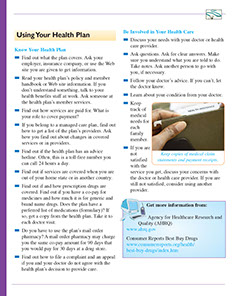
    Image of a folder with the words "Health Insurance" in the tab.

    Know Your Health Plan

    *  Find out what the plan covers. Ask your employer, insurance company, or use the Web site you are given to get information.

    *  Read your health plan’s policy and member handbook or Web site information. If you don’t understand something, talk to your health benefits staff at work. Ask someone at the health plan’s member services.

    *  Find out how services are paid for. What is your role to cover payment?

    *  If you belong to a managed care plan, find out how to get a list of the plan’s providers. Ask how you find out about changes in covered services or in providers.

    *  Find out if the health plan has an advice hotline. Often, this is a toll-free number you can call 24 hours a day.

    *  Find out if services are covered when you are out of your home state or in another country.

    *  Find out if and how prescription drugs are covered. Find out if you have a co-pay for medicines and how much it is for generic and brand name drugs. Does the plan have a preferred list of medications (formulary)? If so, get a copy from the health plan. Take it to each doctor visit.

    *  Learn about using the plan’s mail order pharmacy. This may charge you the same co-pay amount for 90 days that you would pay for 30 days at a drug store.

    *  Find out how to file a complaint and an appeal if you and your doctor do not agree with the health plan’s decision to provide care.

    Be Involved in Your Health Care

    *  Discuss your needs with your doctor or health care provider.

    *  Ask questions. Ask for clear answers. Make sure you understand what you are told to do. Take notes. Ask another person to go with you, if necessary.

    *  Follow your doctor’s advice. If you can’t, let the doctor know.

    *  Learn about your condition from your doctor.

    *  Keep track of medical needs for each family member.

    *  If you are not satisfied with the service you get, discuss your concerns with the doctor or health care provider. If you are still not satisfied, consider using another provider.

    Resources

    Agency for Healthcare Research and Quality (AHRQ)

    www.ahrq.gov

    Consumer Reports Best Buy Drugs

    www.consumerreports.org/health/best-buy-drugs/index.htm

    Page from the Healthier at Home book by the American Institute for Preventive Medicine. www.HealthyLife.com. All rights reserved.

    © American Institute for Preventive Medicine

  • Choose Benefit Options With Both Cost And Care In Mind

    Medical Care

    Wooden blocks with medical icons.

    *  Signing up for the same plan as the one you have is easy, but spending time to find out about all options could be worth it. Ask your employer for written materials for your options or how to access the information online.

    *  Estimate what your costs for the coming year will be using each option. Your company’s or insurance company’s website may have tools to help you do this.

    *  Consider a flexible spending account (FSA) to help pay for health care expenses. It also offers tax advantages. To determine how much to put into an FSA, add up out-of-pocket costs you expect to pay for the coming year. These include co-pays, deductibles, cost for eyeglasses, contact lenses, etc.

    *  The best deal may not be the cheapest plan, but the one that gives the best price for the benefits you are most likely to use.

    *  Find out if you can lower your health care premium costs by taking part in certain wellness and disease management programs offered through work.

    A Year of Health Hints book by the American Institute for Preventive Medicine. www.HealthyLife.com. All rights reserved.

    © American Institute for Preventive Medicine

  • How To Make The Most Of A Doctor Visit

    Medical Care

    Image of doctor and patient talking.

    When a doctor knows how to really communicate well with a patient, it can make a big difference in how that patient responds. But communication is a two-way process. Listening as well as speaking to one another is something both doctor and patient must work on together. Being honest and open with each other is also important.

    What Your Doctor Should Know about You

    Aside from a general health history, it is important that your doctor ask certain questions about the following:

    *  Dietary habits (Are you a frequent junk-food eater? Are you especially fond of cheesecake, sour cream, or other fatty foods?)

    *  Your occupation (Do you work in a high-stress job? Are you exposed to nickel, nuclear power radiation, or other toxic substances?)

    *  Sleep habits (Do you frequently awaken before dawn or have problems getting to sleep?)

    *  Family problems (Are you currently going through a divorce?)

    *  Lifestyle (Do you get any exercise?)

    *  Stress (Do you work in a noisy environment?)

    *  Health attitude (Are you serious about quitting smoking?)

    *  History of family illness (Does heart disease, high blood pressure, diabetes, kidney problems, or cancer run in your family?)

    *  Major life events (Have you recently retired from work?)

    *  Living arrangements (Do you live alone?)

    Quizzing Your Doctor

    Often, patients feel rushed or uneasy during a doctor visit. And when you’re sick, there is a tendency to feel vulnerable and passive. But by heeding these suggestions, you can still make the most of your doctor-patient communications.

    *  Repeat back in your own words what the doctor has told you.

    *  Use simple phrases like “Do I hear you say that…  ?” or “My understanding of the problem is. . .”

    *  Plan ahead of time what you will say to your doctor about your problem. Your observations about a health problem can be invaluable in making a diagnosis.

    *  Take notes on what is wrong and what you need to do.

    *  If you are confused by medical terms, ask for simple definitions. There is no need to be embarrassed by this.

    *  When a medication is prescribed, ask about its possible side effects, its effectiveness, and how long it must be taken.

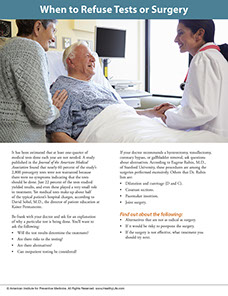
    *  If your doctor discusses surgery, ask about alternatives, risks, and a second opinion.

    *  Be frank with the doctor if any part of the office visit is annoying, such as lengthy waiting time or discourteous staff. Be tactful, but honest.

    *  Don’t be afraid to voice your fears or apprehensions about what you’ve heard. The doctor may be able to clarify any misconceptions.

    *  Discuss any self-care practices you’ve used that have relieved symptoms.

    *  Find out the best time for the doctor to receive your phone calls should any questions arise.

    Page from A Year of Health Hints book by the American Institute for Preventive Medicine. www.HealthyLife.com. All rights reserved.

    © American Institute for Preventive Medicine

  • Save If You Have Insurance

    Medical Care

    Image of doctor and piggy bank.

    Know health insurance terms and plans.

    This allows you to make wise choices. Read “Questions and Answers About Health Insurance – A Consumer Guide” fromwww.ahrq.gov/consumer/insuranceqaandwww.healthdecisions.org.

    If you can get health insurance through work, do it.

    More often than not, it will cost you less than if you buy it on your own. If you can choose from more than one plan, compare the options. The best deal may not be the cheapest plan. It is the one that gives the best price for the benefits you need and are most likely to use. If you need help to understand the options, ask your employer. Get facts from the insurance company’s Web site and/or customer service representative, too.

    Raise your deductible.

    Your deductible is the amount you must pay before your health insurance kicks in. Like car insurance, monthly premiums cost less if you pay a higher deductible. Healthy adults can usually save money with this option.

    Check into a Consumer Driven Health Plan.

    This gives you greater control over how you use your health care benefits. You pay a high deductible. You pay for your health care costs from a tax-exempt health account. If you expect to be healthy, this may be a good choice for you.

    Read your health plan.

    Read what products and services are covered before you pay for them on your own. Take advantage of covered services, such as dental checkups and cleanings twice a year. You may find out that your health plan covers some of the costs for flu vaccines and other services.

    Student health insurance.

    Find out about student health insurance from your child’s school or college, especially if your child plans to study abroad.

    Be Medicare aware.

    Medicare is the U.S. government’s health insurance for persons age 65 or older. It also covers people under age 65 who have disabilities. Find out when you will be eligible for Medicare fromwww.medicare.govor by calling 800.MEDICARE (633.4227).

    *  When you are enrolled in Medicare, you get Medicare Part A. This covers medical costs when you are in the hospital.

    *  Medicare Part B covers things that  Part A does not. Examples are doctors’ fees, outpatient hospital costs, physical therapy, etc. You pay a monthly premium for this.

    *  Medicare Part D helps cover the cost of prescribed medicines.

    Fill in the gaps.

    Find ways to pay for services not covered by your insurance plan.

    *  If you have Medicare, you can buy Medigap, Medicare Select, or Medicare Advantage HMO insurance to help pay for services not covered by Medicare. Contact your state health insurance department to find out about your choices for each of these health plans. You need only one of these. For free help choosing a Medicap policy, call your State Health Insurance Assistance Program.

    *  Look into extra coverage from providers, such as Aflac.

    Pay premiums on time.

    If you don’t, your coverage could be cancelled.

    Know about COBRA.

    This stands for Consolidated Omnibus Budget Reconciliation Act. COBRA is temporary health insurance. It applies to former employees, retirees, spouses, former spouses, and dependent children who are no longer covered under an employer health insurance plan. It lets you keep the same health insurance for 18 months (sometimes longer) if you pay for it yourself. Find out more about COBRA fromwww.dol.gov/dol/topic/health-plans/cobra.htm. Know, too, that it may cost you less to buy your own health insurance than to pay what COBRA will cost you, especially if you are in good health and have no pre-existing health problems.

    Find out who to contact when the insurance company denies a claim.

    Sometimes claims are rejected by mistake. When this happens, you can usually clear up the mistake by calling or writing a letter to your insurance company. Keep copies of all bills, letters, and notes from phone calls. Put your policy and claim numbers on all letters or e-mails. Call your insurance company if you don’t get an answer within a few weeks.

    Keep up-to-date.

    Find out how you learn about updates and changes in your health plan. Do you get notified by mail or by e-mail? Do you need to check the health plan’s Web site? How do you add a new dependent to the plan? Also, find out when you can change the plan you have. Often, you can only do this during open enrollment.

    Know before you go.

    Call your health insurance company before you have a medical service. Some services are only covered if the insurance company approves them first and/or if they are done at certain locations or by certain providers.

    One may be enough.

    If both you and your spouse both have health insurance through work, choose the plan that works best. Decide if it is better to keep separate plans or if it would cost less for either of you to join the other’s plan. Your employer may let you take cash or other benefits instead of health insurance. Keep the better policy if you can and “cash in” on the other one. Also, find out which policy covers your children better. Think about future needs, too. For prenatal and delivery costs to be covered, a woman may need to be a member of the plan for nine or more months before she gets pregnant.

    Take advantage of FSAs.

    Find out if your employer offers a Flexible Spending Account (FSA). This lets you set aside some money for medical expenses for the year. You could choose to set aside $1,000. This is usually taken out of your paycheck, but you don’t pay federal income tax or Social Security tax on this money. But be careful how much you put into your FSA. You lose any money you don’t spend on health care in the year. Look at last year’s health care expenses for a ballpark figure on what you think you will likely spend. Don’t count any money that is taken from your paycheck for insurance premiums. Do count deductibles, co-pays, and treatments your insurance doesn’t cover.

    Use it before you lose it!

    If you are going to lose your health insurance, you are part of a growing trend in the U.S. Schedule doctor visits and other health care services before expenses will no longer be covered.

    Before you travel, check out your health insurance coverage.

    Are you covered where you are going? If not, ask your health insurance provider how to get coverage while you are gone. You can also find out about travel health insurance fromwww.travelrinsurance.com.

    Cover image to the Healthy Savings book by the American Institute for Preventive Medicine. www.HealthyLife.com. All rights reserved.

    © American Institute for Preventive Medicine

  • When In Doubt, Get A Second Opinion

    Medical Care

    Image of doctor and patient talking.

    The very first thing you should do if a doctor suggests surgery is to get the opinion of a second doctor. Programs to encourage patients to pursue other options have been established all over the country in an effort to curtail unnecessary surgery.

    Ask your physician or someone else you trust to recommend a non-surgeon or another surgeon, not affiliated with the same hospital as your physician, who will review your case and offer an opinion. Generally, you should not submit to surgery on the basis of one medical opinion alone.

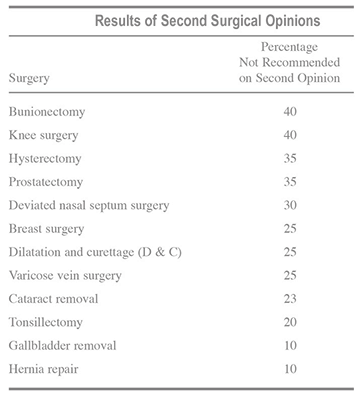
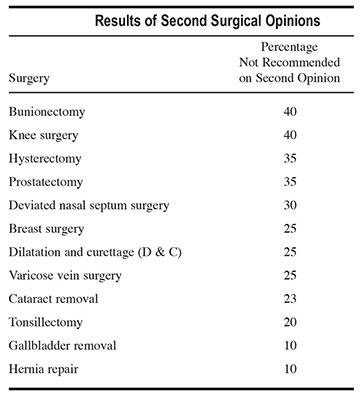
    The following table indicates the percentage of surgeries not recommended by the physician giving a second opinion.

    Always check with your insurance company to see if (and how much of) the cost of a second opinion will be covered. Most policies include this feature. If you have Medicare, call 1.800.MEDICARE (633.4227) for information on second surgical opinions.

    Page from A Year of Health Hints book by the American Institute for Preventive Medicine. www.HealthyLife.com. All rights reserved.

    © American Institute for Preventive Medicine

  • Choosing A Doctor Or Health Care Provider

    Medical Care

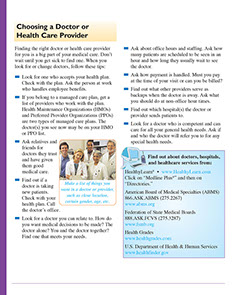
    Finding the right doctor or health care provider for you is a big part of your medical care. Don’t wait until you get sick to find one. When you look for or change doctors, follow these tips:

    *  Look for one who accepts your health plan. Check with the plan. Ask the person at work who handles employee benefits.

    *  If you belong to a managed care plan, get a list of providers who work with the plan. Health Maintenance Organizations (HMOs) and Preferred Provider Organizations (PPOs) are two types of managed care plans. The doctor(s) you see now may be on your HMO or PPO list.

    *  Ask relatives and friends for doctors they trust and have given them good medical care.

    *  Find out if a doctor is taking new patients. Check with your health plan. Call the doctor’s office.

    *  Look for a doctor you can relate to. How do you want medical decisions to be made? The doctor alone? You and the doctor together? Find one that meets your needs.

    *  Ask about office hours and staffing. Ask how many patients are scheduled to be seen in an hour and how long they usually wait to see the doctor.

    *  Ask how payment is handled. Must you pay at the time of your visit or can you be billed?

    *  Find out what other providers serve as backups when the doctor is away. Ask what you should do at non-office hour times.

    *  Find out which hospital(s) the doctor or provider sends patients to.

    *  Look for a doctor who is competent and can care for all your general health needs. Ask if and who the doctor will refer you to for any special health needs.

    Resources

    American Board of Medical Specialties (ABMS)

    866.ASK.ABMS (275.2267)

    www.abms.org

    Federation of State Medical Boards

    888.ASK.FCVS (275.3287)

    www.fsmb.org

    Health Grades

    www.healthgrades.com

    U.S. Department of Health & Human Services

    www.healthfinder.gov

    Page from the Healthier at Home book by the American Institute for Preventive Medicine. www.HealthyLife.com. All rights reserved.

    © American Institute for Preventive Medicine