Category: Uncategorized

  • Disclaimer_Healthylearn

    Disclaimer

    This Online guide is not meant to substitute for expert medical advice or treatment. The information is given to help you make informed choices about your health. Follow your doctor’s or health care provider’s advice if it differs from what is given in this guide.

    HealthyLearn Online provides links to videos and other Internet sites for additional information for the user. The American Institute for Preventive Medicine (AIPM) is not responsible for the availability or content of these videos and external sites, nor does AIPM endorse, warrant or guarantee the products, services or information described or offered at these videos and other Internet sites. Also, it is the responsibility of the user to examine the copyright and licensing restrictions of linked pages and to secure all necessary permission.
    The content on this Web site is proprietary. YOU MAY NOT MODIFY, COPY, REPRODUCE, REPUBLISH, UPLOAD, POST, TRANSMIT, OR DISTRIBUTE, IN ANY MANNER, THE MATERIAL ON THE SITE.

    By visiting www.healthylearn.com, you are accepting the practices described in this Privacy Policy. This Policy is subject to change without notice and you should revisit this site frequently for the most current version of our policy.

    Our Pledge to You, Our Customer

    www.healthylearn.com respects your privacy. We do not sell, rent, loan or transfer any personal information regarding our customers to any unrelated third parties. Any information you give us about yourself is held with the utmost care and security and will not be used in ways to which you have not consented. Information collected on our Web site is used by www.healthylearn.com and authorized agents for www.healthylearn.com purposes (“www.healthylearn.com”). www.healthylearn.com will not collect any personal information about you except when specifically and knowingly provided by you. Examples of personally identifiable information include full name, home address, e-mail address and phone number. www.healthylearn.com will use reasonable efforts to include accurate and up-to-date information on this site. All users agree that all access to and use of this site and its content is at your own risk. www.healthylearn.com will not be liable for any damage arising out of your access to, use of, or inability to use this site, or any errors or omissions in the content thereof. The materials in this site are provided “AS IS” and without warranties of any kind either expressed or implied.

    Use of Your Information

    Authorized www.healthylearn.com employees internally use information collected on our Web site for two main purposes. First, we collect information to figure out how to improve our site by seeing which areas features and products are most popular. Second, we collect information in order to personalize the site for our customers. For example, in the future, we may recommend products or features you may like based on what you have liked in the past. If we want to collect information for other purposes, we will inform you when we collect the information. Occasionally, www.healthylearn.com may also share non-personal, summary information regarding our customers with unrelated third parties (for example, we publicly disclose the aggregate number of registered users of our Web site). However, www.healthylearn.com does not share any personal information about any particular customer with unrelated third parties. If you do not want to receive e-mail from us and currently do, please reply to an e-mail that we have sent to you and insert “unsubscribe” in the subject line.

    Use of Our Information

    We are certain you understand that www.healthylearn.com must protect its intellectual property, including its patents, trademarks, and copyrights. Therefore, no license to www.healthylearn.com’s intellectual property has been granted by this Internet site.

    Cookies

    www.healthylearn.com uses a feature of your Internet Web browser called a “cookie” to assign a unique identification to your computer. Cookies are files that your Web browser places on your computer’s hard drive. We use these cookie files to track your clicks as you go through the www.healthylearn.com Web site, to tell us whether you have visited www.healthylearn.com previously, and to help us determine whether you came to www.healthylearn.com from a particular Internet link or banner advertisement. www.healthylearn.com does not and cannot use cookies to retrieve personal information about you from your computer. The “help” portion of the toolbar on most browsers will tell you how to prevent your browser from accepting new cookies, how to have the browser notify you when you receive a new cookie, or how to disable cookies altogether. However, you will not be able to use some www.healthylearn.com features if you do not use cookies.

    Maintenance Of Accurate Information

    Procedures have been established to ensure that our product and promotional information is current and accurate in keeping with reasonable standards. We are committed to respond to requests to correct inaccurate information in a timely manner.

    Third-Party Sites

    Our site contains links to other sites whose information practices and privacy policy may be different than our own. Visitors should consult the other sites’ privacy notices, as we have no control over information that is submitted to, or collected by, these third parties.

    Questions and Comments

    © American Institute for Preventive Medicine
  • Bloated Belly: Ways To Get Relief

    SELF-CARE CORNER

    Image of tea and different tea leaves.

    Most people have felt a bloated stomach after a big meal. Usually, the belly feels overly full. It can make clothing feel tighter. The belly may look swollen. Bloating is usually caused by too much food or air and gas getting trapped in the intestines.

    But some people get bloated even when they didn’t eat too much. In some cases, it can be downright painful. The best way to address painful bloating is to find the cause and know how you can treat it.

    Bloating culprits

    The most common causes include:

    *  Dairy foods. If you notice bloating after eating cheese, ice cream, or drinking milk, you could have lactose intolerance.

    *  Gum. Swallowing air while chewing can cause bloating.

    *  Eating too much fiber at once. Fiber is great for you, but if your body isn’t used to it, you can get bloated and uncomfortable. Increase the amount you eat gradually.

    *  Bowel problems. Being constipated or having irritable bowel syndrome (IBS) can cause painful bloating. Drinking plenty of water can help with constipation and fiber absorption.

    *  Menstrual cycles. Some women get bloated because their body holds extra water before or during their periods.

    Treat bloating at home

    Many times, bloating can be managed at home. Here’s how:

    *  Write down what you eat and drink. Record when you get stomach pain or bloating.

    *  Cut back on gum.

    *  Avoid carbonated drinks.

    *  Drink plenty of water to keep the bowels moving. Don’t use a straw when drinking.

    *  Eat enough fiber. Start with fruits and vegetables. Eat only small amounts of beans, lentils and other gas-causing foods until you get used to them.

    *  Watch out for sugar-free foods. Some artificial sweeteners can cause bloating and gas.

    *  Ginger, peppermint, chamomile or fennel herbal teas may help. Always ask a doctor before using herbs if you have a health condition or take any medicines.

    *  Over-the-counter anti-gas medicines with simethicone help move gas bubbles out of the body.

    When to see your doctor

    Call a doctor or seek immediate medical care if you notice bloating with:

    *  Blood with bowel movements (stool)

    *  Losing weight without making an effort

    *  Nausea or vomiting

    *  For women: menstrual bleeding between periods or after menopause

    *  Fever

    *  Severe pain that won’t go away

    These could be signs of a serious health issue that needs treatment.

    Source: American Academy of Family Physicians

    © American Institute for Preventive Medicine
  • Health Screenings For Women

    SELF-CARE CORNER

    Stethoscope and female symbol pills on pink top view.

    Women are at risk for a unique set of health issues. Every woman should visit their primary care and OB-GYN provider every year for a checkup that includes the recommended screenings.

    Ask your doctor what screenings are right for you. Your doctor will decide which screenings you need based on your age, family history, health history, and other risk factors.

    Women aged 18 to 39

    *  Blood pressure screening

    *  Cholesterol screening

    *  Diabetes screening

    *  Immunizations

    *  Infectious disease screening including STI’s

    *  Physical exam

    *  Breast cancer screening

    *  Cervical cancer screening

    *  Skin self-exam

    *  Dental and eye exams

    *  Early and regular prenatal care during pregnancy

    Women aged  40 to 64

    *  Blood pressure screening

    *  Cholesterol screening

    *  Diabetes screening

    *  Immunizations

    *  Infectious disease screening including STI’s

    *  Physical exam

    *  Breast, colon, and lung cancer screenings

    *  Cervical cancer screening

    *  Osteoporosis screening

    *  Skin cancer screening

    *  Dental and eye exams

    Women aged 65 and over

    *  Blood pressure screening

    *  Cholesterol and heart disease screening

    *  Diabetes screening

    *  Immunizations

    *  Infectious disease screening including STI’s

    *  Physical exam

    *  Breast, colon, and lung cancer screenings

    *  Cervical cancer screening may no longer be needed. Check with your doctor.

    *  Osteoporosis screening

    *  Skin cancer screening

    *  Hearing test

    *  Dental and eye exams

    © American Institute for Preventive Medicine
  • Should You Be Taking Daily Aspirin?

    SELF-CARE CORNER

    An open pill bottle with aspirin spilled out.

    Taking a low dose aspirin every day can lower the chance of a heart attack. But that doesn’t mean that a daily aspirin is right for everyone. The National Institutes of Health says some people take aspirin each day – but they shouldn’t. The NIH has new guidelines about who should or should not take it.

    What does aspirin do?

    Aspirin is a non-steroidal anti-inflammatory drug (NSAID). It is a pain reliever for headaches and other aches and pains.

    Aspirin also thins the blood. This can prevent clots that can lead to a heart attack or stroke. Taking a low-dose aspirin every day can be life-saving for many people. However, aspirin also has risks. It can cause bleeding in the stomach and brain bleeding in rare cases.

    New guidelines to follow

    Researchers think many people are taking aspirin without their doctor’s approval. This can mean they could put themselves in danger of bleeding or stomach problems. Aspirin can also interact with other medications or supplements.

    Experts no longer think everyone over age 70 should take daily aspirin. People who have a low risk of heart attack or stroke may not need it. Also, people who have a higher risk of bleeding – no matter what age – should not take it.

    People who benefit from daily aspirin have a higher risk of heart attack or stroke. They may have already had a heart attack or stroke in the past. They may have a family history of heart problems or other risk factors.

    The best protection

    If you don’t need daily aspirin, you can help prevent heart disease with simple healthy habits.

    *  Get more exercise.

    *  Eat a heart-healthy diet.

    *  Don’t smoke.

    *  Get regular cholesterol and blood pressure checks.

    What’s the bottom line?Don’t start taking daily aspirin unless your doctor says you should. And, tell your doctor and pharmacist about all medications and supplements you take.

    Sources: American Heart Association, National Institutes of Health

    © American Institute for Preventive Medicine
  • Exercise Lowers Breast Cancer Risk

    BE FIT

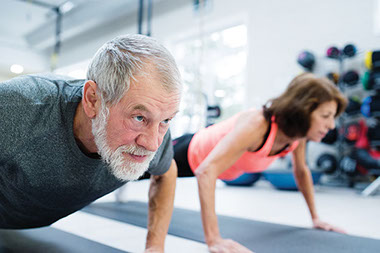
    Women using weights.

    In just 30 minutes a day, a woman can lower her risk of breast cancer. You don’t need special equipment or a gym. Power walking is a good choice to make a difference!

    Exercise lowers breast cancer risk by:

    *  Helping you get to a healthy weight. Being overweight raises the risk of getting breast cancer. This is because fat cells make estrogen that can allow some types of breast cancer cells to grow.

    *  Boosting your immune system. This could help stop or slow the growth of cancer cells.

    Source: National Breast Cancer Foundation

    © American Institute for Preventive Medicine

  • Know Your Fitness Goals

    BE FIT

    Two men with hands in the air sitting on bikes.

    The reason you exercise and move is unique to you. Knowing your fitness goals will help you stay focused on the types of movements that will provide you the most benefits for your physical, mental, and emotional health.

    Fitness goals

    *  Increased energy

    *  Better sleep

    *  Weight loss

    *  Stress reduction

    *  Improved strength

    *  Better balance

    *  Reduced disease risk

    *  Joint health

    *  Increased mobility

    *  Recovery from injury

    *  Maintain independence as you age

    Identify needs

    Reflect on these questions:

    *  How do I feel when I don’t move or exercise?

    *  How do I feel when I get more movement?

    *  Are there parts of my body that cause me pain?

    *  How might exercise reduce any current or future health problems?

    *  What do I want my health to look like in the next 5 to 10 years?

    Prioritize goals

    *  Choose 2-3 goals as your main focus.

    *  Find activities that match your goals.

    *  Don’t compare yourself to others.

    *  Connect with other people who have similar goals.

    *  Reevaluate your goals over time.

    © American Institute for Preventive Medicine

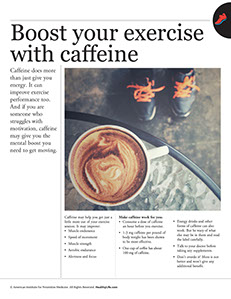
  • Boost Your Exercise With Caffeine

    BE FIT

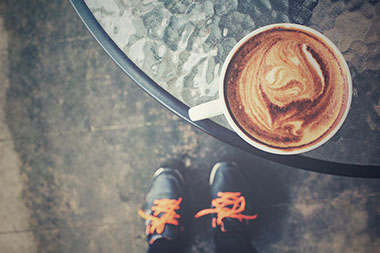
    Caffeine does more than just give you energy. It can improve exercise performance too. And if you are someone who struggles with motivation, caffeine may give you the mental boost you need to get moving.

    Caffeine may help you get just a little more out of your exercise session. It may improve:

    *  Muscle endurance

    *  Speed of movement

    *  Muscle strength

    *  Aerobic endurance

    *  Alertness and focus

    Make caffeine work for you:

    *  Consume a dose of caffeine an hour before you exercise.

    *  1-3 mg caffeine per pound of body weight has been shown to be most effective.

    *  One cup of coffee has about 100 mg of caffeine.

    *  Energy drinks and other forms of caffeine can also work. But be wary of what else may be in them and read the label carefully.

    *  Talk to your doctor before taking any supplements.

    *  Don’t overdo it! More is not better and won’t give any additional benefit.

    © American Institute for Preventive Medicine
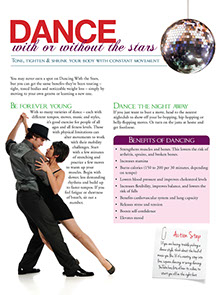
  • Dance With Or Without The Stars

    Fitness

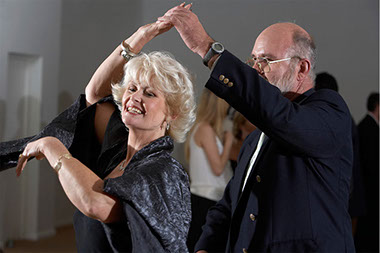
    Image of older couple ballroom dancing.

    Tone, tighten & shrink your body with constant movement.

    You may never earn a spot on Dancing With the Stars, but you can get the same benefits they’ve been touting – tight, toned bodies and noticeable weight loss – simply by moving to your own groove or learning a new one.

    Be forever young.

    With so many varieties of dance – each with different tempos, moves, music and styles, it’s good exercise for people of all ages and all fitness levels. Those with physical limitations can alter movements to work with their mobility challenges. Start with a few minutes of stretching and practice a few moves to warm up your muscles. Begin with slower, less demanding rhythms and build up to faster tempos. If you feel fatigue or shortness of breath, sit out a number.

    Dance the night away.

    If you just want to bust a move, head to the nearest nightclub to show off your be-bopping, hip-hopping or belly-flopping moves. Or turn on the jams at home and  get footloose.

    Benefits of dancing

    *  Strengthens muscles and bones. This lowers the risk of arthritis, sprains, and broken bones.

    *  Increases stamina

    *  Burns calories (150 to 200 per 30 minutes, depending on tempo)

    *  Lowers blood pressure and improves cholesterol levels

    *  Increases flexibility, improves balance, and lowers the risk of falls

    *  Benefits cardiovascular system and lung capacity

    *  Releases stress and tension

    *  Boosts self-confidence

    *  Elevates mood

    Action Step

    If you are having trouble picking a dance style, think about the kind of music you like. If it’s country, step into line, square dancing, or swing dancing. YouTube has lots of how-to videos to start you off on the right foot.

    Page image from Ways to Well-Being book by the American Institute for Preventive Medicine. www.HealthyLife.com. All rights reserved.

    © American Institute for Preventive Medicine
  • Healthy Exercise Tips For Children

    Fitness

    Image of 2 young kids running.

    *  Set a good example. Be active and get your family to join you. Have fun together. Play with the kids or pets. Go for a walk. Tumble in the leaves. Play catch.

    *  Take the President’s Challenge as a family. Keep track of physical activities each of you does. Earn awards for active lifestyles atwww.presidentschallenge.org.

    *  Get into a routine. Set aside time each day as activity time. Walk, jog, skate, cycle, or swim. Adults need at least 30 minutes of physical activity most days of the week. Children need 60 minutes everyday or most days of the week.

    *  Have an activity party. Make the next birthday party centered on physical activity. Try backyard Olympics or relay races. Have a bowling or skating party.

    *  Set up a home gym. Use things you have in the house. Use canned foods for weights. Use stairs for stair machines.

    *  Move it! Limit TV watching and computer time. When you watch TV, exercise or at least get up and move during TV ads. When you talk on the phone, lift weights or walk around.

    *  Give activity gifts. Give gifts that promote physical activity. Give sporting equipment or active games.

    *  Promote group sports. Children get regular exercise during practice and during games. Being part of a team can be good for children’s self-esteem, too.

    Page image from the Children's Self-Care Book by the American Institute for Preventive Medicine. www.HealthyLife.com. All rights reserved.

    © American Institute for Preventive Medicine
  • Test Your Fitness Level

    Fitness

    Image of women talking to her fitness trainer.

    How do you measure the success of your fitness program? By how much weight you lose? How many inches you trim off your waistline or hips? How well you sleep at night? How energetic you feel?

    These are all worthwhile criteria. Another way to evaluate your fitness level-and assess your progress-is to keep track of your resting heart rate (that is, your pulse rate when you’re least active).

    The idea is, the lower your resting heart rate, the better shape your heart is in. So as you become more fit, your resting heart rate should drop.

    Here’s how to measure it.

    1.  Take your pulse as soon as you wake up in the morning, before you get out of bed.

    2.  Count the number of beats for 10 seconds and multiply by six. This will give you your pulse in beats per minute.

    3.  Repeat the following morning. Then calculate the average of the two. (That is, add the two numbers together and divide by two.) This is your resting heart rate.

    Calculate your resting heart rate every three months, as conditioning takes some time to have an effect.

    Take the “Talk Test”

    No, this isn’t a suggestion that you audition to guest host “The Tonight Show.” It’s just a simple way for you to tell if you’re overdoing it when you exercise. If you’re too out of breath to comfortably carry on a conversation with another person as you dance, run, or slam-dunk your way to fitness, you’re probably working too hard and should slow down. (On the other hand, you should be working hard enough to break a mild sweat.) And of course, any unusual sign of physical distress (such as chest discomfort, pain of any kind, or dizziness) is a signal to slow down to a stop.

    Page image from A Year of Health Hints book by the American Institute for Preventive Medicine. www.HealthyLife.com. All rights reserved.

    © American Institute for Preventive Medicine