Category: Uncategorized

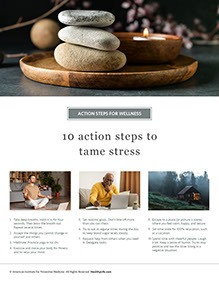
  • 10 Action Steps To Tame Stress

    Stress Management

    Wooden tray with stacked rocks and a candle.

    1.  Take deep breaths. Hold it in for four seconds. Then blow the breath out. Repeat several times.

    2.  Accept the things you cannot change in yourself and others.

    3.  Meditate. Practice yoga or tai chi.

    4.  Exercise and move your body for fitness and to relax your mind.

    5.  Set realistic goals. Don’t bite off more than you can chew.

    6.  Try to eat at regular times during the day to keep blood sugar levels steady.

    7.  Request help from others when you need it. Delegate tasks.

    8.  Escape to a place (or picture a scene) where you feel calm, happy, and secure.

    9.  Set time aside for 100% relaxation, such as a vacation.

    10. Spend time with cheerful people. Laugh a lot. Keep a sense of humor. Try to stay positive and see the silver lining in a negative situation.

    Page from HealthyLife Weigh book by the American Institute for Preventive Medicine. www.HealthyLife.com. All rights reserved.

    © American Institute for Preventive Medicine

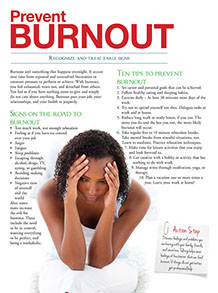
  • Prevent Burnout

    Stress Management

    Image of women with head in her hands.

    Recognize and treat early signs.

    Burnout isn’t something that happens overnight. It occurs over time from repeated and unresolved frustration or constant pressure to perform or achieve. With burnout, you feel exhausted, worn out, and detached from others. You feel as if you have nothing more to give and simply do not care about anything. Burnout puts your job, your relationships, and your health in jeopardy.

    Ten tips to prevent burnout:

    1.  Set career and personal goals that can be achieved.

    2.  Follow healthy eating and sleeping habits.

    3.  Exercise daily – At least 30 minutes most days of the week.

    4.  Try not to spread yourself too thin. Delegate tasks at work and at home.

    5.  Reduce long work or study hours, if you can. The more you do and the less you rest, the more likely burnout will occur.

    6.  Take regular five to 10 minute relaxation breaks. Take mental breaks from stressful situations, too. Learn to meditate. Practice relaxation techniques.

    7.  Make time for leisure activities that you enjoy and look forward to.

    8.  Get creative with a hobby or activity that has nothing to do with work.

    9.  Manage stress through meditation, yoga, or therapy.

    10. Plan a vacation one or more times a year. Leave your work at home!

    Signs on the road to burnout:

    *  Too much work, not enough relaxation

    *  Feeling as if you have no control over your job

    *  Anger

    *  Fatigue

    *  Sleep problems

    *  Escaping through alcohol, drugs, TV, eating, or gambling

    *  Avoiding making decisions

    *  Negative view of yourself and the world

    Also, some traits increase the risk for burnout. These include the need to be in control, wanting everything to be perfect, and being a workaholic.

    Action Step

    Discuss feelings and problems you are having with your family, friends, and coworkers. Talking helps ease feelings of frustration that can feed burnout. If things do not get better, get professional help.

    Page from Ways to Well-Being book by the American Institute for Preventive Medicine. www.HealthyLife.com. All rights reserved.

    © American Institute for Preventive Medicine

  • Immunize Or Your Health Care Costs Could Rise

    Medical Exams

    Women wearing face mask, smiling, showing bandage on arm where she got a vaccine.

    Vaccines prevent many diseases that could have a costly impact, resulting in doctor’s visits, hospitalizations, and premature deaths. Sick children can also cause parents to lose time from work.

    *  Learn about vaccines you and your children need fromcdc.gov/vaccines.

    *  Find if and which vaccines are covered benefits of your health plan.

    *  Contact your local health department about its vaccine services.

    *  Find out about free or low-cost vaccines for kids from the Vaccines for Children (VFC) Program atcdc.gov/vaccines/programs/vfc/index.html.

    *  Beginning in early fall, read local papers and store ads to find out where flu shots will be given. Find out if and when flu shots will be given at work.

    ays to Well-Being book by the American Institute for Preventive Medicine. www.HealthyLife.com. All rights reserved.

    © American Institute for Preventive Medicine

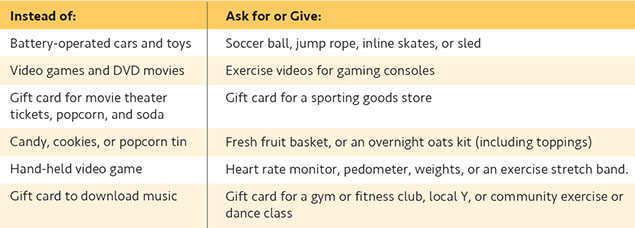
  • Wellness Gifts 2

    Personal Safety

    Fitness tools shaped into a Christmas tree.

    Give presents that promote a healthy lifestyle. Keep their well-being and self-care in mind when making your list and checking it twice.

    Action Step:There are many thoughtful and joyful gifts to choose from that will enhance well-being, for adults and kids.

    A Year of Health Hints book by the American Institute for Preventive Medicine. www.HealthyLife.com. All rights reserved.

    © American Institute for Preventive Medicine

  • How To Take Painkillers Safely

    Medication

    Image of pills.

    Millions of Americans suffer from some form of chronic or severe pain. Many will seek relief with painkilling drugs or analgesics. Painkillers treat the symptom of pain rather than the root cause.

    Simple analgesics. This type of painkiller, such as aspirin or acetaminophen, provides relief from pain at the site of the injury or inflammation. (Aspirin decreases inflammation in addition to its analgesic effect.) These are not habit forming and they maintain effectiveness even after repeated use.

    Narcotic analgesics. Analgesics such as codeine or morphine provide relief by acting on the central nervous system, rather than by decreasing inflammation. The cause of the pain does not disappear, but it is easier to endure. These drugs also cause sedation. As the body builds up a tolerance to the narcotic, dosages may need to be increased. When discontinued, withdrawal symptoms can occur.

    To minimize unwanted effects of painkillers:

    *  Take painkillers with a full glass of milk or water. It will speed entry into the digestive system and minimize stomach upset.

    *  Remember that all drugs have side effects. Find out early what to expect by asking the pharmacist for the drug package insert or asking your physician.

    *  Take only the weakest form and the smallest dosage that will provide relief.

    *  Don’t wait until the pain is too severe to begin your medication. Delay makes it more difficult for the painkiller to be effective, and you may need a stronger dose.

    *  If pain keeps you from sleeping, never take a sleeping pill along with painkillers. Use analgesics only for the pain itself.

    *  If you are a cigarette smoker, painkillers may be metabolized at a different rate so tell your doctor if you smoke.

    *  Before considering switching painkillers because of side effects, ask your doctor if he or she can reduce your dosage.

    *  If you are taking a narcotic type of painkiller, check with your physician about alternating it with aspirin or an acetaminophen analgesic. This will help reduce the possibility of developing a tolerance.

    *  Don’t think of painkillers as your only weapon against pain. There are other techniques, such as relaxation training or cold compresses that your physician can help you with.

    Page from A Year of Health Hints book by the American Institute for Preventive Medicine. www.HealthyLife.com. All rights reserved.

    © American Institute for Preventive Medicine

  • Help For Restless Legs

    SELF-CARE CORNER

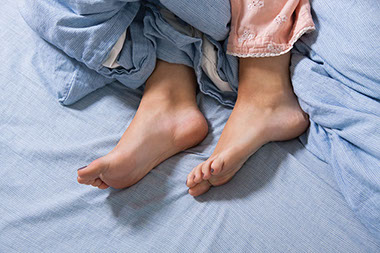
    Close up feet laying in bed.

    Do you feel a twitchy, jumpy feeling in your legs when you sit or lie down? Do you have an urge to move your legs when you go to bed at night? If so, you may have restless legs syndrome (RLS).

    What is RLS?

    RLS is known as a sleep disorder, although it can happen when you’re awake or asleep. It occurs when you’re resting or lying still, and is more common at night. Because it can interfere with sleep, RLS is linked to:

    *  Daytime sleepiness

    *  Memory problems or trouble concentrating

    *  Mood changes

    *  Job performance issues

    *  Problems with personal relationships

    RLS affects people of any age, but tends to cause more problems in older adults.

    What causes it?

    RLS can run in families, especially if your symptoms began before age 40. Experts believe RLS may be related to a problem in the part of the brain that controls movement. It may be linked to certain health problems, including:

    *  Low iron in your blood (iron deficiency anemia)

    *  End-stage renal (kidney) disease

    *  Neuropathy (nerve damage)

    Most of the time, though, there’s no clear cause of RLS.

    Self-care tips for restless legs

    You may be able to manage mild RLS at home. Try these tips:

    *  Avoid caffeine. Drinks like coffee, tea, energy drinks and cola usually contain caffeine.

    *  Don’t smoke. Ask your doctor if you need help quitting.

    *  Avoid alcohol.

    *  Get moderate exercise early in the day. Don’t exercise right before bedtime.

    *  Try relaxation techniques like deep breathing, meditation or yoga before bed.

    *  Make sleep a priority. Go to bed and get up at the same time each day. Aim for seven to eight hours of sleep each night.

    See your doctor regularly and tell your doctor about any symptoms you’re having. You may also want to ask if you should get your iron levels checked. Doctors sometimes treat more severe cases of RLS with medications.

    Sources: American Academy of Family Physicians, National Institute of Neurological Disorders and Stroke, Restless Legs Syndrome Foundation

    © American Institute for Preventive Medicine