Category: Fitness

  • Exercise & Health Conditions Can Mix

    BE FIT

    Image of doctor and patient talking.

    Working out isn’t easy, and if you have a health condition, exercise may seem even more difficult. In many cases, exercise is not only safe for those with health conditions – it’s recommended. Being active may improve your overall health and help you manage your condition. And, it can help you feel better too.

    Check out some of the ways exercise can help you if you have a health condition. Ask your doctor which activities are best for you.

    ARTHRITIS

    Exercise can prevent or slow some types of arthritis. In fact, it may be the most effective non-drug treatment for reducing pain and improving movement in people who have osteoarthritis (OA). Walking and water exercises are generally good choices.

    HEART DISEASE

    You can improve heart health when you move. Physical activity reduces your chance of having a heart attack or stroke. It helps your heart work better and improves blood flow. Forty minutes of moderate activity 3 to 4 times per week can lower cholesterol and blood pressure. If you have chest pain, or recently had a heart attack or a heart procedure, ask your doctor before you start exercising.

    DEPRESSION

    Depression, anxiety and high stress can be alleviated with exercise. Aerobic exercise may improve mood, sleep and self-esteem. The chemicals released during exercise have feel-good effects on the brain. Try walking, biking, aerobics or dancing.

    BLOOD SUGAR

    Working out may help manage blood sugar and diabetes. During exercise, your cells become more sensitive to insulin so it can work better. The cells are also able to lower your blood sugar. If you have diabetes, regular exercise can mean fewer diabetes medicines or less insulin. People with diabetes should ask their doctor how they can exercise safely before they begin exercise.

    ASTHMA/COPD

    Asthma and COPD (chronic obstructive pulmonary disease) can make exercise more challenging, but it’s often possible to do safely. Exercise can help manage weight, reduce stress and keep the heart healthy – all important factors with asthma and COPD. In general, people with asthma or COPD should avoid exercise when temperatures are low and air is dry or polluted. Wearing a mask over the mouth can help, and doing a proper warm-up and cool-down is also advised. Always carry your rescue inhaler when you exercise.

    Even if you don’t have a health condition, exercise to stay healthy. Regular physical activity can reduce the risk of many diseases including some cancers, and help you live longer. Talk to your doctor before you start an exercise routine.

    © American Institute for Preventive Medicine

  • Hit The Ground Running Safely

    BE FIT

    Image of women stretching.

    If you’re ready to train for a charity 5K or more serious road running, follow this advice from Saint Louis University physical therapy professor Chris Sebelski. You’ll hit the ground running and have realistic expectations about the work ahead.

    *  Before you begin, visit your doctor for a complete overall body check-up and talk about your exercise plans.

    *  It’s easy to go overboard during the enthusiasm of planning, but be sure you accurately acknowledge your current level of fitness. If you haven’t been exercising at all, you’ll want to start with a walking/jogging mix.

    *  Consider journaling to keep track of your progress and how you feel.

    *  Make small steps and celebrate little victories.

    *  Anticipate setbacks and obstacles (a cold, an injury, caregiving) and adjust your workout.

    *  Always do something. A few minutes doing squats is better than nothing.

    *  Consume calories smartly (lean proteins, whole grains). Drink water.

    *  Cross train with yoga for stretching or Pilates to build core strength.

    *  Join friends to train. Follow each other on Facebook. Blog about your experience. Let others cheer you on.

    © American Institute for Preventive Medicine

  • Race Drinking

    BE FIT

    Image of man drinking from a water bottle.

    Nearly half of recreational runners may be drinking too much fluid during races, according to a survey of runners by Loyola University Health System researchers. Expert guidelines recommend runners drink only when thirsty. But the Loyola survey found that 36.5% of runners drink according to a preset schedule or to maintain a certain body weight and 8.9% drink as much as possible.

    Drinking too much fluid while running can cause a potentially fatal condition called exercise-associated hyponatremia. It occurs when runners drink even when they are not thirsty. Drinking too much during exercise can dilute the sodium content of blood to abnormally low levels.

    Drinking only when thirsty will prevent overconsumption of fluids. “It’s the safest known way to hydrate during endurance exercise,” said Loyola sports medicine physician Dr. James Winger. The study is in the British Journal of Sports Medicine.

    Symptoms of hyponatremia can include nausea, vomiting, headache, confusion, loss of energy, muscle weakness, spasms or cramps. In extreme cases, the condition can lead to seizures, unconsciousness, and coma.

    © American Institute for Preventive Medicine

  • The Aerobic Mile

    BE FIT

    Image of water bottle, towel and dumb bells on a mat.

    How much exercise do you need? The answer is 30 minutes most days of the week, according to government guidelines. But you can calculate your own fitness level by using the aerobic mile as your guideline.

    An aerobic mile, simply, is how much energy you expend jogging one mile. Okay, you don’t want to jog. But you can burn the same number of calories by doing other exercises. Here are some examples of activities you can do to equal one aerobic mile:

    *  Walking one mile at any pace

    *  Bicycling at a moderate pace for 12 minutes

    *  Vigorous rowing for 12 minutes

    *  Swimming for 24 minutes

    *  Tennis for 20 minutes (11 if your game is vigorous)

    *  Weight training at a moderate pace for 15 minutes

    *  Easy gardening for one hour

    *  Aerobic exercise to music, easy pace for 20 minutes

    Beginning exercisers should strive to achieve the equivalent of 6 aerobic miles a week. Those with good fitness levels can move up to 10 hours a week. High fitness levels are achieved with 15 aerobic miles each week, according to ACSM Guidelines for Exercise Testing.

    © American Institute for Preventive Medicine

  • Beating Exercise Barriers

    BE FIT

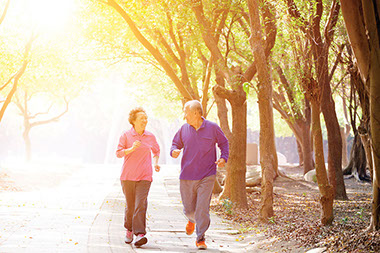
    Image of older couple jogging with their dog.

    Exercise is one of the best things you can do for your health. It reduces your risk of heart disease, type 2 diabetes, and some types of cancer. It can also improve your mental well-being and increase your energy. So why don’t more people do it? A variety of things can come between you and your fitness goals. Here are some ways to overcome them:

    Problem: You find exercise boring.

    Solution:Invite a friend to walk with you or attend an exercise class together. Having a fitness buddy gives you more to look forward to, and helps you stick with your commitment.

    Problem: You’re too tired.

    Solution:Identify a time of day when you feel more energetic. Even a short walk during your lunch hour has health benefits. Remind yourself that once you get started, you may find that your energy levels increase and it gets easier.

    Problem: You think you’re out of shape.

    Solution:You don’t have to do exercises that are too challenging for you. Start with walking, biking, or something else you enjoy. Go at your own pace and build up to longer, harder workouts as your fitness level improves.

    Problem: You’re just too busy.

    Solution:Find small amounts of time to fit in a walk or class. If you have children at home, take them with you for walks and make it a family activity. You can add activity into your daily life. Park farther from your destination and walk. Take the stairs instead of the elevator. March in place or use a treadmill while you watch TV.

    Source: Centers for Disease Control and Prevention

    © American Institute for Preventive Medicine

  • Exercise Benefits Outweigh The Struggle At Any Age

    BE FIT

    Image of older couple on a brisk walk.

    The more you age, the more you need exercise to stay independent and healthy, said Dr. Keith Veselik, director of primary care at Loyola University Health System. “Around age 35 is when our muscle mass and resting metabolism starts to decrease. When this happens our bodies require more, not less exercise to manage our caloric intake. When this starts to happen, we can eat the same things, do the same things and may gain 3 pounds a year. That’s 30 pounds in a decade,” he said.

    Dr. Veselik said the best workout program balances heart healthy exercise, strength training, and flexibility. He recommends an hour of cardiovascular exercise 4 days a week, 2 days of strength training for 30 minutes, and balance and flexibility exercises such as stretching, yoga or pilates, 1 to 2 times a week.

    In your 50s:

    *  Muscle and joint aches and pains start becoming more apparent, so get creative about how to keep up cardiovascular exercise that is easy on the joints but gets the heart rate up (hint: swimming, biking, or running on softer surfaces).

    *  Cardiovascular exercise also helps to fight many of the most common and deadly medical concerns, including heart disease, asthma, and COPD.

    *  Don’t go from doing nothing to running a marathon. Talk to your doctor, ask about risk factors, and together create a plan that’s right  for you.

    *  If back pain occurs, protect your back by building strong core muscles and make sure you are lifting heavy objects correctly.

    In your 60s:

    *  Balance and strength should be a major focus. Many people are scared of breaking a hip, which can limit independence.

    *  Bones aren’t as strong and both men and women become more prone to osteoporosis.

    *  Add balance and leg strengthening exercises to increase flexibility, as well as balance to help prevent accidental falls. Weight-bearing exercise is crucial to bone health and keeping bone density strong.

    *  If arthritis develops at this age, exercise can help you cope. Swimming or aquatic classes are especially good.

    *  Walking is a great form of exercise. Just make sure you get your heart rate up.

    In your 70s and beyond:

    To combat seniors’ biggest worry, dementia, know that exercise is the only thing that is proven to prevent Alzheimer’s disease. And many of the major risk factors for dementia – high blood pressure, high cholesterol and diabetes can be countered with exercise.

    © American Institute for Preventive Medicine

  • How Does Your Heart ‘Rate’?

    BE FIT

    Image of female checking heart rate.

    When it comes to getting a good workout, no two people are alike. Age, health status, fitness level, and many other factors can play a role in how hard you can – or should – exercise.

    Your target heart rate can tell you if you’re exercising hard enough to burn calories, but not too hard. Your target heart rate is how fast you want your heart to beat during exercise.

    You can find your target heart rate by following these steps:

    1. Get a stopwatch or use a watch or clock that has a second hand.

    2. Periodically during exercise, put two fingers on a pulse point. This can be the inside of your wrist on the thumb side, the inside of your elbow, or the side of your neck.

    3. Count how many times your heart beats in 60 seconds.

    Next, find your age in the chart and see if your heart rate is within the target heart rate zone listed. If it’s higher than the zone, take your workout down to an easier level. If it’s below, you may be able to exercise a little harder.

    Chart of Target Heart Rate Zone.

    If you’re just starting out with exercise, aim for the lower end of the range. After a few weeks, you can gradually work up to a higher heart rate within the zone.

    People who have heart conditions or other health problems should discuss any exercise or fitness activities with their doctor before starting. Certain medications that treat heart and blood pressure disease can cause a lower heart rate. Discuss your medications with your physician before trying to reach your maximum heart rate.

    Heart rate and blood pressure explained

    Heart rate and blood pressure are not the same thing. Blood pressure is the force of blood moving through your body. Heart rate or pulse is simply the number of times your heart beats per minute.

    A faster heart rate does not necessarily mean your blood pressure is rising. When the heart rate speeds up, blood vessels get bigger, allowing more blood to move through. This means many people can safely raise their heart rate during exercise without affecting their blood pressure.

    Talk to your doctor about blood pressure and get it checked yearly. Most people with high blood pressure can and should exercise with their doctor’s approval.

    Source: American Heart Association

    © American Institute for Preventive Medicine

  • Ride Your Bike To Work

    BE FIT

    Image of young man in a business suit with a bike and helmet on.

    Think of the money you’ll save on gas, train fare, and parking. If you live within 10 miles of your work, find solutions to overcome these popular excuses:

    *Not safe:Use less congested roads if rush-hour traffic clogs the main streets.

    *Have to dress nicely at work:Drive to work one day each week and leave a week’s worth of clean clothes.

    *No place to shower:To clean up, use a deodorant soap and washcloth in the restroom.

    *No secure place to park my bike:Check for a storage closet or furnace room, or stash your bike with a friend who lives nearby or at a bike shop.

    *I’d have to ride in the dark:Wear light-colored, reflective clothing, attach lights and reflectors and use a route that’s lit by streetlights.

    *Hate riding in cold and rainy weather:If it’s pouring or sleeting, leave the bike at home.

    *Too far:Drive part way and cycle the rest. Look for a park-and-ride commuter lot.

    Source: Bicycling magazine’s 1,000 All-Time Best Tips

    © American Institute for Preventive Medicine

  • The Downside Of Skiing: Falls And Spills

    BE FIT

    Image of man on top of a skiing slope.

    If you find yourself heading downhill on skis, but you’re swooshing down on your backside because of a fall, you’ll be glad you prepared for the inevitable spills.

    According to the American College of Sports Medicine, falls account for up to 85% of skiing injuries. The majority of those injuries are sprains, broken bones, cuts, and dislocations-and now more knee injuries because mid-calf plastic ski boots are protecting ankles.

    Thirty to 40% of ski injuries affect the knee area, most likely the MCL (medial collateral ligament). This trauma often occurs with slow twisting falls or when beginners maintain a snowplow position for lengthy periods and stress the ligament. If skiers catch an edge (when the lower leg is suddenly twisted away from the upper leg) or skis separate, the foot is forced away from the body, which causes a distraction force on the inside of the knee.

    Another common knee injury is rupture of the anterior cruciate ligament (ACL), which can be caused by a backward fall as the lower leg moves forward. Catching an edge causes a sudden external rotation below the knee, which can cause the ACL to become sprained or snap (5 times more common in women skiers).

    Your pre-conditioning program should include 4 elements: endurance, strength training, flexibility, and balance. Aerobic fitness is the key to preventing the end-of-the-day injuries. Cross training, which includes multiple sports and activities, will help with cardiovascular endurance, while strength and flexibility focusing on the legs is vital for injury prevention, says Scott M. Levin, MD, a board-certified orthopaedic surgeon and sports medicine specialist.

    “Besides conditioning, skiers need to warm up and stretch before starting down the hill because cold muscles are more prone to injury,” notes Dr. Levin. Warm up with jumping jacks, running, or walking in place for a few minutes and then stretch your hamstrings, hip flexors, and quadriceps.

    © American Institute for Preventive Medicine