Category: Healthy Eating

  • Healthy Weight, Healthy Kids

    HEALTHY EATING

    Young child smiling eating vegetables.

    Many kids struggle to be at a healthy weight. They may be overweight or obese. Childhood obesity can cause serious health problems now and later in life.

    There is no simple fix, but there are ways we can help children get or stay healthy.

    What is childhood obesity?

    In adults, a BMI of 40 or higher is considered obese. It’s not the same with children. A child’s age and gender must be considered when calculating their BMI. In children, this is called BMI-for-age. This is because children’s body fat amounts vary as they grow.

    Percentiles matter when looking at a child’s BMI. A child whose BMI is at or above the 95th percentile may have obesity. This means their BMI is higher than 95 percent of other children of their age and gender. Your child’s doctor can help you calculate their BMI.

    Why is it unhealthy?

    Children with obesity are at a higher risk of:

    *  Asthma

    *  Sleep apnea

    *  Type 2 diabetes

    *  Bone and joint problems

    *  High blood pressure

    *  Unhealthy cholesterol levels

    What can adults do?

    *  Take them for regular doctor checkups. Your child’s doctor can offer eating and exercise advice.

    *  Allow them to eat fruits and vegetables in place of processed foods high in fat and sugar.

    *  Have them drink water in place of juice or soda.

    *  Aim for one hour of activity each day. This can be walking, biking or dancing. Choose things they enjoy!

    *  Make sleep a priority. Most children need at least eight hours. Ask your child’s doctor about this.

    Sources: Centers for Disease Control and Prevention, U.S. Department of Health and Human Services

    © American Institute for Preventive Medicine

  • Organic Food & The Dirty Dozen™

    HEALTHY EATING

    Varity of fruits.

    In recent decades, as organic foods became available, more people are asking if their fruits and vegetables need to be organic.

    At the moment, the debate about organic foods is ongoing. While there appears to be environmental benefits to organic farming practices, more research is needed to show how organic food impacts long-term health.

    Pros & cons of organic

    In order for a food to be certified “organic” by the USDA it must meet certain criteria. These include:

    *  No prohibited pesticides or synthetic fertilizers

    *  No hormones or antibiotics

    *  No GMOs or artificial preservatives

    *  Organic soil managment

    *  Animals provided natural conditions such as grass pastures

    *  Healthy water systems

    These standards generally result in farming practices that have less negative environmental impact. In addition, the absence of pesticides and hormones may benefit human health. But, for all the reasons organic food may be good, there is one big reason it can be out of reach: COST.

    When farmers practice organic techniques, it requires more time and effort, leading to higher food costs.

    Make organic affordable

    If you want to purchase organic without breaking the bank, one option is to simplify by focusing on The Dirty Dozen™.

    The Dirty Dozen™ is a list released each year by the Environmental Working Group, a non-profit organization focused on improving agriculture in the U.S. The fruits and vegetables on this list contain the highest concentrations of pesticides of any produce. If you’re going to buy organic, these foods are the best place to start.

    Choosing organic when you buy The Dirty Dozen™ allows you to make the biggest impact with the fewest dollars.

    The Dirty Dozen™

    1.  Strawberries

    2.  Spinach

    3.  Kale, collard greens, and mustard greens

    4.  Nectarines

    5.  Apples

    6.  Grapes

    7.  Cherries

    8.  Peaches

    9.  Pears

    10. Bell and hot peppers

    11. Celery

    12. Tomatoes

    Not buying organic? No problem!

    If organic isn’t the right choice for you, don’t worry. What’s most important is making healthy food choices, regardless of the organic label.

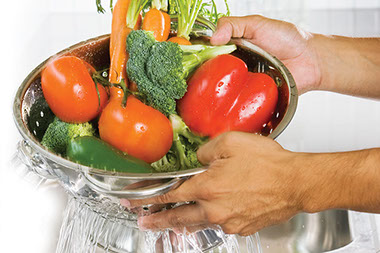
    Just be sure to thoroughly clean any fruits and vegetables you buy. A good wash protects you from contaminants and can reduce pesticide residue.

    © American Institute for Preventive Medicine

  • Orange Honeyed Winter Squash

    HEALTHY EATING

    Orange honeyed winter squash on plate.

    Ingredients

    *  3 acorn squash (small)

    *  2 tablespoons orange juice

    *  1/4 cup honey

    *  2 tablespoons butter or margarine

    *  nutmeg (1/8 teaspoon, optional)

    Directions

    1.  Preheat oven to 400 degrees.

    2.  Cut squash in half. Remove seeds and place halves cut side up in a shallow baking pan.

    3.  In a small bowl, combine orange juice and honey. Mix well. Pour a small amount of this mixture into each squash cavity.

    4.  Add 1 teaspoon of butter/margarine to each squash half. Sprinkle with nutmeg, if desired.

    5.  Cover pan with aluminum foil to keep steam in and speed cooking.

    6.  Bake covered for 30 minutes. Remove foil and continue baking for 30 minutes more, or until squash is tender.

    Nutritional Information: Servings 6

    Per serving: 166 calories, 4 g total fat, 2 g saturated fat, 8 mg sodium, 35 g carbohydrates, 3 g fiber, and 2 g protein.

    © American Institute for Preventive Medicine

  • Tips For Intermittent Fasting

    HEALTHY EATING

    Clock sitting on top of a white plate.

    If you have a health condition, talk to a doctor before trying any diet.

    Intermittent fasting isn’t safe for everyone. People who have diabetes could have dangerous blood sugar crashes if they go too long without eating. If you take medications, the timing of your meals may be important, too.

    Focus on healthy foods

    Intermittent fasting plans focus on when you eat, not what you eat. But, this doesn’t mean you should eat lots of junk food when you’re following this diet approach.

    Sugary, processed foods will likely make you feel even more hungry not long after you eat them. Also, they won’t give you the nutrients your body needs.

    To help you feel full and cut calories, focus on plenty of high fiber, vegetables, fruits, whole grains, and lean protein.

    Stay hydrated

    Hydration is very important when you’re fasting. Make sure you drink plenty of water. Some people may need electrolyte drinks. Ask your doctor about why these types of fluids may be recommended.

    Dehydration can make you more hungry and is not healthy for you. Severe dehydration is life-threatening. Make sure you have water with you at all times and drink plenty of other fluids. Avoid caffeinated drinks like coffee, because they can make you jittery and could make dehydration worse.

    Start small

    Fasting can be difficult when you’re not used to it. Think about a healthy way you could do a mini fast each day. For instance, start by not eating anything after dinner each night. You might fast from   7 p.m. to 6 a.m.

    This is a way to allow your digestive system to rest and to burn some extra calories at night. When we don’t eat for several hours, the fat cells can get rid of some of their stored energy. Plus, because you’re not snacking after dinner, you’ll probably cut some calories from your daily intake.

    If this method works for you, try making the fast a little longer. Work your way up to the 8-hour window, or whatever timeframe works best for you.

    © American Institute for Preventive Medicine

  • Choosing Low-Mercury Fish

    HEALTHY EATING

    Fish in frying pan.

    Fish are a healthy choice of protein. They are low-calorie and contain fats that can boost heart health.

    However, fish also contain mercury. Some fish contain high amounts, but others contain very low amounts. Fish absorb mercury from the environment. But they also get it from manufacturing, coal burning and other things.

    The type of mercury found in fish is called methylmercury. Too much methylmercury can damage a person’s brain and nervous system. This is even more dangerous for a developing fetus and for young children.

    Is fish safe to eat?

    Fish is safe and healthy to eat if you choose the right kind of fish and the right amounts. A serving size of fish is four ounces. This is about the size of the palm of your hand. Adults should eat at least two “palm-size” portions each week.

    Children should eat less than this amount. Ask your child’s pediatrician about the recommended amount for their age.

    Pregnant and breastfeeding women should avoid high-mercury fish. They can eat up to 3 palm-sized servings of low-mercury fish each week.

    Low-mercury fish types

    There are many types of fish that are low in mercury. They include the following:

    *  Anchovies

    *  Cod

    *  Flounder

    *  Haddock

    *  Herring

    *  Oyster

    *  Perch, freshwater and ocean

    *  Pickerel

    *  Pollock

    *  Salmon

    *  Sardines

    *  Scallops

    *  Shrimp

    *  Sole

    *  Tilapia

    *  Tuna, canned light (limit albacore to 1 serving/week)

    *  Whitefish

    High mercury fish to avoid

    The following types of fish are high in mercury. People should not eat these types of fish.

    *  King mackerel

    *  Marlin

    *  Orange roughy

    *  Shark

    *  Swordfish

    *  Tilefish (Gulf of Mexico)

    *  Tuna, bigeye

    Local fishing

    If you like to eat fish caught from local waters, check fish advisories first. Then, eat only one palm-size serving and don’t eat other fish that week.

    Fish advisories can be found on the Environmental Protection Agency (EPA) website. Go tofishadvisoryonline.epa.gov.

    Sources: U.S. Environmental Protection Agency, U.S. Food and Drug Administration

    © American Institute for Preventive Medicine

  • Eating To Enhance Gut Health

    HEALTHY EATING

    Three stacked jars with picked carrots, beets and onion.

    The health of your gut microbiome is a significant factor in the health of your entire digestive system. How well your stomach and intestines digest and absorb the food you eat depends on the condition of the microorganisms in your gut.

    In turn, what you eat can either support the diversity of your microbiome or disrupt the delicate balance.

    Certain foods provide necessary nutrients to support the growth of beneficial bacteria. The more beneficial bacteria you have in your digestive tract, the less room there is for unhealthy bacteria to grow.

    Probiotics

    Probiotics are live bacteria and yeasts which have beneficial functions in the body. Probiotics may be present in foods that have undergone fermentation. Ingesting probiotics through food or supplements can boost the number of beneficial microorganisms in your digestive system.

    Regular consumption of foods that contain probiotics may improve digestive health and boost the immune system. Choose some of these foods as part of your daily diet:

    *  Yogurt (with live active cultures) or kefir

    *  Saukraut

    *  Kombucha

    *  Tempah

    *  Miso

    *  Kimchi

    *  Pickles

    Prebiotics

    Prebiotics provide essential nutrients that feed beneficial bacteria and encourage their growth.

    Most prebiotics are a type of fiber that is indigestible to the body. The microorganisms in the digestive tract can break down these fibers into short-chain fatty acids (SCFA). These SCFAs provide valuable food for the probiotic communities in the body. Beneficial prebiotic foods include:

    *  Garlic

    *  Onion

    *  Asparagus

    *  Bananas

    *  Oats

    *  Flaxseeds

    *  Apples

    Should you take a supplement?

    Supplements containing probiotics are widely available. However, supplements are not regulated by the FDA and should be approached with caution.

    Talk to your doctor before starting any supplement to make sure it is a safe choice for you. In the meantime, probiotic and prebiotic foods are a generally safe way to support gut health.

    © American Institute for Preventive Medicine

  • Is Sea Salt Better Than Regular Salt?

    HEALTHY EATING

    A salt bottle opened with spilled salt.

    Many food products contain “sea salt” as an ingredient instead of table salt, also commonly called “salt.” In particular, many so-called natural food products say they use sea salt. But is sea salt any healthier than old-fashioned table salt?

    What’s the difference?

    In general, sea salt has a coarse, crunchy texture. Table salt has a more fine grind and may have a weaker taste. In foods like potato chips or sea salt caramels, some people prefer the flavor and texture of sea salt.

    Sea salt is made from evaporated sea water. It’s usually not processed, so it may be considered a more “natural” choice. It may contain trace levels of minerals like magnesium, potassium and calcium. But, these minerals are found in small amounts. So, eating sea salt is not a reliable way to get more minerals in your diet.

    Table salt comes from mined salt deposits. It is processed into a fine texture. During this process, it usually loses its other minerals. However, most table salt brands contain added iodine, which is a necessary nutrient that many people don’t get enough of. Table salt may also contain some additives to prevent clumping.

    Same in sodium

    Although sea salt shows up in many “natural” food products, it’s not usually healthier. Sea salt and table salt have about 40 percent sodium by weight.

    Some types of sea salt say that they contain less sodium than table salt. To check this, read the Nutrition Facts panel on the package. Table salt contains about 575 mg of sodium in ¼ teaspoon.

    Going coarser

    Some very coarse salts like kosher salt may have slightly less sodium, teaspoon for teaspoon. This is because the larger crystal size makes it less compact, so you can’t get as much salt into your measuring spoon.

    In these cases, using a coarse type of salt in cooking may help you reduce sodium content, but probably not by very much. Some people prefer the taste and texture of a very coarse salt. But don’t use it thinking that you’ll really reduce your sodium intake.

    Choose the type of salt you prefer, and use it sparingly. One type isn’t healthier than another. Talk to your doctor about how much sodium you should eat each day.

    Source: American Heart Association

    © American Institute for Preventive Medicine

  • Pasta With Chickpeas, Tomato & Spinach

    HEALTHY EATING

    Pasta with chickpeas, tomato and spinach.

    Ingredients

    *  1 small yellow onion (peeled and chopped into ¼-inch pieces)

    *  8 ounces medium-size whole-wheat pasta (such as rotini or shells)

    *  1 tablespoon vegetable oil

    *  2 cloves garlic (peeled and minced)

    *  2 carrots (scrubbed and diced into 1/4-inch pieces)

    *  1 celery stalk (diced into 1/4-1/2-inch pieces)

    *  1/2 teaspoon dried rosemary

    *  1 can 16-ounce low-sodium chickpeas (drained and rinsed with cold water)

    *  1 can 14.5-ounce low-sodium diced tomatoes (including the liquid)

    *  2 cups spinach (washed and chopped)

    *  1/2 teaspoon chopped red pepper flakes (optional)

    *  1/4 cup grated Parmesan cheese (optional)

    *  1/4 cup whole olives (optional)

    Directions

    1.  To cook the pasta, fill a large pot halfway with water. Bring it to a boil over high heat. When the water is boiling, add the pasta and cook until just tender, about 12 minutes or the time listed on the package. Just before draining, reserve 1 ½ cups of the pasta water. Drain the pasta and set aside.

    2.  While the pasta is cooking, cook the sauce: Put the skillet on the stove over medium-low heat and when it is hot, add the oil. Add the garlic, onion, carrots, celery, and rosemary and cook until the garlic is golden, about 15 minutes.

    3.  Add the chickpeas and using the fork, lightly mash half of them. Add the reserved pasta water and tomatoes and cook 10 minutes.

    4.  Add the pasta and spinach to the skillet mixture and cook until the spinach is tender and most of the liquid has been absorbed by the pasta, about 10 minutes. Add the red pepper flakes and olives, if desired.

    5.  Mix well and serve immediately, garnished with Parmesan cheese if desired.

    Note: Kale can be used instead of spinach.

    Nutrition Facts: Servings 4. Calories 395; Total Fat 8 g; Saturated Fat 2 g; Total Carbohydrate 68 g; Dietary Fiber 13 g; Protein 19 g.

    Source: What’s Cooking? USDA Mixing Bowl

    © American Institute for Preventive Medicine

  • Recipe: Salad With Pears

    HEALTHY EATING

    Plate of salad with pears.

    Ingredients

    For the Salad:

    *  2 canned pear halves

    *  6 cups mixed greens

    *  1/2 tablespoon Parmesan cheese

    *  1-1/3 cups carrots, grated

    *  3 tablespoons walnuts

    For the Dressing:

    *  1/4 cup pear juice

    *  1/4 teaspoon each of cider vinegar, honey, dijon mustard, and olive oil

    *  1 dash salt and black pepper

    Directions

    1.  For the dressing, mix pear juice, vinegar, honey, mustard, salt and pepper, and olive oil in a blender and blend until smooth.

    2.  Put mixed greens in a large mixing bowl, drizzle dressing over greens, and mix together.

    3.  Add remaining chopped pear, walnuts, and grated carrots and toss lightly.

    4.  Portion out 1 cup of salad and top with grated Parmesan cheese.

    Nutrition Information: Serves 6: Total calories 64, total fat 3g, saturated fat 0g, sodium 86 mg, carbohydrates 10g, fiber 2g, protein 2g.

    Source: MyPlate.gov

    © American Institute for Preventive Medicine

  • Turmeric

    HEALTHY EATING

    Small bowl filled with turmeric spice.

    Turmeric is a member of the ginger family and widely grown in India. Its color comes from curcumin, the major active compound in turmeric.

    Using Turmeric In Cooking

    The savory, earthy flavor of turmeric can add depth to many dishes. Experiment with adding it to some of the foods you commonly eat. You might be surprised how well it complements dishes you already love.

    Here are some foods that are delicious when flavored with turmeric:

    *  Rice

    *  Eggs

    *  Smoothies

    *  Soups and stews

    *  Vegetable dishes

    *  And, of course, curry

    Whenever you use turmeric, add a bit of pepper as well. Pepper contains a compound called piperine, which enhances the absorption of the curcumin in turmeric.

    © American Institute for Preventive Medicine