Category: Medical Exams

  • A Routine Checkup

    Medical Exams

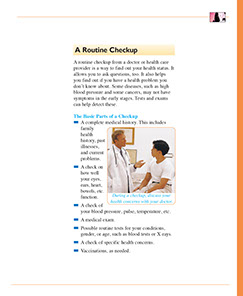
    A routine checkup from a doctor or health care provider is a way to find out your health status. It allows you to ask questions, too. It also helps you find out if you have a health problem you don’t know about. Some diseases, such as high blood pressure and some cancers, may not have symptoms in the early stages. Tests and exams can help detect these.

    The Basic Parts of a Checkup

    *  A complete medical history. This includes family health history, past illnesses, and current problems.

    *  A check on how well your eyes, ears, heart, bowels, etc. function.

    *  A check of your blood pressure, pulse, temperature, etc.

    *  A medical exam.

    *  Possible routine tests for your conditions, gender, or age, such as blood tests or X-rays.

    *  A check of specific health concerns.

    *  Vaccinations, as needed.

    Page from the Healthier at Home book by the American Institute for Preventive Medicine. www.HealthyLife.com. All rights reserved.

    © American Institute for Preventive Medicine

  • 10 Action Steps For Adult Vaccines

    Medical Exams

    A vaccine bottle.

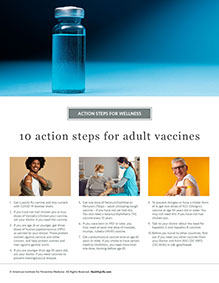
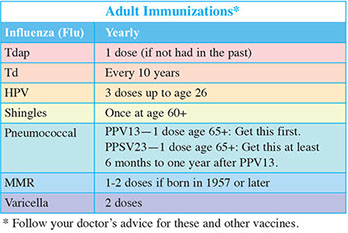
    1.  Get a yearly flu vaccine and stay current with COVID-19 booster shots.

    2.  If you have not had chicken pox or two doses of Varicella (chicken pox) vaccine, ask your doctor if you need this vaccine.

    3.  If you are age 26 or younger, get three doses of human papillomavirus (HPV) as advised by your doctor. These protect women against cervical and other cancers, and help protect women and men against genital warts.

    4.  If you are younger than age 55 years old, ask your doctor if you need vaccines to prevent meningococcal disease.

    5.  Get one dose of Tetanus/Diphtheria/Pertussis (Tdap) – adult whooping cough vaccine – if you have not yet had this. You also need a tetanus/diphtheria (Td) vaccine every 10 years.

    6.  If you were born in 1957 or later, you may need at least one dose of measles, mumps, rubella (MMR) vaccine.

    7.  Get a pneumcoccal vaccine once at age 65 years or older. If you smoke or have certain medical conditions, you need more than one dose, starting before age 65.

    8.  To prevent shingles or have a milder form of it, get two doses of RZV (Shingrix) vaccine at age 50 years old or older. You may not need this if you have not had chicken pox.

    9.  Talk to your doctor about the need for hepatitis A and  hepatitis B vaccines.

    10. Before you travel to other countries, find out if you need any other vaccines from your doctor and from 800.CDC.INFO (232.4636) orcdc.gov/travel.

    ays to Well-Being book by the American Institute for Preventive Medicine. www.HealthyLife.com. All rights reserved.

    © American Institute for Preventive Medicine

  • Be Mindful Of…Health Screenings

    Medical Exams

    Smiling doctor.

    Caring for your body shows respect and kindness to yourself. This includes getting recommended health screenings to help find any potential problems or find them early when treatments can be more successful. Plus, getting answers about your health can help relieve added stress and worry. Get empowered to live a healthier, stronger, and longer life.

    ays to Well-Being book by the American Institute for Preventive Medicine. www.HealthyLife.com. All rights reserved.

    © American Institute for Preventive Medicine

  • Health Screening Tests

    Medical Exams

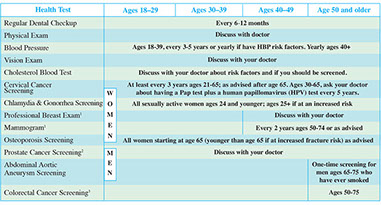
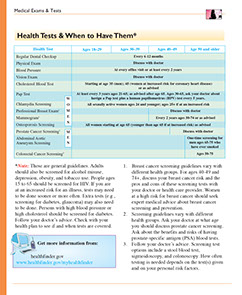
    *Note: These are general guidelines. If you are at an increased risk for an illness, tests may need to be done sooner or more often. Adults should also be screened for alcohol misuse, depression, obesity, and tobacco use. People ages 15-65 should be screened for HIV/AIDS. Baby Boomers should be screened for hepatitis C. Overweight or obese adults between ages 40 and 70 should be screened for adnormal sugar levels and type 2 diabetes. Follow you doctor’s advice for screening tests and exams. Check with your health plan to see if and when tests are covered.

    1. Breast cancer screening guidelines vary with different health groups. For ages 40-49 and 74+, discuss your breast cancer risk and the pros and cons of these screening tests with your doctor or health care provider. Women at a high risk for breast cancer should seek expert medical advice about breast cancer screening and prevention.

    2. Screening guidelines vary with different health groups. Ask your doctor at what age you should discuss prostate cancer screening. Ask about the benefits and risks of having prostate-specific antigen (PSA) blood tests.

    3. Follow your doctor’s advice. Screening test options include stool blood tests, sigmoidoscopy, and colonoscopy. How often testing is needed depends on the test(s) given and on your personal risk factors.

    Resources

    Page from the Healthier at Home book by the American Institute for Preventive Medicine. www.HealthyLife.com. All rights reserved.

    © American Institute for Preventive Medicine

  • Health Screenings Can Save Lives

    Medical Exams

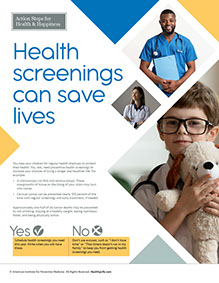
    Smiling doctor.

    You take your children for regular health checkups to protect their health. You, too, need preventive health screenings to increase your chances of living a longer and healthier life. For example:

    *  A colonoscopy can find and remove polyps. These overgrowths of tissue on the lining of your colon may turn into cancer.

    *  Cervical cancer can be prevented nearly 100 percent of the time with regular screenings and early treatment, if needed.

    *  Schedule health screenings you need this year. Write when you will have these.

    *  Don’t use excuses, such as “I don’t have time” or “That illness doesn’t run in my family” to keep you from getting health screenings you need.

    Approximately one half of all cancer deaths may be prevented by not smoking, staying at a healthy weight, eating nutritious foods, and being physically active.

    ays to Well-Being book by the American Institute for Preventive Medicine. www.HealthyLife.com. All rights reserved.

    © American Institute for Preventive Medicine

  • Health Tests For Men & Women

    Medical Exams

    Blood Cholesterol Test (Lipid Profile)

    Why you need this:

    Blood cholesterol levels play a major role in heart disease. Getting blood cholesterol levels in goal ranges lowers the risk for heart disease. A lipid profile test gives information about total cholesterol, LDL (bad) cholesterol, HDL (good) cholesterol, and triglycerides (another form of fat).

    What to do before the test:

    It is best to schedule the test in the morning, because you need to have nothing to eat or drink for 9 to 12 hours before the test. Fasting before the test is needed for LDL (bad) cholesterol and triglycerides.

    What to expect:

    A blood sample is taken, usually from a vein in the arm. A bandage is put on the skin site where your blood was drawn. The blood sample is sent to a lab. Lipids are measured in milligrams per deciliter (mg/dL).

    What the results mean:

    Total Blood Cholesterol Goal: Less than 200 mg/dL

    {Note: Ask your doctor what your LDL-cholesterol goal is. This is based on your risk factors for heart disease and how many you have. Examples are high blood pressure; diabetes; family history of early heart disease; cigarette smoking; and being a man age 45 years and older or being a women age 55 years old and older. Your HDL-cholesterol is also a factor.}

    LDL (bad) Cholesterol Goals  (Deposits cholesterol in the artery walls.)

    Less than 70 mg/dL:  If at “very high risk.”

    Less than 100 mg/dL:  If at “high risk.”

    Less than 70 mg/dL:  Optional goal for this risk level.

    Less than 130 mg/dL:  If at “moderate high risk.”

    Less than 100 mg/dL:  Optional goal for this risk level.

    Less than 160 mg/dL:  If at “lower/moderate risk.”

    HDL (good) Cholesterol Goals  (Helps remove cholesterol from the blood.)

    40 mg/dL or higher for men

    50 mg/dL or higher for women

    Triglycerides Goal: Less than 150 mg/dL

    Blood Pressure

    Why you need this:

    High blood pressure (HBP) may not have symptoms. Getting tested is how you find out if you have it. If you do have HBP and it is not controlled, you run the risk of having a heart attack or stroke. Diet, weight control, and exercise can help control HBP.

    What to do before the test:

    Wear short sleeves so your arm is exposed. Don’t drink coffee or smoke 30 minutes before the test. (Don’t smoke at all!) Go to the bathroom before the test. Right before the test, sit for 5 minutes. When you get tested, keep your back and arm supported and your arm at heart level.

    What to expect:

    The end of a stethoscope is placed on the inside of your elbow. A blood pressure cuff is wrapped around your arm. A pump attached to the cuff inflates the cuff to stop the blood flow in the artery for a few seconds. You feel tightness in your arm. The technician listens for a thumping sound and when it is no longer heard to measure your blood pressure. A valve by the pump is opened up to let air out of the cuff, which allows blood flow to start again.

    What the results mean:

    Normal: Systolic < 120 and Diastolic < 80

    Pre-hypertension: Systolic 120-139 or Diastolic 80-90

    Stage 1 Hypertension: Systolic 140-159 or Diastolic 90-99

    Stage 2 Hypertension: Systolic ≥ 160 or Diastolic ≥ 100

    Colorectal Cancer Screening – Colonoscopy

    Why you need this:

    To remove colon polyps and to screen for cancers of the colon and rectum. These cancers can be cured when found and treated early.

    What to do before the test:

    Follow your doctor’s guidelines for when and how long before the test to stop taking iron supplements and aspirin and other blood thinners. Stop eating solid foods 2 to 3 days before the test. Drink lots of clear liquids. Take what your doctor advises to completely cleanse the colon. Don’t have anything to eat or drink 9 to 12 hours before the test. Arrange for someone to drive you home after the test.

    What to expect:

    You wear a gown for this test. An IV is used to give a pain reliever and a sedative. You lie on your left side with your knees drawn up to your chest. A long flexible tube with a video camera (colonoscope) is inserted through the anus to examine the entire colon. After the test, you may have a lot of gas because air is inserted through the scope to allow for a better view of the colon. If you had one or more polyps removed, you may have a little bit of blood in your bowel movement for a few days.

    What the results mean:

    If the test is normal, follow your doctor’s advice for future screenings. A biopsy is done on removed polyps. If cancer is found, your doctor will discuss treatment for it.

    Colorectal Cancer Screening – Stool Blood Test

    Why you need this:

    To find cancers of the colon and rectum. These can be cured when treated early.

    What to do before the test:

    Follow the doctor’s advice for what foods and medicines to avoid 2 to 3 days before you take a sample of your stool. Examples are red meat, horseradish, and aspirin.

    What to expect:

    For 3 days in a row, you collect a sample of your stool. Samples from different bowel movements are needed because colon cancers and polyps that precede them do not bleed every day. Have your bowel movement in a clean container. (The stool sample should not be mixed with urine or water.) Follow instructions in the test kit to apply a thin smear of stool on one part of the test card. Let it dry. After you have taken 3 stool samples, return the test card to your doctor’s office.

    What the results mean:

    A negative result means there is no blood in your stool. A positive result means there is blood in the stool or a substance gave a false positive result. The blood could be from cancer or from a bleeding ulcer or other problem. Your doctor will order follow up tests to check for colon cancer.

    Dental Checkup

    Why you need this:

    To check for tooth decay, infection, and gum disease. Infections, gum disease, and other mouth infections may increase the risk for pneumonia, diabetes, and heart disease. An oral exam can also help your dentist detect other health problems. These include diabetes, eating disorders, heart disease, osteoporosis, and a lack of vitamins.

    What to do before the test:

    Brush and floss your teeth. If you are not going to the dentist’s office right from home, take a toothbrush and dental floss with you to use at the dentist’s office right before the checkup.

    What to expect:

    You sit in the dentist’s chair. The dentist or hygienist does these things: Looks at your teeth, gums, cheeks, tongue, and throat for problems. Checks your bite and jaw joints. Takes dental X-rays, as needed, to find cavities and other problems. Removes tartar from your teeth. Cleans and flosses your teeth. Addresses any areas of concern. You are given a new toothbrush and dental floss!

    What the results mean:

    The dentist will tell you what you need to do to take care of your teeth and gums. The dentist will prescribe follow-up care and treatment, as needed.

    Depression / Mental Health Screening

    Why you need this:

    Depression occurs twice as often in women than in men. Untreated depression affects both mental and physical health. It can make blood sugar and other medical problems worse. It can also lead to suicide. Depression is an illness that is very treatable.

    What to do before the test:

    Find out if your biological relatives have or have had depression or bipolar disorder.

    What to expect:

    Your doctor or a mental health care provider will ask you to answer yes or no to a number of questions.

    What the results mean:

    Your answers help your doctor decide if you have depression or some other physical or mental health problem. He or she will prescribe treatment or further tests, as needed. Treatment for depression is counseling, medicine, or both of these.

    Diabetes Screening (Blood Glucose [Sugar] Test)

    Why you need this:

    Checks for diabetes and pre-diabetes. When diabetes in not treated, hardening of the arteries, stroke, kidney failure, and blindness can result. A woman with diabetes has 4 to 6 times the risk of coronary artery disease than a woman without diabetes. (A man’s risk only doubles.)

    What to do before the test:

    It is best to schedule the test in the morning, because you need to have nothing to eat or drink for 8 or more hours before the test.

    What to expect:

    1.  A blood test is taken from a vein in your arm. This is a fasting blood test. It is analyzed at a lab.

    2.  For a 2-hour oral glucose test, you are given a very sweet liquid to drink. Two hours later, a blood test is taken.

    What the results mean:

    Fasting Blood Glucose Test*

    99 mg/dL and below:  Normal

    100 to 125 mg/dL:  Pre-diabetes (impaired fasting glucose)*

    126 mg/dL and above Diabetes*

    *A diagnosis is confirmed by repeating the test on a different day

    2-Hour Glucose Tolerance Test:  200 mg/dL or higher

    HIV Screening

    Why you need this:

    If HIV is present, treatment can lessen chances of infecting others and improve health outcomes. Early treatment of a pregnant female can greatly lessen the chance that her baby will be infected with HIV.

    What to do before the test:

    Wait 1 to 3 months after possible HIV exposure to get a blood test to check for HIV. This is the average time it takes for HIV antibodies to show up in blood. If you think you have been exposed to HIV, practice “Safer Sex”; do not donate blood; do not share needles; and do not breast-feed.

    What to expect:

    A blood sample is taken from your arm. (For a home testing kit, a finger prick blood sample is used.) If the blood sample shows a certain reaction, another test is done using the same sample. If the 2nd test confirms the results of the first, HIV is diagnosed. Rapid HIV blood tests give results in 20 minutes. Other tests for HIV are done using a sample of your urine or collecting fluid from inside your mouth.

    What the results mean:

    Negative means HIV antibodies were not detected. Positive means you are infected with HIV. Get medical care right away. Practice “Safer Sex” to greatly reduce the risk of spreading HIV and of getting infected with other STIs.

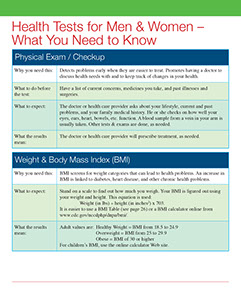
    Physical Exam / Checkup

    Why you need this:

    Detects problems early when they are easier to treat. Promotes having a doctor to discuss health needs with and to keep track of changes in your health.

    What to do before the test:

    Have a list of current concerns, medicines you take, and past illnesses and surgeries.

    What to expect:

    The doctor or health care provider asks about your lifestyle, current and past problems, and your family medical history. He or she checks on how well your eyes, ears, heart, bowels, etc. function. A blood sample from a vein in your arm is usually taken. Other tests & exams are done, as needed.

    What the results mean:

    The doctor or health care provider will prescribe treatment, as needed.

    Sexually Transmitted Infection (STI) Screening

    Why you need this:

    STIs may or may not have symptoms. Left untreated, different STIs can lead to health problems, such as cervical cancer, pelvic inflammatory disease, infertility, liver problems, and even death. Treating STIs lowers the risk of spreading them.

    What to do before the test:

    Follow your doctor’s advice for the test(s) needed.

    What to expect:

    For men and women: A blood test screens for hepatitis B, HIV, and syphilis.

    For men: The doctor will examine the genital area, as well as the lymph nodes in the groin. A urine sample is taken to test for chlamydia. For gonorrhea, a thin swab is inserted into the urethra just far enough to get a sample of cells.

    For women: The doctor examines the genital area and uses a long cotton swab to collect cells from the cervix and/or the walls of the vagina.

    What the results mean:

    If a test is postive for an STI, your doctor will prescribe treatment, as needed.

    Video Exam

    Why you need this:

    Checks for problems with vision and eye function. Can also help detect diabetes, glaucoma, and other problems.

    What to do before the test:

    Gather the eyeglasses, sunglasses, contact lenses, etc. you use, so you can show these to the eye doctor. (Take sunglasses with you in case the eye doctor dilates your eyes.)

    What to expect:

    You sit in the exam chair. The eye doctor and/or technician uses vision testing equipment to check your vision and for problems. To test for glaucoma, you look through a machine that sends a puff of air into one eye at a time. The eye doctor may put drops into your eyes to dilate the pupils of your eyes.

    What the results mean:

    The eye doctor will prescribe treatment, as needed.

    Weight & Body Mass Index (BMI)

    Why you need this:

    BMI screens for weight categories that can lead to health problems. An increase in BMI is linked to diabetes, heart disease, and other chronic health problems.

    What to expect:

    Stand on a scale to find out how much you weigh. Your BMI is figured out using your weight and height. This equation is used:

    Weight (in lbs) ÷ height (in inches) x 703.

    It is easier to use a BMI Table or a BMI calculator online fromwww.cdc.gov/nccdphp/dnpa/bmi/.

    What the results mean:

    Adult values are: Healthy Weight =

    BMI from 18.5 to 24.9

    Overweight = BMI from 25 to 29.9

    Obese = BMI of 30 or higher

    For children’s BMI, use the online calculator Web site.
    Men's and Women's Self-Care Book. Published by the American Institute for Preventive Medicine.

    © American Institute for Preventive Medicine

  • Health Tests For Men

    Medical Exams

    Abdominal Aortic Aneurysm (AAA) Screening

    Why you need this:

    The aorta is the main artery in the body. It extends upward from the heart, curves behind the heart, and runs downward through the chest and into the abdomen. The part in the abdomen is called the abdominal aorta. An aneurysm is a balloon-like swelling in a blood vessel wall. If this gets too big, the aorta can burst or tear. This is life threatening. Major risk factors for an aneurysm in the aorta are: being male; Being age 65 years or older; and a history of smoking at least 100 cigarettes over a lifetime. An ultrasound test is used to screen for an AAA. This test uses sound waves to get an image of your aorta and other structures in the upper abdomen to check for problems.

    What to do before the test:

    You may need to avoid eating for 8 to 12 hours before the test.

    What to expect:

    The test is usually painless. It does not involve the use of needles, injections, or radiation. You will be given a gown to wear. You lie on your back on an exam table. A warm gel is applied to the skin on your abdomen. The technician firmly presses a hand-held instrument (a transducer) in a back and forth motion over the skin of your abdomen. The test takes about 30 minutes. The gel is wiped off. The test is done.

    What the results mean:

    A radiologist looks at the images and sends a report to your doctor. If a problem is found, your doctor will order follow-up testing or treatment, as needed.

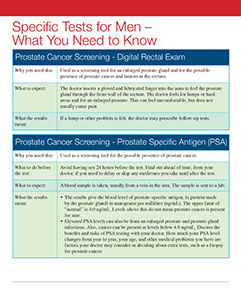
    Prostate Cancer Screening – Digital Rectal Exam

    Why you need this:

    Used as a screening tool for an enlarged prostate gland and for the possible presence of prostate cancer and tumors in the rectum.

    What to expect:

    The doctor inserts a gloved and lubricated finger into the anus to feel the prostate gland through the front wall of the rectum. The doctor feels for lumps or hard areas and for an enlarged prostate. This can feel uncomfortable, but does not usually cause pain.

    What the results mean:

    If a lump or other problem is felt, the doctor may prescribe follow-up tests.

    Prostate Cancer Screening – Prostate Specific Antigen (PSA)

    Why you need this:

    Used as a screening tool for the possible presence of prostate cancer.

    What to do before the test:

    Avoid having sex 24 hours before the test. Find out ahead of time, from your doctor, if you need to delay or skip any medicines you take until after the test.

    What to expect:

    A blood sample is taken, usually from a vein in the arm. The sample is sent to a lab.

    What the results mean:

    The results give the blood level of prostate-specific antigen, (a protein made by the prostate gland) in nanograms per milliliter (ng/mL). The upper limit of “normal” is 4.0 ng/mL. Levels above this do not mean prostate cancer is present for sure.

    Elevated PSA levels can also be from an enlarged prostate and prostate gland infections. Also, cancer can be present at levels below 4.0 ng/mL. Discuss the benefits and risks of PSA testing with your doctor. How much your PSA level changes from year to year, your age, and other medical problems you have are factors your doctor may consider in deciding about extra tests, such as a biopsy for prostate cancer.

    Men's and Women's Self-Care Book. Published by the American Institute for Preventive Medicine.

    © American Institute for Preventive Medicine

  • Health Tests For Women 2

    Medical Exams

    Bone Mineral Density Test (BMD)

    Why you need this:

    Osteoporosis occurs four times more often in women than in men. Get tested as often as advised by your doctor.

    What to do before the test:

    Dress in clothing that makes it comfortable to lie on a table.

    What to expect:

    A common and reliable method used is the Dexa-Scan (DXA). With your clothes on, you lie on a table. A low energy X-ray is taken of your hip and/or spine. Portable BMD screening devices are used to scan a heel or fingers. They are not as accurate as a DXA scan, but may be used at workplaces, health fairs, etc. Other ways to measure bone mineral density are CT scans, X-rays, and ultrasounds.

    What the results mean:

    Normal is a BMD value less than 1 standard deviation below the young adult mean. Osteopenia (low bone mass) is a BMD value between -1 and -2.5 standard deviation below the young adult mean. Osteoporosis is a BMD value at least -2.5 standard deviations below the young adult mean.

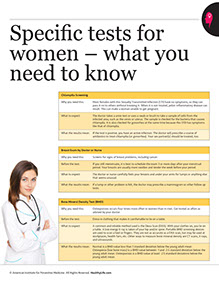
    Breast Exam by Doctor or Nurse

    Why you need this:

    Screens for signs of breast problems, including cancer.

    What to do before the test:

    If you still menstruate, it is best to schedule the exam 3 or more days after your menstrual period. Your breasts are usually more swollen and tender the week before your period.

    What to expect:

    The doctor or nurse carefully feels your breasts and under your arms for lumps or anything else that seems unusual.

    What the results mean:

    If a lump or other problem is felt, the doctor may prescribe a mammogram or other follow up tests.

    Cervical Cancer Screening – Pap Test and Human Papillomavirus (HPV) Test

    Why you need this:

    HPV test checks for DNA of high-risk types of human papillomavirus that can cause abnormal cells and cervical cancer. HPV test results are of value only with your Pap test results. Having a Pap test and an HPV test is an option for women ages 30 and older. If both tests are negative, the risk for cervical cancer is very low and women can opt to wait five years before another screening. Note: More than 40 types of HPV infect the vulva, cervix, anus, and penis. HPV testing for cervical cancer does not screen for other forms of cancers linked to HPV. It does not screen for genital warts and  other sexually transmitted infections, either.

    What to do before the test:

    You do not need any special preparation before an HPV test, but follow the same procedures as for Pap test, listed on this page, if both tests are done at the same time. HPV testing can also be done to provide more information when a Pap test’s results are not clear.

    What to expect:

    An HPV test is done the same way as a Pap test. The test can be done at the same time as the Pap test, using the same swab or a second swab.

    What the results mean:

    A negative HPV test means you do not have an HPV type that is linked to cervical cancer.

    A positive HPV test means you do have an HPV type that may be linked to cervical cancer. This does not mean you have cervical cancer now. But it could be a warning.

    Treatment depends on results your HPV and Pap test results. This includes:

    *  Having repeat tests to monitor changes

    *  Taking a closer look at your cervix (a colposcopy)

    *  Removing abnormal cells

    *  Treating for cancer, if present

    Cervical Cancer Screening – Pap Test (or Pap Smear)

    Why you need this:

    Checks for cell changes on the cervix that might become cervical cancer if they are not properly treated. Regular screening and follow-up can help prevent cervical cancer or find it early. Cervical cancer is the most preventable type of female cancer. Note: The Pap test does not screen for ovarian, uterine, vaginal, or vulvar cancers.

    What to do before the test:

    If you still menstruate, schedule the test for a time you will not be having a menstrual period. Don’t douche, tub-bathe, or use vaginal creams for 48 to 72 hours before the test. Avoid sex within 24 hours of the test.

    What to expect:

    You need to undress below the waist. You lie down on the exam table and put your feet in the stirrups attached to the bottom of the table. A device called a speculum is inserted into the vagina. A long cotton swab is used to take a sample of cells from the cervical area. This does not usually hurt. You may feel a brief pinch. The sample is analyzed for abnormal cells.

    What the results mean:

    Results come back as:

    *  Negative (normal) – No cell changes were found on your cervix. Continue to get regular Pap tests in the future.

    *  Unclear – This means the cells on the cervix could be abnormal. Or, the cells could not be clearly identified. Cell changes could be due to an infection, menopause, or other life changes. The changes could also be related to human papillomavirus (HPV) types that have a high risk for cervical cancer. Your doctor can order a test to check for HPV.

    *  Abnormal – Cell changes were found on your cervix. A likely cause is HPV, but this does not mean you have cervical cancer. Abnormal cells can be: Low-grade changes are minor and could go back to normal on their own. Your doctor can order a test to check for HPV types that have a high risk for cervical cancer. High-grade changes are serious. They could turn into cancer if they are not removed. Cancer may be found, but other tests need to confirm this.

    Chlamydia Screening

    Why you need this:

    Three fourths of females with this STI have no symptoms, so they can pass it on to others without knowing it. When it is not treated, pelvic inflammatory disease can result. This can make a woman unable to get pregnant.

    What to expect:

    The doctor takes a urine test or uses a swab or brush to take a sample of cells from the infected area, such as the cervix or uterus. The sample is checked for the bacteria that causes chlamydia. It is also checked for gonorrhea at the same time because this STI has symptoms like that of chlamydia.

    What the results mean:

    If the test is positive, you have an active infection. The doctor will prescribe a course of antibiotics to treat chlamydia (or gonorrhea). Your sex partner(s) should be treated, too.

    Mammogram

    Why you need this:

    Screens for signs of breast problems, including cancer.

    What to do before the test:

    Schedule the test at an approved testing facility. Find out from the National Cancer Institute at 800.4.CANCER (422.6237) orwww.cancer.gov. If you still menstruate, try not to schedule the test during the week before a period. On the day of the test, don’t wear lotions, powders, perfumes or deodorant. They can cause shadows on the X-ray pictures. Wear slacks or a skirt with a blouse or top, so you only need to undress from the waist up.

    What to expect:

    You will need to undress above the waist. You put on a gown that covers your front and back. The test is quick and easy: You stand up in front of the X-ray machine. The person who takes the X-rays places one breast between two plastic plates. The plates press your breast and make it flat. This can feel uncomfortable, but it lasts only seconds. The machine has an automatic release. The same test is done on the other breast. Then side images are taken for both breasts for a total of 4 X-rays.

    What the results mean:

    A radiologist reads the X-rays and sends the results to your doctor. A report is sent to you within 30 days. A normal result means the radiologist did not find anything that needs follow up. Continue to get screening mammograms. If the result is abnormal, it means the radiologist saw:

    *  A change from a past mammogram.

    *  A change that needs follow up.

    *  Your doctor will order follow up tests, as needed, such as an ultrasound or an MRI. If one of these shows a solid mass, your doctor may prescribe a biopsy of the mass.

    The good news is that about 80% of lumps are not cancerous.

    Pelvic Exam

    Why you need this:

    Checks for problems on the outside of the vaginal area and inside the vagina and cervix.

    What to do before the test:

    Follow guidelines for Pap smear.

    What to expect:

    The doctor does a physical exam of the vaginal area. A Pap smear is usually done with a pelvic exam. The doctor may also insert a gloved and lubricated finger into the rectum. This can feel uncomfortable, but does not usually cause pain.

    What the results mean:

    If no problems are found, continue to have pelvic exams yearly or as advised by your doctor. If a problem is found, your doctor will prescribe follow-up tests or exams.

    Men's and Women's Self-Care Book. Published by the American Institute for Preventive Medicine.

    © American Institute for Preventive Medicine

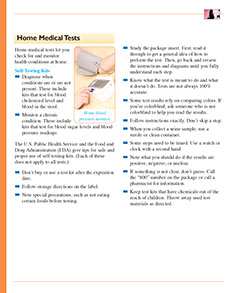
  • Home Medical Tests

    Medical Exams

    Home medical tests let you check for and monitor health conditions at home.

    Self-Testing Kits

    *  Diagnose when conditions are or are not present. These include kits that test for blood cholesterol level and blood in the stool.

    *  Monitor a chronic condition. These include kits that test for blood sugar levels and blood pressure readings.

    The U.S. Public Health Service and the Food and Drug Administration (FDA) give tips for safe and proper use of self-testing kits. (Each of these does not apply to all tests.)

    *  Don’t buy or use a test kit after the expiration date.

    *  Follow storage directions on the label.

    *  Note special precautions, such as not eating certain foods before testing.

    *  Study the package insert. First, read it through to get a general idea of how to perform the test. Then, go back and review the instructions and diagrams until you fully understand each step.

    *  Know what the test is meant to do and what it doesn’t do. Tests are not always 100% accurate.

    *  Some test results rely on comparing colors. If you’re colorblind, ask someone who is not colorblind to help you read the results.

    *  Follow instructions exactly. Don’t skip a step.

    *  When you collect a urine sample, use a sterile or clean container.

    *  Some steps need to be timed. Use a watch or clock with a second hand.

    *  Note what you should do if the results are positive, negative, or unclear.

    *  If something is not clear, don’t guess. Call the “800” number on the package or call a pharmacist for information.

    *  Keep test kits that have chemicals out of the reach of children. Discard away used test materials as directed.

    Page from the Healthier at Home book by the American Institute for Preventive Medicine. www.HealthyLife.com. All rights reserved.

    © American Institute for Preventive Medicine

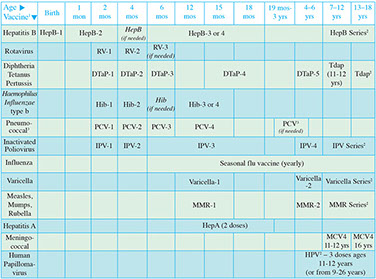
  • Immunization Schedule

    Medical Exams

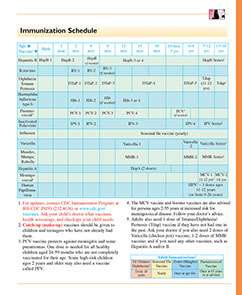
    1.  For updates, contact CDC Immunization Program at 800.CDC.INFO (232.4636) orwww.cdc.gov/vaccines. Ask your child’s doctor what vaccines, health screenings, and checkups your child needs.

    2.  Catch-up vaccines should be given to children and teenagers who have not already had them.

    3.  PCV vaccine protects against meningitis and some pneumonias. One dose is needed for all healthy children aged 24-59 months who are not completely vaccinated for their age.

    Vaccines for Traveling Abroad

    Before you travel to other countries, find out if you need certain vaccines. Get information from the CDC Travelers’ Information Line. Call 800.CDC.INFO (232.4636) or use thewww.cdc.gov/travelWeb site. Discuss your needs with your doctor.

    Page from the Healthier at Home book by the American Institute for Preventive Medicine. www.HealthyLife.com. All rights reserved.

    © American Institute for Preventive Medicine