Category: Medical News

  • Can You Pass This Drug Test?

    MEDICAL NEWS

    Image of man looking in his medicine cabinet.

    Question: What is our nation’s most abused drug? Need a hint? It is legal and may be sitting in your medicine cabinet.

    Fatal drug overdoses are an epidemic. Opioid prescription painkiller overdoses account for the majority of these deaths. The National Safety Council revealed these startling facts many people do not know, but need to, about prescription painkiller use:

    *  Forty-five people die every day from opioid prescription painkillers-more deaths than from heroin and cocaine overdoses combined.

    *  In 2010, enough prescription painkillers were provided to medicate every American around the clock for an entire month.

    *  More than 70% of people who abused prescription pain relievers got the pills from friends or relatives.

    *  The U.S. contains only 4.6% of the world’s population but consumes 80% of the world’s opioids and 99% of the world’s hydrocodone.

    *  While middle-aged men and women have the highest prescription painkiller fatal overdose rates, the rates are increasing most rapidly among women. Teen use also is rising. One in 8 high school seniors admits to using prescription painkillers for fun.

    Remove painkillers from your home. Talk with your kids about drugs, including common medications in your home. If you need pain meds, work with your doctor to cut back.

    © American Institute for Preventive Medicine

  • High Blood Pressure And Cold Medicines: A Potentially Bad Combination

    MEDICAL NEWS

    Image of a pharmacist.

    If you have high blood pressure, you need to be cautious when taking over-the-counter (OTC) medicines for coughs, colds, and flu. Most people didn’t know they were at risk if they took certain decongestants, according to a survey by St. Joseph Health Products.

    Here’s the caution:The most common OTC ingredient to avoid: decongestants. OTC cough and cold medicines with decongestants help to reduce nasal swelling in part by narrowing the blood vessels in the nose and facial area. However, the narrowing effect of decongestants can also affect other blood vessels while increasing blood pressure and heart rate, making it a potentially dangerous situation for the millions of Americans who have high blood pressure.

    Talk with your doctor or pharmacist about which cold and cough medications might be better for you if you have high blood pressure.

    © American Institute for Preventive Medicine

  • Melanoma And Skin Cancer Awareness

    MEDICAL NEWS

    Image of father and child walking on the beach with a big blue umbrella.

    Skin cancer is the most common type of cancer in the U.S. Melanoma, the deadliest form of skin cancer, kills one American every 54 minutes.

    The good news is many cases of skin cancer can be prevented. Before you head outside to enjoy the sunshine and fresh air, know how you can protect yourself and your family from skin cancer.

    *There’s no “safe” tan:Getting a “base” tan before vacation isn’t safe. It increases your risk of skin cancer and aging of the skin. Using self-tanners is the only safe way to get a bronze glow.

    *Seek shade:One of the best ways to avoid UV rays is to love the shade. Trees, umbrellas and buildings are easy ways to keep the sun’s rays off your skin, especially between the hours of 10 a.m. and 4 p.m., when rays are strongest.

    *Get vitamin D safely:Though the skin makes vitamin D when it’s exposed to the sun, there are safer ways to get what you need of this nutrient. Eggs, fatty fish, fortified dairy and juice are good ways to get your D.

    *Use caution with water and snow:Swimming and skiing can expose the skin to more UV rays because the sun reflects off water and snow. Be diligent about sun protection during these kinds of activities.

    *Apply (and reapply) sunscreen:Use a sunscreen labeled “broad spectrum” with an SPF of at least 30. Reapply at least every 2 hours, and after swimming or toweling off.

    *Use protective clothing:Sun protective hats, shirts, scarves and more are available to help block UV rays. Look for clothing and swimwear with a “UPF” rating on the label for protection. Use it with sunscreen for optimum protection.

    Finally, contact your doctor if you notice a new, itchy or painful mole. Moles with irregular shapes and borders or those that are black or multicolored should be checked.

    Sources: U.S. Department of Health and Human Services, American Cancer Society, Skin Cancer Foundation

    © American Institute for Preventive Medicine

  • Do You Know The  Signs Of A Drinking Problem?

    MEDICAL NEWS

    Image of a group of friends drinking.

    According to the National Institute on Alcohol Abuse and Alcoholism, more than 15 million adults have an alcohol use disorder (AUD). This means they cannot stop or control their drinking.

    It can be hard to admit that you or someone you love has AUD. Plus, someone with AUD can’t just decide to stop drinking. AUD is a health condition that requires treatment and support. Knowing the signs can help a person seek medical help.

    Alcohol abuse is defined as:

    *  A woman who has more than 7 drinks per week or more than 3 drinks per sitting.

    *  A man who has more than 14 drinks per week or more than 4 drinks per sitting.

    *  A person older than 65 who has more than 7 drinks per week or more than 3 drinks per sitting.

    Questions to ask about alcohol abuse

    If you’re not sure whether your drinking is a problem, ask yourself:

    *  Have I tried to stop drinking, but keep slipping up?

    *  Do I feel that once I start drinking, I can’t stop?

    *  Have I been told by others that my drinking is a problem?

    *  Do I drink in the morning to “get my day started”?

    *  Have I ever hurt myself or others because of my drinking?

    *  Do I ever hide my drinking from others or lie about how much I’ve had?

    *  Do I have “blackouts” or memory lapses  after drinking?

    *  Is drinking interfering with my relationships?

    *  Is my alcohol use getting in the way of success at work?

    If you answered “yes” to any of these questions, you may have AUD. Talk to your doctor about treatment that may help you.

    Preventing alcohol abuse

    Alcohol problems can run in families. If you have a close family member with AUD, you may have to work harder than others to avoid alcohol problems. But, preventing alcohol abuse is possible. Follow these tips to help:

    *  Be extra cautious about signs of AUD and ask yourself the questions in this article on a regular basis.

    *  If you decide to drink, stop after one drink and switch to non-alcoholic beverages.

    *  Get regular checkups with your doctor. Follow any recommended treatment for health conditions.

    *  Avoid people who drink too much or abuse alcohol.

    *  Consider joining a support group.

    Did you know?

    As adults grow older, our bodies are less capable of tolerating addictive substances like alcohol, and are more susceptible to their negative effects.

    Source: American Academy of Family Physicians

    © American Institute for Preventive Medicine

  • The “Truth” About Tv Drug Ads

    MEDICAL NEWS

    Image of "As Seen On TV" logo.

    Be wary when watching those ads for drugs on TV because 6 out of 10 claims could potentially mislead you, say researchers in an article in the Journal of General Internal Medicine.

    False claims are illegal, but some claims were misleading, left out important information, exaggerated facts, provided opinions, or made meaningless links with lifestyle, the researchers found in reviewing TV drug commercials. Their findings also included problems with ads for over-the-counter drugs as well as prescription medication.

    Don’t believe everything you see on TV, and when it comes to making medication decisions, your doctor and pharmacist are your best sources.

    © American Institute for Preventive Medicine

  • Why Do Mosquitoes Always Bite Me?

    MEDICAL NEWS

    Close up image of person itching arm.

    It has to do with how you smell, but scientists still don’t know why some breeds are attracted to different smells, said Jason Pitts, professor of biological sciences at Vanderbilt University.

    The source of the aromatic compounds that produce body odor are bacterial colonies that exist on human skin, particularly in dark, moist areas such as the armpits and between the toes. Pitts and his colleagues have discovered that mosquito antennae are filled with hundreds of tiny odor receptors, which are individually tuned to detect specific odors.

    Just as mosquitoes may love you, they may not love natural repellants such as clove oil, citronella, lemon grass, eucalyptus, castor oil, peppermint, lavender, and cedar oil. But almost all of these are less effective than the synthetic repellant DEET, and they need to be reapplied more frequently.

    Bet you didn’t know these pesky insects have a long-range system that allows them to track down potential prey from more than 100 yards away. The mosquitoes do so, in part, by sensing the carbon dioxide in human breath. When we exhale, our breath contains more carbon dioxide than the surrounding air, and mosquitoes can detect this difference-especially if you’ve had a beer or other alcoholic drink.

    To avoid mosquito bites, CDC gives the following advice:

    *  Use an insect repellant when you go outdoors. The FDA approves ones with DEET, picaridin. IR3535, and oil of lemon eucalyptus. Follow the product label’s directions.

    *  As much as possible, wear long sleeves, long pants, and socks. For extra protection, spray clothes, not your skin, with repellant that contains permethrin.

    *  Avoid outdoor activities from dusk to dawn or take extra care to use insect repellant and protective clothing during these times.

    *  Keep mosquitoes outside the house. Use screens on windows and doors or use air conditioning.

    *  On a regular basis, empty water that collects in outdoor buckets, flowerpots, pool covers and bird baths. Mosquitoes like stationary water.

    © American Institute for Preventive Medicine

  • 5 Ways To Tell Your Heart, ‘I Love You’

    MEDICAL NEWS

    Image of mother and daughter making a heart with their hands.

    You can love your heart, not just during heart month, but all year long. Let’s count the ways with Lori Daniels, MD, cardiologist at the University of California, San Diego Medical Center. She offers 5 easy ways, especially for people with heart disease, to love their hearts throughout the year.

    1.One crème brulee = 5 miles.Research shows a direct link between obesity and increased heart disease. One way to keep your weight down is to reduce the number of calories you take in and increase the number of calories you burn. So before diving into a crème brulee or double chocolate sundae, find out how many calories the dessert contains. Then determine how many miles you would need to walk to burn the calories off. On average, 100 calories are burned walking 1 mile. Is one dessert worth a 3-mile trek? You decide.

    2.Laminate.Keep an up-to-date list of medications and doctors’ contact info in your bag and car glove compartment. In an emergency, this will serve as a quick and easy reference for family and medical personnel. Be sure to share this list with friends and family before traveling in case you need to fill a prescription or get medical attention.

    3.One aspirin, crushed.Keep a supply of aspirin handy. If you have heart disease, you may already be taking some form of aspirin every day at any time you choose. If you or a friend believes you are suffering the onset of a heart attack, take either 1 adult or 2 baby aspirin. Instead of swallowing the pill whole, crush it first so that the aspirin is more rapidly absorbed into your body.

    4.Avoid salt of all colors.You may be able to greatly lower your blood pressure by reducing the sodium (salt) in your diet. Be aware that white table salt is just one form of sodium in your kitchen. Other culprits with high sodium content come in black (soy and teriyaki sauce), yellow (mustard), pink (lunch meats) and brown (canned soups and gravies.) Check the sodium content before eating a processed product. If you dramatically reduce your intake of sodium, you might, under your doctor’s care, be able to stop taking some blood pressure medications.

    5.Sunday night, count them out.Whether you take blood pressure medicine, cholesterol drugs or any other prescription or supplement, try this. Instead of managing many pill bottles, manage one pill box. Almost every pharmacy sells pill boxes marked with the days of the week. Every Sunday night, fill up one weeks’ worth of pills. Reduce the time you spend counting your prescriptions to 4 times a month instead of 30. And you’ll be able to keep track of whether you took your medicine each day.

    © American Institute for Preventive Medicine

  • Casual Smokers At Risk

    MEDICAL NEWS

    Image of a person placing on a nicotine patch.

    People who smoke just a few cigarettes a day are exposed to the same serious health risks as heavier smokers, breaking a common myth that social or casual smoking is somehow safe or that they can easily quit.

    Casual smokers who smoke between 1 and 4 cigarettes a day, are tripling their risk of dying of heart disease and lung cancer, according to Dr. Robin J. Mermelstein, a clinical psychologist and director of the Center for Health Behavior Research at the University of Illinois at Chicago who specializes in smoking cessation counseling. Light smokers represent about 7 million of the U.S. smoking population.

    For light smokers looking to quit and stay smoke-free, Dr. Mermelstein offers the following advice:

    *Think about the reasons you smoke.It will give you a clearer path to quitting. Does smoking relieve stress? Is it a large part of your social life?

    *Get your head in the game.Get support products like nicotine replacement therapy and online help. Customized online support services provide encouragement to help you break your behavioral and psychological link to cigarettes and is proven effective in helping smokers quit.

    *Choose nicotine replacement that’s right for you.Lighter smokers may be less likely to use nicotine replacement therapy to help them quit, which means they could be setting themselves up for failure. Nicotine replacement therapies are clinically proven to reduce the physical withdrawal symptoms like cigarette cravings and can double a smoker’s chance of quitting successfully.

    For light smokers or heavier smokers, research shows the most successful approach to quitting is a combination of medicine, such as nicotine replacement patches, that can help reduce the physical cravings of nicotine, and behavioral strategies that help smokers cope with those triggers to light up. Your employer may offer some of these options.

    © American Institute for Preventive Medicine

  • Hiv And Aids – How Much Do You Know?

    MEDICAL NEWS

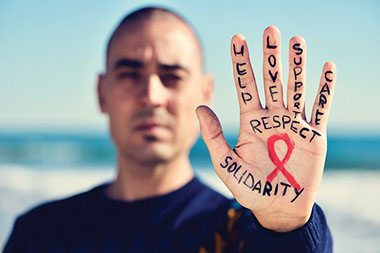
    Image of man's hold with the AIDS ribbon and words on fingers, that inlcude 'help', 'love', 'support', 'care.'

    When HIV and AIDS were first discovered, they were commonly thought to be one in the same. Nearly everyone who had HIV would eventually get AIDS. But as treatment for AIDS and HIV has continued to progress, HIV does not always turn  into AIDS.

    Today, there are special medicines called antiretroviral therapy (ART) that can help keep HIV from getting worse. These drugs can help a person live a long, healthy life with HIV, preventing them from getting AIDS later on.

    HIV: What it is and how it’s treated

    HIV stands for human immunodeficiency virus. HIV is spread through certain bodily fluids. Most commonly, it is spread through sexual contact or sharing needles.

    HIV attacks the body’s immune system, destroying the body’s cells that fight off infections. There is no cure for HIV, but there is treatment.

    Early treatment with ART is important. Someone who begins HIV treatment in the early stages of the infection can live nearly as long as someone who doesn’t have HIV.

    About 166,000 people have HIV and don’t know it. This means they aren’t getting the treatment they need to live longer and they can spread HIV to others.

    HIV is NOT spread through:

    *  Hugging or casual kissing

    *  The air, such as sneezing or coughing

    *  Mosquito or other insect bites

    Symptoms of HIV

    Within 2 to 4 weeks of getting HIV, a person may feel like they have a bad case of the flu. Symptoms include:

    *  Fever

    *  Headache

    *  Swollen glands

    *  Sore throat

    *  Body aches

    *  Rash

    These symptoms may last a few days or several weeks. Having these symptoms does not mean you have HIV.

    Some people do not feel sick at all after getting HIV. That’s why it’s important to get tested if you think you may have been exposed.

    To find an HIV testing site near you, go tolocator.hiv.gov.

    AIDS

    The last stage of an HIV infection is acquired immunodeficiency syndrome, or AIDS. Once HIV has progressed to AIDS, the body’s immune system is badly damaged. A person with AIDS may get sick often, and may get infections and cancers because the body cannot fight them off.

    Starting treatment at this late stage can still be helpful to someone with AIDS. But, it is much better to begin treatment as soon as possible after getting HIV.

    Sources: HIV.gov and Centers for Disease Control and Prevention

    © American Institute for Preventive Medicine

  • Men’s Health 2

    MEDICAL NEWS

    Image of oler man at the doctor's office.

    Increasing awareness of health problems that can be prevented among men and encourage men and boys to get early detection and treatment of disease and injury.

    6 health tests men need

    Here are 6 essential screening tests all men should receive during their lifetime, according to pathologist and men’s health expert Dr. Thomas Wheeler, Baylor College of Medicine.

    1.Prostate cancer:The prostate specific antigen (PSA) test was developed to help detect prostate cancer in men, but experts now disagree about treating the cancer if detected. Men, starting at age 50, should speak with their docs about the pros and cons of screening. For those in high-risk categories, this conversation should begin at age 45 or earlier.

    2.Blood pressure:It’s a simple and painless test for the “silent killer.” Why? Because high blood pressure has no symptoms. Often, simple diet changes and regular exercise can lower blood pressure. If not, the medications to control blood pressure are well tolerated and do not cost a lot.

    3.Cholesterol:A cholesterol test also is a simple screening test and is advised for men at least every 5 years, or yearly if abnormal.

    4.Colon cancer:This is the third most common cancer in Americans. Beginning at age 50, men should be screened for precancerous polyps and colon cancer. Screening tests include the fecal occult blood test, flexible sigmoidoscopy and colonoscopy.

    5.Skin cancer:Limiting sun exposure and receiving regular check-ups can help men avoid this common cancer including melanoma – a potentially deadly form.

    6.Diabetes:Men 45 years and older should be tested for type 2 diabetes every 3 years. Common screening blood tests are fasting glucose and hemoglobin A1c. Diabetes can be detected early before complications of more advanced disease set in.

    © American Institute for Preventive Medicine