Category: Medical News

  • Know Your Heart Risk

    MEDICAL NEWS

    Winter image of hands wearing red gloves making a heart shape.

    One reason heart disease is so deadly is due to its silent nature. Often, people do not know they have heart issues until they experience a heart attack or stroke.

    There’s plenty of good news, though. The risk factors for heart disease are fairly easy to spot. Taking steps to understand your heart numbers and manage your risk can decrease your chance of heart disease. And even if you already have heart disease, you can improve your odds by addressing your risk factors.

    Numbers to know

    Regular check-ins with your doctor are key to monitoring heart health. Your doctor will check your blood pressure, blood lipids, and overall health to determine your heart disease risk. Here are some numbers that could signal cause for concern:

    *  Blood pressure equal to or higher than 130/80 mm/Hg

    *  Total blood cholesterol ≥200 mg/dL

    *  LDL cholesterol  ≥100 mg/dL

    *  HDL cholesterol less than 40 mg/dL for men and 50 mg/dL for women

    *  Fasting blood sugar equal to or higher than 100 mg/dL

    *  Waist circumference greater than 40 inches for men and 35 inches for women

    Habits that put you at risk

    While the numbers your doctor tests for can indicate your heart disease risk, they are not the only factors to watch out for. Your lifestyle habits can tell you a lot about the health of your heart. Here are some habits that can increase your risk:

    *  Smoking

    *  Drinking more than 1 drink a day for women or 2 drinks a day for men

    *  Eating too much salty food

    *  Not eating enough fruits and vegetables

    *  Consuming a diet high in red meat and processed foods

    *  Being sedentary, or getting less than 150 minutes of exercise a week

    What to do next

    If any of these risk factors apply to you, talk to your doctor about your heart health. A long and healthy life requires a healthy heart.

    There are many effective treatments for heart disease, but the best plan is prevention. Taking steps to address your risk factors can make all the difference. Your doctor may recommend:

    *  Changes to your diet

    *  More exercise

    *  Cutting back on alcohol

    *  Quitting smoking

    *  Getting more sleep

    *  Medication

    © American Institute for Preventive Medicine

  • Understanding Autism

    MEDICAL NEWS

    Blue teddy bear holding heart with autism puzzle icon.

    Autism is a spectrum of developmental disorders that impacts how a person learns, communicates, behaves, and interacts socially. While boys are more likely to be affected, autism spectrum disorders (ASD) can develop in people of all ages, races, and ethnicities.

    Health professionals believe ASD is caused by a mix of genetic and environmental factors. Autism presents differently in each individual and ranges from very mild to requiring extensive support.

    Signs of ASD

    Screening is a routine part of well-child visits during the first few years of life. However, those with only mild impairments from ASD may remain undiagnosed until later in life. Signs include:

    *  Poor eye contact

    *  No babbling or pointing before age 1

    *  Not responding appropriately to name

    *  Poor social responsiveness

    *  Preferring to play alone

    *  Repetitive movements such as hand-flapping

    *  Delays in skill development

    *  Loss of previously acquired skills

    *  Preoccupation with certain objects or subjects

    *  Inflexible adherence to routine

    Diagnosing ASD

    There is no blood test or other medical diagnostic test. A doctor makes the diagnosis based on observation of the child’s behavior and developmental history. Screening tools a physician may use include:

    *  Developmental screening

    *  Developmental monitoring

    *  Comprehensive developmental evaluations

    If a child has additional risk factors for autism, your doctor may recommend additional screenings. Risk factors include:

    *  Preterm delivery

    *  Low birth weight

    *  Lead exposure

    *  Sibling with ASD

    *  Other factors

    Treatment for ASD

    There is no cure for ASD. However, treatment can significantly improve symptoms. Many people with autism benefit from a combination of therapies that help them develop language and social skills and encourage positive behaviors. Common treatment includes:

    *  Speech therapy

    *  Occupational therapy

    *  Educational interventions

    *  Intensive behavioral interventions

    *  Family counseling

    *  Skill-oriented training

    *  Medication

    *  Physical therapy

    *  Cognitive behavior therapy

    *  Nutritional therapy

    © American Institute for Preventive Medicine

  • Understanding Perimenopause

    MEDICAL NEWS

    Women outside looking out to the distance.

    Before a woman reaches menopause, she first goes through perimenopause. It is a time of adjustment as the body shifts away from the reproductive years. Preparing for these changes allows you to plan how to manage symptoms and find support.

    What is perimenopause?

    Perimenopause is the period of time when a woman’s body is gradually transitioning to menopause. It signals the end of the reproductive years and involves many physical and hormonal changes. When a woman’s period has been absent for a full 12 months, she has reached the end of perimenopause and is in post menopause.

    Every woman’s experience of perimenopause is different. Perimenopause can last for as little as four months to as long as ten years. The average length is about four to eight years. Many women begin perimenopause in their mid-forties though it can begin as late as their mid-fifties or as early as their mid-thirties.

    Symptoms

    *  Irregular or skipped periods

    *  Heavier or lighter periods

    *  Needing to urinate more frequently

    *  Hot flashes

    *  Vaginal dryness

    *  Difficulty sleeping

    *  Mood changes

    *  Changes in sexual desire

    *  PMS-like symptoms

    *  Trouble concentrating

    *  Headaches

    Manage Symptoms

    *  Eat a healthy, balanced diet with plenty of fruits, vegetables, and whole grains.

    *  Exercise regularly and include weight training at least two days a week to protect bone health.

    *  Watch for hot flash triggers such as alcohol or coffee.

    *  Establish healthy sleep habits.

    *  Seek ways to reduce stress, such as meditation, tai chi, or yoga.

    Treatment

    If symptoms are severe, your doctor may recommend additional treatment such as:

    *  Antidepressants to stabilize mood

    *  Low-dose birth control for irregular or heavy periods

    *  Hormone therapy to manage symptoms

    *  OTC or prescription medicine to address vaginal dryness or painful sex

    Pregnant during perimenopause

    Fertility naturally declines during perimenopause; however, it is still possible to conceive. The ovaries release fewer eggs, and fertility hormones gradually decrease, causing periods to become irregular. But, as long as you continue to have periods, it means you are still ovulating, and pregnancy is possible.

    © American Institute for Preventive Medicine

  • Colorectal Cancer: Don’T Wait For Signs

    MEDICAL NEWS

    A plastic model of the colon being held by a women.

    Colorectal cancer is cancer in the colon or rectum. And, it kills thousands of people each year. But getting screened can prevent many of these deaths. Plus, screening can catch colon cancer in the early stages when it’s easier to treat.

    Many people don’t have any signs or symptoms of colon cancer at first. If you wait until you have symptoms, the cancer may be more advanced.

    Polyps and the cancer link

    Polyps are clumps of cells that form on the lining of the colon or rectum. Having polyps does not mean you will get colorectal cancer. Some polyps are harmless, while others can turn into cancer.

    Polyps usually don’t hurt. People don’t know they have them until they have a colon cancer test.

    Screening matters

    Colorectal cancer may not have any signs, especially at first. That’s why many people should get screened for colorectal cancer even if they don’t have any symptoms.

    Ask your doctor about colorectal screening. Your doctor can talk with you about whether you need a test and which test to get. This depends on many factors, such as:

    *  Your age

    *  Family history of colorectal cancer

    *  Any risk factors you have, such as Crohn’s disease or ulcerative colitis

    *  Lifestyle risk factors, like smoking or being overweight

    There are several different screening tests for colorectal cancer. Some tests will check for blood or other signs of colon cancer in the stool.

    Other tests use special tools to see directly inside the colon and rectum. During these tests, a doctor uses a thin, lighted tube and a special camera. The test may be:

    *  A colonoscopy, which looks inside the entire colon and rectum

    *  A flexible sigmoidoscopy, which looks inside the rectum and lower part of the colon

    During a colonoscopy or sigmoidoscopy, the doctor gives you medicine to help keep you comfortable. In most cases, you will go home after the test, but will need someone to drive you.

    If you see any changes with your stool, talk to your doctor.

    Sources: American Cancer Society, Centers for Disease Control and Prevention

    © American Institute for Preventive Medicine

  • The Latest On Mammograms

    MEDICAL NEWS

    Female doctor smiling.

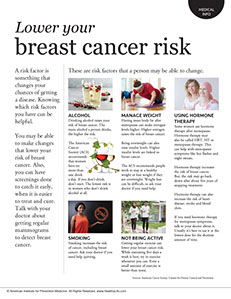
    Our understanding of cancer has expanded rapidly in recent decades. As a result, cancer treatment continues to improve. However, prevention and early detection are important steps to fight cancer.

    Identifying breast cancer before it has the chance to spread is one of the best ways to improve breast cancer survival. In general, the earlier cancer is diagnosed, the better the prognosis. Mammograms are a critical tool for early detection.

    How a mammogram works

    A mammogram is an x-ray specially designed to look at breast tissue. The amount of radiation exposure from a mammogram is low, and the benefits usually outweigh any risk.

    While the images from a mammogram cannot tell you if you have cancer, they can show if there is abnormal tissue in the breast. The presence of abnormal tissue could indicate the need for further testing.

    When used as a routine screening tool, a mammogram may detect breast cancer before it presents any symptoms and while it is too small to feel.

    When to get a mammogram

    A woman’s risk of breast cancer increases over their lifespan. Past a certain age, a mammogram should be a regular part of routine healthcare.

    If and when you should get a mammogram is a decision to be made in consultation with your doctor. The general guidelines for women are:

    *  Women who are 50-74 years of age and at average risk of breast cancer should have a mammogram every two years.

    *  Women between the ages of 40-49 may benefit from early screening if recommended by their doctor.

    *  Women at high risk of breast cancer should talk to their doctor about how often to get a mammogram.

    Recent Advances in Mammography

    The FDA recently approved a computer-assisted and detection (CAD) program to aid doctors in identifying and diagnosing breast cancer using data from mammographies. The advances in CAD have the potential to improve the early detection of breast cancer. This could mean a big step forward in the fight against breast cancer.

    © American Institute for Preventive Medicine

  • Understanding Autoimmunity

    MEDICAL NEWS

    Smiling female.

    The immune system is a finely tuned network of organs and cells that protect you. When the body senses a threat, such as an injury, bacteria, or virus, the immune system swings into action. An autoimmune disease occurs when the immune system mistakenly targets your own tissues, causing damage.

    Common autoimmune conditions

    *  Type 1 diabetes

    *  Lupus

    *  Rheumatoid arthritis

    *  Irritable bowel syndrome

    *  Graves’ disease

    *  Hashimoto’s disease

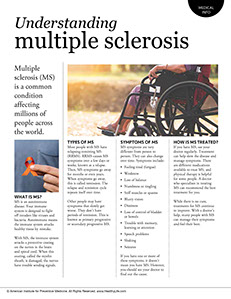
    *  Multiple sclerosis

    *  Psoriasis

    *  Celiac disease

    *  Alopecia areata

    Symptoms

    The specific symptoms vary by type of autoimmune condition. However, many autoimmune diseases share some common symptoms:

    *  Fatigue

    *  Dizziness

    *  Redness and swelling

    *  Muscle aches

    *  Low-grade fevers

    *  Symptoms that come and go, called flares and remission

    Causes

    No one knows exactly why some people develop an autoimmune disease. However, they are more common in some groups of people:

    *  Women are more likely than men to develop an autoimmune condition.

    *  Genetics may predispose a person to certain autoimmune diseases.

    *  Exposure to certain viruses, bacteria, or chemicals may trigger an autoimmune reaction.

    *  Some autoimmune disorders are more common among certain racial or ethnic groups.

    Treatment

    Your doctor is your best resource to properly diagnose and treat autoimmune diseases. The exact treatment depends on the type of autoimmune condition, the areas of the body affected, and your own health and medical history.

    Treatment goals include:

    *  Suppress or slow down the immune system to prevent it from damaging tissues.

    *  Control symptoms, including pain, inflammation, rash, etc.

    *  Replace any substances your body can no longer make, for example, insulin if you have type 1 diabetes.

    © American Institute for Preventive Medicine

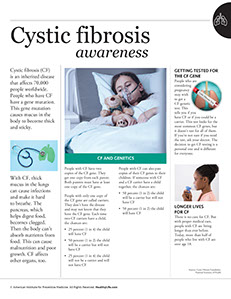
  • Cystic Fibrosis Awareness

    MEDICAL NEWS

    Girl in bed with breathing mask on while holding a teddy bear.

    Cystic fibrosis (CF) is an inherited disease that affects 70,000 people worldwide. People who have CF have a gene mutation. This gene mutation causes mucus in the body to become thick and sticky.

    With CF, thick mucus in the lungs can cause infections and make it hard to breathe. The pancreas, which helps digest food, becomes clogged. Then the body can’t absorb nutrients from food. This can cause malnutrition and poor growth. CF affects other organs, too.

    CF and genetics

    People with CF have two copies of the CF gene. They get one copy from each parent. Both parents must have at least one copy of the CF gene.

    People with only one copy of the CF gene are called carriers. They don’t have the disease and may not know that they have the CF gene. Each time two CF carriers have a child, the chances are:

    *  25 percent (1 in 4) the child will have CF

    *  50 percent (1 in 2) the child will be a carrier but will not have CF

    *  25 percent (1 in 4) the child will not be a carrier and will not have CF

    People with CF can also pass copies of their CF genes to their children. If someone with CF and a CF carrier have a child together, the chances are:

    *  50 percent (1 in 2) the child will be a carrier but will not have CF

    *  50 percent (1 in 2) the child will have CF

    Getting tested for the CF gene

    People who are considering pregnancy may wish to get a CF genetic test. This tells you if you have CF or if you could be a carrier. This test looks for the most common CF genes, but it doesn’t test for all of them. If you’re not sure if you need the test, ask your doctor. The decision to get CF testing is a personal one and is different for everyone.

    Longer lives  for CF

    There is no cure for CF. But with proper medical care, people with CF are living longer than ever before. Today, more than half of people who live with CF are over age 18.

    Sources: Cystic Fibrosis Foundation, National Institutes of Health

    © American Institute for Preventive Medicine

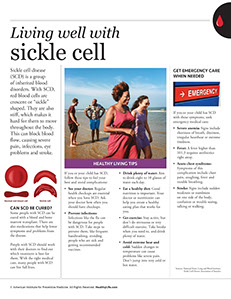
  • Living Well With Sickle Cell

    MEDICAL NEWS

    Two couples walking and laughing along the beach.

    Sickle cell disease (SCD) is a group of inherited blood disorders. With SCD, red blood cells are crescent or “sickle” shaped. They are also stiff, which makes it hard for them to move throughout the body. This can block blood flow, causing severe pain, infections, eye problems and stroke.

    Can SCD be cured?

    Some people with SCD can be cured with a blood and bone marrow transplant. There are also medications that help lower symptoms and problems from the disease.

    People with SCD should work with their doctors to find out which treatment is best for them. With the right medical care, many people with SCD can live full lives.

    Healthy living tips

    If you or your child has SCD, follow these tips to feel your best and avoid complications:

    *  See your doctor: Regular health checkups are essential when you have SCD. Ask your doctor how often you should have checkups.

    *  Prevent infections: Infections like the flu can be dangerous for people with SCD. Take steps to prevent them, like frequent handwashing, avoiding people who are sick and getting recommended vaccines.

    *  Drink plenty of water: Aim to drink eight to 10 glasses of water each day.

    *  Eat a healthy diet: Good nutrition is important. Your doctor or nutritionist can help you create a healthy eating plan that works for you.

    *  Get exercise: Stay active, but don’t do strenuous or very difficult exercise. Take breaks when you need to, and drink plenty of water.

    *  Avoid extreme heat and cold: Sudden changes in temperature can cause problems like severe pain. Don’t jump into very cold or hot water.

    Get emergency care when needed

    If you or your child has SCD with these symptoms, seek emergency medical care:

    *  Severe anemia: Signs include shortness of breath, dizziness, irregular heartbeat or extreme tiredness.

    *  Fever: A fever higher than 101.3 requires antibiotics right away.

    *  Acute chest syndrome: Symptoms of this complication include chest pain, coughing, fever and trouble breathing.

    *  Stroke: Signs include sudden weakness or numbness on one side of the body, confusion or trouble seeing, talking or walking.

    Sources: National Heart, Lung and Blood Institute, Sickle Cell Disease Association of America

    © American Institute for Preventive Medicine

  • Understanding Crohn’S Disease

    MEDICAL NEWS

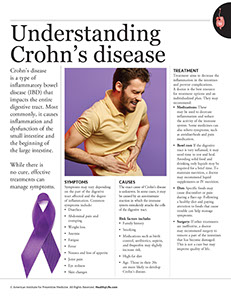
    Man holding abdomen in pain.

    Crohn’s disease is a type of inflammatory bowel disease (IBD) that impacts the entire digestive tract. Most commonly, it causes inflammation and dysfunction of the small intestine and the beginning of the large intestine.

    While there is no cure, effective treatments can manage symptoms.

    Symptoms

    Symptoms may vary depending on the part of the digestive tract affected and the degree of inflammation. Common symptoms include:

    *  Diarrhea

    *  Abdominal pain and cramping

    *  Weight loss

    *  Anemia

    *  Fatigue

    *  Fever

    *  Nausea and loss of appetite

    *  Joint pain

    *  Eye redness

    *  Skin changes

    Causes

    The exact cause of Crohn’s disease is unknown. In some cases, it may be caused by an autoimmune reaction in which the immune system mistakenly attacks the cells of the digestive tract.

    Risk factors include:

    *  Family history

    *  Smoking

    *  Medications such as birth control, antibiotics, aspirin, and ibuprofen may slightly increase risk.

    *  High-fat diet

    *  Age. Those in their 20s are more likely to develop Crohn’s disease.

    Treatment

    Treatment aims to decrease the inflammation in the intestines and prevent complications. A doctor is the best resource for treatment options and an individualized plan. They may recommend:

    *Medications:These may be used to decrease inflammation and reduce the activity of the immune system. Some medicines can also relieve symptoms, such as antidiarrheals and pain medication.

    *Bowl rest:If the digestive tract is very inflamed, it may need time to rest and heal. Avoiding solid food and drinking only liquids may be required for a brief time. To maintain nutrition, a doctor may recommend liquid supplements or IV nutrition.

    *Diet:Specific foods may cause discomfort or pain during a flare-up. Following a healthy diet and paying attention to foods that cause trouble can help manage symptoms.

    *Surgery:If other treatments are ineffective, a doctor may recommend surgery to remove a part of the intestines that has become damaged. This is not a cure but may improve quality of life.
    © American Institute for Preventive Medicine

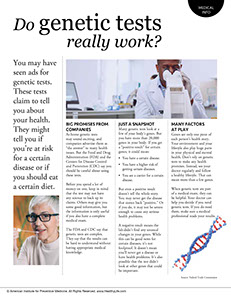
  • Do Genetic Tests Really Work?

    MEDICAL NEWS

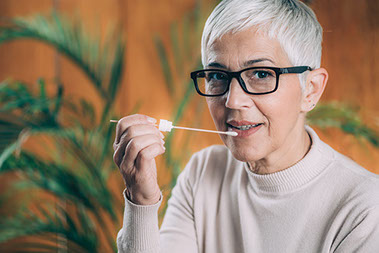
    Women holding a swab near her mouth.

    You may have seen ads for genetic tests. These tests claim to tell you about your health. They might tell you if you’re at risk for a certain disease or if you should eat a certain diet.

    Big promises from companies

    At-home genetic tests may sound exciting, and companies advertise them as “the answer” to many health issues. But the Food and Drug Administration (FDA) and the Centers for Disease Control and Prevention (CDC) say you should be careful about using these tests.

    Before you spend a lot of money on one, keep in mind that the test may not have any science to back up its claims. Others may give you some good information, but the information is only useful if you also have a complete medical exam.

    The FDA and CDC say that genetic tests are complex. They say that the results can be hard to understand without having appropriate medical knowledge.

    Just a snapshot

    Many genetic tests look at a few of your body’s genes. But you have more than 20,000 genes in your body. If you get a “positive result” for certain genes, it could mean:

    *  You have a certain disease.

    *  You have a higher risk of getting certain diseases.

    *  You are a carrier for a certain disease.

    But even a positive result doesn’t tell the whole story. You may never get the disease that comes back “positive.” Or if you do, it may not be severe enough to cause any serious health problems.

    A negative result means the lab didn’t find any unusual changes in your genes. While this can be good news for certain diseases, it’s not foolproof. It doesn’t mean you’ll never get a disease or have health problems. It’s also possible that the test didn’t look at other genes that could be important.

    Many factors at play

    Genes are only one piece of each person’s health story. Your environment and your lifestyle also play huge parts in your physical and mental health. Don’t rely on genetic tests to make any health promises. Instead, see your doctor regularly and follow a healthy lifestyle. That can mean more than a few genes.

    When genetic tests are part of a medical exam, they can be helpful. Your doctor can help you decide if you need genetic tests. If you do need them, make sure a medical professional reads your results.

    Source: Federal Trade Commission

    © American Institute for Preventive Medicine