Category: Uncategorized

  • Home-Cooked Mealspromote Family Togetherness

    HEALTHY EATING

    Image of young family sitting around the table eating together.

    Busy weeknights often lead parents to skip family meals and instead rely on fast and processed foods, but a growing number of public health officials and parents alike agree that enjoying home-cooked meals as a family promotes health and well-being.

    Adolescents who participated in even one or two family meals per week were less likely to be overweight or obese in adulthood as compared to adolescents who never participated in family meals, according to a study in The Journal of Pediatrics.

    On this page, try the kid-friendly recipe by Kids Cook Monday, a national nonprofit campaign, which aims to help parents incorporate family meals at least once a week by offering a variety of free online resources. The latest is The Family Dinner Date, an easy-to-navigate e-cookbook featuring recipes that parents and kids can easily prepare together. Download free here:http://bit.ly/TKCMdinner.

    Each recipe features the campaign’s signature kid/adult/together instruction format to help parents determine which steps in the cooking process are safe for children to complete.

    The Kids Cook Monday is an initiative of The Monday Campaigns, a nonprofit public health organization in association with Columbia Mailman School of Public Health, Johns Hopkins Bloomberg School of Public Health, and the Maxwell School at Syracuse University.

    © American Institute for Preventive Medicine
  • Mushrooms: Eat Your Fungi!

    HEALTHY EATING

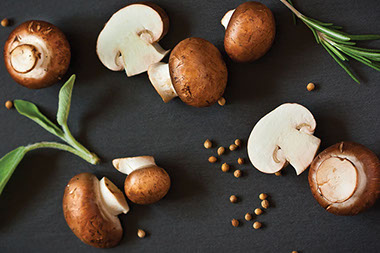
    Image of mushrooms.

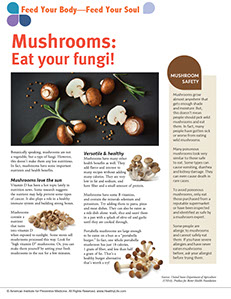
    Botanically speaking, mushrooms are not a vegetable, but a type of fungi. However, this doesn’t make them any less nutritious. In fact, mushrooms have some important nutrients and health benefits.

    Mushrooms love the sun

    Vitamin D has been a hot topic lately in nutrition news. Some research suggests the nutrient may help prevent some types of cancer. It also plays a role in a healthy immune system and building strong bones.

    Mushrooms contain a nutrient that turns into vitamin D when exposed to sunlight. Some stores sell mushrooms processed this way. Look for “high vitamin D” mushrooms. Or, you can make them yourself by setting your fresh mushrooms in the sun for a few minutes.

    Versatile & healthy

    Mushrooms have many other health benefits as well. They add flavor and interest to many recipes without adding many calories. They are very low in fat and sodium, and have fiber and a small amount of protein.

    Mushrooms have some B vitamins, and contain the minerals selenium and potassium. Try adding them to pasta, pizza and meat dishes. They can also be eaten as a side dish alone: wash, slice and sauté them in a pan with a splash of olive oil and garlic until they are cooked through.

    Portabella mushrooms are large enough to be eaten on a bun as a “portabella burger.” In fact, one whole portabella mushroom has just 18 calories, 1 gram of fiber, and less than half a gram of fat. That’s a healthy burger alternative that’s worth a try!

    Mushroom safety

    Mushrooms grow almost anywhere that gets enough shade and moisture. But, this doesn’t mean people should pick wild mushrooms and eat them. In fact, many people have gotten sick or worse from eating wild mushrooms.

    Many poisonous mushrooms look very similar to those safe to eat. Some types can cause vomiting, diarrhea and kidney damage. They can even cause death in rare cases.

    To avoid poisonous mushrooms, only eat those purchased from a reputable supermarket or have been inspected and identified as safe by a mushroom expert.

    Some people are allergic to mushrooms and cannot safely eat them. If you have severe allergies and have never eaten mushrooms before, ask your allergist before trying them.

    Sources: United States Department of Agriculture (USDA), Produce for Better Health Foundation

    © American Institute for Preventive Medicine
  • Salmon’S Health Benefits

    HEALTHY EATING

    Image of salmon.

    NUTRITION FACTS

    *  High quality protein

    *  Vitamins: Niacin, thiamin, B6, B12, and D

    *  Minerals: Calcium, iron, magnesium, potassium, phosphorus, selenium, and zinc

    *  Omega-3 fatty acids

    HELPS IMPROVE memory and brain function

    LOWERS THE RISK of cardiovascular disease and cancers of the colon, kidney and prostate gland

    LOWERS INFLAMMATION which can be beneficial for arthritis

    AIDS IN MAINTAINING insulin levels in the body

    HELPS PREVENT macular degeneration and vision loss

    © American Institute for Preventive Medicine

  • The Best Foods To Help You Focus

    HEALTHY EATING

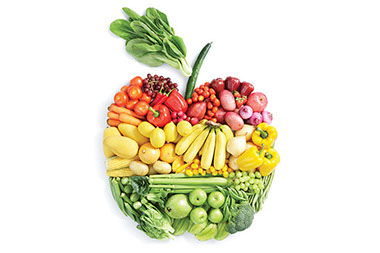
    Image of different vegetables shaped into an apple.

    You know the right foods are good for your body, but did you know they can help your brain too? Many foods can actually improve brain function, according to the Academy of Nutrition and Dietetics:

    *Vegetables.All vegetables can benefit the brain, but certain vegetables seem to be especially helpful. Cruciferous vegetables like broccoli, cabbage or cauliflower boost brain power. Dark leafy greens, such as spinach, kale, mustard greens and dark lettuce, also improve concentration and memory.

    *Dark-colored berries.Blackberries, blueberries and cherries have nutrients that your brain needs for optimal function. Fresh or frozen are great options. If you choose dried fruits, read the label and avoid any with added sugar.

    *Omega-3 fatty acids.Fatty fish, such as salmon, bluefin tuna, sardines and herring contain high amounts of omega-3 fatty acids. Vegetarian sources include flaxseeds, chia seeds and walnuts.

    In addition, these foods are also great for your heart and overall health. Try working them into your daily diet for maximum brain benefit and a healthier you.

    © American Institute for Preventive Medicine

  • Wash And Eat

    HEALTHY EATING

    Image of man holding a bowl of fruit.

    Pesticides are compounds that help to protect crops from devastating pests and weeds. Whether conventional or organic, farmers safely and carefully use pesticides as necessary to control insects, weeds, and fungus (organic farming does permit the use of certain pesticides), says the International Food Information Council.

    Pesticide residues are tiny amounts of chemicals that may remain on food from their application to crops while being grown on the farm. Some crops are less susceptible to pesticide residues, such as those with a husk (corn), shell (peanuts), or skin (bananas). However, even those without an outer layer are safe to eat, and simply washing raw fruits and vegetables before eating them removes most traces of pesticide residues.

    © American Institute for Preventive Medicine
  • Avocado-Green Tea Popsicle

    HEALTHY EATING

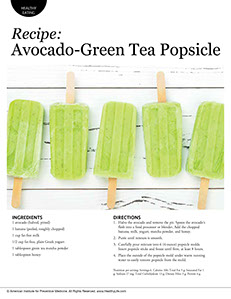
    Avocado green tea popsicles.

    Ingredients

    1 avocado (halved, pitted)

    1 banana (peeled, roughly chopped)

    1 cup fat-free milk

    1/2 cup fat-free, plain Greek yogurt

    1 tablespoon green tea matcha powder

    1 tablespoon honey

    Directions

    1.  Halve the avocado and remove the pit. Spoon the avocado’s flesh into a food processor or blender. Add the chopped banana, milk, yogurt, matcha powder, and honey.

    2.  Purée until mixture is smooth.

    3.  Carefully pour mixture into 6 (4-ounce) popsicle molds. Insert popsicle sticks and freeze until firm, at least 8 hours.

    4.  Place the outside of the popsicle mold under warm running water to easily remove popsicle from the mold.

    Nutrition per serving: Servings 6. Calories 106; Total Fat 5 g; Saturated Fat 1 g; Sodium 27 mg; Total Carbohydrate 13 g; Dietary Fiber 3 g; Protein 4 g.

    © American Institute for Preventive Medicine

  • Piggy Bank Smarts

    FINANCIAL HEALTH

    Image of hand placing a dollar bill into a piggy bank.

    Smart money management begins at home. Washington University researcher Michal Grinstein-Weiss found that teaching kids about money in childhood helps them better manage their mortgage loans as adults. The study was in Social Work Research.

    The professor offers 5 ways parents can teach their kids financial literacy:

    1. Discuss and explain basic finances around the dinner table, especially the difference between needs and wants.

    2. Teach kids how to save and set short-term goals (a new toy) and long-term goals (college). Kids will follow by example if they see you saving for something such as a family vacation.

    3. Open a savings account for your child as early as possible. Even if you bank online, visit the bank with your child to make a deposit because actions reinforce behaviors. Review monthly statements together.

    4. Teach kids budgeting and money-management skills. Help your child figure out how much money to save for how long to reach a goal amount.

    5. Get kids involved in daily activities and decisions about spending. Take them grocery shopping and have them compare prices of different brands. Count out the cash during a sale.

    © American Institute for Preventive Medicine

  • Where Does The Money Go?

    FINANCIAL HEALTH

    Image of scale with bills on one side and a piggy bank on the other side.

    Regular expenses are a necessary part of life. In your household, you probably have a certain amount of money coming in and a different amount going out.

    Even if you have a rough idea of how much you spend, tracking your monthly expenses can help you find out a lot about your money. Small amounts here and there can quickly add up. For one month, write down everything you spend on bills, food, gas, clothes, and any other purchases – even your morning latte. Then, you can look for ways to cut back on unnecessary costs. Money you have left at the end of the month can be saved for an emergency fund or for future needs.

    © American Institute for Preventive Medicine

  • Bloody Nose Know-How

    MEDICAL NEWS

    Image of a nose bleed.

    Maybe you blew your nose too hard or bumped your nose. Causes aren’t always known. But when the blood starts gushing, nosebleeds can be frightening.

    Experts at eMedicineHealth tell what to do: Remain calm. Sit up straight and lean your head forward. Contrary to what some people think, do not lean your head back, you’ll only swallow the blood.

    Ice packs do not help either. Pinch your nostrils tightly together with your thumb and index finger for 10 minutes. Just hold it. Breathe through your mouth, of course. Do not release your grip.

    That should stop the blood flow, usually from an artery in the front of your nose. Then be nice to your tender nose for the rest of the day. Think about adding humidity to the air when you sleep, especially in dry winter weather.

    © American Institute for Preventive Medicine

  • Endometriosis: A Mysterious Condition

    MEDICAL NEWS

    Image of women holding her stomach in pain.

    Millions of women are affected by endometriosis. Yet, it remains a mysterious, often painful disease that is difficult to treat. Get to know the symptoms of this condition and what you can do about it.

    Signs of endometriosis include:

    *  Stomach or pelvic pain during menstruation

    *  Nausea or diarrhea during menstruation

    *  Severe menstrual cramps

    *  Infertility without a known cause

    If you think you may have endometriosis, see your gynecologist.

    Treatment options may include:

    *  Birth control pills

    *  Hormonal treatments that stop menstruation temporarily

    *  Surgery (this is often a minimally invasive procedure called a laparoscopy)

    Some women have also found relief with alternative therapies such as acupuncture. Be sure to talk with your doctor about any supplements or medications you are taking. If you plan to become pregnant, talk with your doctor about this as well. Endometriosis can be treated and many women are able to become pregnant with this disease.

    Source: National Institutes of Health

    © American Institute for Preventive Medicine