Category: Uncategorized

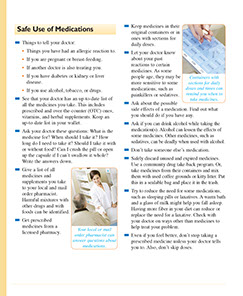
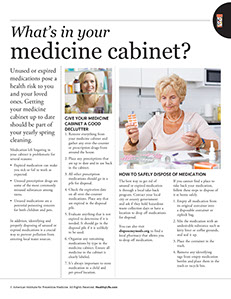
  • Overhauling Your Medicine Cabinet

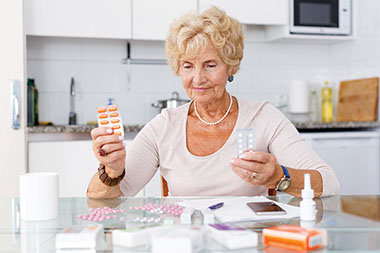
    Medication

    Take everything out of the medicine cabinet.

    *  Check expiration dates. Throw out all outdated medicines. If you’re not sure about a certain item, call your pharmacist. Ask what the shelf life is.

    *  Discard old tubes of cream that are hardened or cracked. Throw out any liquid medicines that look cloudy or filmy.

    *  If medications are not in original containers and clearly labeled, throw them away. Some medicines come in tinted glass, for example, because exposure to light may cause them to deteriorate.

    *  Every medication is a potential poison. If there are children in the house, keep all medicines and vitamins locked in a high cabinet, well out of their reach.

    *  Activated charcoal and syrup of ipecac are not advised for home use for swallowed poisons. Call the Poison Control Center at 800.222.1222 for advice.

    Page from the Healthier at Home book by the American Institute for Preventive Medicine. www.HealthyLife.com. All rights reserved.

    © American Institute for Preventive Medicine

  • Disappearing Hair: Know About Alopecia

    SELF-CARE CORNER

    Women showing hair loss.

    Hair loss is a normal part of life and aging. The average person loses 100 strands of hair from their scalp every day. Usually, these hairs grow back as part of a hair follicle’s lifecycle.

    However, as people get older, hair loss usually outpaces hair regrowth. In addition, some people may be susceptible to losing their hair early in life.

    Alopecia, another name for hair loss, can be frustrating, embarrassing, and tough to manage. But, there may be options available to slow, halt, or reduce the appearance of thinning hair.

    Causes of alopecia

    There are many different types of alopecia, each with a different cause.

    For example, androgenetic alopecia, commonly known as pattern baldness, is linked to your genetics. If your dad or mom experienced pattern baldness, the likelihood is you will too.

    Other causes include:

    *  Aging

    *  Genetics

    *  Hormones

    *  Stress

    *  Thyroid dysfunction

    *  Medications

    *  Chemical hair treatments

    *  Autoimmune reactions

    Treatment options

    The best way to manage hair loss depends on the cause. While some forms of alopecia may be slowed or halted, others are irreversible. Your medical doctor or dermatologist is your best resource when exploring treatments for alopecia.

    Options may include:

    *  Topical medications or shampoos

    *  Oral medications

    *  Corticosteroid injections

    *  Hair transplant

    *  Wigs or hairpieces

    Caring for your hair

    How you treat your hair may contribute to alopecia in some cases. The better care you take of the hair you have, the healthier it will be.

    *  Use a gentle shampoo that won’t remove moisture from your hair.

    *  Apply conditioner after every shampoo.

    *  Limit how long and how often you blow-dry your hair.

    *  Avoid wearing your hair in a tight bun, ponytail, or braid.

    *  Brush or comb your hair gently. Avoid tugging.

    If you are dealing with alopecia, talk to your doctor to find out the cause and discuss the best treatment options for you.

    © American Institute for Preventive Medicine
  • Keeping An Eye Out For Retinal Detachment

    SELF-CARE CORNER

    Close up of eye.

    Retinal detachment means your retina is pulled away from its normal position at the back of your eye. If a retinal detachment happens, it is a medical emergency. It can cause permanent vision loss.

    See the signs

    Retinal detachment may cause symptoms that come on suddenly. You may see things like:

    *  A lot of gray or black “floaters” that look like squiggly lines or specks of dirt

    *  Flashes of bright light

    *  A dark area or shadow

    Will it happen to me?

    Retinal detachment can happen to anyone. But you are more likely to get it if:

    *  Someone in your family has had a retinal detachment

    *  You’ve had any kind of eye surgery

    *  You’ve had a serious eye injury

    *  You have diabetic retinopathy

    *  You have other eye diseases

    The best way to know your risk is to talk to your eye doctor. Most of the time, retinal detachment happens from aging or an eye injury.

    Can I prevent it?

    You can lower your risk by protecting your eyes. Wear safety goggles during sports or when using power tools.

    You should also get a dilated eye exam regularly. Always see your eye doctor after any eye injury.

    Good news

    Retinal detachment is treatable. An eye doctor or surgeon can often fix the retina and reattach it. The earlier it is found, the better the outcome. Don’t ignore the signs – save your vision!

    Source: National Eye Institute

    © American Institute for Preventive Medicine

  • What To Do When Your Heel Hurts

    SELF-CARE CORNER

    Image of heel walking on bare floor.

    Heel pain is the most common foot and ankle problem. Often, a sore heel is not serious. But if you ignore it and keep using the foot, it could get worse.

    When it comes to heel pain, the first clue is where the heel hurts. Pain at the bottom of the heel is different from pain behind the heel.

    Pain underneath the heel

    *  Plantar fasciitis. This happens when activity inflames the tissue band that runs along the bottom of the foot. Sometimes, people get plantar fasciitis from wearing shoes that don’t properly support their foot. It’s often worse when you first get up in the morning. It can usually be resolved with rest, wearing special inserts in the shoes and/or physical therapy.

    *  Heel spur. A heel spur is a buildup of calcium that causes a bony bump on the heel bone. It usually happens if a person has plantar fasciitis for a long time. Treatment is usually similar to plantar fasciitis treatment.

    *  Stone bruise. Stepping on a hard object like a stone can injure the bottom of the heel. If you stepped on something recently, try to rest and protect the foot for a few days until it feels better. Wear shoes when you go outside to prevent this from happening in the future.

    Pain behind the heel

    Pain in the back of the heel is usually due to a problem with the Achilles tendon. This tendon connects the heel bone to the calf muscle. Heavy activity or exercise can put too much stress on the tendon too quickly. This can cause Achilles tendinitis, which includes small tears and inflammation in the tendon. Treatment may include:

    *  Physical therapy

    *  Rest

    *  Ice

    *  Orthotic(s) (shoe inserts)

    *  Night splint (device worn at night to protect the foot and tendon)

    People who have Achilles tendinitis may need to avoid the activity that caused it, such as running or jumping.

    Respect your feet

    Many people ignore heel pain, hoping it will go away. But, untreated problems with the foot may only get worse over time without treatment. If your heel pain lasts more than a couple of days, or if you have a health condition like diabetes, see a doctor right away.

    Source: American Academy of Orthopaedic Surgeons, American College of Foot and Ankle Surgeons

    © American Institute for Preventive Medicine

  • Crossfit Faq

    BE FIT

    Man in gym working out.

    CrossFit is a high-intensity strength and conditioning workout. It emphasizes dynamic exercises such as Olympic lifting, plyometrics, and kettlebells.

    Who can do CrossFit?

    CrossFit can be modified for a variety of ages and fitness levels. There are even CrossFit classes for kids and seniors.

    Is CrossFit safe?

    Because CrossFit is a high-intensity form of exercise, it may not be the best choice for everyone. Check with your doctor to make sure CrossFit is right for you.

    What are the benefits of CrossFit?

    Regular CrossFit workouts can build strength and improve cardiovascular endurance. It counts towards your recommended 150 minutes of moderate to vigorous-intensity exercise.

    Are there risks to CrossFit?

    Any form of high-intensity exercise carries the potential for injury. To reduce your risk, get clearance from your doctor first and remember to increase gradually.

    © American Institute for Preventive Medicine
  • How Much Exercise Kids Need

    BE FIT

    Father and young daughter about to exercise.

    Being inactive isn’t good for children’s health. Kids can have health problems related to being inactive, such as:

    *  Sleep problems

    *  Type 2 diabetes

    *  Excess weight

    *  High blood cholesterol

    How much exercise is enough?

    Preschool children should be active throughout the day. School aged children should get at least one hour of moderate to intense activity every day. Some exercise is better than none. If your child isn’t active now, start with a few minutes of exercise each day. Gradually increase the time and intensity of their exercise as they get more fit.

    What is ‘moderate to intense activity’ for children?

    When your child is doing moderate to intense activity, their heartbeat will speed up. They will breathe much harder than normal.

    This type of activity can be walking or biking at a brisk pace. It can also be more intense, like jumping on a trampoline or swimming. Whatever your child likes to do, encourage them to do it every day!

    Know the types of exercise

    Exercise doesn’t have to be the same thing all the time. Try to encourage your child to do all three types throughout each week:

    Aerobic exercise

    Anything that speeds up your child’s heart rate. It can include:

    *  Brisk walking

    *  Bike riding

    *  Swimming

    *  Running

    *  Dancing

    *  Playing games that require running and throwing

    Muscle-strengthening exercise

    These exercises build up muscles, which is important for lifelong fitness. Examples include:

    *  Climbing

    *  Push-ups

    *  Lunges

    *  Yoga

    *  Resistance bands

    *  Hand-held weights

    Bone-strengthening

    This puts pressure on bones. Pressure from exercise helps the bones rebuild and stay strong. Exercises include:

    *  Jumping

    *  Running

    *  Skipping

    *  Sports that require running and stopping, like basketball or soccer

    Source: Centers for Disease Control and Prevention

    © American Institute for Preventive Medicine
  • Workout Wear 101

    BE FIT

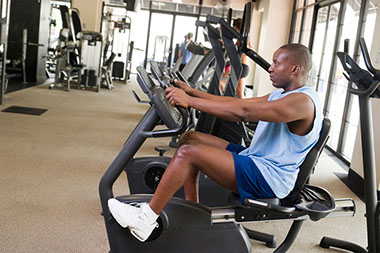
    Women riding stationary bike.

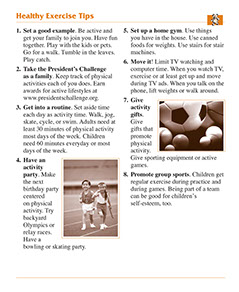
    Wearing the right gear when you exercise can make a big difference. Clothes that are uncomfortable might stop you from finishing your workout. But clothes that feel great may keep you moving longer!

    *  Choose moisture-wicking shirts and shorts. Cotton can absorb sweat, leaving you feeling wet and weighed down.

    *  Invest in well-fitted workout socks. Socks that shift can cause blisters. Cotton socks can also cause chafing and discomfort.

    *  Don’t buy tight shoes. As you exercise, your feet may swell. Make sure your shoes have enough room for your feet.

    Source: American Heart Association

    © American Institute for Preventive Medicine
  • Commit To Be Fit 2

    Fitness

    Couple stretching.

    You don’t have to join a gym to get fit. There are lots of ways you can break a sweat, shed pounds and improve your health. Small steps can make a big difference.

    *  Do leg lifts before you get out of bed.

    *  Walk the dog. Instead of slowing Fido down, pick up your pace.

    *  Use exercise equipment as intended, not as a clothes rack.

    *  Clean the house. That’s right, dust, mop, scrub and vacuum.

    *  Brainstorm ideas with co-workers while walking.

    *  Take the stairs instead of the elevator.

    *  If you must take the elevator, do squats during the ride.

    *  Do sit ups, pushups, and jumping jacks during TV commercials.

    *  Take your bike for a spin around the block.

    *  March while talking on the phone. (Stop if you start panting.)

    *  Work in your garden, garage, and basement.

    *  Drink plenty of water.

    Action Step:Challenge family to a contest of sit ups or pushups during TV commercials. Try to improve your count each time.

    Page from HealthyLife Weigh book by the American Institute for Preventive Medicine. www.HealthyLife.com. All rights reserved.

    © American Institute for Preventive Medicine