Category: Uncategorized

  • Get Up To Date On Vaccines

    MEDICAL NEWS

    Smiling man showing bandaid on upper arm where he got a vaccine shot.

    Vaccinations aren’t just for kids. Adults need them too.

    How they work

    Vaccines stimulate your immune system to create antibodies against common diseases. Antibodies are specialized proteins that recognize and neutralize viruses or bacteria. If you are exposed to the disease, your body will be ready to fight it.

    Why they matter

    Some people are more vulnerable to diseases such as COVID-19 or the flu, even if they are vaccinated. When you get vaccinated, you protect your loved ones and vulnerable people in your community.

    Vaccines you need

    Your doctor is the best resource for information on the vaccines you need. Here are a few your doctor may recommend:

    *  Seasonal flu

    *  Tdap or Td (Tetanus, diphtheria, and pertussis)

    *  COVID-19

    *  Shingles

    *  HPV (Human papillomavirus)

    © American Institute for Preventive Medicine

  • Smoking Triggers And How To Beat Them

    MEDICAL NEWS

    Cigarettes and nicotine gum.

    Many people have tried to quit smoking but couldn’t. There are many reasons for this, but one of them is because of triggers. A trigger is something that makes you want to smoke.

    Emotional triggers

    When you have certain emotions, you may get the urge to smoke. They may include feeling stressed, nervous, depressed or even bored.

    You can help stop these triggers by dealing with your emotions in other healthy ways. Try meditation, deep breathing or exercise to help manage stress and anxiety. Exercise is also a great way to beat boredom and fight depression. Listen to calming music or talk to a friend who can encourage you to keep up your efforts to quit.

    Pattern triggers

    Sometimes you’re used to smoking when you do something else, such as drinking coffee or alcohol. This is known as a pattern trigger. You may also like to smoke after eating or during a work break.

    Change your routine to help avoid these patterns. Chew your favorite gum, suck on a hard candy or mint or go for a walk. Try brushing your teeth after meals, coloring in an adult coloring book or squeezing a stress relief ball.

    Social triggers

    Many people want to smoke at bars, parties or when they’re with people who smoke. These can be powerful triggers for you to smoke.

    It’s best to avoid these triggers if you’re trying to quit. Instead, surround yourself with people who don’t smoke or who want you to quit. Try taking a class or find a hobby, such as painting or cycling.

    Withdrawal triggers

    Your body will crave nicotine when you quit smoking. Nicotine is very addictive and you may go through withdrawal. Withdrawal triggers include:

    *  Cravings for cigarettes or e-cigarettes

    *  Feeling like you need to do something with your hands or mouth

    *  Feeling restless or uncomfortable

    Withdrawal can be very difficult to manage. As with other triggers, spend time with people who don’t smoke and who want you to quit. Find things to do that have nothing to do with smoking. Avoid places or situations where you might see or smell cigarettes or vaping.

    Quitting is hard. But if you have support from your doctor, family and friends, you can do it. Millions of people have quit and you can too!

    Source: Smokefree.gov

    © American Institute for Preventive Medicine

  • What’s The Secret To A Long Life?

    MEDICAL NEWS

    Father and adult son talking while drinking coffee.

    Today many people are living longer than ever. Part of this is because of advances in medical care. But there are things you can do to live a long, healthy life too. Here are some tips that could help you live longer.

    Exercise

    Experts in aging and health say exercise may be the most important thing you can do to live longer. But why?

    As we age, we lose some muscle. This can lead to less energy and achy joints, which may cause you to exercise less and sit more. This, in turn, raises the risk of disease as well as death.

    People of any age can learn to get active. Not sure how to start? Talk to your doctor about options that are safe and healthy for you.

    Shed extra pounds

    Having a BMI higher than 30 raises the risk of all causes of mortality (death). It can lead to health problems like heart disease, stroke, diabetes and some cancers.

    You may not need to lose a lot to improve your health. Even losing 10-15 pounds can make a difference.

    Losing weight isn’t easy. But there are safe and healthy ways to do it. Eating healthier foods and getting regular exercise will help, but ask your doctor for advice.

    Quit smoking (or don’t smoke)

    Smoking increases the risk of lung disease, cancers, heart disease and diabetes. The good news is that when you quit smoking, your risk of smoking-related death starts to decrease. It can add years to your life if you quit today!

    Many people are able to quit smoking with help from a doctor or therapist. They may also use nicotine replacement products like patches, gum or an inhaler. Ask your doctor for help with your plan to quit.

    Do I need good genes?

    We may think a long life is all in our family history. But genes are only a piece of the health puzzle.

    Experts in aging say that your own healthy behaviors mean much more than genes. In fact, many people could live to 90 with a healthy lifestyle, regardless of genes, according to experts at the National Institutes of Health.

    Harness the power to live longer by starting healthy habits!

    Sources: Centers for Disease Control and Prevention, National Institutes of Health

    © American Institute for Preventive Medicine

  • Keeping Your Brain Healthy

    WELL-BEING

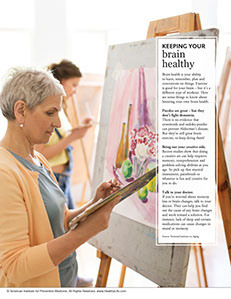
    Elderly female painting.

    Brain health is your ability to learn, remember, plan and concentrate on things. Exercise is good for your brain – but it’s a different type of workout. Here are some things to know about boosting your own brain health.

    Puzzles are great – but they don’t fight dementia.

    There is no evidence that crosswords and sudoku puzzles can prevent Alzheimer’s disease. But they’re still great brain exercise, so keep doing them!

    Bring out your creative side.

    Recent studies show that doing a creative art can help improve memory, comprehension and problem-solving abilities as you age. So pick up that musical instrument, paintbrush or whatever is fun and creative for you to do.

    Talk to your doctor.

    If you’re worried about memory loss or brain changes, talk to your doctor. They can help you find out the cause of any brain changes and work toward a solution. For instance, lack of sleep and certain medications can cause changes in mood or memory.

    Source: National Institute on Aging

    © American Institute for Preventive Medicine

  • Tooth-Brushing Truth

    WELL-BEING

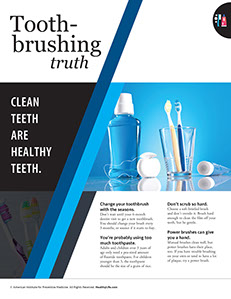
    Toothburshs, toothpaste, floss and mouthwash.

    Clean teeth are healthy teeth.

    Change your toothbrush with the seasons.

    Don’t wait until your 6-month dentist visit to get a new toothbrush. You should change your brush every 3 months, or sooner if it starts to fray.

    You’re probably using too much toothpaste.

    Adults and children over 3 years of age only need a pea-sized amount of fluoride toothpaste. For children younger than 3, the toothpaste should be the size of a grain of rice.

    Don’t scrub so hard.

    Choose a soft-bristled brush and don’t overdo it. Brush hard enough to clean the film off your teeth, but be gentle.

    Power brushes can give you a hand.

    Manual brushes clean well, but power brushes have their place, too. If you have trouble brushing on your own or tend to have a lot of plaque, try a power brush.

    © American Institute for Preventive Medicine

  • Health Screenings Can Save Lives

    Medical Exams

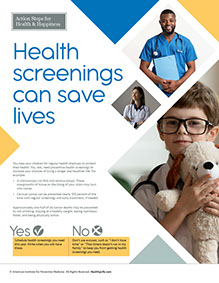
    Smiling doctor.

    You take your children for regular health checkups to protect their health. You, too, need preventive health screenings to increase your chances of living a longer and healthier life. For example:

    *  A colonoscopy can find and remove polyps. These overgrowths of tissue on the lining of your colon may turn into cancer.

    *  Cervical cancer can be prevented nearly 100 percent of the time with regular screenings and early treatment, if needed.

    *  Schedule health screenings you need this year. Write when you will have these.

    *  Don’t use excuses, such as “I don’t have time” or “That illness doesn’t run in my family” to keep you from getting health screenings you need.

    Approximately one half of all cancer deaths may be prevented by not smoking, staying at a healthy weight, eating nutritious foods, and being physically active.

    ays to Well-Being book by the American Institute for Preventive Medicine. www.HealthyLife.com. All rights reserved.

    © American Institute for Preventive Medicine

  • How To Steer Clear Of Drunken Drivers

    Personal Safety

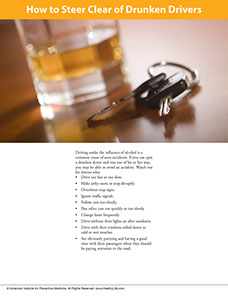
    Image of keys and a glass of alcohol in the background.

    Driving under the influence of alcohol is a common cause of auto accidents. If you can spot a drunken driver and stay out of his or her way, you may be able to avoid an accident. Watch out for drivers who:

    *  Drive too fast or too slow.

    *  Make jerky starts or stop abruptly.

    *  Overshoot stop signs.

    *  Ignore traffic signals.

    *  Follow cars too closely.

    *  Pass other cars too quickly or too slowly.

    *  Change lanes frequently.

    *  Drive without their lights on after sundown.

    *  Drive with their windows rolled down in cold or wet weather.

    *  Are obviously partying and having a good time with their passengers when they should be paying attention to the road.

    A Year of Health Hints book by the American Institute for Preventive Medicine. www.HealthyLife.com. All rights reserved.

    © American Institute for Preventive Medicine