Category: Uncategorized

  • Consider Low-Impact Or Nonimpact Aerobics

    Fitness

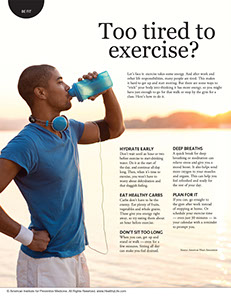
    Image of man exercising at the gym.

    Fitness activities that involve steady, rhythmic motions of major muscle groups and burn oxygen for more than a brief spurt are considered aerobic. They force your heart and lungs to work at anywhere from 60 to 85 percent of their capacity. Brisk walking and bicycling are examples of aerobic activities. So is aerobic dance-informally choreographed routines that combine calisthenics and dance.

    Aerobic dance classes became the rage in the early 1980s, but shock to bones and tendons caused by repeated jumping and bouncing produced a number of injuries. Low-impact and nonimpact aerobics are kinder to your skeleton.

    Low-impact aerobics are designed so that:

    *  Your feet stay close to the floor, and only one foot leaves the floor at a time.

    *  Only moderate jumping is involved.

    *  Jerky movements are kept to a minimum.

    Nonimpact aerobics are designed so that:

    *  No jumping is involved.

    *  They rely on large muscles of the thighs (as in lifts) rather than muscles in the feet and calves (as in jogging and skipping in place).

    *  They require more arm movement than high-intensity aerobics.

    Page image from A Year of Health Hints book by the American Institute for Preventive Medicine. www.HealthyLife.com. All rights reserved.

    © American Institute for Preventive Medicine

  • Healthy Exercise Tips For Children

    Fitness

    Image of 2 young kids running.

    *  Set a good example. Be active and get your family to join you. Have fun together. Play with the kids or pets. Go for a walk. Tumble in the leaves. Play catch.

    *  Take the President’s Challenge as a family. Keep track of physical activities each of you does. Earn awards for active lifestyles atwww.presidentschallenge.org.

    *  Get into a routine. Set aside time each day as activity time. Walk, jog, skate, cycle, or swim. Adults need at least 30 minutes of physical activity most days of the week. Children need 60 minutes everyday or most days of the week.

    *  Have an activity party. Make the next birthday party centered on physical activity. Try backyard Olympics or relay races. Have a bowling or skating party.

    *  Set up a home gym. Use things you have in the house. Use canned foods for weights. Use stairs for stair machines.

    *  Move it! Limit TV watching and computer time. When you watch TV, exercise or at least get up and move during TV ads. When you talk on the phone, lift weights or walk around.

    *  Give activity gifts. Give gifts that promote physical activity. Give sporting equipment or active games.

    *  Promote group sports. Children get regular exercise during practice and during games. Being part of a team can be good for children’s self-esteem, too.

    Page image from the Children's Self-Care Book by the American Institute for Preventive Medicine. www.HealthyLife.com. All rights reserved.

    © American Institute for Preventive Medicine

  • Test Your Fitness Level

    Fitness

    Image of women talking to her fitness trainer.

    How do you measure the success of your fitness program? By how much weight you lose? How many inches you trim off your waistline or hips? How well you sleep at night? How energetic you feel?

    These are all worthwhile criteria. Another way to evaluate your fitness level-and assess your progress-is to keep track of your resting heart rate (that is, your pulse rate when you’re least active).

    The idea is, the lower your resting heart rate, the better shape your heart is in. So as you become more fit, your resting heart rate should drop.

    Here’s how to measure it.

    1.  Take your pulse as soon as you wake up in the morning, before you get out of bed.

    2.  Count the number of beats for 10 seconds and multiply by six. This will give you your pulse in beats per minute.

    3.  Repeat the following morning. Then calculate the average of the two. (That is, add the two numbers together and divide by two.) This is your resting heart rate.

    Calculate your resting heart rate every three months, as conditioning takes some time to have an effect.

    Take the “Talk Test”

    No, this isn’t a suggestion that you audition to guest host “The Tonight Show.” It’s just a simple way for you to tell if you’re overdoing it when you exercise. If you’re too out of breath to comfortably carry on a conversation with another person as you dance, run, or slam-dunk your way to fitness, you’re probably working too hard and should slow down. (On the other hand, you should be working hard enough to break a mild sweat.) And of course, any unusual sign of physical distress (such as chest discomfort, pain of any kind, or dizziness) is a signal to slow down to a stop.

    Page image from A Year of Health Hints book by the American Institute for Preventive Medicine. www.HealthyLife.com. All rights reserved.

    © American Institute for Preventive Medicine

  • Brown Rice Pilaf

    HEALTHY EATING

    Image of brown rice in a bowl.

    Brown rice and almonds are both good sources of magnesium. They also offer fiber and protein. This simple side dish can be a meatless main dish, paired with a green salad and some fruit.

    Ingredients

    1 ½ cups brown rice (rinsed)

    3 cups water

    ¼ cup almonds (chopped)

    1 teaspoon parsley (dried)

    ½ teaspoon garlic powder

    ¼ teaspoon black pepper

    Directions

    1.  Place all ingredients in a rice cooker and cook until the water evaporates, about 30 minutes. You can also cook rice on the stovetop as directed on the package.

    2.  Fluff cooked rice with a fork. Add almonds, parsley, garlic powder and black pepper.

    Nutrition Facts: Serving size: 1 cup, 1/4 of recipe. Calories 320; Total Fat 8 g; Saturated Fat 1 g; Cholesterol 0 mg; Sodium 53 mg; Total Carbohydrate 56 g; Dietary Fiber 5 g; Protein 8 g

    Source: What’s Cooking? USDA Mixing Bowl

    © American Institute for Preventive Medicine

  • Do Detox Diets Work?

    HEALTHY EATING

    Two different detox drinks.

    Detox or cleansing diets are a popular way to make a change and cut calories quickly. But, do they really work?

    How do detox diets work?

    Detox diets use a variety of techniques in an attempt to “cleanse” the body. These include:

    *  Fasting

    *  Juicing

    *  Herbs

    *  Supplements

    *  Colon cleanses such as enemas or laxatives

    *  Saunas

    *  Food restrictions

    The idea is that these techniques cleanse and purify the body of toxins by encouraging increased elimination and digestive rest. Some diets even claim to remove toxins and metals from the bloodstream.

    Is there evidence detox diets work?

    Currently, there is no evidence that these methods to “detoxify” have any impact on human health. Your body already has ongoing processes to purify the blood and remove waste products. For example, your liver and digestive tract are two of the organ systems responsible for protecting you from harmful toxins.

    While some people report feeling better or losing weight on a detox diet, this effect may be the result of removing unhealthy foods from the diet and cutting back on calories. You could likely achieve the same results by eating a healthier, balanced diet in general.

    Are detox diets safe?

    Some of these diets can be unsafe and use false advertising to promote their claims. Many products used in detoxes or cleanses are unregulated by the FDA and could potentially cause harmful side effects.

    In addition, detox diets are often unbalanced, either by avoiding most foods or encouraging a high intake of specific foods or drinks. This could lead to problems with hydration or electrolyte balance, as well as cause digestive problems.

    Other things to consider include any health conditions or medications you currently take. You should talk to your doctor before trying any type of detoxing or cleansing.

    Are there alternatives to detoxing?

    If you are interested in cleaning up your diet but want to avoid the quick fixes promised by detox diets, there are other great options. Improving your health is a lifelong journey. Small changes over time can make a big difference.

    Consider these ideas:

    *  Cut out soda, juices, and other beverages, and let water be your drink of choice.

    *  Limit added sugars in your diet.

    *  Increase your intake of fruits and vegetables to at least 5 servings a day.

    *  Avoid late-night eating.

    *  Limit or remove alcohol from your diet.

    © American Institute for Preventive Medicine

  • Get More Of These 4

    HEALTHY EATING

    Dishes filled with berries, nuts and fruits.

    The 2015-2020 Dietary Guidelines for Americans state that four nutrients are a “public health concern.” Many people are not getting enough:

    *  Calcium

    *  Fiber

    *  Potassium

    *  Vitamin D

    Try these tips to get more:

    1.  Eat more vegetables, fruits and legumes. These foods are rich sources of fiber and potassium. High-fiber bran cereal and shredded wheat also pack a fiber punch.

    2.  Eat more yogurt and drink milk. Both are good sources of calcium, potassium and vitamin D. Avoid sweetened yogurt. Instead, buy plain yogurt and add fresh fruit.

    3.  Eat seafood that’s high in vitamin D. This includes salmon, trout, whitefish, herring and tuna. Pregnant and nursing women should ask a doctor how much seafood they can eat.

    4.  Consider healthy foods that have vitamin D added, like soy milk, orange juice, dairy products and cereals.

    © American Institute for Preventive Medicine

  • Mood-Boosting Foods

    HEALTHY EATING

    Fresh salad bowl.

    A healthy diet can have an effect on your brain. It can actually make you feel happy.

    Eat plenty of foods with omega-3 fats. These heart-healthy fats are found in fish, flaxseeds and walnuts, and may help reduce the risk of developing depression.

    Focus on the Mediterranean Diet. This diet includes lots of plant-based foods like fruits and vegetables, as well as olive oil, whole grains, fish, poultry, eggs and beans.

    Source: American Heart Association

    © American Institute for Preventive Medicine

  • Recipe: Banana Walnut Oatmeal

    HEALTHY EATING

    Bowl of banana walnut oatmeal.

    Ingredients

    *  2 cups fat-free or low-fat milk

    *  1 dash salt

    *  2 cups oats (quick-cooking)

    *  2 bananas (very ripe, mashed)

    *  2 tablespoons maple syrup

    *  2 tablespoons walnuts (chopped)

    Directions

    1.  In a small saucepan, combine milk and salt. Heat over medium heat until steaming hot but not boiling.

    2.  Add oats and cook, stirring until creamy, 1 to 2 minutes.

    3.  Remove the pan from heat and stir in mashed banana and maple syrup. Divide between 4 bowls. Sprinkle with chopped walnuts and serve.

    Nutrition Information: Serves 4: Total calories 292 kcals, total fat 6 g, saturated fat 1 g, sodium 118 mg, carbohydrates 52 g, fiber 5 g, protein 11 g.

    Source: MyPlate.gov

    © American Institute for Preventive Medicine

  • Tea Time: Is Tea Good For You?

    HEALTHY EATING

    A tea pot with two cups of tea and lemons.

    Many people drink tea every day. The most popular teas are black, green and oolong. Matcha tea is also becoming more popular.

    Black, green, oolong and matcha teas come from a plant known as Camellia sinensis. Each of these teas looks and tastes different because of how they are processed.

    Caffeine content

    Tea, like coffee, naturally contains caffeine and can be different in each cup. If you steep your tea longer, it will have more caffeine than a quick steep.

    Estimates of the caffeine content per 8-ounce cup:

    *  Coffee: 95 milligrams

    *  Black tea: 48 milligrams

    *  Oolong tea: 38 milligrams

    *  Green tea: 29 milligrams

    *  Decaffeinated tea: Very small amounts

    Some tea packages will tell you how much caffeine it contains. Look for this on the product label.

    Watch your caffeine intake

    You can still drink too much caffeine from tea if you’re not careful. Too much caffeine can make you feel nervous or shaky. It can also make it hard for you to sleep.

    Most healthy adults can tolerate up to 400 milligrams of caffeine each day. People who are more sensitive to caffeine may need to consume much less than this amount.

    Decaf teas are a good option if you love tea but want to cut back on caffeine. They still contain only small amounts of caffeine.

    Are herbal teas really “tea”?

    Herbal teas are not made from the tea plant Camellia sinensis. Instead, they are made from the roots, leaves, flowers and other parts of certain plants.

    For instance, chamomile tea is made from chamomile flowers. Peppermint and spearmint teas are made from the plant’s leaves.

    Herbal teas don’t contain any caffeine. They are usually safe in regular amounts. But ask a doctor before you consume herbal tea if you are taking medicine or have any health conditions. These teas can interfere with some medications or cause side effects in some people.
    © American Institute for Preventive Medicine

  • Garden Barley Soup

    HEALTHY EATING

    Garden barley soup in bowl.

    Ingredients

    *  46 ounces tomato juice

    *  1 can beef broth  (10.5 ounces)

    *  1 cup hulled barley

    *  1 tablespoon Worcestershire sauce

    *  1 bay leaf

    *  1/2 teaspoon crushed thyme

    *  1/4 teaspoon salt

    *  2 cups zucchini, chopped

    *  1 medium tomato, chopped

    *  1/2 cup green pepper, chopped

    Note: Using sodium-reduced tomato juice and beef broth or leaving out the added salt would significantly reduce the sodium content.

    Directions

    1.  In a Dutch oven or stock pot, combine tomato juice, beef broth, barley, and seasonings. Bring to a boil over high heat.

    2.  Reduce heat to low, cover, and simmer for 40 minutes.

    3.  Add zucchini, tomato, and green pepper. Return heat to high and bring to a boil.

    4.  Reduce heat to low, cover, and simmer for 15-20 minutes or until vegetables and barley are tender.

    If using a pressure cooker: Combine all ingredients except the vegetables and cook on the soup cycle of the pressure cooker, then release the pressure, add the vegetables and cook on saute until the vegetables are tender.

    Nutritional Information: Servings 6

    Per serving: 170 calories, 1 g total fat, 0 g saturated fat, 1122 mg sodium, 40 g carbohydrates, 6 g dietary fiber, and 6 g protein

    © American Institute for Preventive Medicine