Category: Uncategorized

  • Health Screenings For Men

    SELF-CARE CORNER

    Blue stethoscope on a blue table.

    Men can face health challenges at each stage of life. A yearly visit with a primary care doctor ensures access to the appropriate screenings. While some screenings are a standard part of routine medical care, a doctor may recommend additional screenings specific to a man’s health and family history.

    Men aged 18 to 39

    *  Blood pressure

    *  Cholesterol and heart disease screening

    *  Physical exam

    *  Diabetes screening

    *  Eye exam

    *  Dental exam

    *  Infectious disease screening, including STIs

    *  Immunizations

    *  Skin self-exam

    *  Testicular exam

    Men aged 40 to 64

    *  Blood pressure

    *  Cholesterol and heart disease screening

    *  Physical exam

    *  Diabetes screening

    *  Eye exam

    *  Dental exam

    *  Infectious disease screening, including STIs

    *  Immunizations

    *  Skin self-exam

    *  Testicular exam

    *  Colon cancer screening

    *  Lung cancer screening

    *  Osteoporosis screening

    *  Prostate cancer screening

    Men aged 65 and over

    *  Blood pressure

    *  Cholesterol and heart disease screening

    *  Physical exam

    *  Diabetes screening

    *  Eye exam & hearing test

    *  Dental exam

    *  Infectious disease screening, including STIs

    *  Immunizations

    *  Skin exam

    *  Colon cancer screening

    *  Lung cancer screening

    *  Osteoporosis screening

    *  Prostate cancer screening

    *  Abdominal aortic aneurysm screening

    © American Institute for Preventive Medicine
  • Should You Be Taking Daily Aspirin?

    SELF-CARE CORNER

    An open pill bottle with aspirin spilled out.

    Taking a low dose aspirin every day can lower the chance of a heart attack. But that doesn’t mean that a daily aspirin is right for everyone. The National Institutes of Health says some people take aspirin each day – but they shouldn’t. The NIH has new guidelines about who should or should not take it.

    What does aspirin do?

    Aspirin is a non-steroidal anti-inflammatory drug (NSAID). It is a pain reliever for headaches and other aches and pains.

    Aspirin also thins the blood. This can prevent clots that can lead to a heart attack or stroke. Taking a low-dose aspirin every day can be life-saving for many people. However, aspirin also has risks. It can cause bleeding in the stomach and brain bleeding in rare cases.

    New guidelines to follow

    Researchers think many people are taking aspirin without their doctor’s approval. This can mean they could put themselves in danger of bleeding or stomach problems. Aspirin can also interact with other medications or supplements.

    Experts no longer think everyone over age 70 should take daily aspirin. People who have a low risk of heart attack or stroke may not need it. Also, people who have a higher risk of bleeding – no matter what age – should not take it.

    People who benefit from daily aspirin have a higher risk of heart attack or stroke. They may have already had a heart attack or stroke in the past. They may have a family history of heart problems or other risk factors.

    The best protection

    If you don’t need daily aspirin, you can help prevent heart disease with simple healthy habits.

    *  Get more exercise.

    *  Eat a heart-healthy diet.

    *  Don’t smoke.

    *  Get regular cholesterol and blood pressure checks.

    What’s the bottom line?Don’t start taking daily aspirin unless your doctor says you should. And, tell your doctor and pharmacist about all medications and supplements you take.

    Sources: American Heart Association, National Institutes of Health

    © American Institute for Preventive Medicine
  • Exercise: What’s Holding You Back?

    BE FIT

    Smiling women ready to exercise, holding a water bottle.

    Are you struggling to get active? Here are some ways to work on overcoming those exercise barriers.

    Problem:I haven’t exercised in a long time.

    Solution:Start simple. Try walking for a few minutes. Slowly increase the time and intensity of your walk or other exercise.

    Problem:I don’t have enough time.

    Solution:Even 10 minutes of exercise is better than none. Find short breaks in your day to dance or walk.

    Problem:It’s expensive.

    Solution:You don’t need to spend money. You only need a comfortable pair of shoes to start walking. Or, exercise in your home with a smartphone app or video from the library.

    Source: U.S. Office of Disease Prevention and Health Promotion

    © American Institute for Preventive Medicine
  • Move Outside The Exercise Box

    BE FIT

    Family dancing around.

    The more you move, the stronger your body will be and the better your heart, lungs, and other organs function. Any movement that gets your heart rate up counts as physical activity.

    At home

    *  Walk the dog.

    *  Play a family game of catch or frisbee.

    *  Add in some squats or lunges while you work in the kitchen.

    *  Do some light bodyweight exercises while you watch TV.

    At work

    *  Park farther away to get more walking time.

    *  Take the stairs.

    *  Set a timer for a five-minute movement break every 30 to 90 minutes.

    *  Walk at lunch or go up and down the stairs a few times.

    The weekend

    *  Choose a hobby that gets you moving, like an outdoor activity.

    *  Plan social gatherings that include movements like hiking or active games.

    *  Put on some music and make chore time fun and full of movement.

    *  Go sightseeing or choose a family outing that includes a long walk or hike.

    © American Institute for Preventive Medicine
  • Rucking For Beginners

    BE FIT

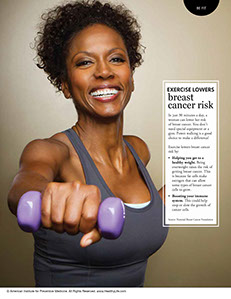
    Rucking is an excellent cardiovascular exercise and builds strength and stamina. It simply means to walk while carrying weight. All you need is a backpack to hold some weight and a safe place to walk. Here’s how to get started:

    *  Plan a walking path. Depending on your fitness level, beginners should plan to walk 2 miles or less. Over time, up your mileage as your strength and endurance increase.

    *  Choose a sack. You don’t need a special rucksack. Any pack can work, but backpacks with a hip belt will be most comfortable as you carry more weight.

    *  Start with light weights. Adding 10-15% of your body weight is a good starting point. You can use any weight, such as gym weight plates, heavy books, or water bottles.

    *  Wear comfortable walking shoes. And don’t forget to hydrate!

    *  Aim for 2-3 weekly rucking sessions. You should begin to see gains in strength and endurance.

    © American Institute for Preventive Medicine

  • Eating For Peak Performance

    Fitness

    Image of oat cereal with fresh fruit.

    No pill or magic formula can instantly turn you into a super-athlete. But eating right can help you perform at your best.

    Carbohydrates-from bread, pasta, potatoes, and fruit-provide energy for vigorous activity. So active people need to replenish this fuel frequently.  Don’t expect to get a quick energy boost from a snack you eat just before starting out, though.  Instead, consuming a high-carbohydrate food like skim milk and a banana, whole wheat bread, or an orange an hour or two before a workout acts like a time-release capsule of energy.

    Because you lose electrolytes (potassium, sodium, magnesium, and calcium) in sweat during vigorous activity, drink plenty of water and eat foods that are rich in these minerals. Almost all fruits and vegetables are rich in potassium, but potatoes, bananas, orange juice, winter squash, cantaloupe, sweet potatoes, and cooked beans are especially high. Sodium is rarely lost in quantities greater than amounts you would normally consume, so you don’t need to worry about getting extra.

    Page image from the A Year of Health Hints book by the American Institute for Preventive Medicine. www.HealthyLife.com. All rights reserved.

    © American Institute for Preventive Medicine
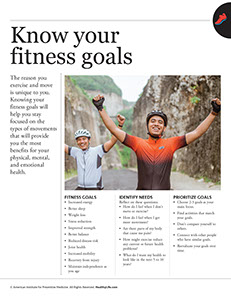
  • Mix-And-Match Training Menu

    Fitness

    Aerobic Dancing / Step Aerobics (low to high-impact)

    Aerobic dancing, step aerobics. Low to high impact.

    Body Benefits

    Excellent for cardiovascular health and overall body toning.

    Training Key

    Find an instructor who works in a style and tempo you feel comfortable with.

    Caution

    High-impact aerobics can strain the knees, hips and ankles. Step aerobics is lower-impact but should be avoided by anyone with knee problems.

    Bicycling (low-impact)

    Bicycling, low impact training.

    Body Benefits

    Excellent for aerobic endurance and weight control. Develops strong legs and thighs without pounding the feet, knees and ankles.

    Training Key

    Find riding partners to reduce wind resistance; learn to maintain a high pedal tempo (80 to 100 revolutions per minute)

    Caution

    Beginners should learn hand signals and rules of the road and should ride in a traffic-free setting.  Local cycling clubs offer courses on proper signaling and road etiquette.

    Running (high-impact)

    Image of runner.

    Body Benefits

    Excellent for leg strength, aerobic fitness and weight control.

    Training Key

    Run at a pace that feels comfortable to you and walk should you feel the need. Whenever possible, seek out a soft training surface such as grass, dirt or a running track.

    Caution

    If you feel any aches or pain in your hips, knees, legs, feet or ankles, stop immediately and take several days off before resuming. If the pain lasts more than a week, see a doctor.

    Stair Climbing (low-impact)

    Image of women climbing oudoor stairs.

    Body Benefits

    Excellent for aerobic fitness, leg and buttock strength and overall toning.

    Training Key

    Short, quick steps work best.

    Caution

    Over striding can strain your knees.

    Stationary Bicycling (low-impact)

    Stationary bicycling, low impact.

    Body Benefits

    Excellent for cardiovascular fitness, weight control and leg strength. Because it develops the quadriceps, it’s a good complement to running.

    Training Key

    Varying the effort helps combat boredom. Use bikes with computerized workouts to add interest to the session.

    Caution

    The exercise bike is most effective when supplemented with other activities.

    Swimming (low-impact)

    Image of swimmer.

    Body Benefits

    Excellent for developing arms and shoulders and great for aerobic endurance. Also good for overall flexibility and fair for weight control. Reduces stress, too.

    Training Key

    Vary your stroke to keep interest. It’s only aerobic if you don’t stop.

    Caution

    Swimming skills take time to perfect. If yours are rusty, start off with a few lessons. Novice swimmers should always swim with a partner or under a lifeguard’s supervision.

    Tennis Racquetball (medium-impact)

    Image of man with racquet and tennis ball.

    Body Benefits

    Excellent for eye-hand coordination, balance and leg and arm toning. Moderately good for aerobic fitness and weight loss.

    Training Key

    Work on developing a smooth, consistent swing. Lessons will help your game improve more rapidly.

    Caution

    Wear shoes with good lateral support to prevent foot and ankle injuries.

    Walking (medium-impact)

    Image of person lacing up shoes.

    Body Benefits

    Good for leg strength and cardiovascular health.

    Training Key

    Pump your arms faster and your legs will follow suit. Try to fit walking into your daily routine. Find a friend to walk with you.

    Caution

    Make sure your shoes fit and are broken in before taking long walks.

    Weight Training (medium-impact)

    Image of person with weight behind head.

    Body Benefits

    Excellent for overall muscle, tendon and bone strength; mildly beneficial for the heart. Done properly, weight training can improve your performance in virtually any sport.

    Training Key

    Do between 8 and 12 repetitions of each exercise.

    Caution

    Don’t overdo it! If you use barbells, always have a friend spot you. Take at least 1 day to recover between weight-training sessions.

    Yoga (low-impact)

    Photo of yoga class in session

    Body Benefits

    Excellent for flexibility, relaxation and stress reduction.

    Training Key

    Find a good instructor who can modify yoga to suit your individual needs rather than someone who insists on “classical” yoga positions.

    Caution

    Don’t push. Develop your skills slowly and yoga will give you a lifetime of satisfaction.

    Page image from HealthyLife Weigh book by the American Institute for Preventive Medicine. www.HealthyLife.com. All rights reserved.

    © American Institute for Preventive Medicine
  • Walkwell™ Tracker

    Fitness

    Use this tracker to:

    *  Write down your weekly walking goals.

    *  Assist you in meeting your goals.

    *  Learn about proper walking technique.

    *  Keep a walking and weight record for 52 weeks.

    Why Walk?

    Walking is an easy form of exercise and does not cost a lot. It provides many benefits and has a very low risk of injury. Check the benefits/goals you wish to get from walking.

    *  Have more energy

    *  Feel better

    *  Look better

    *  Burn calories

    *  Lose weight

    *  Maintain a healthy weight

    *  Relieve tension and stress

    *  Build stamina

    *  Increase muscle tone

    *  Improve heart health and lung health

    *  Lower risk of heart disease, type 2 diabetes, and some cancers

    *  Help treat arthritis, heart disease, depression, diabetes, and/or high blood pressure

    *  Slow down bone loss (osteoporosis)

    *  Improve balance and lower the risk of falling

    How Do I Get Started

    Walk How Much?

    Walking is an easy way to get moderate and/or vigorous-intensity physical activity that adults are advised to get each week:

    1.  At least 2 hours and 30 minutes (150 minutes) of moderate-intensity physical activity (walking briskly for 3 miles per hour or faster, but not race-walking) OR

    2.  At least 1 hour and 15 minutes (75 minutes) of vigorous-intensity physical activity (race walking, jogging, or running) OR

    3.  A mix of 1 and 2

    Does 75-150 minutes each week sound like a lot of time? You don’t have to do it all at once. You can break up your activity into shorter times during the day. For example, take a 10-minute walk, 3 times a day, 5 days a week.

    Adults are also advised to do muscle-strengthening activities on 2 or more days a week that work all major muscle groups (legs, hips, back, abdomen, chest, shoulders, and arms).

    How Do I Get Started

    *  Consult your doctor or health care provider before you start an exercise program.

    *  Plan walking into your daily / weekly schedules.

    *  Write walking times on your calendar, daily planner, or “To Do List.”

    *  Choose the best times for you to walk.

    *  Pick times that you know you can stick to.

    *  Throughout the day, walk more. Sit less.

    *  Park your car farther away from the door of a store or business.

    *  Use extra free time to take mini-walks. The steps will add up!

    Wear What?

    *  Good walking shoes with an arch support to absorb shock and cushion your feet

    *  Clothing that fits loosely and is made of fabrics that absorb sweat and remove it from your skin

    *  Sunscreen on exposed skin to protect it from harmful ultraviolet (UV) rays

    *  A hat and sunglasses (if walking outside) to protect your head and eyes from UV rays

    *  A fanny pack to carry:

    – Identification

    – Cell phone

    – Money

    – Sugar snack (if diabetic)

    *  Pedometer – if you want to keep track of your steps

    Walk Where?

    *  Indoors from room to room

    *  Neighborhoods with sidewalks

    *  Parks and hiking trails

    *  The mall

    *  On a treadmill or an elliptical at home or a local gym

    *  Indoors and outdoors at your place of work

    *  Tracks at local schools and community centers

    *  Map out miles and/or 1,000 to 10,000 steps using these Web sites:

    *Also has a smartphone app

    Walk with Whom?

    *  Family members. Make it a family activity.

    *  A friend or neighbor

    *  A mall walking group

    *  Co-workers. Walk during lunch and/or break times.

    *  Join or start a walking club at your place of work or with your neighbors.

    Walking with a buddy or a group of walkers decreases boredom, provides distraction, and helps keep you motivated.

    Get information and support online from:

    www.startwalkingnow.org

    http://walking.about.com/c/ec/115.htm

    Walking Program

    Sample Program Using Steps

    Use a pedometer to track your steps.

    1.  Wear the pedometer every day for one week to find out how many steps you take in a day.

    2.  Record your steps.

    3.  Add the number of steps you took from Sunday to Saturday. This is the total number of steps you took for Week 1.

    4.  Divide this total number of steps by 7 for an average number of steps per day.

    5.  Each week, add more steps each day until you reach 10, 000 or more steps a day. For example, if your average number of steps per day for week 1 was 2,000; add 500 steps per day every week until you are walking 10,000 steps a day.

    Warm Up

    *  Walk slowly for 5 minutes.

    *  Stretch for 5 or more minutes.

    *  Stretch only to the point of comfort. You should feel mild tension, not pain.

    *  Never bounce.

    – To stretch your arms:  Hold one arm straight out from your side, level with shoulder. Swing your arm across your chest as far as it is comfortable. Then swing it toward your back as far as it will comfortably go. Alternate arms.

    – To stretch your back: Stand with your feet apart. Clasp your hands high above your head. Lean your head back and look up. Hold for 5 seconds. Relax. Repeat 2-4 times.

    – To stretch your legs: Stand up straight and balance yourself with your hand against a wall or chair. Bend one knee, grasp that ankle, and draw the leg up and back. Hold for 10 seconds. Repeat with your other leg.

    Walk This Way

    *  Step down on the back of your heels and roll onto your toes. Point your toes forward.

    *  Keep your chin up and your shoulders slightly back.

    *  Swing your arms at your sides. Try alternating bicep curls while you walk.

    *  Breathe in deeply. Exhale fully.

    Cool Down

    *  Walk at a slower pace for 3-5 minutes.

    *  Breathe slowly and rhythmically.

    Get Motivated!

    *  Walk with a buddy.

    *  Bring music with you. Choose music to match your mood and pace!

    *  Walk the dog! If you don’t have one, walk with your neighbor when he or she walks the dog or volunteer at a local animal shelter.

    *  Help the environment. Walking instead of taking the car helps our climate.

    *  Notice the beauty around you.

    *  Use walks to clear your head and sort out problems.

    *  Meet new people! Say “Hello” to the neighbors.

    *  Change it up. Walk in different areas or at different times of the day.

    *  Reward yourself when you reach a goal.

    Walk for a Cause

    Take part in national fundraising fitness-related walks that are held locally.

    American Heart Association’s Heart Walk

    www.heart.org/HEARTORG

    Step Out: Walk to Fight Diabetes

    http://stepout.diabetes.org

    March of Dimes

    www.marchforbabies.org

    Susan G. Koman Breast Cancer 3-Day

    http://ww5.komen.org

    Walk to Cure Diabetes

    www2.jdrf.org

    Walk Like MADD (Mothers Against Drunk Driving)

    www.madd.org

    Walk MS (Multiple Sclerosis)

    www.walkms.org

    Walking Burns Calories

    The number of calories you burn with walking depends on your weight and metabolism, how fast you walk, how long you walk, and factors in your walking environment.

    Step Equivalents for Distances

    Physical Activities / Step Equivalents & Calories Burned per 30 Minutes (155 Pound Person)

    Cover image to the WalkWell book by the American Institute for Preventive Medicine. www.HealthyLife.com. All rights reserved.

    © American Institute for Preventive Medicine
  • Cholesterol: To Eat Or Not To Eat?

    HEALTHY EATING

    Bowl with salman, nuts, cucumbers.

    Not that long ago, eggs were considered taboo, and heart healthy eating meant avoiding cholesterol. However, our understanding of the impact of dietary cholesterol on blood cholesterol has evolved in recent years.

    Instead of worrying about the amount of cholesterol in food, watching your overall fat intake is most important, especially the unhealthy fats. For the best heart protection, you should consume a diet low in unhealthy fats, such as saturated and trans fats.

    Moderation is key. Cholesterol-containing foods can be part of a healthy diet as long as you do not over-consume them.

    Foods that contain cholesterol & unhealthy fats

    *  Egg yolks (egg whites do not contain cholesterol)

    *  Cheese

    *  Butter

    *  Shellfish

    *  Red meat

    *  Full fat milk and yogurt

    *  Fried foods

    *  Processed meats

    *  Most fast foods

    *  Desserts such as cake, cookies, and pies

    Decrease intake of cholesterol & unhealthy fats

    A healthy diet is one high in plant foods such as fruits, vegetables, and whole grains. If you focus on eating more of these unprocessed, plant foods, you will naturally be eating a diet lower in fat and cholesterol.

    Try these tips to bring more balance to your diet:

    *  Eat 1-2 fruits and vegetables at each meal.

    *  If you consume dairy products, choose fat-free or low-fat.

    *  When you eat meat, choose lean cuts and limit your portion to 3 ounces.

    *  Choose baked over fried foods.

    *  Limit processed meats such as lunch meat, hot dogs, bacon, and salami.

    *  Eat more fiber from fruits, vegetables, oats, and beans.

    © American Institute for Preventive Medicine
  • Eat Your Vitamins For Good Health

    HEALTHY EATING

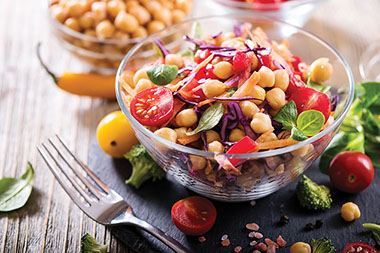
    Bowl of vegetables with rice and chickpeas.

    Vitamins play a powerful role in supporting the immune system. These three vitamins are some of the best for immune system support:

    *  Vitamin D: Eat foods like fortified milk, cereal and fatty fish, like salmon. Spend 15 minutes a day in the sun to get a good dose of vitamin D. Or take a daily 1,000-4,000 IU supplement.

    *  Vitamin C: Eat citrus fruits, tomatoes, potatoes, strawberries, peppers, broccoli, Brussels sprouts and kiwifruit.

    *  Zinc: Eat red meat, poultry, fortified cereal, whole grains, beans and nuts.

    Dietary supplements can also be a good option, but be sure you talk to your doctor first. Dietary supplements can cause undesirable side effects, especially if taken with other medications or if taken in large doses.

    © American Institute for Preventive Medicine