Category: Uncategorized

  • Use Caution With Sleeping Pills

    Medication

    Image of women trying to sleep with pills on her nightstand.

    Used improperly, prescription sleeping pills (called sedative-hypnotics) can be as addictive as alcohol and can produce unpleasant withdrawal symptoms if stopped abruptly.

    You can develop a tolerance to sleeping pills in as little as two weeks of frequent use. In other words, you need higher and higher amounts to fall asleep. Older people should be especially cautious about taking sleeping pills, since their tolerance for medication is usually lower than middle-aged or younger adults.

    If you or someone you’re close to takes prescription sleeping pills, possible signs of misuse include:

    *  Taking sleeping pills nightly for more than two weeks.

    *  Needing to take higher doses to fall asleep.

    *  Increasing the dosage without consulting the doctor.

    If you’ve become dependent on sleeping pills, don’t quit cold turkey-you’re apt to suffer confusion, slurred speech, drowsiness, difficulty concentrating, relentless insomnia, and possibly death. So contact your doctor for instructions on how to wean yourself off the drug.

    Page from A Year of Health Hints book by the American Institute for Preventive Medicine. www.HealthyLife.com. All rights reserved.

    © American Institute for Preventive Medicine
  • Complementary & Integrative Health

    Alternative Medicine

    Image of complementary medicine.

    Complementary medicine is a non-mainstream practice used together with conventional medicine.

    Integrative medicine coordinates complementary approaches into mainstream medicine.

    Alternative medicine is non-mainstream medicine in place of conventional medicine.

    True alternative medicine is not common. Most people who use non-mainstream approaches use them with conventional treatment.

    The National Health Interview Survey (NHIS) found that 33.2% of adults in the U.S. used complementary health approaches.

    Natural products.

    These use substances found in nature, often sold as dietary supplements. Examples are:

    *  Herbs. Chemicals from herbs, plants, or plant parts act upon the body in a therapeutic way.

    * Vitamins and minerals. These are the most common dietary supplement used. About 40% of adults take a multivitamin and mineral (MVM).

    * Probiotics. These are defined as “live micro-organisms which, when given in adequate amounts, provide a health benefit on the host.”

    Mind and body practices

    These focus on the interactions among the brain, mind, body, and behavior. Some practices manipulate and/or move one or more body parts. Examples are:

    *  Acupressure. This applies pressure to certain places (acupoints) on the body by pressing on them with fingers or hands.

    *  Acupuncture. This uses needles that are inserted into the skin at certain points (acupoints).

    *  Chiropractic. This seeks to put the body into balance through manual realignment of the spine and other joints and muscles.

    *  Hypnotherapy. A person is put in a trance state to respond to suggestion to overcome a problem, such as a phobia, anxiety, or tobacco use.

    *  Meditation. This increases calmness and physical relaxation by using:

    – A quiet location that is free of or has few distractions.

    – A comfortable posture.

    – A specific focus on a word or sensation.

    – An openness to let distractions come and go without judging them.

    *  Massage therapy. This uses touching and rubbing techniques to relieve sore muscles and promote relaxation.

    *  Qi gong (“chee-GUNG”). This is part of traditional Chinese medicine. It uses movement, meditation, and controlled breathing to enhance the flow of “qi” in the body. (Qi is an ancient term for vital energy.)

    *  Relaxation therapies. These include breathing exercises, guided imagery, and progressive muscle relaxation.

    *  Tai chi. This is a series of postures and exercises of moving the body slowly and gently, and with awareness while breathing deeply.

    *  Yoga. A system of exercising using postures, breathing, and meditation.

    Page from the Healthier at Home book by the American Institute for Preventive Medicine. www.HealthyLife.com. All rights reserved.

    © American Institute for Preventive Medicine
  • Bloated Belly: Ways To Get Relief

    SELF-CARE CORNER

    Image of tea and different tea leaves.

    Most people have felt a bloated stomach after a big meal. Usually, the belly feels overly full. It can make clothing feel tighter. The belly may look swollen. Bloating is usually caused by too much food or air and gas getting trapped in the intestines.

    But some people get bloated even when they didn’t eat too much. In some cases, it can be downright painful. The best way to address painful bloating is to find the cause and know how you can treat it.

    Bloating culprits

    The most common causes include:

    *  Dairy foods. If you notice bloating after eating cheese, ice cream, or drinking milk, you could have lactose intolerance.

    *  Gum. Swallowing air while chewing can cause bloating.

    *  Eating too much fiber at once. Fiber is great for you, but if your body isn’t used to it, you can get bloated and uncomfortable. Increase the amount you eat gradually.

    *  Bowel problems. Being constipated or having irritable bowel syndrome (IBS) can cause painful bloating. Drinking plenty of water can help with constipation and fiber absorption.

    *  Menstrual cycles. Some women get bloated because their body holds extra water before or during their periods.

    Treat bloating at home

    Many times, bloating can be managed at home. Here’s how:

    *  Write down what you eat and drink. Record when you get stomach pain or bloating.

    *  Cut back on gum.

    *  Avoid carbonated drinks.

    *  Drink plenty of water to keep the bowels moving. Don’t use a straw when drinking.

    *  Eat enough fiber. Start with fruits and vegetables. Eat only small amounts of beans, lentils and other gas-causing foods until you get used to them.

    *  Watch out for sugar-free foods. Some artificial sweeteners can cause bloating and gas.

    *  Ginger, peppermint, chamomile or fennel herbal teas may help. Always ask a doctor before using herbs if you have a health condition or take any medicines.

    *  Over-the-counter anti-gas medicines with simethicone help move gas bubbles out of the body.

    When to see your doctor

    Call a doctor or seek immediate medical care if you notice bloating with:

    *  Blood with bowel movements (stool)

    *  Losing weight without making an effort

    *  Nausea or vomiting

    *  For women: menstrual bleeding between periods or after menopause

    *  Fever

    *  Severe pain that won’t go away

    These could be signs of a serious health issue that needs treatment.

    Source: American Academy of Family Physicians

    © American Institute for Preventive Medicine
  • Health Screenings For Women

    SELF-CARE CORNER

    Stethoscope and female symbol pills on pink top view.

    Women are at risk for a unique set of health issues. Every woman should visit their primary care and OB-GYN provider every year for a checkup that includes the recommended screenings.

    Ask your doctor what screenings are right for you. Your doctor will decide which screenings you need based on your age, family history, health history, and other risk factors.

    Women aged 18 to 39

    *  Blood pressure screening

    *  Cholesterol screening

    *  Diabetes screening

    *  Immunizations

    *  Infectious disease screening including STI’s

    *  Physical exam

    *  Breast cancer screening

    *  Cervical cancer screening

    *  Skin self-exam

    *  Dental and eye exams

    *  Early and regular prenatal care during pregnancy

    Women aged  40 to 64

    *  Blood pressure screening

    *  Cholesterol screening

    *  Diabetes screening

    *  Immunizations

    *  Infectious disease screening including STI’s

    *  Physical exam

    *  Breast, colon, and lung cancer screenings

    *  Cervical cancer screening

    *  Osteoporosis screening

    *  Skin cancer screening

    *  Dental and eye exams

    Women aged 65 and over

    *  Blood pressure screening

    *  Cholesterol and heart disease screening

    *  Diabetes screening

    *  Immunizations

    *  Infectious disease screening including STI’s

    *  Physical exam

    *  Breast, colon, and lung cancer screenings

    *  Cervical cancer screening may no longer be needed. Check with your doctor.

    *  Osteoporosis screening

    *  Skin cancer screening

    *  Hearing test

    *  Dental and eye exams

    © American Institute for Preventive Medicine

  • Snoring And Your Health

    SELF-CARE CORNER

    Women sleeping while wearing a CPAP machine.

    Occasional snoring is often harmless. It may happen when a person has a stuffy nose or is lying on their back. But if you snore every night, talk with a doctor. Long-term snoring can lead to health problems.

    Sleep suffers

    Snoring can make you wake up many times during the night. You probably won’t remember these awakenings. They interfere with your body’s ability to get good, sound sleep.

    Without quality sleep, you may feel tired nearly every day. This can lead to problems at work, school or home. In severe cases, it can lead to dangers like car collisions if you fall asleep at the wheel.

    Obstructive sleep apnea

    Sometimes snoring is a sign of a health problem called obstructive sleep apnea (OSA). Signs of OSA include:

    *  Loud snoring that happens nearly every night

    *  Pauses in breathing during sleep (this can happen hundreds of times per night)

    *  Choking or gasping for air during the night

    *  Feeling very tired even after a full night’s sleep

    *  Trouble concentrating or being irritable

    *  Waking up with a headache

    OSA can also cause heart problems because it can increase a person’s risk of high blood pressure, stroke or heart disease. It can also cause an irregular heartbeat, known as an arrhythmia.

    How to fix snoring

    There are many ways to reduce or eliminate snoring. First, see a doctor to get checked for any health problems. Your doctor may recommend:

    *  If you smoke, quit. Smoking can make snoring worse and leads to other serious health problems.

    *  Limit or avoid alcohol. Don’t drink alcohol close to bedtime. Alcohol relaxes throat muscles and can cause more snoring and pauses in breathing.

    *  Work toward a healthy weight if you are overweight. Being overweight often makes snoring worse.

    If these measures don’t help, ask your doctor about other options. Certain devices and surgery can help some people quit snoring.

    Relationship problems

    Snoring can cause social problems too. Some people find that their marriage or domestic partnership suffers. Partners may not be able to sleep in the same room because of the noise.

    Sources: American Academy of Otolaryngology – Head and Neck Surgery

    © American Institute for Preventive Medicine
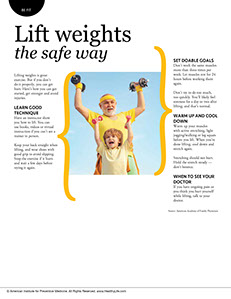
  • Exercise When You Travel

    BE FIT

    Group of people hiking.

    How you exercise may look different when traveling, but it’s still worthwhile. In fact, mixing things up when you’re away from home keeps your workouts fresh and interesting. Try these tips:

    *Bring resistance bands along.Easily packable and super lightweight, resistance bands give you the flexibility to exercise anywhere. Bring a few different types for the most exercise options.

    *Book a hotel with a gym.Many hotels offer fitness rooms. The equipment is often fairly basic, but you can usually depend on a treadmill or bike and a set of free weights.

    *Use your bodyweight.All you really need for a good sweat session is your body! Movements like push-ups, tricep dips, squats, and lunges can be combined in a challenging circuit.

    *Get outside.What better way to get the most out of your travel than to explore on foot. And all that walking counts as exercise!

    © American Institute for Preventive Medicine

  • You’re Never Too Old To Exercise

    BE FIT

    Older man smiling while holding out a basketball.

    Older adults might find it hard to exercise. But exercise is great for older adults and may even help relieve joint pain and increase energy. It can help you sleep better, maintain a healthy weight and  relieve stress.

    See your doctor first.

    Talk to your doctor before starting an exercise plan if you have any health conditions or take medications.

    Stay hydrated.

    Drink water before, during and after your workout.

    Perform all types of exercise.

    This includes flexibility (stretching), strength (weights or resistance) and endurance (walking, biking or other activities).

    © American Institute for Preventive Medicine
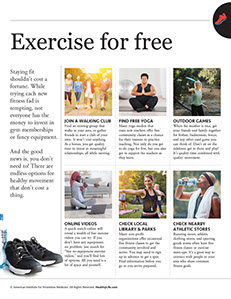
  • Start A Walking Group

    BE FIT

    Group of friends walking on a trail.

    Walking is hands down one of the best forms of exercise. Walking with a group is a great strategy to keep you motivated. And what better way to get involved in a walking group than to start one yourself!

    1. Identify target members. Do you want to invite the general public, only close friends, or people in your neighborhood? Know who you want to join.

    2. Choose a time. Based on who you plan to invite, pick a regular time slot and schedule about 60-75 minutes.

    3. Plan a route (and a backup). A good walking route is free, safe, well-maintained, and near your home or work. Also, select a backup indoor location, such as a mall or walking track, for when the weather is poor.

    4. Spread the word. Reach out to your target members with flyers, social media, phone calls, or emails. Aim for between 5 and 15 members.

    © American Institute for Preventive Medicine
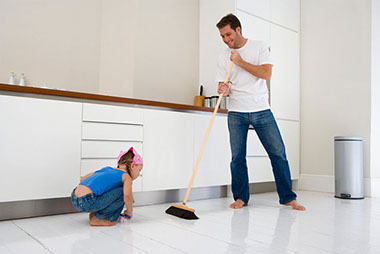
  • Exercise On A Budget 2

    Fitness

    Image of women hiking.

    Lean times are no excuse to ignore your health.

    Don’t let gym memberships, personal training fees, or the cost of the latest exercise gadget weigh you down. Exercise is about moving, stretching, lifting, bending, breathing – things you can easily do at home. Or simply walk – around the block, at a mall, or on a local school’s track.

    Get started.

    Start with a few simple stretches to warm up your muscles. If you need help, go online for how-to instructions on everything from stretching to full routines. You can also find exercise tools to track your progress.

    No equipment necessary

    Do what you were taught in gym class – squats, push-ups, jumping jacks, and crunches. Lift your legs and arms, touch your toes, bend from side to side, jog in place, and twist. Just make sure you target all your major muscle groups at least once every week.

    No free weights? Try these substitutes.

    *  Use cans for triceps and biceps exercises instead of dumbbells.

    *  A gallon jug filled with water, sand, or powdered detergent is just as effective as a kettle bell for squats and arm lifts.

    *  Put a paper plate under one foot and lunge forward. You can also attach plates to both feet with rubber bands to simulate skating. Or, get down on all fours, put the plates under your hands and slide them back and forth for a great chest workout.

    *  Pantyhose move just as well as resistance bands for rowing and stretching routines.

    *  Use a chair or countertop as a push-up bench.

    *  A low, sturdy stool or a bottom stair can be used for a step exercise routine.

    Action Step

    Don’t wait until you have a block of time to exercise. You can do leg lifts in the elevator, calve raises in the grocery line, lunges as you walk the dog. Every little bit counts.

    Page image from Ways to Well-Being book by the American Institute for Preventive Medicine. www.HealthyLife.com. All rights reserved.

    © American Institute for Preventive Medicine
  • Move Your Way

    Fitness

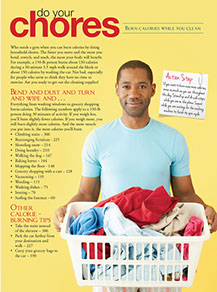
    Man wearing apron and cleaning gloves, using a broom stick as a guitar.

    The key to moving more is finding and doing activities you really enjoy. Dancing, walking, gardening…if it moves you and makes you happy, it works! When you do move, work toward 20 minutes a day of moderate to vigorous levels of movement. Regular physical activity helps with weight management and improving cardiovascular health. Add some weighted hand gloves for increased resistance and to build muscle while you move.

    Be More Earth-Friendly

    Want to help the earth while exercising? Plogging – or picking up trash while you jog or walk – is one way you can do your part to keep your community, and the environment, clean.

    Page from HealthyLife Weigh book by the American Institute for Preventive Medicine. www.HealthyLife.com. All rights reserved.

    © American Institute for Preventive Medicine