Category: Uncategorized

  • Race Drinking

    BE FIT

    Image of man drinking from a water bottle.

    Nearly half of recreational runners may be drinking too much fluid during races, according to a survey of runners by Loyola University Health System researchers. Expert guidelines recommend runners drink only when thirsty. But the Loyola survey found that 36.5% of runners drink according to a preset schedule or to maintain a certain body weight and 8.9% drink as much as possible.

    Drinking too much fluid while running can cause a potentially fatal condition called exercise-associated hyponatremia. It occurs when runners drink even when they are not thirsty. Drinking too much during exercise can dilute the sodium content of blood to abnormally low levels.

    Drinking only when thirsty will prevent overconsumption of fluids. “It’s the safest known way to hydrate during endurance exercise,” said Loyola sports medicine physician Dr. James Winger. The study is in the British Journal of Sports Medicine.

    Symptoms of hyponatremia can include nausea, vomiting, headache, confusion, loss of energy, muscle weakness, spasms or cramps. In extreme cases, the condition can lead to seizures, unconsciousness, and coma.

    © American Institute for Preventive Medicine

  • The Aerobic Mile

    BE FIT

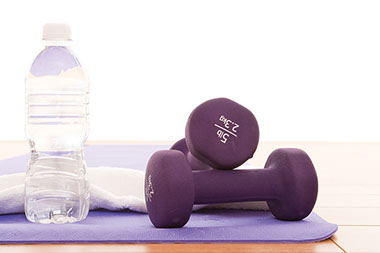
    Image of water bottle, towel and dumb bells on a mat.

    How much exercise do you need? The answer is 30 minutes most days of the week, according to government guidelines. But you can calculate your own fitness level by using the aerobic mile as your guideline.

    An aerobic mile, simply, is how much energy you expend jogging one mile. Okay, you don’t want to jog. But you can burn the same number of calories by doing other exercises. Here are some examples of activities you can do to equal one aerobic mile:

    *  Walking one mile at any pace

    *  Bicycling at a moderate pace for 12 minutes

    *  Vigorous rowing for 12 minutes

    *  Swimming for 24 minutes

    *  Tennis for 20 minutes (11 if your game is vigorous)

    *  Weight training at a moderate pace for 15 minutes

    *  Easy gardening for one hour

    *  Aerobic exercise to music, easy pace for 20 minutes

    Beginning exercisers should strive to achieve the equivalent of 6 aerobic miles a week. Those with good fitness levels can move up to 10 hours a week. High fitness levels are achieved with 15 aerobic miles each week, according to ACSM Guidelines for Exercise Testing.

    © American Institute for Preventive Medicine

  • Black Bean Burgers

    HEALTHY EATING

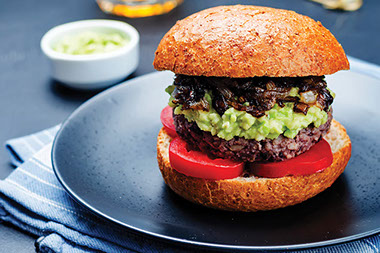
    Image of a black bean burger.

    Ingredients

    1 can of 15.5 ounce low-sodium black beans (drained and rinsed with cold water)

    1 large egg

    1/2 cup cooked brown rice*

    2 scallions (green and white minced, about 1/4 cup)

    2 Tablespoons chopped fresh cilantro (or basil leaves or a combination)

    1 garlic clove (peeled and minced)

    1/4 teaspoon dried oregano or basil

    1 teaspoon vegetable oil

    1/2 teaspoon salt

    1/2 teaspoon black pepper

    4 whole-wheat buns

    Directions

    1. Add beans to a bowl and mash with a fork until chunky. Add the egg and mix well.

    2. Add precooked rice*, scallions, cilantro, garlic and oregano, salt and pepper and mix until well combined.

    3. Divide the mixture into 4 portions and form each portion into a patty about ¾ to 1 inch thick.

    4. Place a large skillet on the stove on high heat. When the skillet is hot, add oil. Add burgers and cook 4 to 5 minutes per side until browned on both sides and heated throughout. Place on a whole-wheat bun.

    *Try using old-fashioned rolled oats, leftover cooked barley or Panko breadcrumbs instead of prepared rice.

    Serve with your favorite toppings, such as lettuce, tomato, guacamole, salsa, low-fat cheese or low-fat yogurt.

    Serves 4. Per serving: Calories: 274; Total Fat: 5 g; Saturated Fat: 1 g, Sodium: 668 mg; Total Carbohydrate: 47 g; Dietary Fiber: 12 g; Protein: 13 g

    Source: What’s Cooking? USDA Mixing Bowl

    © American Institute for Preventive Medicine

  • Easy Food Swaps For A Healthier You

    HEALTHY EATING

    Image of middle-aged couple preparing food in their kitchen.

    What if you could be healthier without making a bunch of drastic changes? No extreme dieting or starving, but just taking some small steps to improve your food choices. It is possible if you know which foods to eat more of, and which ones to scale back on. The American Heart Association recommends a few simple switches that can add up to better overall health:

    *  Don’t cook with butter, lard, or shortening. Use vegetable oils that are high in unsaturated fats. Great choices include olive, canola, walnut, and safflower oils.

    *  When purchasing canned soups or vegetables, look for lower-sodium or “no salt added” varieties. Choose frozen vegetables without added salt or sauces.

    *  Avoid foods with added sugar, such as canned fruits with syrup. Choose canned fruits with no sugar added and/or packed in 100 percent fruit juice.

    *  Use nonstick cooking spray instead of shortening for recipes that call for “greased” cookware.

    *  When buying bread or crackers, look for those labeled “whole grain” or “whole wheat.” These choices contain more fiber and nutrients than refined grains.

    *  Cut back on red meat by using ground turkey or chicken in place of ground beef in recipes. Turkey tacos, meatballs, or chili can be just as tasty and many people can’t tell the difference.

    These simple tips can help you cut back on saturated fat, excess sugar and sodium. This adds up to great health benefits without having to change your eating habits entirely.

    © American Institute for Preventive Medicine

  • Fruit And Peanut Butter Dip

    HEALTHY EATING

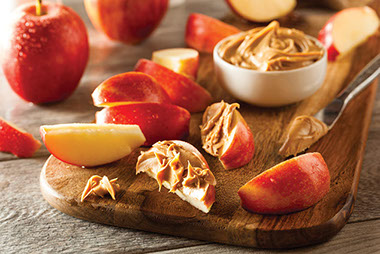
    Image of fruit and peanut butter dip.

    Ingredients

    1 cup apple slices

    1 cup banana slices

    1 cup pear slices

    1 cup grapes

    1 cup strawberries

    1 cup melon slices

    1/2 cup yogurt, nonfat plain

    1/2 teaspoon vanilla

    1/3 cup peanut butter

    Directions

    1. Prepare fruit by washing and slicing, if necessary.

    2. Arrange fruit on a plate around a small bowl.

    3. To make dip, combine yogurt, vanilla and peanut butter in a small bowl.

    4. Mix well.

    5. Chill dip in refrigerator until ready to serve.

    Note: Can use six cups of any washed fruit.

    Source: Colorado State University and University of California at Davis, Eating Smart Being Active Recipes

    © American Institute for Preventive Medicine

  • Heart-Healthy Eating Made Easy

    HEALTHY EATING

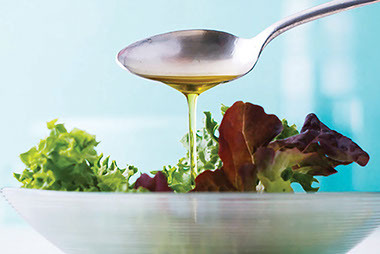
    Image of a healthy salad.

    Simple, small changes in what you eat can make it easier to follow a heart-healthy diet. Experts in the Harvard Heart Letter made these suggestions to lower the amount of saturated fat, trans fat, sugar, sodium, and calories, and boost the amount of fiber and nutrients in a daily diet:

    Breakfast

    If you eat:Eggs

    Try:Scrambling eggs with vegetables from last night’s dinner or chopped fresh tomatoes and avocado

    Why:Adds nutrients and fiber; tomatoes add antioxidants, which help prevent fatty plaques; avocados add monounsaturated fat, which helps the body absorb nutrients

    Lunch

    If you eat:Salad with ranch or blue cheese dressing

    Try:A vinaigrette dressing made with garlic, Dijon mustard, fresh herbs, 1/3 cup vinegar, 2/3 cup extra-virgin olive oil, pepper, and a dash of salt shaken together in a jar

    Why:Reduces sodium and unhealthy fats

    Dinner

    If you eat:Pasta with meat and cheese

    Try:Whole-wheat spaghetti topped with fresh tomatoes and herbs or extra-virgin olive oil, grilled shrimp, and a small amount of freshly grated Parmesan cheese

    Why:Reduces saturated fat; adds fiber and health-protecting phytonutrients; shrimp adds omega-3 fatty acids, which may lower the risk of heart attack, stroke, and irregular heart beats

    © American Institute for Preventive Medicine

  • Meatless Meals (Try It)

    HEALTHY EATING

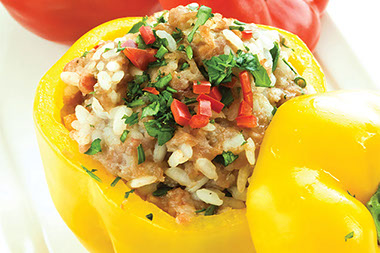
    Image of yellow and red peppers stuffed with rice and other vegetables.

    You don’t have to become a vegetarian to enjoy a meatless meal. Try working more meatless meals into your week, suggests the Recipe Doctor, Elaine Magee, MPH, RD, author of Food Synergy.

    *  Substitute a soy “meat” product for the meat ingredient in casseroles, stews, tacos, and chili.

    *  Break out a can of beans. They make great meal replacers because they’re super satisfying, with high amounts of protein and fiber. In a nice vegetable stew bursting with beans, you might not notice the meat is missing.

    *  Try a veggie potpie featuring potatoes, peas, mushrooms, and any other vegetables with vegetarian gravy and pie crust.

    *  Make Mexican dishes (burritos, nachos, enchiladas, for example) featuring beans and veggies instead of beef and chicken.

    *  Stir-fry Chinese cuisine with veggies and tofu and serve over rice or noodles.

    *  Stuff bell peppers with a mixture of rice with spices and vegetables plus vegetarian sausage, tofu, or beans to make the dish more satisfying.

    *  Layer lasagna with veggies instead of meat. Spinach replaces ground beef.

    *  A grilled Portobello mushroom can stand in for a burger on a bun.

    © American Institute for Preventive Medicine

  • Pumpkin And White Bean Soup

    HEALTHY EATING

    Image of pumpkin and white bean soup.

    Ingredients

    1 can small white beans (15 ounces)

    1 small onion (finely chopped)

    1 cup water

    1 can pumpkin (15 ounces)

    1-1/2 cups apple juice

    1/2 teaspoon cinnamon

    1/2 teaspoon black pepper

    1/4 teaspoon salt

    1/8 teaspoon nutmeg, allspice, or ginger (if you like)

    Directions

    1. Mash white beans, onion and water with a fork or blender until smooth. Set aside.

    2. In a large pot, add the pumpkin, apple juice, cinnamon, black pepper and salt. If using nutmeg, allspice or ginger, add that too. Stir.

    3. Add the bean mix to the pot.

    4. Cook over low heat for 15-20 minutes, until warmed through.

    Source: What’s Cooking? USDA Mixing Bowl

    © American Institute for Preventive Medicine

  • Tasty News

    HEALTHY EATING

    Image of women of a hot cup of tea.

    What we view as the sense of taste is actually a combination of smell, taste, and texture, with smell playing a major role. A single taste bud can have dozens of receptor cells that send signals of sour, sweet, salty, and bitter through nerve channels to the brain.

    The tongue is covered with taste buds, and the back of the mouth is sensitive to bitter tastes-perhaps as a last-ditch chance to expel something toxic. Taste also plays a role in digestion, preparing the stomach for a meal.

    But one of the most interesting things about taste, according to University of Virginia neuroscientist David Hill, is that taste cells regenerate, or turn over, about every 10 days, much like skin cells.

    Burn your tongue? No worries; those cells will regrow and you’ll regain your normal sense of taste within days.

    © American Institute for Preventive Medicine

  • Vinegar Can Be Tasty – And Healthy

    HEALTHY EATING

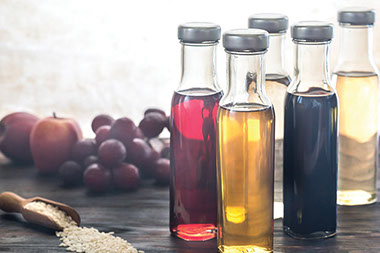
    Image of a varity of different vinegars.

    White vinegar has a number of household uses. Some people use it for cleaning, laundry and flushing out the coffee maker. It’s also been used for centuries to preserve food, especially vegetables.

    But don’t let the strong vinegar odor turn you off from all vinegars. In fact, there are many different types that are both healthful and delicious. Many of them have a mild, pleasing taste that pairs well with a variety of foods. Some are even naturally sweet enough to dress up fruits and healthy desserts.

    Vinegar is made when a liquid that contains starch and sugar is fermented. It comes from the French words “vin” and “aigre” which mean “sour wine.” The liquid ferments into alcohol, then ferments again into vinegar. It is believed that vinegar was made by chance thousands of years ago when some wine was left too long in its cask.

    The right vinegar can add flavor without adding sodium, calories, fat or unhealthy additives. It can add acidity to soups and stews, or works well for marinating meat and vegetables.

    Go beyond the standard vinegar and oil combination and check out these delicious vinegars in your next cooking experiment. There are dozens of types of vinegars, and some can be difficult to find except in specialty stores. The following types are generally easy to find in most stores.

    Distilled white vinegar

    The most common type seen in stores, it is made from fermented alcohol. White vinegar has a strong taste and odor and is great for making pickles, poached eggs and buttermilk.

    Balsamic

    Made from fermented grapes, balsamic becomes sweeter and almost like syrup the longer it ages. It adds flavor to pasta and vegetarian dishes and pairs well with fruit.

    Apple cider vinegar

    Made from fermented apples, apple cider vinegar is very versatile. It adds zest and subtle sweetness to salad dressings and slaws, as well as meat marinades.

    Malt vinegar

    This light brown vinegar, made from barley, is commonly used on french fries and fish and chips. Use it on healthier choices like baked potatoes and grilled chicken for a kick that’s not too overwhelming.

    Red wine vinegar

    This lively, strong tasting vinegar is ideal for meat marinades and dark sauces.

    White wine vinegar

    Don’t confuse this with distilled white vinegar. It is also much milder than red wine vinegar. White wine vinegar is great for those who want a subtle taste or who don’t want to change the color of their food.

    Rice vinegar

    Plain rice vinegar is mild and clean-tasting. It works well with most recipes that require vinegar without a strong taste, especially stir-fries and salad dressings.

    © American Institute for Preventive Medicine