Category: Uncategorized

  • Asian-Style Steamed Salmon

    HEALTHY EATING

    Concept image of plate with "DO NOT" sign and clock hands.

    This is a fast and easy way to make heart-healthy salmon for a weeknight dinner.

    Ingredients

    1 cup low-sodium chicken broth

    ½ cup shiitake mushroom caps, rinsed and sliced (or substitute dried shiitake mushrooms)

    2 tablespoons fresh ginger, minced (or 2 teaspoons ground)

    ¼ cup scallions (green onions), rinsed and chopped

    1 tablespoon less sodium soy sauce

    1 tablespoon sesame oil (optional)

    12 ounces salmon fillet, cut into 4 portions (3 ounces each)

    Directions

    1.  Combine chicken broth, mushroom caps, ginger, scallions, soy sauce and sesame oil (optional) in a large, shallow sauté pan. Bring to a boil over high heat, then lower heat and simmer for 2-3 minutes.

    2.  Add salmon fillets, and cover with a tight-fitting lid. Cook gently over low heat for 4-5 minutes or until the salmon flakes easily with a fork in the thickest part (to a minimum internal temperature of 145 °F).

    3.  Serve one piece of salmon with ¼ cup of broth.

    Nutrition per serving: Servings 4. Calories 175; Total fat 9 g; Saturated fat 2 g; Sodium 208 mg; Total fiber 1 g; Protein 19 g; Carbohydrates 4 g

    Source: National Institutes of Health Keep the Beat Recipes

    © American Institute for Preventive Medicine

  • Planning For Your Child’s Expenses

    FINANCIAL HEALTH

    Image of piggy bank next to '529' blocks on top of books.

    It can feel like a dark cloud hanging overhead – the upcoming expense of your child’s college education. Whether your child is one month or 16 years old, it’s never too late to start putting some money away to invest in your child’s future.

    529 college savings plans

    A 529 allows you to save money to pay for your child’s college education tax-free. If the money is used on higher education, you won’t be taxed on the withdrawal either.

    Usually, the money must be used on tuition, room, board, or certain supplies required for college enrollment, or you may have to pay a penalty and taxes.

    Prepaid tuition plans

    When you set up a prepaid tuition plan, you “lock in” today’s tuition prices. In general, these plans must be used on colleges within your state to get the lower tuition rate.

    Savings accounts

    You can set up a savings account in your child’s name that you manage. This is called a custodial account. When your child is old enough, he or she can access the funds.

    IRA and Roth IRA accounts

    IRAs, or individual retirement accounts, are investment accounts that let you save without getting taxes taken out. With a deductible IRA, you must claim your money that goes into the IRA as tax deductible. Then, taxes are incurred when you withdraw the savings later.

    If you put money into a Roth IRA, your earnings are tax-free if you wait to withdraw them after five years – and if they’re used for college tuition.

    Coverdell education savings accounts (ESA)

    Coverdell ESAs are like an IRA for college. If the money is used for education, you won’t pay any taxes when you withdraw it.

    Because each family’s budget and needs are different, there is no single solution that works for everyone. Carefully consider the pros and cons of each option before you move forward.

    Before you begin saving for college….

    If possible, talk with a financial advisor before you begin. Some plans, such as a deductible IRA, may depend upon your income and other factors. And, an expert in the field can help you choose the best option for your situation.

    Ask questions. Be sure to ask the representative about:

    *  Fees and commissions to pay

    *  When and how taxes are incurred on the money you invest

    *  Interest you may earn

    *  Risk involved with investments

    *  Whether you can use the money for other things (if your child doesn’t go to college or gets a full scholarship, for instance)

    *  Whether the money must be used in-state

    Don’t forget about federal loans, which are an option for many families – especially if college is right around the corner.


    © American Institute for Preventive Medicine

  • 3 “S”S To Close The Deal On A Car

    FINANCIAL HEALTH

    A man with a car salesmen looking at a new car.

    1.See.See what you agreed to. Look at all the paperwork for the loan documents. Check the annual percentage rate (APR), which is the cost of your loan interest measured by a yearly rate. Look at the finance charges, which includes the total amount of interest and certain fees you’ll pay.

    2.Say no.Say no if you’re not comfortable. If you are unhappy with the loan conditions or the vehicle, don’t feel forced into it. You can always leave without finishing the deal if you change your mind. If you’re not sure, tell them you need more time to think about it. Dealers cannot force you to sign the loan.

    3.Sign.Sign all the blanks. Before you drive away with your new vehicle, make sure both you and the dealer have signed everything in the loan papers. All blanks should be filled in. You should also get a copy of all the paperwork on the spot.

    © American Institute for Preventive Medicine

  • 5 Things To Know About Lung Cancer

    MEDICAL NEWS

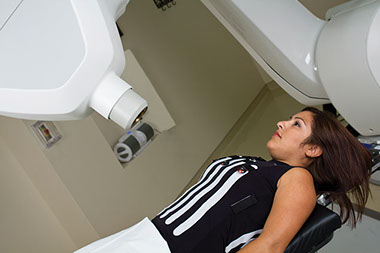
    Image of women getting a lung scan.

    Lung cancer is the country’s leading cause of cancer death. Many of the 160,000 deaths from lung cancer in the U.S. can be prevented. Dr. Bruce Johnson, the director of the Lowe Center for Thoracic Oncology at Dana-Farber Cancer Institute, sorts out the facts about lung cancer and offers simple ways to reduce risk.

    1. Lung cancer targets more than just smokers. The greatest risk factor for lung cancer is smoking, but nonsmokers can also develop lung cancer. About 10 to 15 percent of lung cancer cases occur in nonsmokers, many of them women.

    2. Know the warning signs. They can be subtle but symptoms to be aware of include a cough that does not go away, shortness of breath, back and shoulder pain, and coughing up blood. This could be a sign of something serious and should be discussed with a doctor.

    3. It’s never too late to quit smoking. People who stop and remain a nonsmoker for at least 10 to 20 years can cut their risk of developing lung cancer by 50 to 75 percent.

    4. CT screenings can save lives. Lung cancer can be difficult to detect and, until recently, there has not been a good screening test. But results from the National Lung Screening Trial suggest that screening high-risk people with low-dose CT scans can detect tumors at an earlier stage, resulting in improved lung cancer survival. Screening is currently recommended for people who are between the ages of 55 and 74 and who have smoked a pack a day for 30 years and quit fewer than 15 years ago.

    5. New therapies show promise. Thanks to advances in the last decade, new targeted therapies offer more treatment options for patients.

    © American Institute for Preventive Medicine

  • Can You Pass This Drug Test?

    MEDICAL NEWS

    Image of man looking in his medicine cabinet.

    Question: What is our nation’s most abused drug? Need a hint? It is legal and may be sitting in your medicine cabinet.

    Fatal drug overdoses are an epidemic. Opioid prescription painkiller overdoses account for the majority of these deaths. The National Safety Council revealed these startling facts many people do not know, but need to, about prescription painkiller use:

    *  Forty-five people die every day from opioid prescription painkillers-more deaths than from heroin and cocaine overdoses combined.

    *  In 2010, enough prescription painkillers were provided to medicate every American around the clock for an entire month.

    *  More than 70% of people who abused prescription pain relievers got the pills from friends or relatives.

    *  The U.S. contains only 4.6% of the world’s population but consumes 80% of the world’s opioids and 99% of the world’s hydrocodone.

    *  While middle-aged men and women have the highest prescription painkiller fatal overdose rates, the rates are increasing most rapidly among women. Teen use also is rising. One in 8 high school seniors admits to using prescription painkillers for fun.

    Remove painkillers from your home. Talk with your kids about drugs, including common medications in your home. If you need pain meds, work with your doctor to cut back.

    © American Institute for Preventive Medicine

  • High Blood Pressure And Cold Medicines: A Potentially Bad Combination

    MEDICAL NEWS

    Image of a pharmacist.

    If you have high blood pressure, you need to be cautious when taking over-the-counter (OTC) medicines for coughs, colds, and flu. Most people didn’t know they were at risk if they took certain decongestants, according to a survey by St. Joseph Health Products.

    Here’s the caution:The most common OTC ingredient to avoid: decongestants. OTC cough and cold medicines with decongestants help to reduce nasal swelling in part by narrowing the blood vessels in the nose and facial area. However, the narrowing effect of decongestants can also affect other blood vessels while increasing blood pressure and heart rate, making it a potentially dangerous situation for the millions of Americans who have high blood pressure.

    Talk with your doctor or pharmacist about which cold and cough medications might be better for you if you have high blood pressure.

    © American Institute for Preventive Medicine

  • Melanoma And Skin Cancer Awareness

    MEDICAL NEWS

    Image of father and child walking on the beach with a big blue umbrella.

    Skin cancer is the most common type of cancer in the U.S. Melanoma, the deadliest form of skin cancer, kills one American every 54 minutes.

    The good news is many cases of skin cancer can be prevented. Before you head outside to enjoy the sunshine and fresh air, know how you can protect yourself and your family from skin cancer.

    *There’s no “safe” tan:Getting a “base” tan before vacation isn’t safe. It increases your risk of skin cancer and aging of the skin. Using self-tanners is the only safe way to get a bronze glow.

    *Seek shade:One of the best ways to avoid UV rays is to love the shade. Trees, umbrellas and buildings are easy ways to keep the sun’s rays off your skin, especially between the hours of 10 a.m. and 4 p.m., when rays are strongest.

    *Get vitamin D safely:Though the skin makes vitamin D when it’s exposed to the sun, there are safer ways to get what you need of this nutrient. Eggs, fatty fish, fortified dairy and juice are good ways to get your D.

    *Use caution with water and snow:Swimming and skiing can expose the skin to more UV rays because the sun reflects off water and snow. Be diligent about sun protection during these kinds of activities.

    *Apply (and reapply) sunscreen:Use a sunscreen labeled “broad spectrum” with an SPF of at least 30. Reapply at least every 2 hours, and after swimming or toweling off.

    *Use protective clothing:Sun protective hats, shirts, scarves and more are available to help block UV rays. Look for clothing and swimwear with a “UPF” rating on the label for protection. Use it with sunscreen for optimum protection.

    Finally, contact your doctor if you notice a new, itchy or painful mole. Moles with irregular shapes and borders or those that are black or multicolored should be checked.

    Sources: U.S. Department of Health and Human Services, American Cancer Society, Skin Cancer Foundation

    © American Institute for Preventive Medicine

  • Do You Know The  Signs Of A Drinking Problem?

    MEDICAL NEWS

    Image of a group of friends drinking.

    According to the National Institute on Alcohol Abuse and Alcoholism, more than 15 million adults have an alcohol use disorder (AUD). This means they cannot stop or control their drinking.

    It can be hard to admit that you or someone you love has AUD. Plus, someone with AUD can’t just decide to stop drinking. AUD is a health condition that requires treatment and support. Knowing the signs can help a person seek medical help.

    Alcohol abuse is defined as:

    *  A woman who has more than 7 drinks per week or more than 3 drinks per sitting.

    *  A man who has more than 14 drinks per week or more than 4 drinks per sitting.

    *  A person older than 65 who has more than 7 drinks per week or more than 3 drinks per sitting.

    Questions to ask about alcohol abuse

    If you’re not sure whether your drinking is a problem, ask yourself:

    *  Have I tried to stop drinking, but keep slipping up?

    *  Do I feel that once I start drinking, I can’t stop?

    *  Have I been told by others that my drinking is a problem?

    *  Do I drink in the morning to “get my day started”?

    *  Have I ever hurt myself or others because of my drinking?

    *  Do I ever hide my drinking from others or lie about how much I’ve had?

    *  Do I have “blackouts” or memory lapses  after drinking?

    *  Is drinking interfering with my relationships?

    *  Is my alcohol use getting in the way of success at work?

    If you answered “yes” to any of these questions, you may have AUD. Talk to your doctor about treatment that may help you.

    Preventing alcohol abuse

    Alcohol problems can run in families. If you have a close family member with AUD, you may have to work harder than others to avoid alcohol problems. But, preventing alcohol abuse is possible. Follow these tips to help:

    *  Be extra cautious about signs of AUD and ask yourself the questions in this article on a regular basis.

    *  If you decide to drink, stop after one drink and switch to non-alcoholic beverages.

    *  Get regular checkups with your doctor. Follow any recommended treatment for health conditions.

    *  Avoid people who drink too much or abuse alcohol.

    *  Consider joining a support group.

    Did you know?

    As adults grow older, our bodies are less capable of tolerating addictive substances like alcohol, and are more susceptible to their negative effects.

    Source: American Academy of Family Physicians

    © American Institute for Preventive Medicine

  • The “Truth” About Tv Drug Ads

    MEDICAL NEWS

    Image of "As Seen On TV" logo.

    Be wary when watching those ads for drugs on TV because 6 out of 10 claims could potentially mislead you, say researchers in an article in the Journal of General Internal Medicine.

    False claims are illegal, but some claims were misleading, left out important information, exaggerated facts, provided opinions, or made meaningless links with lifestyle, the researchers found in reviewing TV drug commercials. Their findings also included problems with ads for over-the-counter drugs as well as prescription medication.

    Don’t believe everything you see on TV, and when it comes to making medication decisions, your doctor and pharmacist are your best sources.

    © American Institute for Preventive Medicine

  • Why Do Mosquitoes Always Bite Me?

    MEDICAL NEWS

    Close up image of person itching arm.

    It has to do with how you smell, but scientists still don’t know why some breeds are attracted to different smells, said Jason Pitts, professor of biological sciences at Vanderbilt University.

    The source of the aromatic compounds that produce body odor are bacterial colonies that exist on human skin, particularly in dark, moist areas such as the armpits and between the toes. Pitts and his colleagues have discovered that mosquito antennae are filled with hundreds of tiny odor receptors, which are individually tuned to detect specific odors.

    Just as mosquitoes may love you, they may not love natural repellants such as clove oil, citronella, lemon grass, eucalyptus, castor oil, peppermint, lavender, and cedar oil. But almost all of these are less effective than the synthetic repellant DEET, and they need to be reapplied more frequently.

    Bet you didn’t know these pesky insects have a long-range system that allows them to track down potential prey from more than 100 yards away. The mosquitoes do so, in part, by sensing the carbon dioxide in human breath. When we exhale, our breath contains more carbon dioxide than the surrounding air, and mosquitoes can detect this difference-especially if you’ve had a beer or other alcoholic drink.

    To avoid mosquito bites, CDC gives the following advice:

    *  Use an insect repellant when you go outdoors. The FDA approves ones with DEET, picaridin. IR3535, and oil of lemon eucalyptus. Follow the product label’s directions.

    *  As much as possible, wear long sleeves, long pants, and socks. For extra protection, spray clothes, not your skin, with repellant that contains permethrin.

    *  Avoid outdoor activities from dusk to dawn or take extra care to use insect repellant and protective clothing during these times.

    *  Keep mosquitoes outside the house. Use screens on windows and doors or use air conditioning.

    *  On a regular basis, empty water that collects in outdoor buckets, flowerpots, pool covers and bird baths. Mosquitoes like stationary water.

    © American Institute for Preventive Medicine