Category: Uncategorized

  • The Salty 6: Hidden Sources Of Salt

    HEALTHY EATING

    Image of a bowl of soup.

    Salt, or sodium, can affect your risk of heart disease and high blood pressure. Many Americans already eat much more than the daily recommended amount of salt. Even if you skip the salt shaker, many foods already have high amounts of salt in them. In fact, more than 75 percent of the salt we consume is already in our foods. It’s not coming from the salt shaker! Be aware of these “salty 6” and start eating less of these foods:

    1. Breads and rolls

    When eaten several times a day, these foods add up to a lot of sodium. Most bread has 100 to 200 mg of sodium per slice. Check labels for lower-sodium varieties.

    2. Pizza

    The cheese, crust and tomato sauce used for pizza often contain a high amount of sodium. Add pepperoni and sausage and you’ve got a sodium explosion. Ask for less cheese and sauce, skip the meat toppings, and add more veggies. Pair it with steamed vegetables, a salad or fruit to help fill you up.

    3. Sandwiches

    Restaurant burgers, hot dogs and sandwiches may contain all of your salt allowance for the day. Make burgers at home without salt or ask for a lower-sodium option when eating out (e.g., roasted chicken sandwich). You can also share the sandwich with a friend and fill up on a fresh salad.

    4. Lunch meat or cold cuts

    Six thin slices of deli meat may contain half of your entire day’s worth of salt. Look for lower-sodium lunch meats or skip the deli meats altogether. Instead, try hummus, sautéed vegetables, tuna without salt or eggs as other tasty sandwich options.

    5. Soup

    Canned or pre-packaged soups may have almost an entire day’s worth of salt in one serving. Make homemade soup, if possible, or check labels to find lower-sodium versions. Remember, your taste buds will become more sensitive to less sodium over time.

    6. Burritos and tacos

    Toppings and fillings are often loaded with sodium. For a healthier version, choose burritos and tacos that are veggie-friendly and have less meat and cheese.

    Replace these salty foods with fruits, vegetables, whole grains, lean fresh meat and dairy. And, when you season your foods, choose a salt-free herb blend that adds flavor without any sodium.

    Source: American Heart Association

    © American Institute for Preventive Medicine

  • Ways To Improve Heart Health

    HEALTHY EATING

    Images of fruits and vegetables shaped into a heart.

    (With ingredients in the foods you already eat)

    Poor diet increases the risk of high blood pressure, high cholesterol, and poor circulation-3 major factors that affect overall heart health. Know which nutrients and foods in your diet may decrease risk for heart disease-the number one cause of death in the U.S.

    Phytosterols:Compounds similar to cholesterol that are found in all edible plants. They help reduce low density lipoprotein (LDL) cholesterol, which is a main risk factor for heart disease.

    Cocoa flavanols:Can help maintain the elasticity of blood vessels, which contributes to normal blood flow. Quite simply: dark chocolate.

    Omega-3 fatty acids:Primarily found in fish. Have been shown to decrease triglyceride levels, potentially lowering blood pressure.

    Hydroxytyrosol:An antioxidant found in olive oil, protects blood lipids (fats) from oxidative damage.

    Blueberries: May reduce high blood pressure.

    Oat beta-glucan:Daily consumption of at least 3 grams (your morning cereal) effectively lowers cholesterol.

    Grape seed extract:Shown to support blood pressure within a normal range. This is ground up seeds from red wine grapes.

    Vitamin K:Helps to keep excess calcium out of blood vessel walls and improve cardiovascular health. Found in green leafy vegetables.

    Dairy:Daily consumption of low-fat milk products decreases the risk of high blood pressure.

    Almonds:Improves serum fatty acid profiles and decreases the overall risk of heart disease (a handful a day).

    Walnuts:Good source of omega-3 fatty acids and alpha linolenic acid (ALA) which help your heart by preventing dangerous heart rhythms that can lead to heart attacks.

    © American Institute for Preventive Medicine
  • 4 Behaviors For A Healthy Wallet

    FINANCIAL HEALTH

    Concept image of growing leaf with stacked coins.

    1. Make a budget and stick to it.

    Many money experts will tell you that you need to know where your money is going each month. Creating a budget helps to see how much you spend on certain things and where you can cut back to save even more.

    2. Check your credit report each year.

    You are entitled to a free credit report once per year. This is an important step to help spot identity theft early. Your credit report can affect your mortgage rate and ability to get a loan.

    3. Shop around for a good APR on your next loan.

    The annual percentage rate (APR) on a loan is an important number. This is the total cost, including fees and interest, described as a yearly rate. The APR can vary widely between banks or lenders. It pays to take some extra time to find the best rate. Make sure you understand exactly what you will pay.

    4. Put money away for an emergency fund.

    Having an emergency fund offers peace of mind and protection from unexpected costs. Even a few dollars a week can add up, so save what you can.

    Paycheck checkup

    The Internal Revenue Service (IRS) says employees should look at their paycheck withholdings each year. Withholdings are taxes that are taken out of your paycheck.

    It’s especially important to check your withholdings in 2018, the IRS says. The Tax Cuts and Jobs Act, signed in December 2017, may change how much you want withheld.

    The IRS has a withholding calculator on their website at:apps.irs.gov/app/withholdingcalculator. This calculator can help you be sure that you aren’t having too much or too little tax withheld from your paychecks.

    © American Institute for Preventive Medicine

  • Save More, Spend Less

    FINANCIAL HEALTH

    Image of women at kitchen counter with groceries and placing money in a piggy bank.

    According to the American Psychological Association, finances are the number one cause of stress in America. Whether it’s meeting the monthly bills or trying to build a retirement fund, financial worries can be difficult to deal with.

    If you’re looking for ways to stretch your monthly budget, the Federal Trade Commission offers some tips that may help you save more and spend less without feeling the pinch.

    Start with a budget.

    This may not be fun, but it doesn’t have to be long and difficult. You can use something as simple as a two-column sheet of paper. In one column, write your net income for the month. In the other column, record all your expenses: basic monthly bills (mortgage, food, transportation), lifestyle choices (entertainment, eating out, personal care, pets), and other expenses. This will give you a clear idea of how much you need to save or cut back on spending. The FTC website offers a free budget worksheet atwww.consumer.ftc.gov/articles/pdf-1020-make-budget-worksheet.pdf.

    Consider direct deposits into savings accounts.

    Have part of your paycheck go directly into a 401 savings or other type of retirement account. Have additional money put into another savings account for an emergency fund and major expenses as needed.

    Pack lunches.

    A daily $6 spent on lunch adds up to $800 a year. Instead, make extra food for dinner and take leftovers or make your own sandwich. Or, purchase healthy frozen meals when they’re on sale.

    Use free community services.

    Most cities have well-stocked libraries that have books, magazines, music, games, and movies. You can check these items out for free.

    Know that every little bit helps.

    Make small, manageable goals to help you save. Even just $1,000 less on your credit card bill could save you hundreds of dollars in interest each year. Eating out one fewer time each week adds up to big savings in a few months. Rather than being discouraged by a goal that seems impossible, look for small, doable ways to save a few dollars here and there.

    © American Institute for Preventive Medicine
  • Are Payday Loans Worth It?

    FINANCIAL HEALTH

    Person holding open empty wallet.

    When you need money, payday loans may seem like a quick, easy option. But these loans may not be worth the money they cost you.

    Payday loans are also called cash advance loans. They’re a short-term loan. You pay a fee – often a big one – to borrow money for a short amount of time.

    How does a payday loan work?

    *  You give the lender a check for the amount of money you want to borrow plus the fee to borrow it. For instance, if you borrow $500 and their fee is $75, you give the lender a check for $575.

    *  The lender keeps your check and gives you $500 cash.

    *  On your next payday, you pay the lender $575. You can have the lender cash your original check or you can pay in cash.

    If you can’t pay back the $575 on your next payday, you may have to roll over the loan. This means you may pay another fee. The high fees for these loans add up quickly. It can get so expensive that you end up paying back an amount much higher than what you borrowed.

    Other loan options

    Payday loans are often not worth the cost. Consider borrowing money from your bank or credit union or use your credit card instead. Even if your credit card interest rate is 20%, this may still be lower than a payday loan.

    Sometimes you can ask for more time to pay your bills. A credit counselor may be able to help with this.

    Compare loan costs

    If you need a loan, ask about these things before you sign and agree:

    *  What is the annual percentage rate (APR)?

    *  What are the fees?

    *  When do I pay it back?

    *  What happens if I can’t pay it back on time?

    Sometimes things happen and you need some money quickly. If you’re in this situation, try to find a loan with low fees. Think about the amount you need. Only borrow what you know you can pay back with your next paycheck.

    Source: Federal Trade Commission

    © American Institute for Preventive Medicine

  • Alcohol – Know Your Limits

    MEDICAL NEWS

    Image of three different cocktails.

    Drinking too much, even just one time, can harm your health. Take a look at what too much alcohol can do to the body.

    Brain:Alcohol interferes with the brain’s communication signals. This causes problems with thinking clearly and making decisions. It can also affect mood and behavior. These effects can be long-term.

    Heart:Alcohol can cause an irregular heartbeat and can interfere with the heart’s ability to pump blood. Too much alcohol may increase the risk of stroke and high blood pressure.

    Liver:Drinking too much can permanently damage the liver. In some cases, heavy drinking can lead to liver failure, liver cancer, and death.

    A moderate amount of alcohol may be safe for most people who don’t have health problems. For people who drink alcohol, a moderate amount is:

    *  Women: No more than 1 drink per day

    *  Men: No more than 2 drinks per day

    Drunk driving

    Driving after you’ve had too much alcohol can be deadly for you and others. Just two alcoholic drinks can affect your ability to drive. One person in the U.S. dies every 53 minutes due to an alcohol-related car crash. Help prevent these tragedies by:

    *  Choosing a designated driver

    *  Calling a cab when you’ve had too much alcohol

    *  Not letting friends drink and drive

    *  Offering non-alcoholic drinks at parties and reminding guests not to drink and drive

    Behavior Problems

    Drinking too much can lead to violence, risky behavior, and even suicide or homicide.

    Sources: National Institutes of Health, American Liver Foundation, Centers for Disease Control and Prevention

    © American Institute for Preventive Medicine
  • Diabetes-Related Vision Loss Increasing

    MEDICAL NEWS

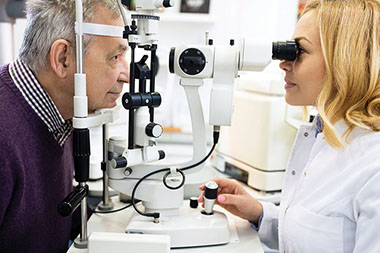
    Image of older women with thumbs up at an eye doctor appointment.

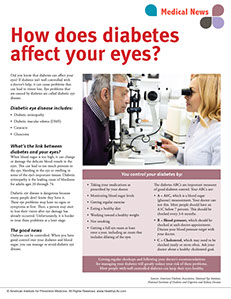
    More than 30 million Americans live with diabetes today. Living a healthy life with diabetes is possible, but it is a serious disease that requires proper medical care.

    Diabetic retinopathy is a possible complication of diabetes. It is caused by damage in the blood vessels of the eye’s retina. It is also a leading cause of vision loss and blindness.

    Diabetic retinopathy rates are rapidly increasing, according to the National Eye Institute. From 2000 to 2010, diabetic retinopathy cases increased 89 percent from 4.06 million to 7.69 million. And, that number is expected to nearly double by the year 2050.

    Keeping eyes healthy

    If you have diabetes, there are ways to lead a healthy life and avoid problems like diabetic retinopathy. The National Institute of Diabetes and Digestive and Kidney Disease recommends:

    *Keep blood glucose (blood sugar) levels under control.High blood glucose damages the blood vessels on the retina over time. The blood vessels may become blocked, cutting off blood supply to the retina. Work with your doctor to set a target blood glucose number. Get clear instruction from your medical team on how you can meet your goal. A healthy diet, regular exercise, and certain diabetes medicines may be needed.

    *Track your blood pressure.Many people associate blood pressure with heart disease, but it matters for diabetes too. Long-term high blood pressure also harms your retina’s blood vessels. Be sure to have your blood pressure checked regularly. Ask your doctor how often it should be checked. If you need blood pressure medicine, take it exactly as your doctor prescribes.

    Early signs of eye problems

    Diabetic retinopathy may not have any early signs or symptoms. That’s why it’s important to keep blood sugar and blood pressure under control, even if you feel fine.

    If you notice any of the following problems, see your doctor:

    *  Double vision

    *  Blurry vision

    *  Seeing rings, flashes or spots

    *  Eye pain or a feeling of pressure in the eye

    *  Trouble seeing out of the corner of your eye

    You can take steps to manage diabetes. Talk to your doctor, nutritionist, and medical team about keeping your eyes – and your entire body – as healthy  as possible.

    © American Institute for Preventive Medicine
  • Is It The Flu?

    MEDICAL NEWS

    Image with the words "Fight the Flu" written in a banner.

    Influenza, or the flu, circulates every winter and leaves thousands of people sick with a cough, aches, fever, and fatigue. The flu is much more serious than a cold: thousands of people die each year from flu-related complications. Unfortunately, many people don’t realize they have the flu until it’s too late. By then, they may have exposed people at work, school, or other public places. Here’s how to know if you have the flu, or just a cold:

    Chart showing symptoms of the cold vs the flu.

    When you come down with a cold, your symptoms usually appear very gradually over a few days. They often start with a sore throat followed by a runny nose. The flu often hits hard, very quickly. Symptoms appear suddenly and the exhaustion and aches can quickly become severe.

    If in doubt, try to stay home and stay away from others when you’re sick. In particular, try to avoid exposing young children and older adults, who may be more likely to suffer from flu-related problems. Wash your hands frequently and encourage others in your household to do the same.

    If you think you have the flu, call your doctor right away. You may be able to take an antiviral medication (brand name: Tamiflu), which can decrease your symptoms and the amount of time you are sick. Antiviral medications should be taken within 48 hours of the start of symptoms.

    Finally, talk to your doctor about getting a flu shot each year: it’s the number one way to help avoid getting – and spreading – the flu!

    Sources: Centers for Disease Control, U.S. Department of Veterans Affairs

    © American Institute for Preventive Medicine

  • Opioid Addiction And Overdose

    MEDICAL NEWS

    Image of medication pills.

    Opioid misuse is one of the biggest health problems facing the U.S. today. The National Institutes of Health says about 2 million people in the U.S. have an opioid misuse disorder.

    Opioids are powerful medicines used to treat pain. They may be prescribed to people after they have surgery or get injured. Some of the most common prescription opioids are oxycodone (OxyContin®), hydrocodone (Vicodin®), codeine and morphine.

    Opioid medicines affect the brain and can make the user feel relaxed and happy. When used for short periods and as directed, they are considered safe. But sometimes, people can become addicted to them. They may also build up a tolerance over time, which means they need higher and higher doses of the medicine to feel its effects.

    If a person builds a tolerance and/or becomes addicted, they can overdose on opioids. This can lead to brain damage, coma and death. About 30,000 people die each year from opioid overdose in the U.S.

    Treating opioid use disorder

    Help is available for people who are addicted to opioids. Two medicines, buprenorphine and methadone, work to lower cravings and withdrawal symptoms. Another medicine, naltrexone, blocks opioids from working and can reduce cravings for the medicine.

    Behavioral therapy for addiction to prescription opioids can help, too. It works by changing people’s thoughts and behaviors about opioid use. Behavioral therapy is a proven treatment, especially when used with medicines.

    Emergency overdose treatment

    When someone overdoses on opioids, their breathing may slow down or stop. Their pupils may be small like pinpoints. A medicine called naloxone (Narcan®) can reverse an opioid overdose and save their life.

    Naloxone is a prescription drug that stops opioid overdose if given in time. Paramedics, emergency room doctors and other first responders have naloxone available to treat people with opioid overdose. In some states, you may need a prescription. Other states will sell naloxone without a prescription. It is available in nasal spray and a shot (injection).

    If you or a loved one has an opioid misuse disorder, don’t wait. Talk to a doctor today to get help.

    Sources: National Institute on Drug Abuse, World Health Organization

    © American Institute for Preventive Medicine

  • So Do You Really Need That Vitamin?

    MEDICAL NEWS

    Concept image of young women with cooking pan and different vitamins words above.

    Before taking a daily vitamin or dietary supplement, you might want to think about what you’re really consuming, suggests a Kansas State University human nutritionist.

    “Supplements are not regulated by the Food and Drug Administration like other drugs are regulated, which is something I think a lot of people don’t realize,” said Brian Lindshield, assistant professor of human nutrition.

    Lindshield researches supplements to see if the ingredients listed on the label actually match what is found in the bottle. You don’t always get what you pay for and think you’re getting.

    If you want to get the most accurate product, look for the bottles with the more descriptive labels. Also, paying a little extra will usually get you the ingredients you are seeking.

    “You should probably avoid buying the cheapest supplement available because if the manufacturer is cutting corners to get the price really cheap, they probably are not using the same standards that the manufacturers of more expensive products are,” Lindshield said.

    Another tip: Don’t expect supplements to make up for a poor diet. “Vitamins and minerals will prevent deficiency, but it’s not going to make up for a lot of the chronic disease risks that come with an unhealthy diet,” Lindshield said.

    © American Institute for Preventive Medicine