Category: Uncategorized

  • Erectile Dysfunction Facts

    MEDICAL NEWS

    Older couple cuddling with a blanket.

    Erectile dysfunction (ED) occurs when a man cannot get an erection or cannot keep an erection long enough to have sex. It can happen at any age but it is more common in men over the age of 75.

    While it may seem like a symptom of aging, erectile dysfunction is not caused by the aging process. Instead, it may be a symptom of another health condition.

    Causes

    *  Diabetes

    *  High blood pressure

    *  Some prescription medications

    *  Alcohol and tobacco use

    *  Atherosclerosis (hardening of the arteries)

    *  Fatigue

    *  Stress, anxiety, or depression

    *  Stroke

    *  Low testosterone

    *  Chronic kidney disease

    *  Multiple sclerosis

    *  Injury to the penis, bladder, prostate, or pelvis

    *  Being overweight

    *  Emotional or psychological factors

    Treatment

    Your doctor is the best resource to diagnose and treat ED. Proper treatment of ED depends on the exact cause. If a health condition causes ED, treatment to bring that condition under control may improve ED.

    In the absence of a medical cause, it may be beneficial to explore psychological or emotional issues. Working with a licensed therapist can help.

    Other treatment options include:

    *  Medication such as Viagra or Cialis

    *  Testosterone replacement

    *  Devices that assist in getting and maintaining an erection

    *  Surgery

    Prevention

    Some causes of ED are preventable. Protecting your overall health may decrease your chance of developing ED later in life.

    Healthy habits may improve health issues such as being overweight, diabetes, high blood pressure, and atherosclerosis. Your doctor may recommend some of these healthy habits to address or prevent ED.

    *  Stop smoking

    *  Avoid excess alcohol intake

    *  Eat a healthy, balanced diet

    *  Maintain a healthy weight

    *  Be physically active

    © American Institute for Preventive Medicine

  • Polypharmacy: What To Know

    MEDICAL NEWS

    Wooden spoon filled with variety of pills.

    Medications improve the quality of life for many people. When you have a medical condition, the right medication can make all the difference.

    Polypharmacy refers to the use of multiple medications, generally in the range of 5-10 each day. It is common in older adults; however, anyone who struggles with more than one chronic condition may be at risk.

    While taking medication to protect your health is essential, you should be aware of the danger associated with polypharmacy and how to prevent it.

    The danger of polypharmacy

    Every drug is studied to make sure it is safe and effective to treat the condition it is used for. But, once you start mixing multiple medications together, the side effects may be less known and hard to predict.

    Anyone taking more than five medications is at risk for:

    *  Adverse drug reactions

    *  Balance issues

    *  Cognitive impairment

    *  Harmful drug interactions

    *  Drug-disease interactions

    Taking a lot of different medications also creates a burden on you, the patient, to manage and keep track of everything you are taking.

    Ways to decrease your risk

    *  Keep an updated list of all your medications. Take it with you to every doctor’s appointment. If you see multiple doctors, this is especially critical.

    *  Talk to the pharmacist every time you are prescribed a new medication. Make sure to show them your medication list so they can check for any drug interactions.

    *  If possible, fill all your prescriptions at one pharmacy.

    *  Don’t stop taking a medication on your own. Always talk to your doctor if you are concerned about the amount of medicine you are taking.

    Questions to ask your doctor

    Your doctor is your best resource to decrease your risk of polypharmacy. Always review your medications with them at each visit and ask detailed questions. Here are some questions to ask:

    *  Is there one medication that could help with multiple conditions?

    *  Do the benefits of the drug outweigh the risks?

    *  Should I keep taking a medicine that doesn’t seem to be working?

    *  Can the dosage be adjusted to decrease the risk of side effects?

    *  Could a new symptom be a side effect of my medication?

    © American Institute for Preventive Medicine
  • Understanding Psoriatic Arthritis

    MEDICAL NEWS

    Image of women's arm rash.

    Psoriatic arthritis (PA) is an inflammatory autoimmune condition in which the immune system mistakenly attacks the joints. Up to 1 in 3 people with the skin condition psoriasis will go on to develop PA.

    Most people who experience PA have had psoriasis for ten or more years. However, it is possible to develop PA without showing symptoms of psoriasis. PA is most likely to develop in middle age, though it can occur at any age. It can even occur in children.

    Signs & symptoms

    The most common symptom of PA is pain and swelling of the joints. The joints most likely to be affected include the fingers, ankles, wrists, and knees.

    Swelling of the fingers and toes is also common. This is called dactylitis, which causes discomfort and difficulty bending or using the fingers. In addition, the swelling can lead to stiffness and decreased range of motion, especially in the morning.

    Other symptoms of PA include fatigue, redness of the eyes, and pitting of the nails.

    Though PA is predominantly a joint condition, some organs of the body may be affected. For example, the digestive system, lungs, and heart can be damaged if the condition is left untreated.

    Diagnosis & treatment

    While there is no diagnostic test for PA, doctors make a diagnosis based on their observation, a health history, and by ruling out other possibilities. Tests that may be used include X-rays to assess the bones and joints and blood tests to look for markers of inflammation.

    Prompt treatment of PA is essential to prevent damage to the joints or organs. Unfortunately, there is no cure for PA, but many treatment options are available to manage pain and decrease inflammation.

    A primary care doctor, rheumatologist, and dermatologist may all be part of the care team for treating PA.

    Living with PA

    Thanks to the many effective treatments available, people with PA can reduce the side effects of the condition and lead active, healthy lives.

    In addition to medical resources, lifestyle habits such as exercise and eating an anti-inflammatory diet can help manage symptoms.

    If you have PA, always talk to your doctor to find out what activities or lifestyle choices are right for you.

    Sources: Arthritis Foundation, National Psoriasis Foundation

    © American Institute for Preventive Medicine

  • Get Ready To Garden

    WELL-BEING

    Gardening tools on dirt with flowers ready to plant.

    Spring marks the beginning of the growing season in many parts of the country. To ensure a successful garden, now is the time to prepare for the season ahead.

    The garden tasks you need to do in early spring will vary depending on your growing zone. Colder climates will just be getting started, while warmer parts of the country may already be enjoying garden bounty.

    For those of us just thawing out, here are the spring gardening tasks that will set you up for success:

    *  Weed and mulch. Early spring is a key time to get ahead of the weeds and put down a thick layer of protective mulch.

    *  Plant bare-root trees, shrubs, and roses. These should go in before temperatures get too warm.

    *  Fertilize spring bulbs.

    *  Trim back grasses and perennials to make way for new growth.

    *  Prepare vegetable beds for early spring seeds. Apply a layer of compost and turn the soil over.

    *  Plant cold-weather vegetable seeds such as lettuce, radish, and kale.

    © American Institute for Preventive Medicine

  • Sitting Doesn’t Mean Not Moving

    WELL-BEING

    Female sitting at table with laptop, stretching arms up.

    A certain amount of time sitting is unavoidable, especially if your job requires it. However, this doesn’t mean you have to be still. With a bit of creativity, you can add bursts of movement even when you’re sitting down.

    Try these four movements throughout the day to keep your body moving in your seat.

    Reach your arms overhead

    Add a side-to-side bend or a big arch to your back to stretch into areas of stiffness.

    Do a chair twist

    Reach one hand to the opposite armrest and pull yourself into a gentle twist. Turn your head to look over one shoulder and then the other.

    Stretch your outer hip

    Cross one ankle over the opposite thigh and bend forward slightly for added stretch. Be sure to do both sides.

    Leg lifts

    Sit at the edge of the seat and straighten one leg. Lift it as high as is comfortable without rounding the low back. Alternate back and forth slowly 5-10 times.

    © American Institute for Preventive Medicine

  • Addressstress In Your Life

    Stress Management

    Indoor hammack.

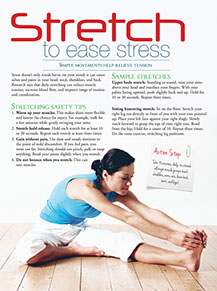
    *  Avoid things that cause stress, as much as you can.

    *  Do something that you enjoy and look forward to doing.

    *  Develop a positive attitude.

    *  Relax with deep breathing, soothing music, or quiet time. Take a warm shower or bath.

    *  Exercise every day. Walk or do another aerobic activity. Do stretching and strengthening exercises, too.

    *  Share your feelings and frustrations with a good listener.

    *  Solve problems that you can. Learn to accept or tolerate things that you cannot change or control.

    Manage Stress Exercise

    *  Sit in a comfortable chair.

    *  Close your eyes.

    *  Take a deep breath.

    *  Hold it in for four seconds then blow the breath out.

    *  Repeat several times.

    Page from HealthyLife Weigh book by the American Institute for Preventive Medicine. www.HealthyLife.com. All rights reserved.

    © American Institute for Preventive Medicine

  • Six Things You Should Never Do In Your Car

    Personal Safety

    Image of man driving.

    Driving takes total concentration. If you try to text message, talk on a cell phone, and do other things while driving, you risk having an accident.

    *  Adjust your child’s safety belt before, not after, you start driving.

    *  Don’t peer into the rearview mirror to comb your hair or touch up your makeup.

    *  Don’t drive with one hand holding the wheel and the other holding a hamburger. If you’re hungry, stop and eat.

    *  If a bee or flying insect distracts you or your passengers, pull off the road and get rid of it. Don’t swat at the bug while maneuvering through traffic.

    *  Don’t try to drive and read a road map at the same time. If you’re lost or need to get your bearings, pull off the road and look at a map, or have a passenger help you follow directions. Use a global positioning system (GPS), if you have one.

    *  If your children start to misbehave, don’t turn around to discipline them. Pull off the road and settle the problem, and teach your children how dangerous it is to misbehave in a car.

    Note: You should always wear a safety belt, use approved child safety seats, and heed the warning for air bags given by your car manufacturer. Doing so can make the difference between surviving a car crash intact or not surviving at all, between walking away with just a scratch or never walking again.

    A Year of Health Hints book by the American Institute for Preventive Medicine. www.HealthyLife.com. All rights reserved.

    © American Institute for Preventive Medicine