Blog

  • Lift Weights The Safe Way

    BE FIT

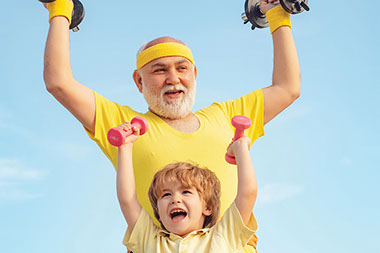
    Grandfather and grandson exercising by lifting weights.

    Lifting weights is great exercise. But if you don’t do it properly, you can get hurt. Here’s how you can get started, get stronger and avoid injuries.

    Learn good technique

    Have an instructor show you how to lift. You can use books, videos or virtual instruction if you can’t see a trainer in person.

    Keep your back straight when lifting, and wear shoes with good grip to avoid slipping. Stop the exercise if it hurts and wait a few days before trying it again.

    Set doable goals

    Don’t work the same muscles more than three times per week. Let muscles rest for 24 hours before working them again. Don’t try to do too much, too quickly. You’ll likely feel soreness for a day or two after lifting, and that’s normal.

    Warm up and cool down

    Warm up your muscles with active stretching, light jogging/walking or leg squats before you lift. When you’re done lifting, cool down and  stretch again.

    Stretching should not hurt. Hold the stretch steady – don’t bounce.

    When to see your doctor

    If you have ongoing pain or you think you hurt yourself while lifting, talk to your doctor.

    Source: American Academy of Family Physicians
    © American Institute for Preventive Medicine

  • The Latest On Mammograms

    MEDICAL NEWS

    Female doctor smiling.

    Our understanding of cancer has expanded rapidly in recent decades. As a result, cancer treatment continues to improve. However, prevention and early detection are important steps to fight cancer.

    Identifying breast cancer before it has the chance to spread is one of the best ways to improve breast cancer survival. In general, the earlier cancer is diagnosed, the better the prognosis. Mammograms are a critical tool for early detection.

    How a mammogram works

    A mammogram is an x-ray specially designed to look at breast tissue. The amount of radiation exposure from a mammogram is low, and the benefits usually outweigh any risk.

    While the images from a mammogram cannot tell you if you have cancer, they can show if there is abnormal tissue in the breast. The presence of abnormal tissue could indicate the need for further testing.

    When used as a routine screening tool, a mammogram may detect breast cancer before it presents any symptoms and while it is too small to feel.

    When to get a mammogram

    A woman’s risk of breast cancer increases over their lifespan. Past a certain age, a mammogram should be a regular part of routine healthcare.

    If and when you should get a mammogram is a decision to be made in consultation with your doctor. The general guidelines for women are:

    *  Women who are 50-74 years of age and at average risk of breast cancer should have a mammogram every two years.

    *  Women between the ages of 40-49 may benefit from early screening if recommended by their doctor.

    *  Women at high risk of breast cancer should talk to their doctor about how often to get a mammogram.

    Recent Advances in Mammography

    The FDA recently approved a computer-assisted and detection (CAD) program to aid doctors in identifying and diagnosing breast cancer using data from mammographies. The advances in CAD have the potential to improve the early detection of breast cancer. This could mean a big step forward in the fight against breast cancer.

    © American Institute for Preventive Medicine
  • Know Your Rights With Rebates

    FINANCIAL HEALTH

    Person holding a bag of gifts.

    The holiday shopping season is here, and with it comes big sales and big purchases. Some stores and companies advertise big rebate offers to get you to buy. These offers may promise you a certain amount of money back, either immediately or after you send in a form.

    Usually, you buy the item, fill out and send in some paperwork, and wait for the rebate money to come in the mail. You probably need the sales receipt, a form and the packaging from the item. Sometimes you get a rebate within a month, but many rebates take longer – up to 12 weeks.

    The Federal Trade Commission says people should beware of rebates that take too long to show up – or never come at all. Companies are required by law to send the rebate within the promised timeframe. If there’s no timeframe listed, the timeframe is usually 30 days.

    Follow these tips if you buy a product with a rebate:

    *  Make sure you follow all the steps on the rebate form. Enclose all of the required paperwork.

    *  Make a copy of all your paperwork. You’ll want these records if your rebate doesn’t show up or if there’s a problem.

    *  Keep track of the date you sent the rebate. Contact the company if your rebate doesn’t show up when they promised it.

    If your rebate is late or never shows up, you can file a complaint. Contact the Federal Trade Commission, your state Attorney General or your local Better Business Bureau.

    © American Institute for Preventive Medicine

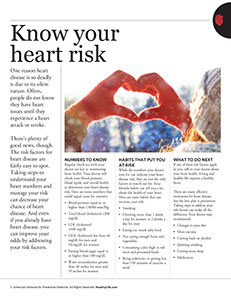
  • Know Your Heart Risk

    MEDICAL NEWS

    Winter image of hands wearing red gloves making a heart shape.

    One reason heart disease is so deadly is due to its silent nature. Often, people do not know they have heart issues until they experience a heart attack or stroke.

    There’s plenty of good news, though. The risk factors for heart disease are fairly easy to spot. Taking steps to understand your heart numbers and manage your risk can decrease your chance of heart disease. And even if you already have heart disease, you can improve your odds by addressing your risk factors.

    Numbers to know

    Regular check-ins with your doctor are key to monitoring heart health. Your doctor will check your blood pressure, blood lipids, and overall health to determine your heart disease risk. Here are some numbers that could signal cause for concern:

    *  Blood pressure equal to or higher than 130/80 mm/Hg

    *  Total blood cholesterol ≥200 mg/dL

    *  LDL cholesterol  ≥100 mg/dL

    *  HDL cholesterol less than 40 mg/dL for men and 50 mg/dL for women

    *  Fasting blood sugar equal to or higher than 100 mg/dL

    *  Waist circumference greater than 40 inches for men and 35 inches for women

    Habits that put you at risk

    While the numbers your doctor tests for can indicate your heart disease risk, they are not the only factors to watch out for. Your lifestyle habits can tell you a lot about the health of your heart. Here are some habits that can increase your risk:

    *  Smoking

    *  Drinking more than 1 drink a day for women or 2 drinks a day for men

    *  Eating too much salty food

    *  Not eating enough fruits and vegetables

    *  Consuming a diet high in red meat and processed foods

    *  Being sedentary, or getting less than 150 minutes of exercise a week

    What to do next

    If any of these risk factors apply to you, talk to your doctor about your heart health. A long and healthy life requires a healthy heart.

    There are many effective treatments for heart disease, but the best plan is prevention. Taking steps to address your risk factors can make all the difference. Your doctor may recommend:

    *  Changes to your diet

    *  More exercise

    *  Cutting back on alcohol

    *  Quitting smoking

    *  Getting more sleep

    *  Medication

    © American Institute for Preventive Medicine
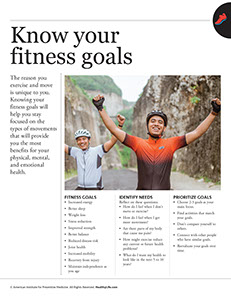
  • Know Your Fitness Goals

    BE FIT

    Two men with hands in the air sitting on bikes.

    The reason you exercise and move is unique to you. Knowing your fitness goals will help you stay focused on the types of movements that will provide you the most benefits for your physical, mental, and emotional health.

    Fitness goals

    *  Increased energy

    *  Better sleep

    *  Weight loss

    *  Stress reduction

    *  Improved strength

    *  Better balance

    *  Reduced disease risk

    *  Joint health

    *  Increased mobility

    *  Recovery from injury

    *  Maintain independence as you age

    Identify needs

    Reflect on these questions:

    *  How do I feel when I don’t move or exercise?

    *  How do I feel when I get more movement?

    *  Are there parts of my body that cause me pain?

    *  How might exercise reduce any current or future health problems?

    *  What do I want my health to look like in the next 5 to 10 years?

    Prioritize goals

    *  Choose 2-3 goals as your main focus.

    *  Find activities that match your goals.

    *  Don’t compare yourself to others.

    *  Connect with other people who have similar goals.

    *  Reevaluate your goals over time.

    © American Institute for Preventive Medicine

  • Know The Different Heart Disease Types

    MEDICAL NEWS

    Heart on a blue background.

    You’ve probably heard the terms cardiovascular disease, heart disease and coronary heart disease. But did you know each of these terms means something different?

    Let’s learn some of these “heart” terms and what they mean for your health. If you have a type of cardiovascular disease, work with your doctor to come up with a heart health plan. Your plan might include a healthy diet, exercise and medications.

    What is cardiovascular disease?

    Cardiovascular disease is any type of disease that affects the heart or blood vessels. “Cardio” refers to the heart, and “vascular” refers to the blood vessels.

    Types of cardiovascular disease include:

    *  Coronary heart disease

    *  High blood pressure

    *  Stroke

    *  Heart failure

    *  Peripheral artery disease

    What is heart disease?

    Heart disease is any type of condition that affects the heart’s function or structure. The most common type of heart disease is coronary heart disease. Heart disease also includes:

    *  Heart rhythm disorders known as arrhythmias

    *  Cardiomyopathy

    *  Congenital (present at birth) heart defects

    *  Coronary artery disease (CAD)

    *  Heart failure

    Heart disease is a type of cardiovascular disease.

    What is coronary heart disease?

    Coronary heart disease is also called coronary artery disease (CAD). Coronary heart disease happens when a fatty substance called plaque builds up in the arteries. Sometimes people call this clogged arteries or atherosclerosis.

    The plaque reduces the amount of blood getting to the heart. This can cause angina, or chest pain. It can also cause blood clots and can lead to a heart attack.

    Sources: American Heart Association and National Heart, Lung, and Blood Institute

    © American Institute for Preventive Medicine
  • Knees Hurt During Exercise?

    BE FIT

    Man running.

    Knee pain can happen for many different reasons. But if you notice pain in the front of the knee during sports, jumping or running, you could have patellofemoral pain syndrome, also known as runner’s knee.

    What does runner’s knee feel like?

    Runner’s knee usually has one or more of these symptoms:

    *  The kneecap hurts when you touch it.

    *  It feels like the kneecap is grinding or clicking when you move it.

    *  The kneecap or front of the knee hurts after you’ve been active.

    What causes it?

    Runner’s knee is common in athletes, especially young adults and females. It may be caused by:

    *  Tight muscles in the legs, especially the hamstrings and Achilles tendons

    *  A kneecap that is slightly out of place

    *  Thigh muscles that are too weak

    *  Wearing shoes with poor support during exercise

    *  Exercising too hard or too long

    What to know about runner’s knee

    Runner’s knee often feels better with home care. Try these tips:

    *  Use ice packs on the knee for up to 20 minutes, several times a day.

    *  Replace the activity that hurts the knee with lower impact activities.

    *  Lightly wrap the knee in an elastic bandage.

    *  Rest the knee when you can, lifting it up higher than the heart.

    *  Take ibuprofen or naproxen for more bothersome pain, but ask a doctor before taking it more than seven days.

    Prevention matters

    You can help prevent runner’s knee if you:

    *  Stretch all your muscles, especially the legs, before and after exercise.

    *  Do a warm-up before you start vigorous workouts.

    *  Increase your exercise slowly.

    *  Maintain a healthy weight to reduce knee stress.

    See a doctor if knee pain doesn’t get better with a few days of rest and home care. Your doctor can recommend physical therapy, shoe inserts or other treatments to help. Always ask your doctor before starting a new exercise program.

    Source: American Academy of Orthopedic Surgeons

    © American Institute for Preventive Medicine

  • Kids, Puberty & Sports

    BE FIT

    Adult and teen playing basketball.

    Sports can be a great way for kids to develop social skills, teamwork and resilience. But it’s important to know that athletic ability changes as kids grow.

    Growth affects performance

    During puberty, boys and girls have a growth spurt that can change their athletic ability. After going through puberty:

    *  Boys may notice more muscle strength and overall bigger body size.

    *  Girls often lose some muscle mass. They may temporarily lose some of their speed or agility.

    *  Kids could feel “clumsy” as they adjust to being taller. The brain hasn’t yet adjusted to this new height and may affect balance skills or body control.

    *  It may be harder to throw or hit a ball with longer arms.

    *  Girls may have headaches, mood swings or cramps during menstruation.

    Puberty & knee injuries

    As kids get taller and heavier, they have a higher risk of anterior cruciate ligament (ACL) injury. The ACL is an important ligament that supports the knee.

    ACL injuries can be serious. They may require surgery and can increase the risk of knee arthritis later in life.

    Most ACL injuries happen when a person suddenly stops, changes direction, jumps or lands on the ground. They don’t usually happen from a blow to the knee. Sometimes an ACL injury causes a “popping” sound as it occurs.

    ACL injuries may cause swelling, severe pain, and inability to put weight on the knee. If your child injures their knee, see a doctor right away.

    Positive support is key

    Coaches who know about the effects of puberty can help kids. In addition, parents can help their kids by being positive and supportive. Yelling at kids or being put down may cause them to quit their sport. Remember that changes caused by puberty are only temporary.

    Source: American Academy of Pediatrics

    © American Institute for Preventive Medicine