Blog

  • Kid-Friendly, Healthy Snacks

    HEALTHY EATING

    Kids hands cutting out star shaped watermelon.

    A simple way to encourage your kids to eat healthy is to have healthy foods on hand and easily available to them.

    *  Put fruits and vegetables within reach on the counter or in the refrigerator.

    *  Save cookies and sweets as occasional treats, not everyday snacks.

    *  Avoid buying chips, crackers and other high-calorie, high-sugar packed foods. Or buy less of them and keep them in a less convenient location. Out of sight, out of mind.

    *  Purchase easy but healthy “packaged” snacks like no sugar added fruit cups, raisin packs, cheese sticks, Greek yogurt and popcorn (choose “light” popcorn without too much added butter or salt).

    Popcorn treats

    Ingredients

    2 tablespoons soft margarine or butter (melted)

    5 cups popped popcorn

    3/4 cup raisins

    1 cup shredded wheat cereal (bite-size)

    1 tablespoon sugar  (brown or white)

    1 1/4 teaspoons cinnamon

    Directions

    1.  Pop popcorn. You can use microwave or stovetop, but choose one without added butter, sugar or salt.

    2.  Mix popped corn, raisins, and cereal in a large bowl.

    3.  Mix sugar and cinnamon in small dish.

    4.  Drizzle melted margarine or butter over mixture.

    5.  Add sugar and cinnamon mixture.

    6.  Shake or stir until all ingredients are evenly distributed.

    Nutrition per serving: Servings 4. Calories 265; Total Fat 10 g; Saturated Fat 2 g; Sodium 118 mg; Total Carbohydrate 46 g; Dietary Fiber 5 g; Protein 4 g

    Source: USDA ChooseMyPlate

    © American Institute for Preventive Medicine

  • Keeping Your Brain Healthy

    WELL-BEING

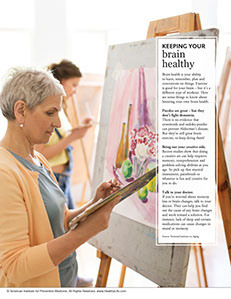
    Elderly female painting.

    Brain health is your ability to learn, remember, plan and concentrate on things. Exercise is good for your brain – but it’s a different type of workout. Here are some things to know about boosting your own brain health.

    Puzzles are great – but they don’t fight dementia.

    There is no evidence that crosswords and sudoku puzzles can prevent Alzheimer’s disease. But they’re still great brain exercise, so keep doing them!

    Bring out your creative side.

    Recent studies show that doing a creative art can help improve memory, comprehension and problem-solving abilities as you age. So pick up that musical instrument, paintbrush or whatever is fun and creative for you to do.

    Talk to your doctor.

    If you’re worried about memory loss or brain changes, talk to your doctor. They can help you find out the cause of any brain changes and work toward a solution. For instance, lack of sleep and certain medications can cause changes in mood or memory.

    Source: National Institute on Aging

    © American Institute for Preventive Medicine
  • Keeping Cool When Work Heats Up

    WORK LIFE

    Image of a great of employees.

    Have you ever been in a tense situation at work? Perhaps two people were arguing or someone got angry with you.

    Though it’s hard to stay calm in these types of situations, it’s the best thing you can do. If you don’t react strongly, you can help defuse tension and find a helpful resolution.

    Focus on a solution

    It’s easy to get wrapped up in the problem, not the solution. Ask yourself, “what are we trying to accomplish?” Many workplace arguments start because two people have different ideas about what should be done. But, both people ultimately want to fix the same problem.

    Sometimes, an argument can be stopped if both parties remember what they both want: a good outcome. Talk about what you agree upon, and try to build from there.

    Take pause

    When something stressful is happening, your body immediately wants to respond. You may feel tense and anxious. You may also want to run from the situation or defend yourself. This is a normal “fight-or-flight” response that wants to protect you. But, this isn’t always the best way to react. Here’s how you can stay in control:

    *  Watch your breathing. Take deep, slow breaths to help calm your body’s natural response to stress. This can help you think more clearly and lower your anxious feelings.

    *  Think before you speak. It’s okay to pause before answering a question. Also, you can say, “Let me think about that for a moment.” This gives you time to come up with a professional response, rather than an angry one.

    *  Wait to hit “send.” Read emails out loud to yourself before you send them. Save the draft and wait before you send it if you’re angry. This can help avoid something you will later regret.

    © American Institute for Preventive Medicine

  • Keeping An Eye Out For Retinal Detachment

    SELF-CARE CORNER

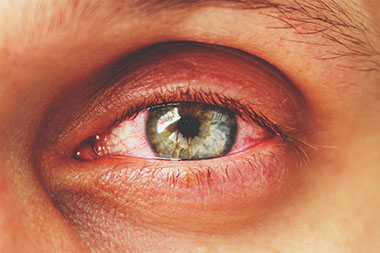
    Close up of eye.

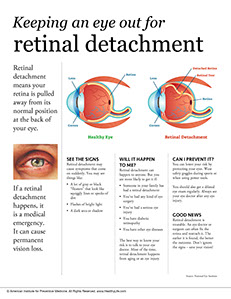
    Retinal detachment means your retina is pulled away from its normal position at the back of your eye. If a retinal detachment happens, it is a medical emergency. It can cause permanent vision loss.

    See the signs

    Retinal detachment may cause symptoms that come on suddenly. You may see things like:

    *  A lot of gray or black “floaters” that look like squiggly lines or specks of dirt

    *  Flashes of bright light

    *  A dark area or shadow

    Will it happen to me?

    Retinal detachment can happen to anyone. But you are more likely to get it if:

    *  Someone in your family has had a retinal detachment

    *  You’ve had any kind of eye surgery

    *  You’ve had a serious eye injury

    *  You have diabetic retinopathy

    *  You have other eye diseases

    The best way to know your risk is to talk to your eye doctor. Most of the time, retinal detachment happens from aging or an eye injury.

    Can I prevent it?

    You can lower your risk by protecting your eyes. Wear safety goggles during sports or when using power tools.

    You should also get a dilated eye exam regularly. Always see your eye doctor after any eye injury.

    Good news

    Retinal detachment is treatable. An eye doctor or surgeon can often fix the retina and reattach it. The earlier it is found, the better the outcome. Don’t ignore the signs – save your vision!

    Source: National Eye Institute

    © American Institute for Preventive Medicine

  • Keeping An Eye Out For Cataracts

    SELF-CARE CORNER

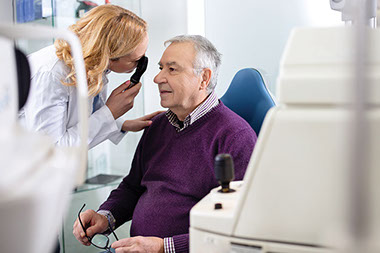
    Eye doctor examining patients eye.

    Most people will have cataracts by the age of 80. But they don’t have to mean loss of vision. They are treatable.

    What is a cataract?

    A normal lens inside the eye is clear. Cataracts happen when the proteins in the eye’s lens start to break down. Then they clump together. This causes cloudiness and problems with your vision.

    Cataracts may occur with normal aging. But they can also happen after an eye injury or if you had eye surgery.

    Signs of cataracts

    People often notice changes in vision when cataracts start to form. These changes include:

    *  Blurry or distorted vision

    *  Being sensitive to light

    *  Seeing a “halo” around lights

    *  Seeing double

    *  Trouble seeing at night or in dimly lit rooms

    *  Seeing colors as dull or yellow-tinted

    Prevention

    The best way to help prevent cataracts is with eye sun protection. Wear sunglasses that block out 100 percent of UV rays when you’re outside during the day. Not all sunglasses offer 100 percent UV protection. Check the packaging to be sure. Wear a wide-brimmed hat to keep sun off your face.

    Smoking increases the risk for cataracts, so quit smoking. Get help quitting if you need it.

    Finally, get a dilated eye exam regularly. Ask your eye care specialist or doctor how often you need one.

    Seeing a doctor

    If you think you might have cataracts, talk to a doctor. You may need an eye exam from an optometrist or ophthalmologist. During the exam, your eye care specialist can perform tests to look for cataracts.

    Treatment options

    If your doctor finds cataracts, don’t panic. There are ways to treat them.

    First, your doctor may recommend new glasses or contacts for mild symptoms. You may also find that using brighter lights or a magnifying lens is helpful for reading or working.

    If your cataracts are interfering with life, you may need surgery. Cataracts surgery involves putting a new artificial lens in the eye. It is a safe surgical procedure and works well for most people.

    Sources: American Academy of Ophthalmology, National Eye Institute

    © American Institute for Preventive Medicine
  • Is Your Relationship Healthy?

    FAMILY LIFE

    Happy older couple.

    Sometimes it’s hard to know if you’re in a healthy relationship. This can include a romantic partner, friend or family member.

    Know the good

    Some signs of a healthy relationship include:

    *  You feel good about yourself when you’re around that person.

    *  You feel safe telling them how you feel about things.

    *  They listen to you, and you listen to them.

    *  You feel valued by them.

    *  You trust them, and don’t think they would do something to betray you.

    *  You can disagree or argue, but you don’t insult each other. Neither person uses personal attacks.

    Unsafe signs

    Ask yourself whether you see any of these signs of an unhealthy or abusive relationship:

    *  They say hurtful things to you. They make you feel bad about yourself.

    *  They stop showing love or care when they are mad.

    *  They blame you for feeling bad about something they did or said. They may say you’re “too sensitive,” or, “you made me do it.”

    *  They hurt you physically, such as pushing or hitting.

    *  They keep you from seeing family or friends.

    *  They threaten you or try to control you. They want you to fear them.

    If you’re not sure if you’re in an abusive relationship at home, reach out for help.

    Call the National Domestic Violence Hotline at 1-800-799-7233 or go tothehotline.org.

    © American Institute for Preventive Medicine
  • Is Sea Salt Better Than Regular Salt?

    HEALTHY EATING

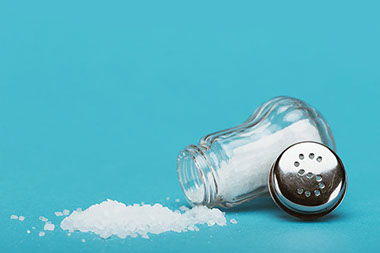
    A salt bottle opened with spilled salt.

    Many food products contain “sea salt” as an ingredient instead of table salt, also commonly called “salt.” In particular, many so-called natural food products say they use sea salt. But is sea salt any healthier than old-fashioned table salt?

    What’s the difference?

    In general, sea salt has a coarse, crunchy texture. Table salt has a more fine grind and may have a weaker taste. In foods like potato chips or sea salt caramels, some people prefer the flavor and texture of sea salt.

    Sea salt is made from evaporated sea water. It’s usually not processed, so it may be considered a more “natural” choice. It may contain trace levels of minerals like magnesium, potassium and calcium. But, these minerals are found in small amounts. So, eating sea salt is not a reliable way to get more minerals in your diet.

    Table salt comes from mined salt deposits. It is processed into a fine texture. During this process, it usually loses its other minerals. However, most table salt brands contain added iodine, which is a necessary nutrient that many people don’t get enough of. Table salt may also contain some additives to prevent clumping.

    Same in sodium

    Although sea salt shows up in many “natural” food products, it’s not usually healthier. Sea salt and table salt have about 40 percent sodium by weight.

    Some types of sea salt say that they contain less sodium than table salt. To check this, read the Nutrition Facts panel on the package. Table salt contains about 575 mg of sodium in ¼ teaspoon.

    Going coarser

    Some very coarse salts like kosher salt may have slightly less sodium, teaspoon for teaspoon. This is because the larger crystal size makes it less compact, so you can’t get as much salt into your measuring spoon.

    In these cases, using a coarse type of salt in cooking may help you reduce sodium content, but probably not by very much. Some people prefer the taste and texture of a very coarse salt. But don’t use it thinking that you’ll really reduce your sodium intake.

    Choose the type of salt you prefer, and use it sparingly. One type isn’t healthier than another. Talk to your doctor about how much sodium you should eat each day.

    Source: American Heart Association

    © American Institute for Preventive Medicine
  • Is Lasik Right For You?

    SELF-CARE CORNER

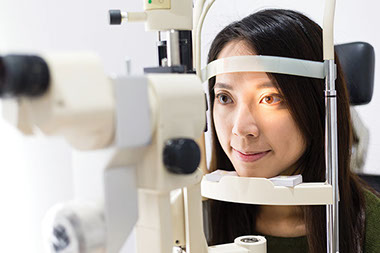
    Female getting her eyes examied.

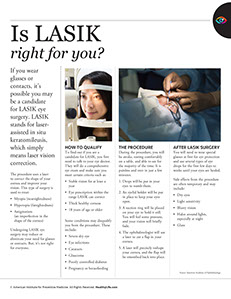
    If you wear glasses or contacts, it’s possible you may be a candidate for LASIK eye surgery. LASIK stands for laser-assisted in situ keratomileusis, which simply means laser vision correction.

    The procedure uses a laser to correct the shape of your cornea and improve your vision. This type of surgery is used to treat:

    *  Myopia (nearsightedness)

    *  Hyperopia (farsightedness)

    *  Astigmatism (an imperfection in the shape of the cornea)

    Undergoing LASIK eye surgery may reduce or eliminate your need for glasses or contacts. But, it’s not right for everyone.

    How to qualify

    To find out if you are a candidate for LASIK, you first need to talk to your eye doctor. They will do a comprehensive eye exam and make sure you meet certain criteria such as:

    *  Stable vision for at least a year

    *  Eye prescription within the range LASIK can correct

    *  Thick healthy corneas

    *  18 years of age or older

    Some conditions may disqualify you from the procedure. These include:

    *  Severe dry eye

    *  Eye infections

    *  Cataracts

    *  Glaucoma

    *  Poorly controlled diabetes

    *  Pregnancy or breastfeeding

    The procedure

    During the procedure, you will be awake, resting comfortably on a table, and able to see for the majority of the time. It is painless and over in just a few minutes.

    1.  Drops will be put in your eyes to numb them.

    2.  An eyelid holder will be put in place to keep your eyes open.

    3.  A suction ring will be placed on your eye to hold it still. You will feel some pressure, and your vision will briefly fade.

    4.  The ophthalmologist will use a laser to cut a flap in your cornea.

    5.  A laser will precisely reshape your cornea, and the flap will be smoothed back into place.

    After LASIK surgery

    You will need to wear special glasses at first for eye protection and use several types of eye drops for the first few days to weeks until your eyes are healed.

    Side effects from the procedure are often temporary and may include:

    *  Dry eyes

    *  Light sensitivity

    *  Blurry vision

    *  Halos around lights, especially at night

    *  Glare

    Source: American Academy of Ophthalmology

    © American Institute for Preventive Medicine

  • Is It Overactive Bladder Or Just ‘Normal’?

    MEDICAL NEWS

    Close up of hands holding toilet paper.

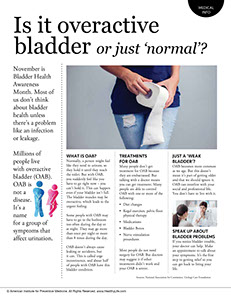
    Most of us don’t think about bladder health unless there’s a problem like an infection or leakage. Millions of people live with overactive bladder (OAB). OAB is not a disease. It’s a name for a group of symptoms that affect urination.

    What is OAB?

    Normally, a person might feel like they need to urinate, so they hold it until they reach the toilet. But with OAB, you suddenly feel like you have to go right now – you can’t hold it. This can happen even if your bladder isn’t full. The bladder muscles may be overactive, which leads to the urgent feeling.

    Some people with OAB may have to go to the bathroom too often during the day or at night. They may go more than once per night or more than 8 times during the day.

    OAB doesn’t always cause leaking or accidents, but it can. This is called urge incontinence, and about half of people with OAB have this bladder condition.

    Treatments for OAB

    Many people don’t get treatment for OAB because they are embarrassed. But talking with a doctor means you can get treatment. Many people are able to control OAB with one or more of the following:

    *  Diet changes

    *  Kegel exercises, pelvic floor physical therapy

    *  Medications

    *  Bladder Botox

    *  Nerve stimulation procedures

    Most people do not need surgery for OAB. But doctors may suggest it if other treatments didn’t work and your OAB is severe.

    Just a ‘weak bladder’?

    OAB becomes more common as we age. But this doesn’t mean it’s part of getting older and that we should ignore it. OAB can interfere with your social and professional life. You don’t have to live with it.

    Speak up about bladder problems

    If you notice bladder trouble, your doctor can help. Make an appointment to talk about your symptoms. It’s the first step to getting relief so you can get back to living your life.

    Sources: National Association for Continence, Urology Care Foundation

    © American Institute for Preventive Medicine