Blog

  • Getting Fit In Less Time

    BE FIT

    Women on treadmill looking at watch.

    Have you heard of interval training for exercise? You may have assumed this type of exercise is only for athletes. However, people of almost all fitness levels can use it.

    Interval training means you add short bursts of more intense activities into your regular exercise routine. How fast and how long you do your intervals is completely up to you. This can be as simple as 10 seconds of running and then 4 minutes of walking. If that’s not possible, alternate brisk walking with slower walking.

    Intervals don’t have to be more than a few seconds. One of the biggest advantages is that you don’t need any special equipment to get started!

    Why should I do it?

    The American College of Sports Medicine (ACSM) says interval training has several benefits, including:

    *  Burn more calories: Even if you can only do short intervals, you’re still burning more calories than if you hadn’t done the intervals at all.

    *  Most of your time: Many people can’t find time for longer workouts. Instead, use the time you have to work harder with intervals.

    *  Boost mood: Exercise releases endorphins. These are feel-good chemicals in the brain. More vigorous exercise may release more endorphins than only doing light exercise.

    *  Fight boredom: Doing the same exercises all the time can lead to boredom. But, mixing it up with intervals can help keep you interested.

    *  More aerobic fitness: Higher intensity will improve your cardio fitness. With time and practice, you’ll be able to exercise harder and longer.

    For beginners

    *  Choose a distance if you don’t want to count or use a stopwatch. For instance, jog or walk briskly to the next tree or driveway.

    *  If using equipment like an elliptical machine or bike, alternate faster bouts of that exercise with your usual pace.

    Interval training can be done at your fitness level. But, don’t be too aggressive at first because you could get an injury. While you want to get your heart pumping, you don’t want to make it so hard that you can’t stick with it.

    Studies suggest that interval training can be safe and helpful to most people. Ask your doctor before starting a new exercise plan to be sure it’s right for you.

    Source: American College of Sports Medicine

    © American Institute for Preventive Medicine

  • Get Up To Date On Vaccines

    MEDICAL NEWS

    Smiling man showing bandaid on upper arm where he got a vaccine shot.

    Vaccinations aren’t just for kids. Adults need them too.

    How they work

    Vaccines stimulate your immune system to create antibodies against common diseases. Antibodies are specialized proteins that recognize and neutralize viruses or bacteria. If you are exposed to the disease, your body will be ready to fight it.

    Why they matter

    Some people are more vulnerable to diseases such as COVID-19 or the flu, even if they are vaccinated. When you get vaccinated, you protect your loved ones and vulnerable people in your community.

    Vaccines you need

    Your doctor is the best resource for information on the vaccines you need. Here are a few your doctor may recommend:

    *  Seasonal flu

    *  Tdap or Td (Tetanus, diphtheria, and pertussis)

    *  COVID-19

    *  Shingles

    *  HPV (Human papillomavirus)

    © American Institute for Preventive Medicine

  • Get Up & Move After Work

    WORK LIFE

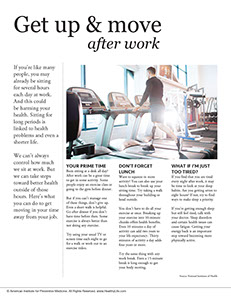
    Man with amputee leg using the treadmill.

    If you’re like many people, you may already be sitting for several hours each day at work. And this could be harming your health. Sitting for long periods is linked to health problems and even a shorter life.

    We can’t always control how much we sit at work. But we can take steps toward better health outside of those hours. Here’s what you can do to get moving in your time away from your job.

    Your prime time

    Been sitting at a desk all day? After work can be a great time to get in some activity. Some people enjoy an exercise class or going to the gym before dinner.

    But if you can’t manage one of these things, don’t give up. Even a short walk is helpful. Go after dinner if you don’t have time before then. Some exercise is always better than not doing any exercise.

    Try using your usual TV or screen time each night to go for a walk or work out to an exercise video.

    Don’t forget lunch

    Want to squeeze in more activity? You can also use your lunch break to break up your sitting time. Try taking a walk throughout your building or head outside.

    You don’t have to do all your exercise at once. Breaking up your exercise into 10-minute chunks offers health benefits. Even 10 minutes a day of activity can add two years to your life expectancy. Thirty minutes of activity a day adds four years or more.

    Try the same thing with any work break. Even a 15-minute break is long enough to get your body moving.

    What if I’m just too tired?

    If you find that you are tired every night after work, it may be time to look at your sleep habits. Are you getting seven to eight hours? If not, try to find ways to make sleep a priority.

    If you’re getting enough sleep but still feel tired, talk with your doctor. Sleep disorders and certain health issues can cause fatigue. Getting your energy back is an important step toward becoming more physically active.

    Source: National Institutes of Health

    © American Institute for Preventive Medicine

  • Get To Know An Aed

    MEDICAL NEWS

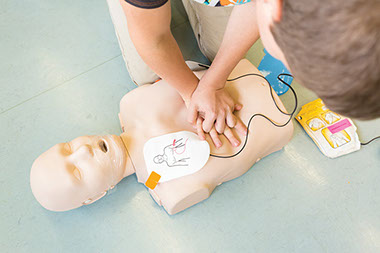
    Person training to use an AED.

    Automated external defibrillators help a person who is in cardiac arrest. They can deliver an electric shock to help get the heart beating normally again.

    You may have seen AEDs at places like stores, malls, hotels or gyms. Many public places have them and they are usually mounted on a wall.

    What is cardiac arrest?

    Cardiac arrest and a heart attack are not the same thing.

    In a heart attack, a blockage stops blood flow to the heart. But with cardiac arrest, the heart’s electrical rhythm isn’t working properly. The heart stops pumping, or is “arrested.” A heart attack can cause cardiac arrest.

    Why should I learn to use an AED?

    Sudden cardiac arrest is a major cause of death. An AED is the only way to restore a person’s heart rhythm during cardiac arrest. Knowing how to do cardiopulmonary resuscitation (CPR) is also helpful.

    You still need to call 911 if someone is in cardiac arrest. But it takes a few minutes for an ambulance to arrive. In those minutes, an AED could be life-saving.

    When to use one

    If a person has cardiac arrest, they will be completely unresponsive. If the person cannot talk or wake up, check to see if they are breathing. If they aren’t breathing and don’t have a pulse, start CPR and ask someone else to get the AED, if possible.

    What to do

    Even if you’re not trained, you can use an AED on someone in cardiac arrest. The machine helps guide you along. Here’s what to do:

    *  Call 911 or have someone else call.

    *  If possible, have someone do chest compressions or CPR while someone else gets the AED ready.

    *  Turn on the AED.

    *  Remove clothes from the person’s chest. Dry their skin with a cloth if needed.

    *  Put the pads on the chest as pictured on the pads.

    *  Do not place AED pads on top of a pace maker.

    *  First, the AED will measure the person’s heart rhythm. Don’t touch the person while this happens.

    *  If the person needs a shock, the AED will tell you.

    *  The AED will tell you when it gives a shock and what to do next. Stand back while it gives a shock through the pads.

    Together, CPR and an AED can save lives.

    Sources: American Heart Association, American Red Cross

    © American Institute for Preventive Medicine
  • Get The Facts About Stuttering

    MEDICAL NEWS

    Adult helping child with speech.

    Speech is an important part of communicating. Yet millions of people cope with a speech disability every day.

    What is stuttering?

    Stuttering is a problem that affects how your speech flows. People who stutter may:

    *  Stretch words out for too long when speaking

    *  Have pauses where they can’t get a word out

    *  Repeat whole words or parts of words

    *  Have uncontrolled movements when speaking, such as trembling in the jaw or excessive blinking

    Scientists don’t fully understand why stuttering happens. But we do have plenty of facts about this speech disorder. Learn more about what it is and how you can help someone who has it.

    FACT #1: Stuttering isn’t related to intelligence.

    Stuttering isn’t a problem with being confused or less intelligent. In fact, many intelligent and successful people have dealt with this speech disorder.

    FACT #2: Finishing a word or sentence for someone is not helpful.

    People who don’t understand stuttering may get frustrated or impatient when someone stutters. They may just want to say the word for them so they can keep talking. This is not helpful and could make stuttering worse.

    FACT #3: Stuttering is not caused by stress or being tense.

    Experts believe that people who stutter may have some brain differences. These  differences affect how a person’s brain works when they speak. But it’s not caused by anxiety, stress or a mental health condition. However, being stressed could make stuttering worse for a person who already has the disorder.

    FACT #4: Stuttering is more common in children.

    Many children stutter while they are learning how to speak and understand others. Most of the time, children stop stuttering before they become adults. They may need help from their doctor and a speech-language pathologist. If you’re concerned about your child’s stuttering, talk to their pediatrician.

    If you have concerns about stuttering, finding words or other speech issues, talk to your doctor about seeing a licensed speech-language pathologist.

    Sources: American Speech-Language-Hearing Association, National Institutes of Deafness and Other Communication Disorders

    © American Institute for Preventive Medicine
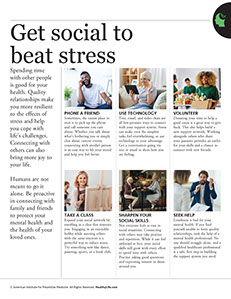
  • Get Ready To Garden

    WELL-BEING

    Gardening tools on dirt with flowers ready to plant.

    Spring marks the beginning of the growing season in many parts of the country. To ensure a successful garden, now is the time to prepare for the season ahead.

    The garden tasks you need to do in early spring will vary depending on your growing zone. Colder climates will just be getting started, while warmer parts of the country may already be enjoying garden bounty.

    For those of us just thawing out, here are the spring gardening tasks that will set you up for success:

    *  Weed and mulch. Early spring is a key time to get ahead of the weeds and put down a thick layer of protective mulch.

    *  Plant bare-root trees, shrubs, and roses. These should go in before temperatures get too warm.

    *  Fertilize spring bulbs.

    *  Trim back grasses and perennials to make way for new growth.

    *  Prepare vegetable beds for early spring seeds. Apply a layer of compost and turn the soil over.

    *  Plant cold-weather vegetable seeds such as lettuce, radish, and kale.

    © American Institute for Preventive Medicine

  • Get Moving To Boost Your Immunity

    BE FIT

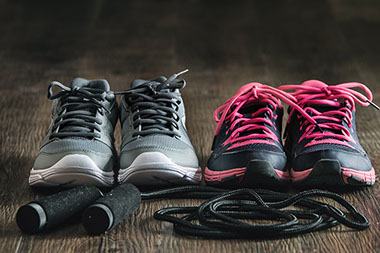
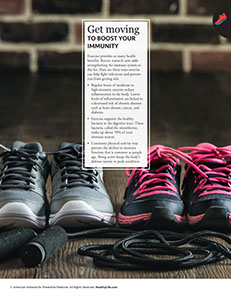
    Two pairs of shoes and a jump rope.

    Exercise provides so many health benefits. Recent research now adds strengthening the immune system to the list. Here are three ways exercise can help fight infections and prevent you from getting sick.

    *  Regular bouts of moderate to high-intensity exercise reduce inflammation in the body. Lower levels of inflammation are linked to a decreased risk of chronic diseases such as heart disease, cancer, and diabetes.

    *  Exercise supports the healthy bacteria in the digestive tract. These bacteria, called the microbiome, make up about 70% of your immune system.

    *  Consistent physical activity may prevent the decline in immune function that is common as people age. Being active keeps the body’s defense system in peak condition.

    © American Institute for Preventive Medicine

  • Get More Of These 4

    HEALTHY EATING

    Dishes filled with berries, nuts and fruits.

    The 2015-2020 Dietary Guidelines for Americans state that four nutrients are a “public health concern.” Many people are not getting enough:

    *  Calcium

    *  Fiber

    *  Potassium

    *  Vitamin D

    Try these tips to get more:

    1.  Eat more vegetables, fruits and legumes. These foods are rich sources of fiber and potassium. High-fiber bran cereal and shredded wheat also pack a fiber punch.

    2.  Eat more yogurt and drink milk. Both are good sources of calcium, potassium and vitamin D. Avoid sweetened yogurt. Instead, buy plain yogurt and add fresh fruit.

    3.  Eat seafood that’s high in vitamin D. This includes salmon, trout, whitefish, herring and tuna. Pregnant and nursing women should ask a doctor how much seafood they can eat.

    4.  Consider healthy foods that have vitamin D added, like soy milk, orange juice, dairy products and cereals.

    © American Institute for Preventive Medicine
  • Get Into Zone 2

    BE FIT

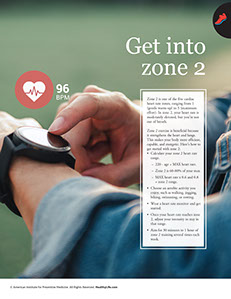
    Close up of man using smart watch with heart beat showing at 96 bpm.

    Zone 2 is one of the five cardiac heart rate zones, ranging from 1 (gentle warm-up) to 5 (maximum effort). In zone 2, your heart rate is moderately elevated, but you’re not out of breath.

    Zone 2 exercise is beneficial because it strengthens the heart and lungs. This makes your body more efficient, capable, and energetic. Here’s how to get started with zone 2:

    *  Calculate your zone 2 heart rate range.

    – 220 – age = MAX heart rate.

    – Zone 2 is 60-80% of your max.

    – MAX heart rate x 0.6 and 0.8 = zone 2 range.

    *  Choose an aerobic activity you enjoy, such as walking, jogging, biking, swimming, or rowing.

    *  Wear a heart rate monitor and get started.

    *  Once your heart rate reaches zone 2, adjust your intensity to stay in that range.

    *  Aim for 30 minutes to 1 hour of zone 2 training several times each week.

    © American Institute for Preventive Medicine