Blog

  • Find Your Balance

    SELF-CARE CORNER

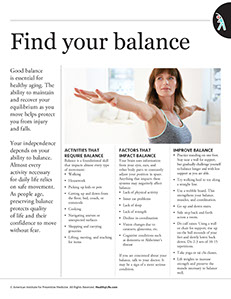
    Women with arms streched out, balancing.

    Good balance is essential for healthy aging. The ability to maintain and recover your equilibrium as you move helps protect you from injury and falls.

    Your independence depends on your ability to balance. Almost every activity necessary for daily life relies on safe movement. As people age, preserving balance protects quality of life and their confidence to move without fear.

    Activities that require balance

    Balance is a foundational skill that impacts almost every type of movement:

    *  Walking

    *  Housework

    *  Picking up kids or pets

    *  Getting up and down from the floor, bed, couch, or commode

    *  Cooking

    *  Navigating uneven or unexpected surfaces

    *  Shopping and carrying groceries

    *  Lifting, moving, and reaching for items

    Factors that impact balance

    Your brain uses information from your eyes, ears, and other body parts to constantly adjust your position in space. Anything that impacts these systems may negatively affect balance:

    *  Lack of physical activity

    *  Inner ear problems

    *  Lack of sleep

    *  Lack of strength

    *  Decline in coordination

    *  Vision changes due to cataracts, glaucoma, etc.

    *  Cognitive conditions such as dementia or Alzheimer’s disease

    If you are concerned about your balance, talk to your doctor. It may be a sign of a more serious condition.

    Improve balance

    *  Practice standing on one foot. Stay near a wall for support, but gradually challenge yourself to balance longer and with less support as you are able.

    *  Try walking heel to toe along a straight line.

    *  Use a wobble board. This strengthens your balance, muscles, and coordination.

    *  Go up and down stairs.

    *  Side step back and forth across a room.

    *  Do calf raises. Using a wall or chair for support, rise up on the ball mounds of your feet and slowly lower back down. Do 2-3 sets of 10-15 repetitions.

    *  Take yoga or tai chi classes.

    *  Lift weights to increase strength and preserve the muscle necessary to balance well.
    © American Institute for Preventive Medicine
  • Find The Energy To Exercise

    BE FIT

    Image of athletic shoes and a bottle of water.

    Too tired to work out? Try these tips to boost energy and get moving.

    1.  Move around. At work, try to switch between sitting and standing. Doing too much of one or the other may leave you feeling drained.

    2.  Sip lots of water. Starting in the morning, drink water and keep drinking it throughout the day. This can keep energy levels from sinking in the afternoon.

    3.  Eat healthy carbs. Choose whole grains, fruits and vegetables, such as carrots.

    4.  Watch your breathing. Slow, deep breaths can relax and energize you throughout the day.

    © American Institute for Preventive Medicine

  • Fill Your Grill, But Keep It Healthy

    HEALTHY EATING

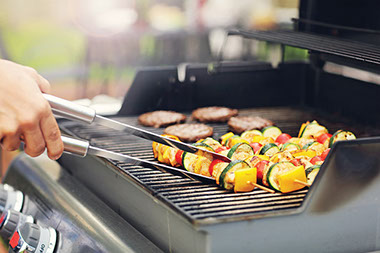
    Vegetables on the grill.

    Many people like to use their grill or barbecue during the summer months. While grilling can create delicious meals, it’s important to know how to avoid grilling meats the wrong way, which can increase cancer-causing substances in the food.

    Substances known as polycyclic aromatic hydrocarbons (PAHs) and heterocyclic amines (HCAs) can be found in meat that is cooked at high temperatures. These substances have been shown to cause cancer in laboratory animals. But the levels used in the animal studies were very high. Experts cannot say for sure how much of these substances would cause cancer in people.

    PAHs and HCAs can be found in meat that has been grilled, especially if it’s charred or blackened. Meat that is smoked may also contain these chemicals.

    To lower these substances in grilled food, you can:

    *  Avoid burning or charring the food when grilling.

    *  Turn meat frequently when grilling to avoid burnt or very hot areas.

    *  Don’t let the flames touch the meat directly.

    *  Marinade the meat first.

    *  Wrap meat in foil before placing it on the grill.

    *  Trim excess fat off of meat to avoid charring.

    *  Cut it up. Smaller pieces of meat will cook faster throughout. Try skewers or small pieces mixed in foil packets with vegetables.

    Beyond meat

    Vegetables and fruits can be delicious on the grill and they don’t have the risk of PAHs or HCAs. This doesn’t mean that meat-lovers have to avoid their favorite foods. Instead, have a portion of meat about the size of a deck of cards. Then fill the rest of your plate with vegetables. Red peppers, tomatoes, pineapple, peaches and asparagus are just a few of the vegetarian options that are both delicious and nutritious on the grill.

    Sources: American Institute for Cancer Research, National Cancer Institute

    © American Institute for Preventive Medicine
  • Filing For A Tax Extension

    FINANCIAL HEALTH

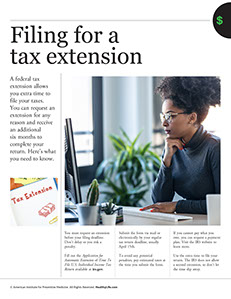
    Women on computer.

    A federal tax extension allows you extra time to file your taxes. You can request an extension for any reason and receive an additional six months to complete your return. Here’s what you need to know.

    *  You must request an extension before your filing deadline. Don’t delay or you risk a penalty.

    *  Submit the form via mail or electronically by your regular tax return deadline, usually April 15th.

    *  To avoid any potential penalties, pay estimated taxes at the time you submit the form.

    *  If you cannot pay what you owe, you can request a payment plan. Visit the IRS website to learn more.

    *  Use the extra time to file your return. The IRS does not allow a second extension, so don’t let the time slip away.

    *  Fill out the Application for Automatic Extension of Time To File U.S. Individual Income Tax Return available atirs.gov.

    © American Institute for Preventive Medicine

  • Fight Back Against Radon

    WELL-BEING

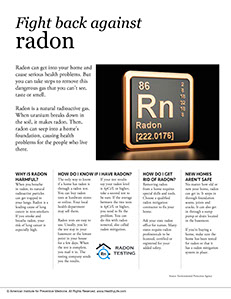
    Women yawning while driving.

    Radon can get into your home and cause serious health problems. But you can take steps to remove this dangerous gas that you can’t see, taste or smell.

    Radon is a natural radioactive gas. When uranium breaks down in the soil, it makes radon. Then, radon can seep into a home’s foundation, causing health problems for the people who live there.

    Why is radon harmful?

    When you breathe in radon, its natural radioactive particles can get trapped in your lungs. Radon is a leading cause of lung cancer in non-smokers. If you smoke and breathe radon, your risk of lung cancer is especially high.

    How do I know if I have radon?

    The only way to know if a home has radon is through a radon test. You can buy radon tests at hardware stores or online. Your local health department may sell them.

    Radon tests are easy to use. Usually, you let the test stay in your basement or the lowest point in your house for a few days. When the test is complete, you mail it in. The testing company sends you the results.

    If your test results say your radon level is 4pCi/L or higher, take a second test to be sure. If the average between the two tests is 4pCi/L or higher, you need to fix the problem. You can do this with radon removal, also called radon mitigation.

    How do I get rid of radon?

    Removing radon from a home requires special skills and tools. Choose a qualified radon mitigation contractor to fix your home.

    Ask your state radon office for names. Many states require radon professionals to be licensed, certified or registered for your added safety.

    New homes aren’t safe

    No matter how old or new your home, radon can get in. It seeps in through foundation seams, joints and cracks. It can also get in through a sump pump or drain located in the basement.

    If you’re buying a home, make sure the home has been tested for radon or that it has a radon mitigation system in place.

    Source: Environmental Protection Agency

    © American Institute for Preventive Medicine
  • Feeding The Picky Eater

    FAMILY LIFE

    Image of young girl excited to eat.

    Pre-dinner tips

    *  Get your child involved. Many kids can help with shopping and cooking. Being involved in the process may make them more likely to try new foods. Have them choose a favorite fruit or vegetable from the store. Younger children can help pour ingredients or cut soft foods, like bananas, with a butter knife. Older children can help with measurements.

    *  Get some exercise. Kids who have been actively playing may be hungrier when dinner comes. The hungrier they are, the more likely they may try new things.

    *  Turn off devices. Make family mealtimes relaxing and unplugged. Ban cell phones, television or other devices from the table.

    Size matters

    Don’t force your child to eat foods they don’t like. Rather, put a “sample size” on their plate. It can be just one bite of food. This may be less overwhelming than serving a large portion to them.

    Sanity-saving steps

    *  Make healthier snacks to fill the gaps. Serve fresh fruit or vegetables as a snack to get in extra nutrients. Skip the processed crackers and chips.

    *  Don’t have a battle. Forcing your child to eat could make them dislike their food even more.

    *  Don’t use bribes or rewards for eating. Rewards teach your child to expect something every time he/she tries a new food.

    *  Make one healthy meal for everyone. Don’t feel pressured to make “special meals” for picky eaters.

    *  Talk about your child’s eating habits with their doctor. Most picky eaters are getting enough of the foods they need. But, ask their pediatrician just in case. Some children need supplements to help get extra nutrients that they’re missing.

    Source: American Academy of Pediatrics

    © American Institute for Preventive Medicine
  • “Fast” Food At Home

    HEALTHY EATING

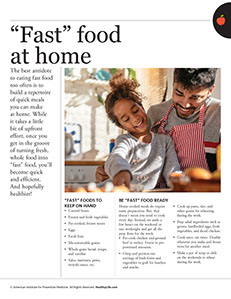
    Father and young daughter cooking together.

    The best antidote to eating fast food too often is to build a repertoire of quick meals you can make at home. While it takes a little bit of upfront effort, once you get in the groove of turning fresh, whole food into “fast” food, you’ll become quick and efficient. And hopefully healthier!

    “Fast” foods to keep on hand

    *  Canned beans

    *  Frozen and fresh vegetables

    *  Pre-cooked, frozen meats

    *  Eggs

    *  Fresh fruit

    *  Microwaveable grains

    *  Whole-grain bread, wraps, and tortillas

    *  Salsa, marinara, pesto, teriyaki sauce, etc.

    Be “fast” food ready

    Home-cooked meals do require some preparation. But, that doesn’t mean you need to cook every day. Instead, set aside a few hours on the weekend or one weeknight and get all the prep done for the week.

    *  Pre-cook chicken and ground beef or turkey. Freeze in pre-portioned amounts.

    *  Chop and portion out servings of fresh fruits and vegetables to grab for lunches and snacks.

    *  Cook up pasta, rice, and other grains for reheating during the week.

    *  Prep salad ingredients such as greens, hardboiled eggs, fresh vegetables, and diced chicken.

    *  Cook once, eat twice. Double whatever you make and freeze extra for another meal.

    *  Make a pot of soup or chili on the weekends to reheat during the week.

    © American Institute for Preventive Medicine