Blog

  • Brown Rice Pilaf

    HEALTHY EATING

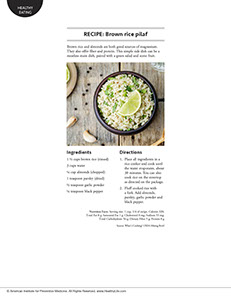
    Image of brown rice in a bowl.

    Brown rice and almonds are both good sources of magnesium. They also offer fiber and protein. This simple side dish can be a meatless main dish, paired with a green salad and some fruit.

    Ingredients

    1 ½ cups brown rice (rinsed)

    3 cups water

    ¼ cup almonds (chopped)

    1 teaspoon parsley (dried)

    ½ teaspoon garlic powder

    ¼ teaspoon black pepper

    Directions

    1.  Place all ingredients in a rice cooker and cook until the water evaporates, about 30 minutes. You can also cook rice on the stovetop as directed on the package.

    2.  Fluff cooked rice with a fork. Add almonds, parsley, garlic powder and black pepper.

    Nutrition Facts: Serving size: 1 cup, 1/4 of recipe. Calories 320; Total Fat 8 g; Saturated Fat 1 g; Cholesterol 0 mg; Sodium 53 mg; Total Carbohydrate 56 g; Dietary Fiber 5 g; Protein 8 g

    Source: What’s Cooking? USDA Mixing Bowl

    © American Institute for Preventive Medicine

  • Breastfeeding And Work

    WORK LIFE

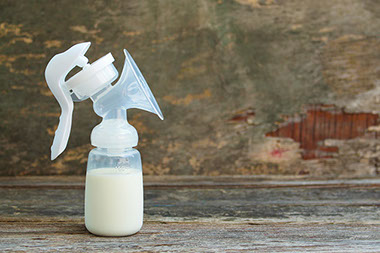
    Breast pump bottle filled with milk.

    Going back to work doesn’t mean an end to breastfeeding. Many new moms find they can pump their breastmilk while at work. This allows them to keep their milk supply up. It also gives them milk to feed their baby later, so they can reduce the need for formula.

    *  Ask your employer about a place to pump at work. You should have a place to pump safely and privately that’s not a bathroom.

    *  Your employer should also allow adequate break times to pump.

    *  Invest in a quality pump. Many moms find that electric pumps are easier and faster than manual ones. A pump may be covered by your insurance.

    *  Have ice packs and coolers to store your milk while at work. It’s important to keep breastmilk fresh and safe for your baby.

    Source: U.S. Department of Health and Human Services

    © American Institute for Preventive Medicine

  • Breaking Bad Habits Now

    WELL-BEING

    Doctor holding an apple in hand wrap with a tape measure.

    If you’re hoping to make a change, these tips may help:

    Avoid.If certain places or people make you want to engage in unhealthy habits, try your best to stay away.

    Replace.Focus on what you can do instead of the bad habit. For instance, take a walk or drink a glass of water.

    Plan.If you know you’ll be tempted with a bad habit, practice what you can do. Picture yourself not giving in. Have a plan for yourself.

    Buddy up.Ask a friend or family member to support you. They can cheer you on and encourage you when you need it.

    Source: National Institutes of Health

    © American Institute for Preventive Medicine

  • Brca Gene For Breast Cancer

    MEDICAL NEWS

    Women wearing pink shirts with pink ribbons.

    You may have heard of the BRCA gene for breast cancer. But many people don’t understand what this gene is, or what it really means for breast cancer risk.

    What BRCA really means

    “BRCA” is an abbreviation for “BReast CAncer.” There are two types: BRCA1 and BRCA2. Everyone has both of these genes. Having them does not mean you will get breast cancer.

    In fact, BRCA genes actually help prevent breast cancer. They can stop or slow breast cancer growth.

    When BRCA genes aren’t good

    In some people however, the BRCA genes don’t work properly. This is called a BRCA gene mutation.

    When this happens, the BRCA genes can’t prevent breast cancer. This makes the person more likely to get breast cancer. They may also develop breast cancer at a younger age. Those with BRCA mutations have a higher risk of developing other cancers too, including ovarian and pancreatic.

    Up to 65 percent of women with a BRCA1 mutation will develop breast cancer before age 70. About 45 percent of women with a BRCA2 mutation will develop breast cancer by age 70. People who have a mutated BRCA gene may also pass this along to their children.

    What to do

    Women who have one of the following should talk with a doctor:

    *  A family history of breast cancer

    *  History of ovarian cancer

    *  History of two or more cancers of any type

    In some cases, you may need a test to look at the BRCA genes. If the test finds that you have a BRCA mutation, talk with your doctor about next steps. This may include:

    *  Watching closely for breast cancer signs and getting regular screenings

    *  Taking certain medicines that can reduce estrogen, which can lower breast cancer risk

    *  Having a mastectomy, which is surgical removal of the breasts

    Screening is key

    Even without a BRCA gene mutation, all women should talk with their doctors about breast cancer risk. They should get regular breast cancer screenings. Finding breast cancer early is key. It means you have the best chance for successful treatment.

    Sources: National Breast Cancer Foundation, National Institutes of Health

    © American Institute for Preventive Medicine

  • Bone Broth:Worth The Hype?

    HEALTHY EATING

    Image of bone broth soup.

    People have been cooking bones to make bone broth for thousands of years.

    Today, this age-old recipe is being promoted as a superfood. But, do these health claims hold water? Here are three main points to keep in mind:

    1.  Homemade bone broth usually contains more protein than store-bought broth.

    2.  You can make your broth healthier by adding vegetables and herbs – and skipping the salt.

    3.  Currently, there is no solid evidence that bone broth has any additional or special medicinal properties, but research is ongoing.

    © American Institute for Preventive Medicine

  • Blood Cancer: Key Facts

    MEDICAL NEWS

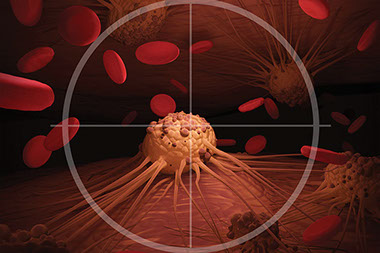
    Illustration of cancer attacking blood cells.

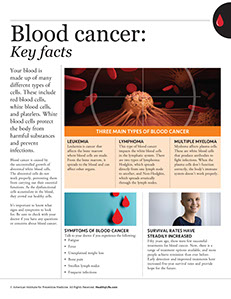
    Your blood is made up of many different types of cells. These include red blood cells, white blood cells, and platelets. White blood cells protect the body from harmful substances and prevent infections.

    Blood cancer is caused by the uncontrolled growth of abnormal white blood cells. The abnormal cells do not work properly, preventing them from carrying out their essential functions. As the dysfunctional cells accumulate in the blood, they crowd out healthy cells.

    It’s important to know what signs and symptoms to look for. Be sure to check with your doctor if you have any questions or concerns about blood cancer.

    Three main types of blood cancer

    Leukemia

    Leukemia is cancer that affects the bone marrow where blood cells are made. From the bone marrow, it spreads to the blood and can affect other organs.

    Lymphoma

    This type of blood cancer impacts the white blood cells in the lymphatic system. There are two types of lymphoma: Hodgkin, which spreads directly from one lymph node to another, and Non-Hodgkin, which spreads erratically through the lymph nodes.

    Multiple myeloma

    Myeloma affects plasma cells. These are white blood cells that produce antibodies to fight infections. When the plasma cells don’t function correctly, the body’s immune system doesn’t work properly.

    Symptoms of blood cancer

    Talk to your doctor if you experience the following:

    *  Fatigue

    *  Fever

    *  Unexplained weight loss

    *  Bone pain

    *  Swollen lymph nodes

    *  Frequent infections

    Survival rates have steadily increased

    Fifty years ago, there were few successful treatments for blood cancer. Now, there is a range of treatment options available, and more people achieve remission than ever before. Early detection and improved treatments have increased five-year survival rates and provide hope for the future.

    © American Institute for Preventive Medicine

  • Bloated Belly: Ways To Get Relief

    SELF-CARE CORNER

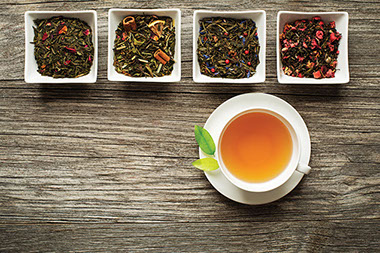
    Image of tea and different tea leaves.

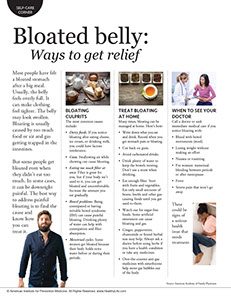
    Most people have felt a bloated stomach after a big meal. Usually, the belly feels overly full. It can make clothing feel tighter. The belly may look swollen. Bloating is usually caused by too much food or air and gas getting trapped in the intestines.

    But some people get bloated even when they didn’t eat too much. In some cases, it can be downright painful. The best way to address painful bloating is to find the cause and know how you can treat it.

    Bloating culprits

    The most common causes include:

    *  Dairy foods. If you notice bloating after eating cheese, ice cream, or drinking milk, you could have lactose intolerance.

    *  Gum. Swallowing air while chewing can cause bloating.

    *  Eating too much fiber at once. Fiber is great for you, but if your body isn’t used to it, you can get bloated and uncomfortable. Increase the amount you eat gradually.

    *  Bowel problems. Being constipated or having irritable bowel syndrome (IBS) can cause painful bloating. Drinking plenty of water can help with constipation and fiber absorption.

    *  Menstrual cycles. Some women get bloated because their body holds extra water before or during their periods.

    Treat bloating at home

    Many times, bloating can be managed at home. Here’s how:

    *  Write down what you eat and drink. Record when you get stomach pain or bloating.

    *  Cut back on gum.

    *  Avoid carbonated drinks.

    *  Drink plenty of water to keep the bowels moving. Don’t use a straw when drinking.

    *  Eat enough fiber. Start with fruits and vegetables. Eat only small amounts of beans, lentils and other gas-causing foods until you get used to them.

    *  Watch out for sugar-free foods. Some artificial sweeteners can cause bloating and gas.

    *  Ginger, peppermint, chamomile or fennel herbal teas may help. Always ask a doctor before using herbs if you have a health condition or take any medicines.

    *  Over-the-counter anti-gas medicines with simethicone help move gas bubbles out of the body.

    When to see your doctor

    Call a doctor or seek immediate medical care if you notice bloating with:

    *  Blood with bowel movements (stool)

    *  Losing weight without making an effort

    *  Nausea or vomiting

    *  For women: menstrual bleeding between periods or after menopause

    *  Fever

    *  Severe pain that won’t go away

    These could be signs of a serious health issue that needs treatment.

    Source: American Academy of Family Physicians

    © American Institute for Preventive Medicine

  • Bike Safety

    BE FIT

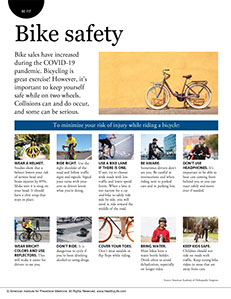
    Bike up against a yellow wall.

    Bike sales have increased during the COVID-19 pandemic. Bicycling is great exercise! However, it’s important to keep yourself safe while on two wheels. Collisions can and do occur, and some can be serious.

    To minimize your risk of injury while riding a bicycle:

    *Wear a helmet.Studies show that a helmet lowers your risk of serious head and brain injuries by 85%. Make sure it is snug on your head. It should have a chin strap that stays in place.

    *Ride right.Use the right shoulder of the road and follow traffic signs and signals. Signal your turns with your arm so drivers know what you’re doing.

    *Use a bike lane if there is one.If not, try to choose wide roads with less traffic and lower speed limits. When a lane is too narrow for a car and bike to safely ride side by side, you will need to ride toward the middle of the road.

    *Be aware.Sometimes drivers don’t see you. Be careful at intersections and when riding next to parked cars and in parking lots.

    *Don’t use headphones.It’s important to be able to hear cars coming from behind you so you can react safely and move over if needed.

    *Wear bright colors and use reflectors.This will make it easier for drivers to see you.

    *Don’t ride.It is dangerous to cycle if you’ve been drinking alcohol or using drugs.

    *Cover your toes.Don’t wear sandals or flip flops while riding.

    *Bring water.Most bikes have a water bottle holder. Drink often to avoid dehydration, especially on longer rides.

    *Keep kids safe.Children should not ride on roads with traffic. Keep young bike riders in areas that are away from cars.

    Source: American Academy of Orthopaedic Surgeons

    © American Institute for Preventive Medicine

  • Benefits Of Stretching

    BE FIT

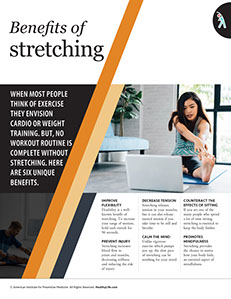
    Women stretching.

    When most people think of exercise they envision cardio or weight training. But, no workout routine is complete without stretching. Here are six unique benefits.

    Improve flexibility

    Flexibility is a well-known benefit of stretching. To increase your range of motion, hold each stretch for 90 seconds.

    Prevent injury

    Stretching increases blood flow to joints and muscles, decreasing stiffness and reducing the risk of injury.

    Decrease tension

    Stretching releases tension in your muscles, but it can also release mental tension if you take time to be still and breathe.

    Calm the mind

    Unlike vigorous exercise which pumps you up, the slow pace of stretching can be soothing for your mind.

    Counteract the effects of sitting

    If you are one of the many people who spend a lot of time sitting, stretching is essential to keep the body limber.

    Promotes mindfulness

    Stretching provides the chance to notice how your body feels, an essential aspect of mindfulness.

    © American Institute for Preventive Medicine

  • Beating Jet Lag

    SELF-CARE CORNER

    Man sleeping on plane.

    Summer travel plans may take you to places across the globe. While this can be exciting, switching to a different time zone can take a toll on the body.

    The body has its own internal clock that tells you when to be awake and when to sleep. This is your circadian rhythm.

    If you travel to a different time zone, the clock gets disrupted:

    You may be awake when it’s nighttime or want to sleep during the day. This can make you exhausted. Jet lag can also cause:

    *  Headaches

    *  Feeling irritable

    *  Trouble concentrating

    *  Loss of appetite

    *  Upset stomach

    *  Diarrhea

    There are some ways to fight jet lag so you can enjoy your trip:

    *  Stay hydrated. Drink plenty of water before, during, and after your arrival.

    *  Avoid alcohol. Some people think a nightcap will help them sleep. But alcohol actually disrupts sleep and makes you more tired.

    *  Use your travel time wisely. If you’ll be on a plane during the “new” night time, try to rest. Use a sleep mask and ear plugs. Avoid staring at TV screens or other devices.

    *  Be careful with caffeine. If you must have caffeine, drink it in the new time zone’s morning hours. Avoid it after lunch.

    *  Get out in the sun. When you get to your destination, go outside if it’s daytime. This will help to tell your body when to be awake.

    *  Skip naps if possible. Napping could make it harder for you to fall asleep at the correct time. If you take a nap at 6 p.m., you could be awake most of the night.

    *  Consider melatonin. Melatonin is a hormone that your body makes to tell you that it’s time for sleep. Taking melatonin at your new bedtime can help you sleep better. It is available over-the-counter, but ask your doctor before trying it.

    Source: National Sleep Foundation

    © American Institute for Preventive Medicine