Blog

  • Strengthening Your Defense

    Healthylife® QuitWell™

    Part 5
    Group of friends outside exercising.

    Keep practicing the urge tamers you learned in Part 4. These tools can help you get through cravings when they happen.

    This section will explore how to manage a lapse and prevent relapse. You will learn about common relapse triggers so you can be on the lookout for them. If you are prepared for a trigger, you are much more likely to respond in a positive way.

    You will also learn how lifestyle habits like sleep, physical activity, and nutrition can help you reduce triggers and feel better. These tips are helpful for all stages of quitting.

    HealthyLife® QuitWell™

    QUICK LINKS: PART 5

    Managing Slip-Ups

    Know Your Triggers

    Relapse Rehearsal

    Be Assertive

    What Assertive Looks Like

    Use the L.A.D.D.E.R. Technique

    Creative Imagination

    Get Enough Sleep

    Move Your Body

    Nutrition

    Review & Prepare
    © American Institute for Preventive Medicine

  • Review & Prepare 3

    Healthylife® QuitWell™

    Part 5

    Image of couple running.

    This section gave you more strategies to add to your quitting toolbox. By knowing more about yourself and what may trip you up, you can be more prepared to succeed when challenges arise. Taking a whole-body approach to quitting by adding exercise and healthy eating to your quit plan can also help you quit for good.

    *  Answer these questions as you review this section.

    *  What are your top 3 relapse triggers you will prepare for?

    *  What other lifestyle changes are you making to help improve your success with quitting?

    © American Institute for Preventive Medicine

  • Taking Off

    Healthylife® QuitWell™

    Part 4

    Family mealtime at home.

    This section adds to the Skill Development phase of quitting. You have already learned a few “Urge Tamers,” skills and techniques to help you be successful at quitting. You will learn many more in this section.

    The following “Urge Tamers” can help stop urges before you have them and help you deal with the urges you may have. QuitWell™ teaches you a lot of “Urge Tamers.” That’s because there are a lot of things you can do to make quitting easier. The more “Urge Tamers” you learn, the better the program will work for you and the easier it will be for you to quit.

    HealthyLife® QuitWell™

    QUICK LINKS: PART 4

    Altering Triggers

    Non-Smoking Zones

    Clean Your Environment

    Fill in the Void

    Smokeless Inhalation

    Positive Reinforcement

    Negative Reinforcement

    A Strategy for Stress

    Cleaning up Mind Pollution

    Thinking Differently

    Keep What is Truly Calming

    Practice Relaxation Techniques

    Relaxation Techniques

    Relaxation Reflex

    Mental Imagery

    Deep Natural Breathing

    Spend Time with Animals

    Cutting Back

    Practice Change

    Action Planning

    Recovery Signals

    Review & Prepare

    © American Institute for Preventive Medicine
  • Review And Prepare 7

    Healthylife® QuitWell™

    Part 4

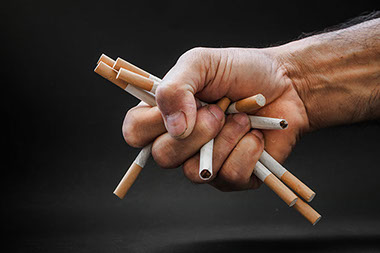
    Image of hand crushing a bunch of cigarettes.

    This section provided strategies to manage urges that you have for tobacco/nicotine. You also learned tools to manage yourself in a demanding, often stressful world.

    *  Which urge tamers and other strategies have you practiced already?

    *  Which tools have worked well for you? Add these to your quit plan.

    *  What gaps do you have in your quit plan? What is still a big challenge?

    Review this section often. What may have helped you get started may not be what takes you all the way to quitting completely. You may need to use new strategies as your life changes, new stressors arise, or new people enter your life. As you feel more and more ready to take action, strengthen your action plan by assigning urge tamers to triggers.

    © American Institute for Preventive Medicine
  • Making A Quit Plan

    Healthylife® QuitWell™

    Part 3

    Healthy green meal prep containers with rice and vegetables.

    By the time you arrive at this section, you have already taken steps towards successfully quitting. Even if you haven’t changed any behaviors yet, lining up your mindset will pay off as you go forward. Wanting to quit is just part of success. Willpower is not very reliable but having a plan in place with lots of support can carry you through.

    * If you are not ready to quit, use the strategies in this section to experiment with changing a habit or two-even if just for a day. You can practice these activities for a quit attempt in the future.

    * If you are ready to quit, dive in! Try to do as many activities as you can, noting what helps you and adding that to your quit plan. The more tools you add to your quitting toolkit, the more prepared you will be for that first day without tobacco/nicotine.

    * If you have already quit, add these strategies to your plan to manage any lapses or a relapse. Having a plan for when a slip-up happens can keep you tobacco/nicotine free in the long run.

    HealthyLife® QuitWell™

    QUICK LINKS: PART 3

    You Don’t Need a Great Plan

    Take Small Steps to Get Started

    Keep Track

    Wait 5 Minutes

    Buy Smaller Amounts

    Smokers: Use Matches Instead of a Lighter

    Make a “Butt Bottle”

    Carry & Store in a New Place

    Buddy System

    How to Help Me Quit

    Identify S.M.A.R.T. Goals

    Medications to Help You Quit

    Nicotine Replacement Therapy

    Other Aids for Quitting

    Review & Prepare

    © American Institute for Preventive Medicine

  • Review & Prepare 2

    Healthylife® QuitWell™

    Part 3

    Image of older women.

    Summary of Small Steps You Can Take:

    *  Keep tracking your habit.

    *  Wait 5 minutes when you have an urge to use.

    *  Buy your cigarettes by the pack (not the carton), your chewing tobacco by the can, or a lower concentration of e-cigarette cartridge.

    *  Store tobacco/nicotine products in a different place then usual.

    *  Set up a buddy system. Write goals in S.M.A.R.T. ways.

    *  Add to your list of “pros” for quitting. Star what is important to you.

    Change Is Your Choice

    The decision to make changes is up to you. You can decide which changes you want to make, how long it takes you to make them, and who you will tell. Answer the following:

    *  What do I want to do? Am I willing to do this?

    *  What am I going to do right now (within the next hour)?

    *  How will today be different for me?

    © American Institute for Preventive Medicine
  • Preparing For Change

    Healthylife® QuitWell™

    Part 2

    Broken cigarette in man's hand.

    This part of the program will help you get ready to make a change. Even if you feel very confident, knowing what may trip you up can help you overcome barriers when they come up. This section will give you tools to overcome barriers and set yourself up for success.

    *  If you aren’t sure about quitting, learning what stands between you and that change is a helpful step. You can also work on other areas of your mental and physical health (like logical thinking or healthy eating) to prepare for quitting.

    *  If you are ready to quit, taking stock of barriers can help you know what you will need to work on as part of your quitting process. If gaining weight worries you, it could be a relapse trigger if you do not plan for healthy eating behaviors.

    *  If you have recently quit, review these barriers to see if any could be relapse triggers for you. Answer the questions with the goal of staying quit in mind.

    HealthyLife® QuitWell™

    QUICK LINKS: PART 2

    What Holds You Back?

    Break Down Barriers

    Time Management

    Mindfulness

    Managing Weight

    Food & Drink Tips

    Address Anxiety

    Plan Problem-Solving

    Separate Tobacco/Nicotine from Situations

    Reflect on Your Past Change Attempts

    Make the Connection

    Balance of Choice

    Identify Your Strengths

    Review & Prepare

    © American Institute for Preventive Medicine

  • Review & Prepare

    Healthylife® QuitWell™

    Part 2

    Image of no smoking sign.

    In this section, you were guided to understand the barriers you face with quitting. By carefully reading, thinking about each part, and answering questions along the way, you are getting yourself ready for success.

    *  How have you prepared yourself to quit? Write the steps you have taken, mentally and physically, to get to this point.

    *  Look back at your list of barriers. Do any of them feel more manageable now?

    *  Which of your strengths do you think will come in handy for quitting? Be confident in what you know you are good at and what makes you a strong person.

    © American Institute for Preventive Medicine

  • Getting Ready For Liftoff

    Healthylife® QuitWell™

    Part 1

    Two people climbing a mountain.

    Thinking About Change

    Welcome to QuitWell™! Quitting is a big, life-changing step. It won’t always be easy. You might feel motivated and ready-to-go some days. Other days might be harder, and you might wonder if it’s worth the effort. Change can be hard and doesn’t happen overnight! In fact, it normally happens in stages.

    This guide is designed to help you achieve your goals, even if you are not ready to change right away. The questions and activities are designed to help you move through the quitting process at your own pace and under your control. On a scale of 1 to 10 (1-not motivated, 10-very motivated), how motivated do you feel to quit right now?

    HealthyLife® QuitWell™

    QUICK LINKS: PART 1

    Stages of Change

    Moving Through Stages

    I’m Not Ready to Quit

    I’m Thinking About Quitting, But I’m Not Sure

    I’m Ready to Plan to Quit

    I Am Quitting!

    I Quit & Want to Stay Quit

    I’ve Relapsed

    Look Ahead

    What Motivates You?

    My ‘Why Quit’ List

    Why Does It Matter If I Quit?

    Smoking & Your Health

    How Smoking Hurts the Body

    Smokeless Tobacco & Your Health

    Warning Signs of Oral Cancer

    E-Cigarettes & Your Health

    Secondhand Smoke

    Money Talks

    The Big Picture

    © American Institute for Preventive Medicine
  • Other Aids For Quitting

    Healthylife® QuitWell™

    Part 3

    Image of the word Stop spelled out in tobacco.

    Pharmaceutical:

    *  Buproprion (brand names Zyban and Wellbutrin) is a prescription, non-nicotine pill. This medication is used to treat depression and help with quitting smoking. To use, begin taking 1 to 2 weeks before your quit date. It must build up in your system before you quit. It can be taken for 7 to 12 weeks. It may cause dry mouth and insomnia.

    *  Varenicline (brand name Chantix) is another prescription, non-nicotine pill. It works by cutting the pleasure of smoking and reducing withdrawal symptoms. To use, begin taking one week before your quit date. It must build up in your system before you quit. It is taken once or twice daily for 12 weeks. If quit, it can be taken for another 12 weeks. It can cause nausea, headache, vomiting, gas, insomnia, abnormal dreams, and a feeling that food tastes different.

    Non-Pharmaceutical:

    *  Counseling or coaching can help you identify triggers and challenges, give you support and encouragement, and help you set personal goals. Coaching can double your chances of success.

    *  Text or smartphone apps offer goal setting, reminders, and encouragement. Some even send text messages to keep you motivated.

    *  Hypnosis helps you learn to relax and identify triggers. It also helps your subconscious mind look at your habit differently.

    *  Acupuncture uses special thin needles placed in specific spots to help you relax and fight cravings for nicotine.

    Hypnosis and acupuncture are not proven ways to quit tobacco/nicotine, but they have helped many people. Be a smart consumer when choosing one of these therapies. Continue to work on behavior change and stress management. You will still need these skills to prevent relapse.

    © American Institute for Preventive Medicine