Blog

  • A Heavy Load For Kids’ Backs

    FAMILY LIFE

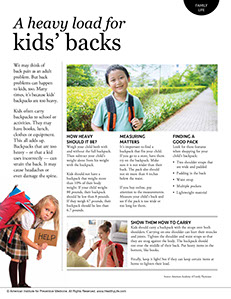
    Smiling boy wearing a backpack.

    We may think of back pain as an adult problem. But back problems can happen to kids, too. Many times, it’s because kids’ backpacks are too heavy.

    Kids often carry backpacks to school or activities. They may have books, lunch, clothes or equipment. This all adds up. Backpacks that are too heavy – or that a kid uses incorrectly – can strain the back. It may cause headaches or even damage the spine.

    How heavy should it be?

    Weigh your child both with and without the full backpack. Then subtract your child’s weight alone from his weight with the backpack.

    Kids should not have a backpack that weighs more than 10% of their body weight. If your child weighs 80 pounds, their backpack should be less than 8 pounds. If they weigh 67 pounds, their backpack should be less than 6.7 pounds.

    Measuring matters

    It’s important to find a backpack that fits your child. If you go to a store, have them try on the backpack. Make sure it is not wider than their back. The pack also should not sit more than 4 inches below the waist.

    If you buy online, pay attention to the measurements. Measure your child’s back and see if the pack is too wide or too long for them.

    Finding a good pack

    Look for these features when shopping for your child’s backpack:

    *  Two shoulder straps that are wide and padded

    *  Padding in the back

    *  Waist strap

    *  Multiple pockets

    *  Lightweight material

    Show them how to carry

    Kids should carry a backpack with the straps over both shoulders. Carrying on one shoulder can hurt their muscles and joints. Tighten the shoulder and waist straps so that they are snug against the body. The backpack should rest over the middle of their back. Put heavy items in the bottom, like books.

    Finally, keep it light! See if they can keep certain items at home to lighten their load.

    Source: American Academy of Family Physicians

    © American Institute for Preventive Medicine

  • 6 Ways To Help New Parents

    FAMILY LIFE

    Young couple holding newborn.

    New parents need the support to weather all the challenges & changes. Try these practical ways to help the new parents in your life.

    1.  Drop off freezer meals. A fresh meal is greatly appreciated, but having a stash of freezer meals is extra insurance for future tough days.

    2.  Clean the house. Whether you roll up your sleeves yourself or hire a service, a clean, tidy home can be a big load off a new parent’s mind.

    3.  Help with yard work. Rake, mow, prune, mulch, water, and weed so mom and dad can focus on the baby.

    4.  Hold the baby. Sometimes, all new parents need is someone else to snuggle and comfort the baby while they take a nap.

    5.  Give them a night out. Once the baby is old enough, the greatest gift you can give new parents is a chance to get away on their own and reconnect.

    6.  Provide a listening ear. New parents spend all day engaging with their baby. They need time to relax and chat with adults too!

    © American Institute for Preventive Medicine
  • 6 Ways To Boost Productivity

    WORK LIFE

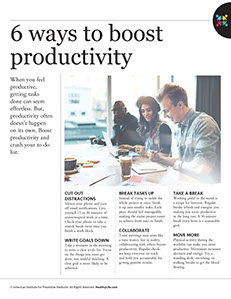
    Three co-workers sitting at table working.

    When you feel productive, getting tasks done can seem effortless. But, productivity often doesn’t happen on its own. Boost productivity and crush your to-do list.

    Cut out distractions

    Silence your phone and turn off email notifications. Give yourself 15 to 30 minutes of uninterrupted work at a time. Check your phone or take a stretch break every time you finish a work block.

    Write goals down

    Take a moment in the morning to write a clear to-do list. Focus on the things you must get done, not wishful thinking. A clear goal is more likely to be achieved.

    Break tasks up

    Instead of trying to tackle the whole project at once, break it up into smaller tasks. Each piece should feel manageable, making the entire project easier to achieve from start to finish.

    Collaborate

    Team meetings may seem like a time-waster, but in reality, collaborating with others boosts productivity. Regular check-ins keep everyone on track and hold you accountable for getting positive results.

    Take a break

    Working pedal to the metal is a recipe for burnout. Regular breaks refresh and energize you making you more productive in the long run. A 10-minute break every hour is a reasonable goal.

    Move more

    Physical activity during the workday can make you more productive. Movement increases alertness and energy. Try a standing desk, stretching, or walking breaks to get the blood flowing.

    © American Institute for Preventive Medicine

  • 5 Things About Natural Anxiety Remedies

    SELF-CARE CORNER

    Man getting a chair massage.

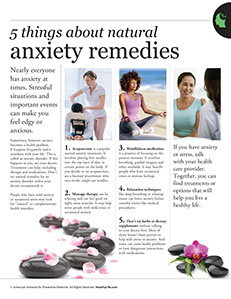
    Nearly everyone has anxiety at times. Stressful situations and important events can make you feel edgy or anxious.

    Sometimes, however, anxiety becomes a health problem. It happens frequently and it interferes with your life. This is called an anxiety disorder. If this happens to you, see your doctor. Treatments can help, including therapy and medications. Don’t try natural remedies for an anxiety disorder unless your doctor recommends it.

    People who have mild anxiety or occasional stress may look for “natural” or complementary health remedies.

    1.  Acupuncture is a popular natural anxiety treatment. It involves placing thin needles into the top layer of skin in certain points on the body. If you decide to try acupuncture, see a licensed practitioner who uses sterile, single-use needles.

    2.  Massage therapy can be relaxing and can feel good on tight, tense muscles. It may help some people with mild stress or occasional anxiety.

    3.  Mindfulness meditation is a practice of focusing on the present moment. It involves breathing, guided imagery and other methods. It may benefit people who have occasional stress or anxious feelings.

    4.  Relaxation techniques like deep breathing or relaxing music can lower anxiety before stressful events like medical procedures.

    5.  Don’t try herbs or dietary supplements without talking to your doctor first. Most of them haven’t been proven to help with stress or anxiety. And some can cause health problems or have dangerous interactions with medications.

    If you have anxiety or stress, talk with your health care provider. Together, you can find treatments or options that will help you live a healthy life.

    © American Institute for Preventive Medicine
  • 4 Ways To Save Money At Home

    FINANCIAL HEALTH

    Young couple smiling and holding money.

    Homes come with costs. Rent, mortgage, utilities and other expenses can add up. Here are some ways to save right at home that can help your wallet.

    Unsubscribe from advertising.

    Getting emails from stores and companies can tempt you to buy things you don’t really need.

    Cool down the water heater.

    Turn down the water heater 10 degrees and you can save 5 percent on water heating costs.

    Check your insurance.

    Shop for homeowners insurance every year or two. You may find a cheaper plan with the same coverage.

    Source: American Academy of Family Physicians

    © American Institute for Preventive Medicine

  • 4 Tips For Lunchtime Walking

    WORK LIFE

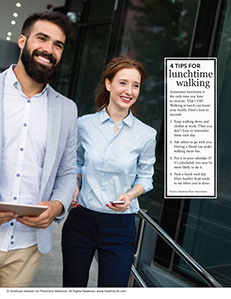
    Coworkers walking outside.

    Sometimes lunchtime is the only time you have to exercise. That’s OK! Walking at lunch can boost your health. Here’s how to succeed:

    1.  Keep walking shoes and clothes at work. Then you don’t have to remember them each day.

    2.  Ask others to go with you. Having a friend can make walking more fun.

    3.  Put it in your calendar. If it’s scheduled, you may be more likely to do it.

    4.  Pack a lunch each day. Have healthy food ready to eat when you’re done.

    Source: American Heart Association

    © American Institute for Preventive Medicine