Blog

  • Yes, More Sunscreen!

    SELF-CARE CORNER

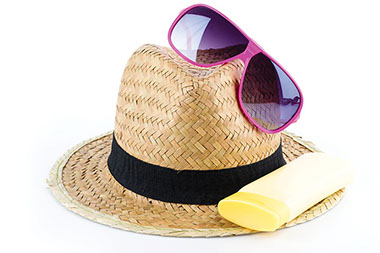
    Image of sun hat, sunglasses and sunscreen.

    Wear it. Wear plenty of it. And this summer is the first season for the new FDA regulations. Here’s what you need to know about labels and ingredients from Dr. Alan Friedman of Montefiore Medical Center.

    Water-resistant

    Sunscreens claiming to be waterproof and sweat proof are no longer on the shelves. In their place are 40- and 80-minute water-resistant sunscreens. They offer sun protection for a limited time when exposed to water. Choose the 80-minute water-resistant product and reapply after swimming or toweling off.

    Sun Protection Factor (SPF)

    Some people think that SPF measures the length of time users can be in the sun before getting sunburned. Not so. SPF defines the amount of ultraviolet B (UVB) radiation needed to cause sunburn, even while sunscreen is on. Sunscreens with SPF 2 through SPF 14 can prevent sunburn, but they provide no protection against skin cancer or premature skin aging. Such sunscreens must now carry a warning label stating, “Spending time in the sun increases your risk of skin cancer and early skin aging. This product has been shown only to help prevent sunburn, not skin cancer or early skin aging.”

    The FDA has yet to rule on whether products with SPF values higher than 50 provide extra protection compared to ones with SPF values of 50.

    For a sunscreen to reach its listed SPF, a full ounce (think of a shot glass full) needs to be applied. Recent research shows that people only apply 20-25% of this amount, unknowingly lowering the protection factor of their sunscreens. Best choice: SPF 30 or higher and plenty of it.

    Broad spectrum

    Until the final FDA requirements took effect, sunscreens were only evaluated and regulated for their ability to protect against UVB radiation, as measured by SPF. Now, sunscreens also are evaluated for their UVA protection. Sunscreens labeled as “broad spectrum” protect against both UVA and UVB radiation.

    “UVA penetrates deeper into the skin where it can accelerate skin aging and cause skin cancer. I call UVA the silent killer, because unlike UVB, it does not cause sunburns so it is hard to tell if you are getting harmful exposure,” said Dr. Friedman. “Broad spectrum sunscreen use should not be limited to beach outings or summer months. Recent research showed that the skin aging process is significantly slower among people who apply broad spectrum sunscreen daily, year round.”

    Read the ingredients

    Sunscreen companies use different mixtures of ingredients. Choose products that have a variety of sun-blocking agents. Dr. Friedman recommends selecting a sunscreen that contains several organic sun-blocking agents such as ecamsule, cinoxate, octyl salicylate, and benzophenones (oxybenzone). The different chemicals work in synergy to create greater sun protection than any one ingredient alone. Also, combining multiple agents allows companies to use less of each, which decreases the risk of any associated irritation.

    The best products also contain mineral, physical sun-blocking agents like zinc oxide and titanium oxide. In the past, these ingredients appeared chalky and left skin greasy, but newer products deliver “micronized” thinner, sheerer formulations. Products that contain talc and bentone gel prevent these ingredients from clumping, and improve cosmetic appearance.

    Look for pH stabilizers to hydrate and fortify the skin, like dimethicone, cyclomethicone, and sodium phosphate. When the skin is hydrated, its can heal and repair itself much more quickly.

    © American Institute for Preventive Medicine

  • Working Through Cancer

    WORK LIFE

    Image of co-workers hugging.

    A person is considered a cancer survivor from the minute he or she is diagnosed with the disease. Staying at work during treatment or going back to work after treatment can pose challenges along with fighting the disease.

    Employers are required to support a survivor’s decision to work, said Teri Hoenemeyer, director of education and supportive services at the University of Alabama at Birmingham Comprehensive Cancer Center.

    “Cancer is classified as a disability, and working survivors have protections and rights under the Americans with Disabilities Act, so employers will need to provide time for doctors’ appointments and treatments that may go above and beyond Family Medical Leave,” she said.

    Whether it’s a work colleague, family member, or yourself, this advice may help, say survivors:

    *  Take it all in one bit at a time-one day, one treatment, one surgery, one radiation.

    *  Though it can be difficult, stay positive.

    *  Understand that cancer will take away your hair, your energy, and control of your schedule, but it will give back many new things such as supportive friends and coworkers, notes of encouragement, and a new outlook on life.

    Hoenemeyer said once back in the workplace following a diagnosis, survivors must take special care of themselves.

    “Extra rest, a healthy diet, physical activity, and low stress are all important factors to the survivor at work,” Hoenemeyer said. “Take time out of the day to do something that focuses on managing stress and anxiety; it could be meditation, sitting still with some music or taking a walk.”

    © American Institute for Preventive Medicine

  • Work The Crowd

    WORK LIFE

    Image of business man smiling.

    Social gatherings, office parties, community events-they all give you an opportunity to enhance your professional image.

    But if you’re nervous about what to talk about in a crowd of strangers, Toastmasters International offers this advice to turn small talk into smart talk:

    *  Plan your topics. Think of 2 to 3 topics you can discuss with anyone.

    *  Keep it lighthearted. Avoid office gossip and controversial topics. Stay clear of topics related to sex, religion, and politics.

    *  Meet someone new. Take the first step to introduce yourself to the CEO. Or talk to someone new while waiting in the   food line.

    *  Spark a conversation. Ask open-ended questions about the person you’re getting to know.

    *  Listen attentively. Ask follow-up questions about the person or group you’re talking with. Listen more than you talk.

    *  Introduce others. Be sure to introduce a newcomer to those you’re talking with.

    *  Consider cultural differences. Take into account figures of speech, how you present humor, and personal space.

    *  Limit alcohol. Know your drink limit. If necessary, avoid alcohol altogether to keep your composure.

    © American Institute for Preventive Medicine

  • Won’t Touch That

    HEALTHY EATING

    Image of mother feeding 2 young kids carrots.

    Focus on the veggies your kids will eat, not on the ones they won’t, suggests food scientist Brian Wansink of Cornell University. Don’t give up too early on kids who don’t like vegetables.

    Dr. Wansink and his colleagues identified favorite vegetables in a panel of mothers with 2 kids. Moms and kids could easily name a favorite veggie most of the time (for boys it was corn; for girls it was broccoli). Other faves included carrots, green beans (no kidding), potatoes, and tomatoes.

    “Children may not like all vegetables all of the time, but they may like some vegetables some of the time,” Wansink said. “Keep serving the vegetables that kids prefer and don’t be discouraged if they turn up their noses at other vegetables. They may eventually like them if you continue to offer them, and if they see you enjoy them too.”

    He suggests parents find ways to modify meals to accommodate veggie favorites into pizza, tacos, and pastas.

    © American Institute for Preventive Medicine

  • Women Traveling Alone: Safety Tips

    WELL-BEING

    Image of young women reading a map.

    Perhaps more than ever, women are willing to ditch their traveling companions and go solo when it comes time to hit the road and see the world. Many travel for business.

    Still, despite the trend, many women may worry that traveling alone can carry too many risks, making them a target for thieves, kidnappers,

    and other criminals.

    Barbara Foster, a veteran globetrotter and author of the book The Confessions of a Librarian: A Memoir of Loves, advises, “Sure, there are risky places and bad types out there. But with the right precautions, women can travel solo with confidence, visiting the places and meeting the people they always dreamed of and returning home with wonderful stories and memories.”

    *Steer clear of the most dangerous locales.Simply put, some places just aren’t worth the risk. Avoid “no go” neighborhoods, cities, and countries.

    *Connect with friendly contacts.Make yourself known not only to the US embassy or consul, but also to people in your field, Foster said. During her travels, Foster wrote articles about libraries she visited. Her fellow librarians were a  protective group.

    *Learn the language or at least useful phrases.Even if it’s just a few key words, speaking the language can come in handy if you need to seek help. Knowing what others are saying can also alert you to potential dangers.

    *Dress wisely, pay attention to manners, and spend money in moderation.Don’t draw needless attention to yourself. For added protection against thieves, Foster suggests carrying money and ID in a pouch under your shirt.

    *Travel in the US.You will miss many of the world’s must-see places, but if the thought of traveling abroad holds too much stress for you, it might be better to stick closer to home.

    © American Institute for Preventive Medicine

  • Wired And Dangerous

    FAMILY LIFE

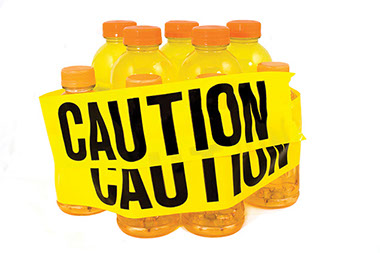
    Image of sport drinks with yellow "Caution" tape wrapped around the bottles.

    Parents beware. If your tots and teens get their hands on your energy drinks, they could experience seizures, heart palpitations, or other problems that drive them to the hospital ER.

    Children most at risk appear to be those who regularly consume the increasingly popular caffeine-laden energy drinks or gulp down a relatively large amount of the liquid in a short span, according to Rutgers University’s poison control experts.

    “These drinks are made for adults. When young children drink them, they consume a large quantity of caffeine for their body mass. At the minimum, they become wired-just as an adult would-and it might be difficult for parents to console them or calm them down,” said Bruce Ruck, director of drug information and professional education for the New Jersey Poison Information & Education System at Rutgers.

    “Children also might have trouble falling asleep or experience tremors, anxiety, agitation, heart palpitations, nausea or vomiting. Of more concern, they may experience a rapid heart rate or seizures,” he said.

    Ruck also said that, in addition to large amounts of caffeine, most energy drinks contain sweeteners, vitamins, and maybe herbal products, some of which may hold hidden risks for certain people.

    *  Don’t let kids be lured by the “rock star” graphics  on the cans that look like soda pop.

    *  Store drinks on a high shelf, away from the view  of kids.

    *  Monitor and limit your teens’ exposure to these drinks. Mixing them with alcohol or a rigorous workout can cause death.

    *  The journal Clinical Toxicology has reported that children under age 6 who consumed caffeine-infused energy drinks accounted for more than half of the energy drink-related poisonings involving children. The American Medical Association is calling for a ban on marketing energy drinks to children under 18.

    © American Institute for Preventive Medicine

  • Winter Itch

    SELF-CARE CORNER

    Image of a snowman.

    All winter flakes are not made of snow. Cold weather, with its low relative humidity, wreaks havoc on your skin, making it dry and flaky. Skin dries out if it’s deprived of moisture, and this dryness often aggravates itchiness, resulting in a condition commonly referred to as “winter itch.” During the winter the air is drier, and indoor heating further robs your skin of moisture. Fortunately, there are several ways that you can replenish the water content of your skin.

    Dr. Robyn Gmyrek, a dermatologist and director of the Skin and Laser Center at New York-Presbyterian Hospital/Columbia University Medical Center, suggests the following skin advice:

    *Moisturize daily.Petrolatum or cream-based moisturizers are far better than lotions for normal to dry skin. If you have sensitive skin, choose a moisturizer without fragrance or lanolin. After bathing, apply moisturizer directly to your wet skin to ensure that the moisturizer can help to trap surface moisture.

    *Limit the use of hot water and soap.If you have “winter itch,” take short lukewarm showers or baths with a non-irritating, non-detergent-based cleanser. Immediately afterward, apply a thick cream or a petroleum-jelly-type moisturizer. Gently pat skin dry.

    *Humidify.Dry air can pull the moisture from your skin. Room humidifiers can be very helpful. However, be sure to clean the unit and change the water according to the manufacturer’s instructions to reduce mold and fungi.

    *Protect yourself from the wind.Cover your face and use a petrolatum-based balm for your lips.

    *Protect your skin from the sun.Remember that winter sun can also be dangerous to the skin. Even in the winter months you should use a sunscreen with a sun-protection factor of 15 or greater if you will be outdoors for prolonged periods.

    *Avoid winter tanning.Tanning beds and artificial sunlamps are always damaging to your skin and increase your risk of skin cancer.

    *Take vitamin D supplements.During the summer months your natural vitamin D production increases due to daily sun exposure, but when winter rolls around that exposure decreases. Taking vitamin supplements can ensure that you are getting the recommended amounts of vitamin D all year.

    © American Institute for Preventive Medicine

  • Wine Confusion: Healthy Or Not?

    MEDICAL NEWS

    Image of a wine bottle with 2 glasses of wine and grapes.

    Wine has been making the headlines in recent months as a “healthy” choice. Some studies suggest the compounds and antioxidants in wine can reduce your risk of heart disease, cancer, and more.

    This can be confusing if you’ve been told that alcohol isn’t good for you. Should you drink wine to get healthier, or skip it?

    There is no perfect answer for everyone. It’s important to note that these studies are promising, but they’re not enough to say that wine is a healthy choice. Many of these studies were done in labs, on mice, or were done with supplements instead of real wine. And for some, the possible benefits of wine wouldn’t be worth the risk. Wine is also high in calories and sugar. This can add to obesity and affect blood sugar, especially in diabetics. In addition, wine and alcohol can interact with certain medicines.

    Many people can enjoy alcohol in  small amounts without problems. But if you have a history of alcoholism or your doctor has told you not to drink, you should not drink wine or any alcoholic beverage.

    The Centers for Disease Control and Prevention (CDC) says that drinking too much alcohol, even wine, can harm your health. So if you decide to drink, be sure you do it in moderation.

    So what is “moderation”? According to the Dietary Guidelines for Americans, moderation is up to one drink per day for women and up to two drinks per day for men-and only by adults of legal drinking age.

    The bottom line:

    If you already have a drink once in a while, switching to red wine may be healthier than other choices such as beer or spirits. But the health benefits of red wine are not fully understood. So, experts do not recommend it as a daily drink for everyone.

    © American Institute for Preventive Medicine

  • Will Ab Exercises Shrink Your Belly?

    BE FIT

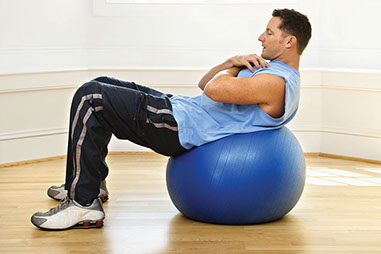
    Image of man using a fitness ball to do ab exercises.

    Sit-ups and crunches can give you stronger ab muscles. But, do they give you a leaner and slimmer belly?

    Experts say that toning and strengthening your core is an important part of being fit. Your ab muscles help support your body and back. They help you reach things off a shelf, throw a ball, climb a ladder, and other everyday tasks. Weak ab muscles can lead to back pain and other injuries.

    But ab exercises alone will not give you a flat belly. To get a slimmer middle, you must burn calories and fat through aerobic exercise. The Centers for Disease Control and Prevention recommends 150 minutes per week of moderate aerobic activity. This includes walking, biking, dancing, and other activities that raise your heart rate. These exercises, along with a healthy diet, can help you lose overall body fat. This will help shrink your middle and improve your health.

    © American Institute for Preventive Medicine
  • Why You Shouldn’t Eat At Your Desk

    WORK LIFE

    Image of co-workers wating lunch together.

    It seems like a convenient way to get through your day. Rather than take a break to eat lunch, you grab a bite and eat while you’re at your desk. But, this may be leading the way to unhealthy habits.

    Here’s why you should escape your workspace for your meals:

    *You need a mental break.Getting up and eating away from your desk can help you clear your mind and boost mental energy.

    *Moving more is better.A 5-10 minute walk is better than no walk at all. Being active and sitting less will improve your health.

    *You may eat more mindfully.If you munch on food while working or watching a screen, you may eat more than you need to. Instead, sit down away from a screen and focus on your food. This can help you pay attention to your feelings of hunger and fullness.

    *You could be missing out on fun.Bonding with others at your workplace can be fun and enjoyable. You may even look forward to social lunch breaks, which could increase your happiness at work.

    Healthy lunch, healthy wallet

    Packing a healthy lunch can be good for your health. It can help you steer clear of the vending machine or other unhealthy options. Plus, bringing your own lunch may be healthy for your wallet. The average American spends $53 a week on lunch and coffee expenses during the workday. That adds up to more than $2,700 a year.

    © American Institute for Preventive Medicine