Blog

  • Nutrition 2

    Healthylife® QuitWell™

    Part 5

    Variety of vegetables.

    Here are more ways you can choose healthy foods to manage cravings and any weight gain.

    Healthy Eating Behavior

    How you eat is as important as what you eat. Weight control involves developing and maintaining healthy eating behaviors. Diets are hard to stay on for a long time because they are usually boring or too rigid. If you make a lasting change in your eating behavior, you will be able to maintain a healthy weight without depending on diets.

    *  Try to always eat in the same spot in your home. Eat at a table, if possible, and avoid eating on the couch or in bed.

    *  When you eat, only eat. Avoid TV or looking at your phone.

    *  Slow down your eating pace. While tobacco/nicotine raised your blood sugar in seconds, food takes a bit longer.

    – Chew and swallow each bite before the next.

    – Pause frequently to take a drink of water or engage in conversation.

    – Put your fork or food down between bites.

    *  Start your meal with a small salad or hot soup.

    *  Before having a second serving, wait 5-10 minutes to see if you begin to feel full or satisfied with your meal.

    *  Keep less healthy foods hidden in cupboards or in the back of the fridge.

    *  Use smaller plates and utensils-this will help you feel satisfied with a healthy portion and may help you eat more slowly.

    Avoid turning to food to manage difficult emotions. Address what is bothering you, go for a walk, or call a friend. Emotional eating can lead to choices higher in sugar, salt, and saturated fat.

    Choose Healthy Snacks

    Your body may be giving you hunger cues more frequently when you quit. Your body’s natural way of managing blood sugar and metabolism takes time to go back to normal. Choosing healthy snacks can help you manage your weight and energy level.

    *  Celery stalks

    *  Bell peppers, cut into slices

    *  Cantaloupe, cut into cubes

    *  Raw carrot sticks or baby carrots

    *  Cucumber slices

    *  Tomato wedges or cherry tomatoes

    *  Broccoli or cauliflower florets

    *  Green beans

    *  Frozen veggies, microwaved

    *  Apples

    *  Peaches

    *  Oranges or grapefruit

    *  Strawberries or other berries

    *  Bananas

    *  Dried fruit

    *  100% fruit juice

    Other Healthy Snacks & Combinations:

    *  Cut-up veggies with hummus, salsa, or nut butter

    *  Pita bread with hummus

    *  Granola bar (with less than 5g sugar)

    *  Raw nuts (low-salt or no-salt)

    *  Natural peanut butter on low-salt crackers, apple slices or celery sticks

    *  Mini whole-wheat bagel with natural peanut butter or cream cheese

    *  Hard boiled eggs

    *  Trail mix with nuts, dried fruit, and seeds

    *  Yogurt with berries and nuts (with less than 10g sugar)

    *  Whole-grain crackers with cheese

    *  Oatmeal with dried fruit and nuts

    *  Scrambled eggs with veggies

    *  Nut butter on a slice of whole-grain toast

    *  Whole-grain cereal with milk

    *  String cheese and low-sodium crackers

    *  Smoothie with fruit, protein powder, and milk. Try adding avocado or leafy greens.
    © American Institute for Preventive Medicine
  • I’M Not Ready To Quit

    Healthylife® QuitWell™

    Part 1

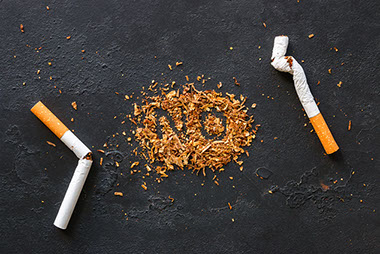
    Broken cigarettes with an inscription "no" on tobacco.

    You may be reading this book because someone else wants you to. Maybe your spouse or other family member is worried about your health. Or maybe your employer is worried about rising healthcare costs. Maybe you’re just checking out some facts to decide if you want to quit.

    Whatever brought you here, we’re glad it did. Even if you’re here for somebody else’s reasons, maybe we can give you something to think about,  for your family, your employer, and for yourself.

    How do you feel about tobacco/nicotine?

    Tobacco/nicotine may have been part of your life for a long time. It may have even helped you get through some stressful times.

    There are many common reasons for continuing to use tobacco/nicotine. Can you relate to some of these?

    *  Quitting is just not a priority for me right now.

    *  My friends all do it, so quitting would affect my social life.

    *  The ritual is familiar and comfortable.

    *  I don’t like how my body feels when I stop.

    *  Tobacco is like a “friend.” It’s always there when I need it.

    *  I tried before and failed – I don’t want to fail again.

    Understanding why you aren’t ready to start can help you know what to think about or work on for a future quit attempt. You can learn different ways to think about these barriers and ways to break them down.

    It is important to understand what comes with using tobacco/nicotine. While it may be easier to deny the health issues that can come with tobacco/nicotine use, you owe it to yourself to know what you’re getting into.

    Many people start in this stage, but over time move to thinking about quitting. However, change truly is your choice.

    © American Institute for Preventive Medicine
  • Non-Smoking Zones

    Healthylife® QuitWell™

    Part 4

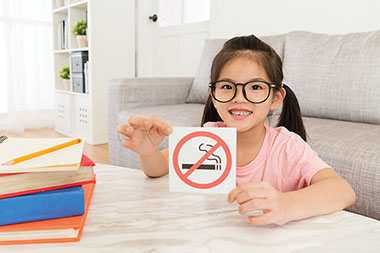
    Child holding no smoking sign.

    Go to the places where you usually did not smoke/use tobacco-or where tobacco/nicotine is not allowed. Spend time with people who don’t use tobacco/nicotine.

    *  Go to the movies

    *  Visit a non-smoking friend

    *  Spend time with children

    *  Volunteer

    List places that are easier for you to be tobacco/nicotine free.

    © American Institute for Preventive Medicine
  • No Ifs, Ands, Or Butts About It. Be Tobacco Free.

    Tobacco Cessation

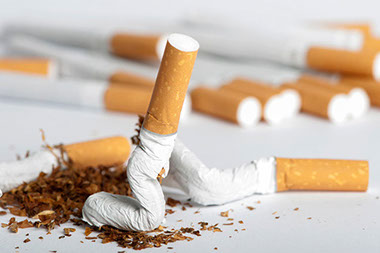
    Image of crushed cigarettes.

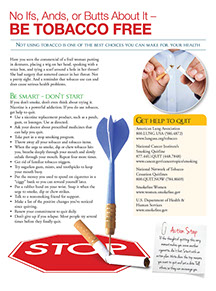
    Not using tobacco is one of the best choices you can make for your health.

    Have you seen the commercial of a frail woman putting in dentures, placing a wig on her head, speaking with a voice box, and tying a scarf around a hole in her throat? She had surgery that removed cancer in her throat. Not a pretty sight. And a reminder that tobacco use can and does cause serious health problems.

    Be smart, don’t start.

    If you don’t smoke, don’t even think about trying it. Nicotine is a powerful addiction. If you do use tobacco, get help to quit.

    *  Use a nicotine replacement product, such as a patch, gum, or lozenges. Use as directed.

    *  Ask your doctor about prescribed medicines that  can help you quit.

    *  Take part in a stop smoking program.

    *  Throw away all your tobacco and tobacco items.

    *  When the urge to smoke, dip or chew tobacco hits you, breathe deeply through your mouth and slowly exhale through your mouth. Repeat four more times.

    *  Get rid of familiar tobacco triggers.

    *  Try sugarless gum, mints, and toothpicks to keep your mouth busy.

    *  Put the money you used to spend on cigarettes in a “ciggy” bank so you can reward yourself later.

    *  Put a rubber band on your wrist. Snap it when the urge to smoke, dip or chew strikes.

    *  Talk to a nonsmoking friend for support.

    *  Make a list of the positive changes you’ve noticed since quitting.

    *  Renew your commitment to quit daily.

    *  Don’t give up if you relapse. Most people try several times before they finally quit.

    Bidis – Not a Safe Alternative

    Bidis are thin brown cigarettes made in India and other Southeast Asian countries. They are filled with tobacco flakes and dust and rolled in dried tendu or temburni leaves (plants native to Asia). These unfiltered cigarettes may be tied with a string at one or both ends. To mask the poor quality of tobacco used, flavors are often added. These include cherry, chocolate, mango, and vanilla.

    Bidis are cheaper and easier to buy than regular cigarettes, but have serious health risks.

    *  One bidi produces more than three times the carbon monoxide than one cigarette.

    *  Smoke from an unfiltered bidi has three to five times the amount of nicotine as a regular cigarette. This increases risk for nicotine addiction.

    *  One bidi releases three to five times more tar than a regular cigarette.

    *  Bidi smoke contains more deadly chemicals, such as ammonia than the smoke of one regular cigarette.

    *  Smoking bidis increases the risk for:

    *  Lung cancer, oral cancer, stomach cancer, and cancer of the esophagus

    *  Heart attack and coronary heart disease

    *  Chronic bronchitis and emphysema

    In India, the majority of bids are made by women and children and in their homes. Exposure to particles and dust in the process leads to many health problems. These include:

    *  Asthma

    *  Lung cancer

    *  Tuberculosis

    *  Skin problems

    *  Eye problems

    Resources

    American Lung Association

    800.LUNG.USA (586.4872)

    www.lungusa.org/tobacco

    National Cancer Institute’s Smoking Quitline

    877.44U.QUIT (448.7848)

    www.cancer.gov/cancertopics/smoking

    National Network of Tobacco Cessation Quitlines

    800.QUIT.NOW (784.8669)

    Smokefree Women

    www.women.smokefree.gov

    U.S. Department of Health & Human Services

    www.smokefree.gov

    www.surgeongeneral.gov/tobacco

    Action Step

    If the thought of quitting this very moment makes you crave another cigarette, don’t fret. Start with an action plan. Write down the top reasons you want to quit and set a date. Tell others so they can encourage you.

    Page from Ways to Well-Being book by the American Institute for Preventive Medicine. www.HealthyLife.com. All rights reserved.

    © American Institute for Preventive Medicine
  • Nicotine Replacement Therapy

    Healthylife® QuitWell™

    Part 3

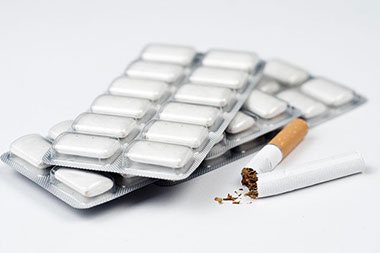
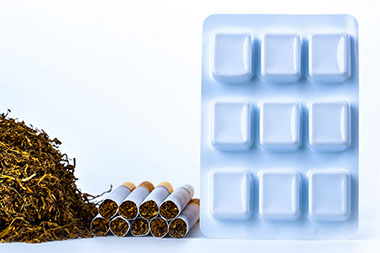
    Image of nicotine gum to help stop smoking.

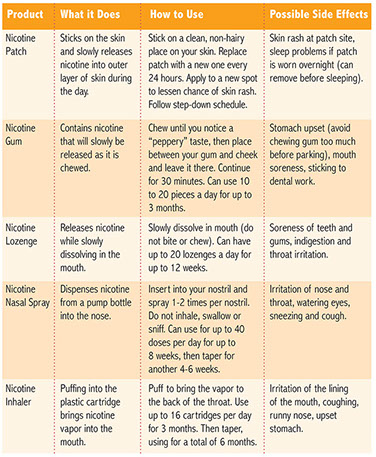
    All of these products contain nicotine. Patches, gum, and lozenges are available other-the-counter. The nicotine nasal spray and nicotine inhaler require a prescription.

    © American Institute for Preventive Medicine
  • Nicotine Gum Can Help Smokers Quit

    Tobacco Cessation

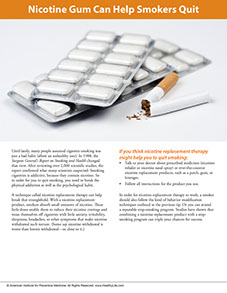
    Image of cigarette broken in half with nicotine gum next to it.

    Until lately, many people assumed cigarette smoking was just a bad habit (albeit an unhealthy one). In 1988, the Surgeon General’s Report on Smoking and Health changed that view. After reviewing over 2,000 scientific studies, the report confirmed what many scientists suspected: Smoking cigarettes is addictive, because they contain nicotine. So in order for you to quit smoking, you need to break the physical addiction as well as the psychological habit.

    A technique called nicotine replacement therapy can help break that stranglehold. With a nicotine replacement product, smokers absorb small amounts of nicotine. These little doses enable them to reduce their nicotine cravings and wean themselves off cigarettes with little anxiety, irritability, sleepiness, headaches, or other symptoms that make nicotine withdrawal such torture. (Some say nicotine withdrawal is worse than heroin withdrawal-or close to it.)

    If you think nicotine replacement therapy might help you to quit smoking:

    *  Talk to your doctor about prescribed medicines (nicotine inhaler or nicotine nasal spray) or over-the-counter nicotine replacement products, such as a patch, gum, or lozenges.

    *  Follow all instructions for the product you use.

    In order for nicotine replacement therapy to work, a smoker should also follow the kind of behavior modification techniques outlined in the previous tip. Or you can attend a reputable stop-smoking program. Studies have shown that combining a nicotine replacement product with a stop-smoking program can triple your chances for success.

    Page from A Year of Health Hints book by the American Institute for Preventive Medicine. www.HealthyLife.com. All rights reserved.

    © American Institute for Preventive Medicine
  • Negative Reinforcement

    Healthylife® QuitWell™

    Part 4

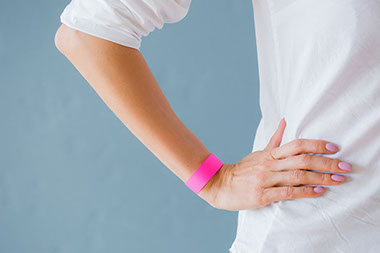
    Women wearing a rubber band around wrist.

    If you are punished for doing something, you are less likely to keep doing it. If a person threw a bucket of water in your face each time you walked around the block, you would take fewer walks.

    Urge Zapper

    1. Place a stretchy band on your wrist.

    2. Snap your wristband whenever you have an urge to use tobacco/nicotine.

    Tobacco Consequence Control

    When you get an urge, think of something you want to avoid-shortness of breath, cancer, heart disease, or letting someone down. What do you want to avoid?

    As the urge goes away, reward yourself by thinking of something you are looking forward to with quitting-feeling in control, breathing more easily, or having more money. What do you look forward to?

    Butt Bottle Revival

    1. Keep your butt bottle where you can see it.

    2. Open it up and smell.

    3. Add water to highlight the foul odor.

    © American Institute for Preventive Medicine
  • My ‘Why Quit’ List

    Healthylife® QuitWell™

    Part 1

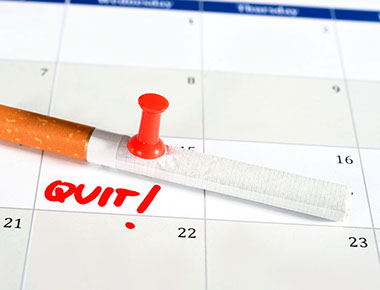
    Image of a cigarette on a calendar with the word "Quit!" next to it.

    What motivates you to try quitting? How might your life change if you quit? If you feel something on that list is one of your reasons to try quitting, write it here. You can also write this list on a separate piece of paper or keep a list in your phone. You can also post this list where you can see it often, like on your fridge or by your desk at work.

    © American Institute for Preventive Medicine
  • Moving Through Stages

    Healthylife® QuitWell™

    Part 1

    Image of couple walking down a paved trail.

    Over the next few weeks, as you move through the QuitWell™ program, you might notice yourself moving back and forth between the stages as different factors affect your thinking. For example, a stressful day at work can make you feel like you’ve taken a step backward. Don’t let that stop you! This guide will give you tools to work through challenges and be better prepared for future ones.

    You can try out nearly all the activities in this guide, though pay special attention to the activities highlighted for your stage of change. Look for the tips throughout the guide that help you fit an activity to your stage of change. This will help you feel good about where you are at and help you feel more confident about the future. When you feel yourself moving forward in the stages of change, you can go back to these activities and do them again, using the tips for your new stage of change.

    In a few words, describe how you are feeling right now about quitting. What brought you here? What stage of change do you feel fits you best right now?

    © American Institute for Preventive Medicine
  • Move Your Body

    Healthylife® QuitWell™

    Part 5

    Couple outside stretching.

    All physical activity has benefits for the body and mind. View exercise as a break from your day. Use this time to focus on the present, instead of past or future problems and worries. What are your favorite ways to be physically active?

    Physical activity can help you quit and stay quit. It can also improve your energy level, ability to learn, and focus.

    Emotional Health

    Exercise releases endorphins and increases levels of serotonin and dopamine in the brain. These brain chemicals help create feelings of happiness and euphoria. You may start to feel these benefits after just a few minutes of moderate exercise. This leads to a happiness buzz and overall mood boost!

    Stress Management

    Norepinephrine is a chemical that can moderate the brain’s response to stress. Exercise helps to increase that chemical. Exercise can decrease worry and tension. These may be triggers for you to smoke, dip, or vape. Exercise also enhances the mind’s ability to deal with daily stressors. Managing stressors can reduce urges to reach for your old habit. The calming effect of exercise can last at least four hours after the exercise is over.

    Physical Health

    Exercise helps strengthen your muscles and bones. This helps you have good posture and keeps your joints and body more aligned. Exercise strengthens your heart muscle so your heart is more efficient. This also helps reduce your risk of having a heart attack or blood clot. Exercise can also help lower your blood pressure. Your ability to breathe also improves, especially as you reduce and eliminate smoking. Exercise improves the circulation of immune cells in your blood that fight off viruses and bacteria. Exercise also helps combat damage done to cells, tissues, and organs.

    Recommendation: Be physically active for at least 2 ½ hours (150 minutes) per week. You can do this for 10, 15, 20, or 30 minutes at a time. Consult your doctor before beginning an exercise routine if you:

    *  Have a chronic health problem, such as heart disease or diabetes.

    *  Have high blood pressure.

    *  Feel faint or dizzy when you try to exercise.

    *  Have an injury or bone or joint problems, such as arthritis, that have been or could become aggravated by exercise.

    Reduce Sit-Time

    Find ways to move more throughout the day.

    *  Set an alarm on your watch or phone to get up every hour, if sitting.

    *  Stretch and walk for a few minutes to get more oxygen flowing through your body.

    *  Drink water regularly so you need to use the bathroom every few hours.

    *  Get up during commercial breaks on TV to tidy up a room or dust.

    *  Walk outside for a few minutes. Take a deep breath of fresh air.

    *  Walk to get lunch.

    Move in Different Ways

    All exercise and movement help give you the benefits. Finding activities you like doing and that you will keep doing is important for long-term success.

    Cardiovascular (cardio) training uses large movements that involve multiple muscle groups, such as your legs, buttocks, and abdominals, all at once. Popular aerobic activities are brisk walking, running, cycling, swimming, and dancing.

    Resistance training uses body weight or weights to build muscle. Move slowly through exercises, breathing regularly. Squats, lunges, push-ups, calf raises, and bicep curls are basic resistance movements.

    Stretching helps your body be more flexible. This helps you prevent injury during exercise and everyday activities. Stretching can also help you relax.

    © American Institute for Preventive Medicine