Blog

  • Tvs Can Injure Kids

    FAMILY LIFE

    Image of boy watching TV.

    How about that shocking headline? Although most parents do not consider furniture and TVs to be dangerous, children are often injured when these items tip over.

    A study conducted by the Center for Injury Research and Policy of The Research Institute at Nationwide Children’s Hospital found that nearly 15,000 children younger than age 18 go to ERs annually for injuries received from furniture tip-overs.

    According to the study, published in Clinical Pediatrics, most furniture tip-over-related injuries occurred among children younger than age 7 and resulted from TVs tipping over. More than one quarter of the injuries occurred when children pulled over or climbed on furniture.

    Older children were more likely to suffer injuries from desks, cabinets, or bookshelves tipping over. Head and neck injuries were most common among younger children, while children older than age 9 were more likely to suffer injuries to the lower body.

    Despite warnings from the U.S. Consumer Product Safety Commission, the number of tip-over injuries has increased since the early 1990s.

    Parents can reduce risks to children by placing TVs low to the ground and near the back of their stands and strapping televisions and furniture to the wall with safety straps or L-brackets. Purchase furniture with wide legs or with solid bases. Install drawer stops on chests of drawers, and place heavy items close to the floor on shelves.

    Also, parents can reduce a child’s desire to climb furniture by not placing attractive items, such as toys or the remote control, high on top of furniture or the TV.

    © American Institute for Preventive Medicine

  • Turn Awareness Into Action

    WELL-BEING

    Image of 2 women holding a sign with the word "Prevent" written.

    Breast cancer screening guidelines vary with different health groups. The U.S. Preventive Service Task Force advises women ages  50-74 to get a mammogram every 2 years.

    Women ages 40-49 and 74+ should discuss their breast cancer risk and the pros and cons of breast cancer screening with their doctors or health care providers. Women at a high risk for breast cancer should seek expert medical advice about breast cancer screening and prevention.

    Many women can survive breast cancer if it’s found and treated early.

    Your doctor can help you decide if you should take medication to help prevent breast cancer and if you should seek genetic counseling.

    Even though you cannot control breast cancer risk factors such as aging and inheriting certain breast cancer gene mutations, you can take action to help prevent breast cancer.

    *  If you have babies, breast-feed them.

    *  Talk to your doctor about the risks and benefits of taking hormone therapy using estrogen and progestin for menopausal symptoms. Taking both estrogen and progestin for more than five years increases breast cancer risk.

    *  Lose weight if you are overweight, especially if you have reached menopause.

    *  Limit alcohol. The more alcohol you drink, the greater the risk.

    *  Be physically active. Strenuous exercise for more than four hours a week may help lower breast cancer risk.

    © American Institute for Preventive Medicine

  • Turn Off, Tune In

    FAMILY LIFE

    Image of family sitting on couch watching TV.

    Parents, turn off the television when your children are with you. And when you do let them watch TV, make sure the programs stimulate their interest in learning.

    That’s the advice arising from University of Iowa researchers who examined the impact of television and parenting on children’s social and emotional development.

    The researchers found that background television-when the TV is on in a room where a child is doing something other than watching-can divert a child’s attention from play and learning. It also found that non-educational programs can negatively affect children’s mental development.

    Best advice:Sit down and watch a TV show. When it’s over, turn off the TV.

    © American Institute for Preventive Medicine

  • Traveling With Diabetes

    SELF-CARE CORNER

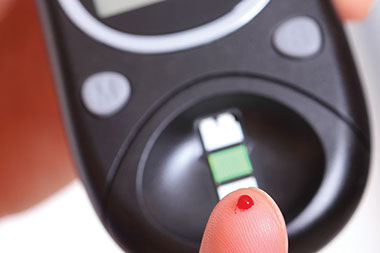
    Image of pricked finger about to test blood glucose levels.

    The American Association of Diabetes Educators suggests a plan for ensuring your next travel adventure is safe and successful.

    Over-pack your medications.

    Gone for a week? Pack two weeks’ worth of your diabetes medications in case of travel delays or misplaced supplies (insulin, syringes, testing strips, extra batteries for your pump, a first-aid kit, glucagon emergency kit). If you use an insulin pump, ask the company if you can bring a backup in case yours fails. Have a prescription from your doctor for insulin or oral medication in case of an emergency.

    Protect your supplies.

    Keep your medications and supplies close at hand and don’t put them in checked luggage or in the car trunk, where they can be exposed to harmful extreme temperatures (too hot or too cold). If you’re flying, keep them in the original packaging (so no one questions they’re yours) in a bag separate from your toiletries, as requested by the TSA. Don’t worry, the TSA allows you to go over the 3.4 liquid-ounce carry-on limit for diabetes medications and supplies.

    Identify yourself.

    Wear your medical bracelet or necklace that notes you have diabetes and take insulin (if you do). Bring a doctor’s note that explains you have diabetes and lists your medications, as well as a prescription in case you need more. Carry a health card that includes your emergency contact and doctor’s name and phone number. Learn how to say “I have diabetes,” “sugar,” and “orange juice, please” in the language of the country you are visiting.

    Carry snacks and low blood sugar treatment.

    Low blood sugar (hypoglycemia) can strike any time and food access during travel is unpredictable, so be sure to bring plenty of snacks such as peanut butter crackers, granola bars, and trail mix as well as glucose tablets or gel.

    Simplify flying.

    Tell the TSA folks that you have diabetes (they’re used to accommodating people with health issues). Visitwww.tsa.gov/traveler-information/passengers-diabetesbefore your trip to learn about current screening policies. If you plan to inject insulin while flying, be forewarned-the pressurized air can make it more challenging to draw up your insulin, if using a vial and syringe, so be extra careful not to inject air into the bottle.

    Test often.

    New foods, increased activity, and different time zones can throw your glucose levels out of whack, so be sure to test frequently, including before and after meals. If you take insulin, keeping your levels steady can be tricky when changing time zones, so make a plan to adjust your schedule for injecting. Before your trip, see a diabetes educator, who can help you with this challenging process.

    Favor your feet.

    Wear comfortable well-fitting shoes and socks at all times. Never go barefoot. Check your feet often, especially after a hike or long walk. Feet and ankles often swell during flights so consider wearing light knee-high compression stockings or bring thinner socks to change into if your feet swell. Wear a shoe that can be loosened if that occurs. Pointing and flexing your ankles during a flight can improve blood flow in your calf muscles and decrease swelling as well as lower the risk of blood clots.

    Prepare for a health emergency.

    If you need medical treatment, ask your hotel to recommend a local doctor who treats diabetes. Before you travel overseas, get a list of local English-speaking doctors through the International Association for Medical Assistance to Travelers atwww.iamat.org.

    © American Institute for Preventive Medicine

  • Train Like An Olympian

    BE FIT

    Image of women running.

    Olympic athletes inspire us with their fierce discipline and natural talent as they smash records, going higher, farther and faster. Their can-do   spirit motivates us all to take on  new challenges.

    Whether your goal is to complete your first marathon or improve your golf game, there are lessons to be learned from the best of the best.

    Saint Louis University assistant professor of physical therapy, Chris Sebelski, gives this guidance on how to train like a champion:

    *Set a goal and break it down.For instance, if you’re training to get in shape for a cross-country hiking trip, you might aim to walk 3 miles a day for the first 2 weeks and build up to 10 miles a day by the end of 10 weeks.

    *Cross-train.Cross-training reduces risks of overtraining and helps avoid injury. It also enhances muscle performance and stimulates the mind so you don’t become bored by too much repetition.

    *Work out with others.Olympic athletes don’t train alone and they don’t train only with those at the same skill level. Run with different people. On one day, partner with someone slower than your normal pace. You’ll stay out longer and practice endurance. Another day, run with someone faster than your average pace. You’ll do a more intense cardio workout.

    *Create a team.Olympic athletes know that they cannot do it on their own. You shouldn’t expect to either. Seek people and methods that can help you accomplish your goal. It could be a face-to-face session with a trainer, a nutrition class, or an online chat room of like-minded people.

    *Find your motivation.Olympians use lots of techniques to manage their emotions. This year, for example, athletes reported using yoga, meditation, and even watching their favorite TV shows to calm themselves before an event.

    *Put on an Olympic attitude.For most of us, our jobs, families and personal commitments mean we can’t spend as much time training as a world champion might. But  you can adopt the mentality of  an Olympian during the time you  do train.

    *Enjoy.Regardless of the scale of your goal, train for and accomplish a physical goal you set for yourself. Crossing that finish line is a feeling unlike any other.

    © American Institute for Preventive Medicine

  • Top Excuses For Not   Getting A Flu Shot (And Why You Should)

    MEDICAL NEWS

    Image of blocks that spell out "flu vaccine".

    Seasonal flu is caused by a virus that can fly through the air, hitch a ride on a handshake, hug or kiss, and is extremely good at infecting people and making them sick.

    It can spread by person-to-person contact or it can land on a surface, such as a doorknob, handrail, or elevator button, only to be picked up by the next unsuspecting person to come along. Maybe even you.

    The best way to avoid the flu this year is to get the widely available flu vaccination from your family doctor, pharmacy, or one of the many flu vaccine clinics sponsored by local health departments, says Dr. Katharine Garnier, a family physician at the University of Medicine and Dentistry of New Jersey-School of Osteopathic Medicine.

    Still, some people routinely avoid this annual shot. For those who are looking for a reason not to get inoculated, Dr. Garnier (humorously) gives her top 10 unwise reasons not to get a flu shot this year:

    1. I’m feeling incredibly lucky this year.

    2. The vaccine is inexpensive so it probably doesn’t work.

    3. I’m not afraid of body aches … or headaches … or sore throats … or dangerously high fevers … and I never get sick!

    4. I like the idea of having a real reason to call in sick for work.

    5. That cute little paper mask over my nose and mouth is a trendy fashion statement.

    6. Getting really, really sick is a great way to lose a few pounds without dieting.

    7. I’m not planning to leave my house, or let anyone in, for the next six months anyway.

    8. I’m anxious to find out if my insurance company really will cover a hospital stay.

    9. I went to the county fair and didn’t get swine flu, so I must have a natural immunity.

    10. Getting sick with the flu will give me a reason to visit relatives I don’t really like so that I can share the virus with them!

    Protect yourself and others. Get a flu shot.

    © American Institute for Preventive Medicine

  • Top 3 Food Myths That Won’t Die

    HEALTHY EATING

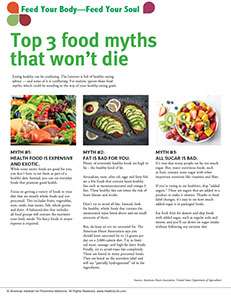
    Image of healthy foods.

    Eating healthy can be confusing. The Internet is full of healthy eating advice – and some of it is conflicting. For starters, ignore these food myths, which could be standing in the way of your healthy eating goals.

    Myth #1: Health food is expensive and exotic.

    While some exotic foods are good for you, you don’t have to eat them as part of a healthy diet. Instead, you can eat everyday foods that promote good health.

    Focus on getting a variety of foods in your diet that are mostly whole foods and not processed. This includes fruits, vegetables, nuts, seeds, lean meats, fish, whole grains and dairy. A balanced diet that includes all food groups will contain the nutrients your body needs. No fancy foods or major expense is required.

    Myth #2: Fat is bad for you.

    Plenty of extremely healthy foods are high in fat – the healthy kind of fat.

    Avocadoes, nuts, olive oil, eggs and fatty fish are a few foods that contain heart-healthy fats such as monounsaturated and omega-3 fats. These healthy fats can lower the risk of heart disease and stroke.

    Don’t try to avoid all fats. Instead, look for healthy, whole foods that contain the unsaturated types listed above and eat small amounts of them.

    But, do keep an eye on saturated fat. The American Heart Association says you should limit saturated fat to 13 grams per day on a 2,000-calorie diet. Try to limit red meat, sausage, and high-fat dairy foods. Finally, try to avoid trans fats completely. These are found in many processed foods. They are listed on the nutrition label and will say “partially hydrogenated” oil in the ingredients.

    Myth #3: All sugar is bad.

    It’s true that many people eat far too much sugar. But, many nutritious foods, such as fruit, contain some sugar with other important nutrients like vitamins and fiber.

    If you’re trying to eat healthier, skip “added sugars.” These are sugars that are added to a product to make it sweeter. Thanks to food label changes, it’s easy to see how much added sugar is in packaged foods.

    Eat fresh fruit for dessert and skip foods with added sugar, such as regular soda and sweets, and you’ll cut down on sugar intake without following any extreme diet.

    Sources: American Heart Association, United States Department of Agriculture

    © American Institute for Preventive Medicine

  • Top 10 Ways To Prevent An Infection

    SELF-CARE CORNER

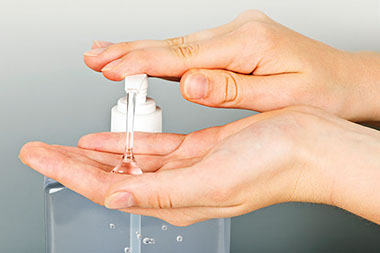
    Close-up image of liquid soap being placed in the palm.

    Beyond the obvious-steering clear of runny noses and hacking coughs-the Association for Professionals in Infection Control and Epidemiology presents some practical ways of staying infection-free.

    1.Wash your hands often.Germs can live on surfaces anywhere from a few minutes to several months. Common places to pick up germs are kitchen sponges, light switches, elevator buttons, and shared computer keyboards and phones. Wash your hands with good old soap and water for 20 seconds and dry them with a paper towel. When you can’t wash your hands, use alcohol-based gels or wipes to clean your hands.

    2.Don’t share personal items.Toothbrushes, towels, razors, handkerchiefs, and nail clippers can all be sources of infectious agents (bacteria, viruses, and fungi). Not sharing is caring, in this case.

    3.Cover your mouth when you cough or sneeze.Coughing or sneezing can spread germs through microscopic droplets in the air. Cover your mouth with a tissue, your sleeve or the inside bend of your elbow.

    4.Get vaccinated.Vaccines help your body develop immunity to infectious organisms.

    5.Use safe cooking practices.Microbes thrive on virtually all food items, and more so on foods left at room temperature. Promptly refrigerate foods within 2 hours of preparation.

    6.Be a smart traveler.If you travel to a location where water is questionable, use a safe water source such as bottled water for drinking and brushing your teeth. Eat foods that have been cooked. Avoid raw vegetables and fruits.

    7.Practice safe sex.Many sexually-transmitted infections can be prevented using condoms and limiting sexual partners.

    8.Don’t pick your nose (or your mouth or eyes either).Many germs prefer the warm, moist environment inside your nose, as well as other mucous-covered surfaces such as your eyes and mouth.

    9.Exercise caution with animals.If you have pets, make sure they get regular check-ups and that their vaccinations are up-to-date. Clean litter boxes often (unless you’re pregnant-stay away!), and keep small children away from animal feces. Wash your hands after playing with pets.

    10.Watch the news.Find out where outbreaks of infectious diseases occur and avoid going to those areas. Follow warnings to avoid foods found to have listeria, salmonella and other harmful organisms.

    © American Institute for Preventive Medicine

  • Top Ten Recommendations For Cancer Prevention

    MEDICAL NEWS

    Image of doctor checking a women for skin cancer.

    1. Be as lean as possible without becoming underweight.

    2. Be physically active for at least 30 minutes every day.

    3. Avoid sugary drinks. Limit consumption of energy-dense foods.

    4. Eat more of a variety of vegetables, fruits, whole grains and legumes such as beans.

    5. Limit consumption of red meats (such as beef, pork and lamb) and avoid processed meats.

    6. If consumed at all, limit alcoholic drinks to 2 for men and 1 for women a day.

    7. Limit consumption of salty foods and foods processed with salt (sodium).

    8. Don’t use supplements to protect against cancer.

    9. It is best for mothers to breastfeed only for up to 6 months and then add other liquids and foods.

    10. After treatment, cancer survivors should follow these recommendations for cancer prevention.

    Source: American Institute for Cancer Research

    © American Institute for Preventive Medicine

  • Top 10 Fruit Snacks For Kids

    HEALTHY EATING

    Image of child eating yogurt with strawberries and blue berries.

    Forget cookies. Fruit is now the number-one snack item parents give to children under the age of 6. That’s because leading researchers believe that parents are taking childhood nutrition more seriously.

    The Produce for Better Health Foundation suggests these top 10 fruit snacks for kids:

    *  Popsicles (freeze fruit juice to make your own)

    *  Fruit sandwiches (slices of apples or pears and low-fat cheese)

    *  Peanut butter and fresh fruit

    *  Fresh fruit dipped in low-fat yogurt

    *  Fruit smoothies

    *  Canned fruit or single-serve fruit cups

    *  Applesauce as a dip for fresh fruit slices

    *  Dried fruit packs such as raisins

    *  Fresh fruit dipped in poppyseed dressing

    *  Frozen fruit chunks such as bananas and grapes

    © American Institute for Preventive Medicine