Blog

  • Too Sick For School?

    SELF-CARE CORNER

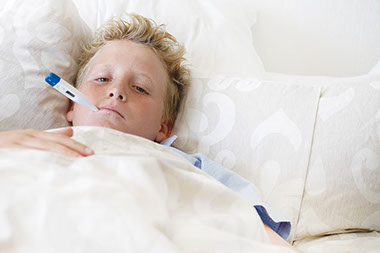
    Image of sick boy in bed.

    Colds? Flu? What to do? Sending a sick child to school can make matters worse and spread the illness to others. Follow these guidelines from pediatrician Dr. Jacqueline Kaari, University of Medicine and Dentistry of New Jersey, who said, “Parents need to be able to quickly assess their child and determine if he or she is well enough to go to school or needs to stay home, or if it’s time to call the pediatrician. Sometimes, parents will guess wrong, but if there’s one rule of thumb, it should be to always err on the side of caution.”

    Colds.What to do: Use over-the-counter saline nose drops or spray and a cool mist humidifier to relieve symptoms. Because colds are caused by viruses, antibiotics are not effective. Instead, the cold just needs to run its course until the child recovers. Contact your child’s doctor if a cough suddenly worsens or a fever develops.

    Fever.What to do: Give acetaminophen or ibuprofen for fevers. Encourage the child to drink lots of fluids and avoid fatty or fried foods that are hard to digest because fevers decrease stomach activity. Keep children at home if their fever is above 100.4ºF. Call a doctor if a high fever lasts more than 24 hours or does not respond to medication, or if the child’s condition worsens.

    Flu.Striking more suddenly and more intensely than a cold, the flu causes a sudden, high fever with body aches. What to do: Have your child vaccinated early in the flu season to protect against this illness. A child who comes down with the flu should stay home for several days, rest, and drink lots of fluids.

    Conjunctivitis (“pink eye”).A red, weeping eye(s) with a thick discharge that could become crusty when sleeping. What to do: Contact your child’s doctor for treatment, which may include antibiotic eye drops. Conjunctivitis can be highly contagious. Follow the doctor’s advice. Children can usually return to school 24 to 48 hours after treatment begins. Check with the school’s policy.

    Head lice.Tiny, crawling bugs that live on the scalp and feed on blood. Itching and sores on the scalp can be signs of head lice. The insects cannot jump or fly and are spread by human contact. What to do. Under bright light, check the entire scalp closely for lice or tiny white eggs (called nits), starting at the upper neck and behind the ears. Lotions and shampoos that can kill the lice are available at the drug store. Keep the child home from school until the lice have completely gone away.

    Sore throat.What to do: Have the child drink a few sips of water. If that relieves the symptoms, you are likely dealing with, at worst, a viral infection that will go away with a few days of rest, plenty of liquids, and pain relievers. If you suspect strep throat, follow the fever guidelines and contact your child’s doctor.

    Stomach ache.What to do: Keep children who have been vomiting home from school. Wait an hour after the child vomits and encourage small drinks of water. Gradually introduce clear liquids and bland foods throughout the day. Contact your doctor if vomiting lasts beyond 24 hours, occurs with worsening pain at the belly button or lower right abdomen, or if the child vomits blood or green or yellow matter.

    © American Institute for Preventive Medicine
  • Too Loud

    SELF-CARE CORNER

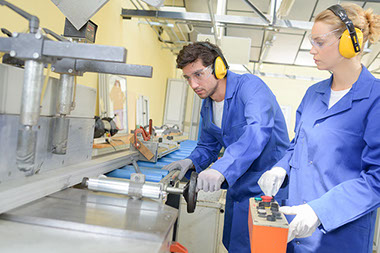
    Image of workers wearing proper safety glasses and headphones while working on machinery.

    Noise-induced hearing loss is the only type of hearing loss you can prevent. If you understand the hazards of noise and how to practice good hearing health, you can protect your hearing for life. Here’s how:

    *  Know which noises can cause damage (those at or above 85 decibels, such as a motorcycle).

    *  If you can’t reduce the noise or protect yourself from it, move away from the source.

    *  Wear earplugs or other protective devices when involved in a loud activity, even Zumba class (activity-specific earplugs and earmuffs are available at hardware and sporting goods stores).

    *  Be alert to hazardous noises in the environment.

    *  Protect the ears of children who are too young to protect their own.

    *  Have your hearing tested if you think you might have hearing loss.

    About sound

    Sound is measured in units called decibels. Sounds of less than 75 decibels, even after long exposure, are unlikely to cause hearing loss. But long or repeated exposure to sounds at or above 85 decibels can cause hearing loss. The louder the sound, the shorter the amount of time it takes for hearing loss to happen.

    © American Institute for Preventive Medicine

  • To Ice Or Not To Ice- That Is The Question

    SELF-CARE CORNER

    Illustration showing treatment for a sprained ankle using R.I.C.E.

    Or maybe the real issue is to heat or not to heat? Either way, whether you’re dealing with a one-time injury or chronic aches and pains, a few simple guidelines will help you know whether it’s best to bag some ice or get the trusty heating pad.

    Dr. Scott Lynch, director of sports medicine at Penn State Medical Center, said it’s all about blood flow. When you injure yourself, you should follow guidelines known as RICE-rest, ice, compression, and elevation.

    “Elevation is probably the most important thing because it limits the amount of blood flow to the area and the amount of swelling,” he said.

    Cold temperatures applied to an injury help constrict, or narrow, the blood vessels and keep blood from pooling there. This could cause too much inflammation or swelling that can delay the healing process.

    Dr. Cayce Onks, family and sports medicine physician at Penn State Hershey, said icing an injury for the first 48 to 72 hours after it occurs can reduce the amount of secondary tissue damage. Ice also can help decrease pain.

    Use ice for 20 minutes, once an hour. That’s so you don’t create other issues such as frostbite or damage to the skin. It also gives the skin a chance to recover from each icing session.

    While special freezer packs are easy to obtain, Dr. Onks said plain old ice in a bag (or a bag of frozen vegetables) works best. “You can mold it around the injury and get more coverage,” he said. “You also have to keep in mind that because of the chemicals in freezer packs, they can get much colder than ice and you could cause temperature-related skin problems.”

    Heat, on the other hand, is often used to ease muscle aches and pains, or to loosen up tense and sore areas before activity.

    “Heat typically brings blood flow to the area, which provides nutrients that the tissues need for healing,” Dr. Onks said. “It can also increase the flexibility of tendons and muscles.”

    Athletes who have chronic issues or old injuries typically heat before they are active and ice afterward. Some people prefer moist heat because they feel the extra humidity helps the heat penetrate.

    In an athletic training room or physical therapy setting, providers can also produce deeper heat by using ultrasound. A heating pad or a pack you heat up in the microwave will do the trick. Commercial heat patches or products such as Icy Hot may provide temporary or superficial relief, but they don’t typically offer the penetration of ice, moist heat, or ultrasound.

    © American Institute for Preventive Medicine

  • Tips To Survive The Workweek

    WORK LIFE

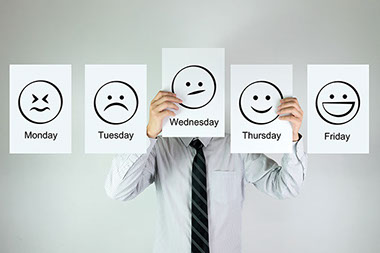
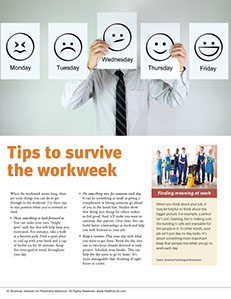
    Image of the days of the week on paper with emotion faces.

    When the workweek seems long, there are some things you can do to get through to the weekend. Try these tips to stay positive when you’re stressed or tired:

    *  Have something to look forward to. You can make your own “bright spot” each day that will help keep you motivated. For instance, take a walk at a favorite park. Find a quiet place to curl up with your book and a cup of herbal tea for 30 minutes. Keep this mini-goal in mind throughout your day.

    *  Do something nice for someone each day. It can be something as small as giving a compliment or letting someone go ahead of you in the lunch line. Studies show that doing nice things for others makes us feel good. And, it’ll make you want to continue that pattern. Over time, this can build better relationships at work and help you look forward to your job.

    *  Keep a routine. Plan your day with what you want to get done. Break the day into one or two-hour chunks devoted to each project. Schedule your breaks. This can help the day seem to go by faster. It’s more manageable than thinking of eight hours at a time.

    Finding meaning at work

    When you think about your job, it may be helpful to think about the bigger picture. For example, a janitor isn’t just cleaning; but is making sure the building is safe and enjoyable for the people in it. In other words, your job isn’t just day-to-day tasks. It’s about something more important. Keep that perspective when you go to work each day.

    Source: American Psychological Association

    © American Institute for Preventive Medicine

  • Tips To Save On Your Summer Vacation

    FINANCIAL HEALTH

    Image of family about to go on a road trip.

    You want your vacation to be memorable, but you probably don’t want to remember spending a lot of money. With some advanced planning, you can save a good amount of your travel and vacation expenses. Here’s what travel experts recommend:

    *Don’t pick prime times for flights.If you’re flying, you’ll usually pay less for airline tickets during off-peak times. This means flying during the middle of the week, early in the morning or late at night.

    *Be flexible.When booking airline tickets, choose the flexible dates option to find the lowest price for airfare. Sometimes, the savings can be substantial.

    *Visit during the off-season.Many people travel to warm, tropical destinations during the winter months. Try going during the late fall or early spring instead.

    *Check out renting a house.Many destinations offer houses for rent at about the same price per night as hotels but with much more space. When you share with another family, you split the cost for even more savings.

    *Look for online deals & coupons.Look online for local activities you want to do, such as visiting museums or scuba diving excursions. Many places offer deals or coupons if you book in advance. You may also be able to avoid lines for buying tickets.

    *Don’t forget your discounts.Companies like AARP and AAA often have discount rates for members. Some employers have discounts available to employees for car rentals and other vacation items.

    *Pack snacks.Pack healthy snacks in a cooler for a car trip like fresh-cut fruits and vegetables. For flights, bring your own food to the airport and eat before getting on the plane. Keep in mind liquids more than 3.4 ounces can’t be taken through the security checkpoints.

    *Get a kitchen.Look for hotel rooms that have a full kitchen so you can store food and beverages, cook your own meals and avoid the higher costs of eating out.

    *Try camping.Instead of traditional hotels, look for campsites. Camping often costs a fraction of what a hotel costs, as long as you have a tent, mats to sleep on and a few more basic camping supplies.

    *Look nearby.If the prices of airline tickets and hotels aren’t in your budget, look for daytrip options. Destinations within 2 hours of home are often doable for families and can be just as fun as a longer trip.

    © American Institute for Preventive Medicine
  • Tips To Prevent Trips & Falls

    SELF-CARE CORNER

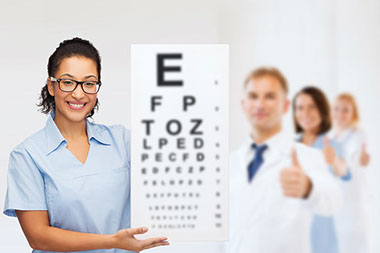
    Image of doctor holding up an eye chart.

    It’s one thing to lose your balance and fall. But it’s especially important to keep elderly people from the hazards of a trip and fall.

    The causes of balance issues could come from a number of different sources-many that don’t have a seemingly direct connection to balance or falls. Dr. Jason Rice, a primary care internist at Loyola University Health System, tells about some surprising reasons you may lose your balance and fall.

    Blood pressure medication.

    Some of these drugs can lead to side effects such as dizziness and lightheadedness, especially when changing positions such as standing up from a seated position. The same mechanism that allows our body to quickly adjust our blood flow after moving to a standing position from a seated or flat position can lead to a change in blood pressure, and several medications actively work to hinder this mechanism, which can lead to unsteadiness or falls when changing positions. Solution: Stand up slowly and get your bearings before walking. Staying hydrated also helps to prevent drops in blood pressure.

    Blood vessel changes.

    Over time the elasticity of blood vessels starts to decline and this can affect blood flow. Similar to blood pressure medication, this can cause you to become dizzy or lightheaded when changing positions, which can lead to falls. Solution: Stand up slowly and hold on to a stable surface before walking.

    Low blood sugar.

    Low blood sugar can cause dizziness, falls, and even loss of consciousness. This is especially true for people with diabetes. If you are taking medication to lower your blood sugar, make sure you take it with an adequate meal so your sugar doesn’t drop too low.

    Declining vision.

    Visual clues are an extremely important part of balance. As we age, our eyesight declines, which can lead to issues with balance. Regular visits to your primary care physician, which includes a vision assessment, is the best way to avoid this problem.

    © American Institute for Preventive Medicine
  • Tips To Help Kids Succeed

    FAMILY LIFE

    Image of kid holding an 'A' graded paper with thumbs up.

    Parenting is not an easy job, and it seems there are thousands of ways to do it. With so many parenting books and techniques available, how do you know what works? Sometimes, it helps to go back to the basics. You don’t have to be perfect or read every parenting book on the market.

    Years of research from medical experts says the following parenting tips will help keep your kids healthy and happy:

    *Be loving.Kids need love every day. Tell them you love them and give hugs and kisses.

    *Give them comfort.If a child is scared, help them to feel safe. Take steps to protect them and help them cope with fears.

    *Spend time with them.Set aside time each day to focus on them, and put the phones and devices away during this time. Point out good things they do. Be specific. For example, you might say, “I’m really proud of you for cleaning your room without being asked.”

    *Be a good listener.No matter what the topic, kids will feel valued if you look at them and listen to what they say.

    *Use a routine.Kids like to know what’s coming next. Set times for bed, meals and simple chores to help them feel secure.

    *Forgive mistakes.Help them by saying what they could do next time to avoid the mistake. Don’t criticize them as a person by saying, “you were bad.”

    *Have rules & stick to them.Parents, babysitters and other caregivers should follow the same rules. Don’t change them or let certain people break them. This only creates confusion and can lead to behavior problems.

    Even with the best advice, parents may need help from an expert. This doesn’t mean you’re a bad parent. Sometimes, talking to someone who can help makes a big difference. If you feel you need help with parenting, try the following resources:

    *  Your child’s pediatrician

    *  Your own primary doctor

    *  Local parenting classes at hospitals, schools or community centers

    *  A family counselor or minister

    *  Online support groups

    Don’t be embarrassed to ask for help. It’s a sign that you want to be the best parent you can be, and that’s a good thing!

    © American Institute for Preventive Medicine

  • Tips For Work Gift-Giving

    WORK LIFE

    Image of 2 wrapped gifts.

    If you’re considering buying presents for people at your workplace, it’s important to know how to do it right:

    *Be discreet.If you are buying gifts for just a friend or two, consider giving them outside of work so others don’t feel excluded.

    *Keep it professional.Work-related items, such as a nice pen or a coffee mug (if the person drinks coffee), are appropriate options. Personal items, such as perfume or clothing, should generally be avoided.

    *Be careful about supervisors.Many companies frown upon giving gifts to the boss. Although your intentions may be good, co-workers may see it as a way to buy into your boss’s good graces. And, it could make your boss uncomfortable.

    *Don’t go overboard.Spending more than you can afford isn’t necessary and may make the recipient feel uncomfortable.

    *Consider different religions and beliefs.Remember that not everyone celebrates the same holidays.

    Hands-free etiquette

    Whether you’re in a work meeting or at the office holiday party, you may want to put down your smart phone. Checking your email and posting to social media during work activities may give others the impression you are bored or would rather be somewhere else. If you must have it on for emergency calls, silence the dinging emails and text messages to minimize distractions.

    © American Institute for Preventive Medicine

  • Tips For Keeping A Food Diary

    HEALTHY EATING

    Image of young man writing in a journal.

    If you’re trying to lose weight or simply want to eat healthier, keeping a food diary can help. Often times, we eat little bites here and there that don’t seem like much, but calories from them can add up quickly. A food diary will help you see everything you eat and drink so you can be more aware of extra calories or unhealthy choices. It can also help you see if you are eating because of stress or emotions. Then, you can find ways to stop these habits.

    A food diary doesn’t have to be complicated. Food diary apps are available, but they’re not necessary. The American Academy of Family Physicians and the CDC say you should write down these things:

    *  What you ate and drank

    *  The time you ate meals and snacks

    *  Where you ate and any other activity you were doing (watching TV, checking emails, etc.)

    *  Who you were with

    *  How you were feeling (before, during, and after eating)

    Don’t rely on your memory at the end of the day. It’s too difficult to remember every bite or sip. Instead, have the diary with you and write things down as soon as you can. Being honest and taking note of everything you eat and drink can help you see your eating patterns and pinpoint ways you can make healthy changes.

    © American Institute for Preventive Medicine
  • Tips For New Empty-Nesters

    FAMILY LIFE

    Image of couple sitting in front of their house.

    Busy parents may dream of the day when they can have time to themselves again. But sometimes when the last child leaves home, parents are left with feelings of sadness and loss. This is known as “empty nest syndrome.”

    Empty nest syndrome happens to many parents. But, there are some ways to help prepare for it and cope with it once it happens.

    Pick a hobby with your spouse.Having an empty nest means you and your partner have more time to do fun things together. This can help you improve your relationship too.

    Get support from friends and family.Talk to those who have been through the empty nest experience.

    See a doctorif you think you may have depression.

    Stay in contact.Talk to your child over the phone, in texts, or online whenever you can.

    Look for new opportunities.Have you been putting off taking a class, working toward a promotion, or other interests? Now may be the time to try it.

    Experts point out that an empty nest isn’t always a time of sadness. Many parents find they enjoy their newfound freedom, according to the American Psychological Association. With today’s technology, it’s easier than ever to stay in touch. And many parents are excited to get more time for their own goals once their children are grown.

    Source: Vanderbilt University Child and Family Center

    Not-so-empty nest

    The number of adult children living with their parents is higher today than ever. Between 2005 and 2011, the percentage of young adults living in their parents’ home went up, according to the U.S. Census Bureau. The percentage of men age 25 to 34 living in their parents’ home rose from 14 percent in 2005 to 19 percent in 2011. For women of the same age, it rose from 8 percent in 2005 to 10 percent in 2011.

    © American Institute for Preventive Medicine