Blog

  • The Importance Of Proper Eye Care

    SELF-CARE CORNER

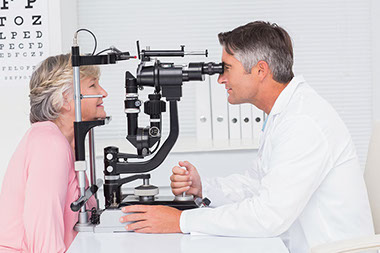
    Image of older women getting her eyes check by an eye doctor.

    Many people don’t think about their eyes until they start to hurt or develop a problem. But even if your eyes feel fine, they need proper care to keep them healthy. Follow the advice of the National Eye Institute:

    Get regular eye exams.

    Your doctor can recommend a schedule for you, depending on your age and other health factors. Many common eye diseases, such as glaucoma, diabetic eye disease and age-related macular degeneration, don’t have obvious symptoms. An eye exam can find these problems early, when they’re most treatable.

    Eat a healthy diet.

    Your eyes benefit from a diet rich in fruits, vegetables and omega-3 fatty acids. Talk with your doctor about the right diet for you.

    Keep them shaded.

    Wear sunglasses that have at least 99 percent UVA and UVB protection when you’re outside.

    Don’t smoke.

    Smoking hurts your health in many ways, including your sight. It increases your risk of eye problems that can lead to blindness. It’s never too late to quit. For free resources to help you quit, visitsmokefree.gov.

    Protect your eyes.

    Cover your face and eyes with goggles or a full-face mask when playing sports or doing work. Wear safety goggles when working with power tools and sharp objects. Follow your employer’s guidelines for wearing eye protection. Encourage your coworkers to do the same.

    Know your family history.

    If there are eye problems in your family, tell your doctor.

    © American Institute for Preventive Medicine
  • This Home Fix Can Save Your Life

    WELL-BEING

    Illustration of a house.

    It’s odorless, colorless, and causes lung cancer. You could be breathing it every day and not know it. It’s radon, and it’s a major health threat in nearly all areas of the country.

    What is radon?

    Radon is a naturally occurring gas that is found in soil. It makes its way into buildings through cracks, joints, and gaps in the basement or foundation. Once inside, it can build up and result in dangerously high levels. High levels of radon can cause lung cancer. The Surgeon General has warned that radon is the second leading cause of lung cancer in the U.S. today. Only smoking causes more deaths from lung cancer.

    The CDC estimates that more than 20,000 people die every year from lung cancer caused by radon. Even people who have never smoked can get lung cancer from radon. But, if you smoke, your chance of lung cancer is even higher.

    How do I know if my house has radon?

    The only way to detect radon in your house is through a radon test. Many hardware stores carry these tests, or you can get a test through your state’s radon office. Follow the instructions exactly as listed on the test. The tests are not expensive and are easy to use. Usually you need to leave the test in your house for a set amount of time. Then, you’ll follow instructions to mail it to a lab to get your results.

    No level of radon is safe. But, if your test shows a level of 4 or higher, you need to fix your house.

    How do I get rid of radon?

    There is an effective way to get radon out of your house and keep it from coming back. A radon mitigation system involves putting a special pipe device in your basement. The pipe has a fan inside that blows the radon back outside.

    Every state has radon removal companies who can install these systems. The Environmental Protection Agency says you should use a company that is accredited by the National Radon Safety Board or the National Radon Proficiency Program.

    Radon is one health problem no one should live with. Get a radon testing kit today. Your health and life are worth it.

    Take action against radon

    To order a radon test kit, call: 1-800-SOS-RADON

    (1-800-767-7236)

    For answers to radon questions, call: 1-800-55-RADON (557-2366)

    For questions about fixing radon levels in your house, call: 1-800-644-6999.

    © American Institute for Preventive Medicine

  • The Grill Is For More Than Meat

    HEALTHY EATING

    Image of a grilled corn on the cob.

    If you love getting out the grill for summer meals, don’t stop at burgers and chicken. The grill is an excellent way to prepare some of summer’s most delicious fresh produce. The Produce for Better Health Foundation says you can use the grill to turn many familiar fruits and veggies into healthy and delicious treats. Try these suggestions:

    *  Fresh pineapple chunks can be grilled on skewers for a sweet twist for kabobs and salads.

    *  Cut peaches in half and remove pit. Grill on low, cut side down, for a few minutes.

    *  Corn can be soaked in water, husks on, and grilled. Once they’re cooked, the husks will slide right off, and you’ll have hassle-free corn!

    *  Toss summer squash or zucchini with a little olive oil and fresh herbs before grilling for a nutritious and tasty side dish.

    If you’ve never grilled these items before, don’t be afraid to give them a try. Test them out when you’ve got extra time and no guests coming over. Then you can perfect your method before you serve it to others.

    © American Institute for Preventive Medicine

  • The Greatest Gift

    FAMILY LIFE

    Image of multi-generation family about to have dinner.

    Forget that fancy wrapped gift box. The chance to spend time with loved ones can be more valuable than the most expensive gift, says Sheri Bridges, professor of marketing at Wake Forest University.

    Memories of the occasion will live on long after the contents of a ribbon-wrapped box have been forgotten or discarded.

    How to give the gift of memories this holiday? Bridges offers a few ideas.

    *Take a day trip.Go to the zoo, a favorite restaurant in a nearby city or visit a town with quaint shops. Follow-up by giving the gift of a photo book of the trip, and as the years pass, the pictures become reminders of the feelings and fun of time spent together.

    *Offer tickets to a football or basketball game, a play or a musical performance– anything that isn’t part of the recipient’s normal routine.

    *Do chores.Baking cookies, wrapping gifts, taking down decorations, straightening up the garage, cleaning out closets-any task that seems hard when performed alone can become fun when shared.

    *Relax and recharge.Take a relative or friend to get a massage, pedicure or facial. Spend time together while getting pampered.

    *Time alone, together.Unless you make a special effort, it can be hard to find time to spend with family and friends. Watching a favorite movie, sipping hot chocolate in front of a fire, playing Scrabble-these are things that require a real time commitment and focus, and say, “I am putting you first now.”

    © American Institute for Preventive Medicine

  • The Grapefruit Effect

    MEDICAL NEWS

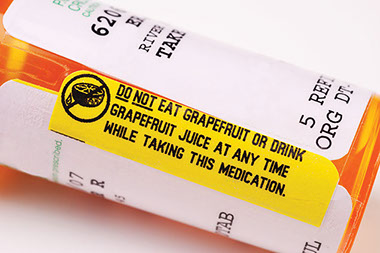
    Image of pill bottle with warning about grapefruit.

    Grapefruit can interact with your drugs. And your doctor may not be aware of it. An article in the Canadian Medical Association Journal points out that drug interactions with grapefruit were noted more than 20 years ago.

    Recently, more and more commonly prescribed newer drugs are found to interact with grapefruit (the fruit and the juice) and can cause serious side effects. Problems can occur even if the grapefruit is eaten hours before taking certain medications.

    Adverse effects include sudden death, acute kidney failure, respiratory failure, gastrointestinal bleeding, bone marrow suppression in ill people, and other serious side effects.

    There are more than 85 drugs that may interact with grapefruit, and 43 can have serious side effects. Other citrus fruits such as Seville oranges, often used in marmalade, limes and pomelos also contain the active ingredients (furanocoumarins) that interact with grapefruit.

    The best advice is to discuss all your medications with your doctor and pharmacist and ask about interactions with grapefruit.

    © American Institute for Preventive Medicine

  • The Facts About Breast Cancer Screening

    MEDICAL NEWS

    Image of 4 women with arms around each other smiling and laughing.

    Breast cancer is the most common cancer in women after skin cancer. About 1 in 8 women in the U.S. will get breast cancer during her life. One of the best things you can do for yourself is learn when and how to get screened for breast cancer.

    A mammogram can help save lives.

    Mammograms do not prevent breast cancer. But, they are the best way to find breast cancer early, when it is easier to treat. Mammograms can detect breast cancer before you can see it or feel it. Finding breast cancer in its early stages may reduce a person’s risk of dying by  30 percent or more.

    Breast self exams alone aren’t enough.

    Experts say that breast self-exams (BSEs) cannot take the place of a mammogram. Although women should see their doctors if they notice any changes in their breasts, studies say that BSEs alone are not enough to catch breast cancer early.

    Each woman’s mammogram schedule may be different.

    Women who have a family history of breast cancer or other risk factors may need to start getting yearly mammograms at a younger age. Women who don’t have risk factors may begin getting mammograms in their 40s or later. It’s important to talk with your doctor to find out when you should start getting mammograms.

    If you’re not sure when you should get a mammogram, talk with your doctor. Together, you can create a breast cancer screening schedule that is right for you.

    © American Institute for Preventive Medicine

  • The Downside Of Skiing: Falls And Spills

    BE FIT

    Image of man on top of a skiing slope.

    If you find yourself heading downhill on skis, but you’re swooshing down on your backside because of a fall, you’ll be glad you prepared for the inevitable spills.

    According to the American College of Sports Medicine, falls account for up to 85% of skiing injuries. The majority of those injuries are sprains, broken bones, cuts, and dislocations-and now more knee injuries because mid-calf plastic ski boots are protecting ankles.

    Thirty to 40% of ski injuries affect the knee area, most likely the MCL (medial collateral ligament). This trauma often occurs with slow twisting falls or when beginners maintain a snowplow position for lengthy periods and stress the ligament. If skiers catch an edge (when the lower leg is suddenly twisted away from the upper leg) or skis separate, the foot is forced away from the body, which causes a distraction force on the inside of the knee.

    Another common knee injury is rupture of the anterior cruciate ligament (ACL), which can be caused by a backward fall as the lower leg moves forward. Catching an edge causes a sudden external rotation below the knee, which can cause the ACL to become sprained or snap (5 times more common in women skiers).

    Your pre-conditioning program should include 4 elements: endurance, strength training, flexibility, and balance. Aerobic fitness is the key to preventing the end-of-the-day injuries. Cross training, which includes multiple sports and activities, will help with cardiovascular endurance, while strength and flexibility focusing on the legs is vital for injury prevention, says Scott M. Levin, MD, a board-certified orthopaedic surgeon and sports medicine specialist.

    “Besides conditioning, skiers need to warm up and stretch before starting down the hill because cold muscles are more prone to injury,” notes Dr. Levin. Warm up with jumping jacks, running, or walking in place for a few minutes and then stretch your hamstrings, hip flexors, and quadriceps.

    © American Institute for Preventive Medicine
  • The Condition Men Don’t Talk About

    MEDICAL NEWS

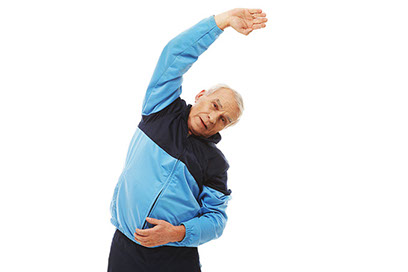
    Image of elderly man stretching.

    Men who are physically active are at lower risk of waking up at night to urinate (a condition called nocturia), according to a study led by a Loyola University Chicago Stritch School of Medicine researcher and published in Medicine & Science in Sports & Exercise.

    Nocturia is the most common and bothersome lower urinary tract symptom in men. It can be due to an enlarged prostate known as benign prostatic hyperplasia (BPH)-as the prostate enlarges, it can squeeze down on the urethra. Other causes include overproduction of urine, low bladder capacity, and sleep disturbances. Nocturia increases with age and is estimated to occur in more than 50% of men 45 and older.

    Among the thousands of men in the study group, those who were physically active one or more hours per week were 13% less likely to report nocturia and 34% less likely to report severe nocturia than men who reported no physical activity. (Nocturia was defined as waking 2 or more times during the night to urinate; severe nocturia was defined as waking 3 or more times to urinate.)

    Physical activity may help manage this symptom, researchers said, because exercise might reduce body size, improve sleep, decrease some nervous system activity, and lower levels of inflammation.

    However, if you are experiencing nocturia, it’s something to discuss with your doctor.

    © American Institute for Preventive Medicine

  • The Buzz About Alcohol

    WELL-BEING

    Image of lemon water.

    Drinking at social events or bars and the ease that a little buzz provides make it hard to limit yourself when friends gather around a pitcher of beer. Dennis Donovan, director of the Alcohol and Drug Abuse Institute at the University of Washington, has advice for how to drink moderately-or not at all.

    *Count your drinks.In many cases, people lose track of how much they’ve had. This is especially true when sharing a pitcher of beer and someone refills the glass.

    *Know a standard serving size.Large wine glasses, higher alcohol content in some beers, and generous liquor pours in mixed drinks make the “I only had one!” claim questionable.

    *One drink, one hour.Most people’s bodies can process about one drink per hour. Pace yourself to one drink an hour or so, and every hour or two you might take a drink “off” and have water or another non-alcoholic beverage instead. Also, make sure to eat.

    *Ginger ale looks like a cocktail.Teetotalers not wanting to attract attention or questions can stick to ginger ale or other non-alcoholic drinks that look like cocktails.

    *Say no.Firmly, confidently turn down drinks and become resistant to social pressure and arm-twisting. Practice saying: “No, I’ve reached my limit” or “I’m not drinking tonight.”

    © American Institute for Preventive Medicine

  • The Best Foods To Help You Focus

    HEALTHY EATING

    Image of different vegetables shaped into an apple.

    You know the right foods are good for your body, but did you know they can help your brain too? Many foods can actually improve brain function, according to the Academy of Nutrition and Dietetics:

    *Vegetables.All vegetables can benefit the brain, but certain vegetables seem to be especially helpful. Cruciferous vegetables like broccoli, cabbage or cauliflower boost brain power. Dark leafy greens, such as spinach, kale, mustard greens and dark lettuce, also improve concentration and memory.

    *Dark-colored berries.Blackberries, blueberries and cherries have nutrients that your brain needs for optimal function. Fresh or frozen are great options. If you choose dried fruits, read the label and avoid any with added sugar.

    *Omega-3 fatty acids.Fatty fish, such as salmon, bluefin tuna, sardines and herring contain high amounts of omega-3 fatty acids. Vegetarian sources include flaxseeds, chia seeds and walnuts.

    In addition, these foods are also great for your heart and overall health. Try working them into your daily diet for maximum brain benefit and a healthier you.

    © American Institute for Preventive Medicine