
Blog

  • The Aerobic Mile

    BE FIT

    Image of water bottle, towel and dumb bells on a mat.

    How much exercise do you need? The answer is 30 minutes most days of the week, according to government guidelines. But you can calculate your own fitness level by using the aerobic mile as your guideline.

    An aerobic mile, simply, is how much energy you expend jogging one mile. Okay, you don’t want to jog. But you can burn the same number of calories by doing other exercises. Here are some examples of activities you can do to equal one aerobic mile:

    *  Walking one mile at any pace

    *  Bicycling at a moderate pace for 12 minutes

    *  Vigorous rowing for 12 minutes

    *  Swimming for 24 minutes

    *  Tennis for 20 minutes (11 if your game is vigorous)

    *  Weight training at a moderate pace for 15 minutes

    *  Easy gardening for one hour

    *  Aerobic exercise to music, easy pace for 20 minutes

    Beginning exercisers should strive to achieve the equivalent of 6 aerobic miles a week. Those with good fitness levels can move up to 10 hours a week. High fitness levels are achieved with 15 aerobic miles each week, according to ACSM Guidelines for Exercise Testing.

    © American Institute for Preventive Medicine
  • The Aches Of Arthritis

    SELF-CARE CORNER

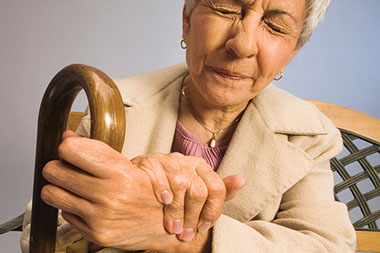
    Image of older women holding hand in pain.

    Feeling pain and stiffness in your joints? Wonder if it’s because you’re aging? Many people experience joint pain when they’re 45 to 50. It’s generally from arthritis-one of the most common diseases. “Arthr” means joint, and “itis” means inflammation.

    There are more than 100 types of arthritis. The most common is osteoarthritis (wear and tear on joints in the fingers, knees, and hips). And, yes, osteoarthritis can develop years after an injury to a joint.

    Rheumatoid arthritis can affect your whole body. It arises when your immune system mistakenly attacks your own joints bringing pain, swelling, stiffness, and loss of function.

    Arthritis can damage not only your joints but also internal organs and skin. Talk with your doctor about what you can do. Here are some ideas from the NIH News in Health:

    *  Try to stay at a healthy weight that’s normal for your height.

    *  Exercise. A trained health professional can show you how to move more easily if you have arthritis. Going for a walk every day will help, too.

    *  If you had a severe joint injury to a joint, protect it from getting injuried again.

    *  Don’t smoke. People who smoke are more likely to get rheumatoid arthritis, and their symptoms tend to be worse.

    *  Take your medicines when and how you are supposed to. They can help reduce pain and stiffness.

    *  Try taking a warm shower in the morning.

    © American Institute for Preventive Medicine

  • Thanksgiving Can Be Healthy – Here’s How

    HEALTHY EATING

    Image of thanksgiving dinner set on the table.

    At major holidays like Thanksgiving, it can be easy to overeat. Being around friends and family and having access to a wide array of foods at the buffet table can make it difficult to stick to a healthy eating plan.

    Fortunately, you can still enjoy your favorite dishes without all the calories if you plan ahead. Here are some simple ways to keep Thanksgiving healthy and delicious:

    *  Add low-sodium chicken broth to mashed potatoes to add flavor without the calories of gravy and butter.

    *  Substitute Greek yogurt in recipes that call for sour cream or buttermilk.

    *  Use applesauce in place of oil or butter in baked goods.

    *  Use fresh fruits and vegetables as appetizers rather than fried foods.

    *  Don’t come to Thanksgiving overly hungry or you may end up overeating. Have a light meal earlier in the day with healthy protein, such as peanut butter or low-fat cheese, to keep you satisfied.

    *  To avoid mindless eating, sit and socialize away from the food table.

    *  Focus on calorie-free beverages, such as water or tea. Have a glass before you eat.

    *  Be aware of drinking calories. Alcoholic drinks should be consumed in moderation, which is one drink per day for women and two drinks for men.

    Source: Academy of Nutrition and Dietetics

    © American Institute for Preventive Medicine

  • Temporary Tattoos Harmful Too

    MEDICAL NEWS

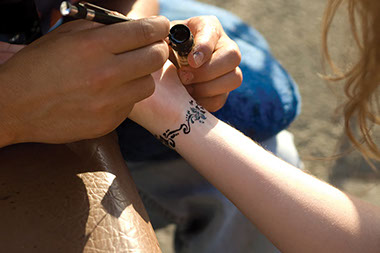
    Close up image of wrist getting a temporary tattoo.

    What’s the harm in a temporary tattoo applied at the beach or boardwalk or state fair? Maybe a lot is wrong.

    The FDA is reporting problems such as redness, blisters, raised red weeping sores, loss of skin color, increased sensitivity to sunlight, and even permanent scarring from seemingly harmless henna tattoos.

    Here’s why. Some temporary tattoo “artists” are using harmful coloring such as hair dye or “black henna” instead of traditional henna, a reddish-brown coloring made from a flowering plant.

    Inks marketed as black henna may be a mix of henna with other ingredients, or may really be hair dye alone. The reason for adding other ingredients is to create a tattoo that is darker and longer lasting, but use of black henna is potentially harmful. The temporary tattoos made with black henna are dark black.

    Temporary tattooing is not regulated by anyone. No one is checking to make sure the artist is following safe practices. Don’t assume this is a safe thing to do.

    For any problems or long-lasting rashes, see a doctor. You may report a problem to the FDA’s MedWatch:www.fda.gov/Safety/MedWatch/HowToReport/default.htm.

    © American Institute for Preventive Medicine

  • Telling Kids About Tragedy

    FAMILY LIFE

    Image of parents talking to their child.

    Talking to kids about scary events and disasters is important when they’re old enough to understand. Kids may have more fear of an event if they don’t know any details. They may imagine something much worse than what happened.

    Although telling kids some details may help, the American Academy of Pediatrics says it’s important that you filter the information you give your child. Think about the child’s age, personality and what they will be able to cope with. These steps can get the conversation started:

    *Ask the child what they know about the event.This can help you separate facts from fiction. It gives you a way to explain the things they already know in a way that is direct but not scary.

    *Avoid any graphic details.Although the media may share lots of details that are graphic and scary, children should be shielded from these things.

    *Don’t be too vague.Saying “something happened that was bad” doesn’t give enough information. Instead, name the place where it happened and tell them that some people were hurt. The police/firemen/ government, etc. are helping people and working to keep us safe.

    *Keep it open ended.Tell them if they have any questions, they can ask you.

    Is your child coping?

    After a disaster, some children have a hard time coping. These red flags may be a sign that your child needs help:

    *  Trouble sleeping, nightmares or being very tired all the time

    *  Unusual aches and pains, such as headache or feeling “sick” often

    *  Appetite changes

    *  Social changes, such as aggression or being clingy

    *  Frequent feelings of sadness or fear

    Talk to your child’s doctor if you notice any of these changes.

    © American Institute for Preventive Medicine
  • Teeth Grinding: Causes And Solutions

    SELF-CARE CORNER

    Image of dentist with a patient.

    Teeth grinding is a movement disorder of the jaw in which there is gnashing, grinding, or clenching of the teeth. It’s called bruxism. Often, people are unaware of their habit.

    The two primary types of teeth grinding are sleep bruxism, which occurs during sleep, and awake bruxism, which occurs when the person is awake.

    There is not a single contributing factor that results in teeth grinding or bruxism, rather it is believed to be the result of complex interactions between many factors, including stress, tension and anxiety; levels of certain chemicals in the brain; other sleep disorders such as snoring or sleep apnea; or a response to pain from earaches or teething (in children).

    “Teeth grinding is most often diagnosed by a combination of information derived from a history reported by the patient and a clinical exam performed by the patient’s dentist,” according to Dr. Erica Harvey, a representative of the Pennsylvania Dental Association.

    While some people noticeably grind their teeth, 80% make no sound, which makes bruxism even harder to discover. Common symptoms include reports of grinding noises during sleep by family members, tooth hypersensitivity, fractured, chipped or worn teeth, and waking up with a constant, dull headache or sore jaws.

    Regular dental checkups can help detect bruxism, and your dentist may recommend these methods to help stop or relieve the symptoms:

    *  Find ways to reduce your stress level and relax.

    *  Avoid or limit the amount of caffeine and alcohol you consume.

    Ask your dentist about the use of a nightguard to prevent further wear of your teeth.

    © American Institute for Preventive Medicine

  • Teens Can’t Resist-Really

    FAMILY LIFE

    Image of two teenage boys on their cell phones.

    Don’t get mad the next time you catch your teenager texting when he promised to be studying. He or she simply may not be able to resist.

    A University of Iowa study in Psychological Science found teenagers are far more sensitive than adults to the immediate effect or reward of their behaviors. The findings may help explain, for example, why the initial rush of texting may be more enticing for adolescents than the long-term payoff of studying. They need help in regulating their attention so they can develop impulse-control skills.

    For parents, that means limiting distractions so teenagers can make better choices. Take the homework and social media dilemma: At 9 p.m., shut off everything except a computer that has no access to Facebook or Twitter, the researchers advise.

    © American Institute for Preventive Medicine

  • Teaching Kids To Manage Money

    FINANCIAL HEALTH

    Image of boy holding money in one hand and thumbs up with the other hand.

    Good money management habits start early. In fact, even preschool age children can begin to learn about money and how to use it responsibly. Parents and caregivers have the power to teach children about proper spending, saving and sharing from a young age.

    Preschool age

    *  Use play money to “buy” items.

    *  Teach children about work. Tell them how your job helps you pay for things like food and clothes.

    *  Take them to the grocery store and talk about what items cost.

    *  If children get money for a birthday or holiday, have them put it in their piggy bank instead of spending it right away.

    School age

    *  Discuss the prices of items while shopping. Show your kids your shopping receipts and explain how much items cost.

    *  Have kids help you clip coupons and talk about how much you can save.

    *  Open a savings account for your child.

    *  Consider giving an allowance for chores. Talk to them about saving their allowance to buy something later, rather than spending it all now.

    Teenagers

    *  Show your teen how to balance a checkbook.

    *  Discuss responsible credit card spending and avoiding credit card debt.

    *  If your teen has a job, talk about taxes and help them fill out their income tax form.

    *  Explain how automobile and health insurance works.

    Don’t feel pressured to give your child a complete course in finances. Children learn by watching others, so setting a positive example for spending and saving is a great way to teach.

    Source: University of Minnesota Extension

    © American Institute for Preventive Medicine

  • Tasty News

    HEALTHY EATING

    Image of women of a hot cup of tea.

    What we view as the sense of taste is actually a combination of smell, taste, and texture, with smell playing a major role. A single taste bud can have dozens of receptor cells that send signals of sour, sweet, salty, and bitter through nerve channels to the brain.

    The tongue is covered with taste buds, and the back of the mouth is sensitive to bitter tastes-perhaps as a last-ditch chance to expel something toxic. Taste also plays a role in digestion, preparing the stomach for a meal.

    But one of the most interesting things about taste, according to University of Virginia neuroscientist David Hill, is that taste cells regenerate, or turn over, about every 10 days, much like skin cells.

    Burn your tongue? No worries; those cells will regrow and you’ll regain your normal sense of taste within days.

    © American Institute for Preventive Medicine

  • Tastes Better, Still Harmful

    MEDICAL NEWS

    Image of e-cigarettes.

    More than two out of every five middle and high school students who smoke report using either flavored little cigars or flavored cigarettes, according to a report by the Centers for Disease Control and Prevention (CDC). The study, based on data from a 2011 National Youth Tobacco Survey, is CDC’s first attempt to measure usage of flavored little cigars and cigarettes by youth in the U.S. The findings were published online in the Journal of Adolescent Health on Oct. 22, 2013.

    “Flavored or not, cigars cause cancer, heart disease, lung disease and many other health problems. Flavored little cigars appeal to youth and the use of these tobacco products may lead to disfigurement, disability and premature death,” CDC director Dr. Tom Frieden said in an agency news release. “We need to take comprehensive steps to reduce all tobacco use for all of our youth.”

    One reason flavored cigarettes and little cigars appeal to young people is because the candy and fruit flavors mask the harsh taste of tobacco. The flavored little cigars are also more affordable. Unlike cigarettes, they are not taxed in most states and can be bought individually or in doubles, so teens do not have to buy a whole pack at a time.

    Little cigars have become more popular in recent years. Sales have increased 240 percent from 1997 to 2007, with flavored brands making up almost 80 percent of the market share.

    The CDC also reported that e-cigarette (electronic cigarette) use among young smokers has doubled, due in part to brands that come in flavors such as bubble gum, gummy bear, orange cream soda and cotton candy.

    Health officials are concerned that flavored tobacco products obscure the health risks of smoking and entice young people into continued use of tobacco.

    © American Institute for Preventive Medicine