Blog

  • Stroke Signs

    MEDICAL NEWS

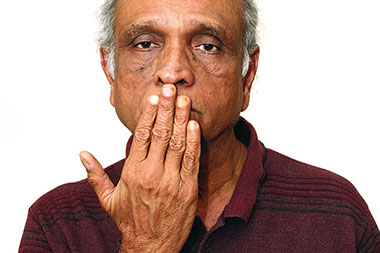
    Image of elderly man with stroke symptoms.

    Seek immediate medical care for someone who shows one or more of the following warning signs: sudden numbness or weakness of the face, arm or leg, especially on one side of the body; sudden confusion, trouble speaking or understanding; sudden trouble seeing in one or both eyes; sudden trouble walking, dizziness, loss of balance or coordination; or sudden, severe headache with no known cause.

    To remember the signs of stroke, the National Stroke Association recommends using the acronymFAST:

    Face:Ask the person to smile. Does one side of the face droop?

    Arms:Ask the person to raise both arms. Does one arm drift downward?

    Speech:Ask the person to speak. Does the person have slurred speech or trouble speaking?

    Time:If you observe any of these signs, call 9-1-1.

    © American Institute for Preventive Medicine

  • Strike The Right Cord

    FAMILY LIFE

    Image of young smiling family.

    Children can be strangled by window cords on blinds and curtains. In fact, such tragedies are among the top hazards in American homes. Infants and children die each year from accidental strangling in the cords.

    The Consumer Product Safety Commission recommends that only cordless window coverings or those with unreachable cords be used in homes with young children. They are available today in the marketplace and will prevent window blind strangulations.

    In addition, the Window Covering Safety Council encourages parents, grandparents and caregivers to follow these basic cord-safety precautions:

    *  Move all furniture, cribs, beds, and climbable surfaces away from windows.

    *  Keep all window shades, blinds, and drapery cords well out of the reach of children.

    *  Install only cordless window coverings in homes with young children.

    © American Institute for Preventive Medicine

  • Stretching Exercises To Do At Your Desk

    WORK LIFE

    Image of office with employees working on computers.

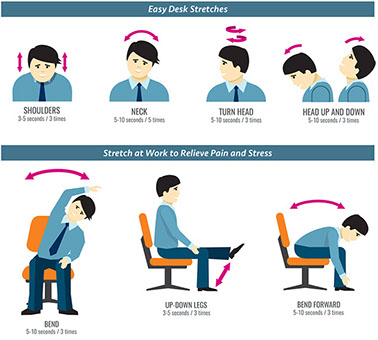
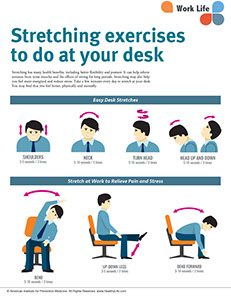
    Stretching has many health benefits, including better flexibility and posture. It can help relieve soreness from tense muscles and the effects of sitting for long periods. Stretching may also help you feel more energized and reduce stress. Take a few minutes every day to stretch at your desk. You may find that you feel better, physically and mentally.

    Illustration showing different desk stretches.

    © American Institute for Preventive Medicine

  • Is Stress Hurting Your Teeth?

    SUCCESS OVER STRESS

    Image of male dentist.

    It’s no secret that high stress levels can harm your health. The American Psychological Association says ongoing stress can increase your risk of heart disease and depression. Stress may be hurting your teeth as well, if it causes you to grind your teeth.

    Dentists refer to teeth grinding as bruxism. Many people grind their teeth during sleep, but it can also occur during the day. It’s often not done consciously, so you may not know you’re doing it at all. But the long-term effects on your dental health can be painful.

    People who grind their teeth may end up with temporomandibular disorder, or TMD. Symptoms of TMD include:

    *  Difficulty opening your jaw wide

    *  Pain when chewing

    *  Clicking or popping noises when you open your mouth wide

    *  Headaches, neck pain, or jaw pain

    If you’re having any of these symptoms, be sure to talk with your doctor or dentist. You may need an exam and some tests done. If you are grinding your teeth, there are some fairly simple ways to treat the problem. Some of the most common treatments include:

    *  Stress management, such as relaxation techniques, regular exercise, and getting enough sleep. The American Academy of Orofacial Pain says this is one of the best ways to help alleviate grinding.

    *  Anti-inflammatory medications or moist heat therapy for relief. This can help with pain and reduce swelling.

    *  A special mouth guard you can wear at night to keep your teeth from getting cracked or damaged in your sleep. Your dentist can make a mold of your teeth and have the guard fitted for you.

    Whatever is causing your stress, you can do your body – and your teeth – a favor by finding ways to manage it. If you need additional help, don’t be afraid to talk with your physician.

    Source: National Institutes of Health

    5 great ways to manage stress

    *  Do something you enjoy.

    *  Get regular exercise.

    *  Recognize there are things you can’t change.

    *  Replace negative thoughts with positive ones.

    *  Ask for help when you need it.

    © American Institute for Preventive Medicine

  • Stress Eating – Spot It And Stop It

    SUCCESS OVER STRESS

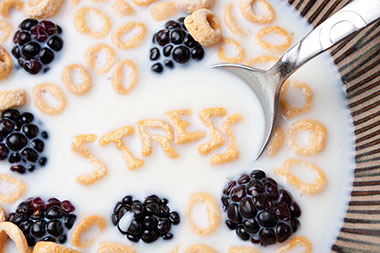
    Image of cereal bowl with berries with the words stress spelled out.

    Stress eating, also called emotional eating, happens when a person eats in response to stress or emotions. Stress eating isn’t cued by actual hunger – and the behavior can lead to overeating, consuming junk food, and over time, weight gain.

    Hunger and stress are linked. Some studies show that stress hormones can cause the body to crave certain foods. And sometimes it can be difficult to know whether you’re stress eating or actually hungry. How do you tell the difference – and what should you do when you want to turn to stress eating?

    Signs of hunger

    First, it’s important to be in tune with the body’s hunger cues. If you see signs of hunger, it may be time for a meal or snack. Consider the following:

    *When did you last eat?If it’s been three hours or more, you’re probably hungry.

    *Is your stomach grumbling?This is often a sign that your body is looking for food.

    *How do you feel emotionally?Are you stressed out or anxious at the moment? If so, you may be looking for food to help calm your feelings.

    *Could you eat nearly anything right now?With stress eating, a person will often crave a specific food, such as ice cream or chips. If you feel like you could eat a salad or an apple, you may be actually hungry.

    *Do you have a headache, nausea or weakness?These may be signs that you waited too long to eat.

    How to curb stress eating

    Perhaps you’ve found that you do eat more during times of stress and you want to stop. Try these tips:

    *Drink a glass of water.Dehydration can often be mistaken for hunger, and it may help take the edge off.

    *Go for a walk or exercise.This relieves stress and can help take your mind off of food.

    *Call a friend.If something is bothering you, try to talk to someone you trust.

    *Try deep breathing, yoga or meditation.If you can, sit down and take deep breaths in through the nose and out through the mouth when you feel stressed. This has a calming effect and may help you overcome the craving. To help manage everyday stress, consider taking a yoga or meditation class.

    Over time, you may find it gets easier to avoid stress eating. Each time you deal with stress without food, be proud of your accomplishment!

    © American Institute for Preventive Medicine

  • Stress At The College Level

    SUCCESS OVER STRESS

    Image of stressed college student reading a text book.

    The American College Health Association says that 30 percent of college students feel that stress hurts their academic success. Difficult classes, important exams, internships and jobs, and social events are just a few of the issues that can cause stress for young adults. Georgetown University offers these tips for stressed out students:

    *  Avoid alcohol, smoking, and other substances. They harm the body and make you feel worse in the long-term.

    *  Rely on your friends for support or take advantage of counseling services on campus.

    *  Minimize caffeine intake and make sleep a priority. Most college students need eight hours or more per night. Stick to a regular sleep schedule.

    *  Write in a journal.

    *  Find time for fun activities, such as exercise classes or campus events.

    © American Institute for Preventive Medicine

  • Stranded In Your Car During A Winter Storm?

    WELL-BEING

    Image of an older Asian couple stretching.

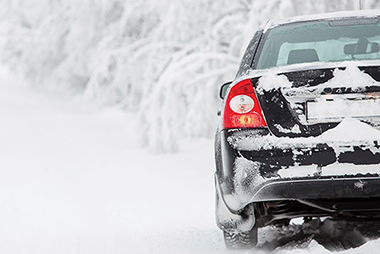
    A fast-moving winter storm could strand you in your car. The cold can lead to hypothermia and frostbite until you’re rescued.

    A charged cell phone can be your lifeline for first responders, but until help arrives, Amica Insurance with advice from the National Oceanic and Atmospheric Administration offers these tips to help keep you safe if you’re stuck in a winter storm:

    *  Always stay in your vehicle. You will become disoriented quickly in wind-driven snow and cold temperatures.

    *  Run the engine for about 10 minutes every hour to provide heat. However, be sure to slightly open a window to avoid carbon monoxide poisoning.

    *  Turn on the dome light at night when running the engine.

    *  After the snow stops, open the hood of your vehicle to indicate that you need assistance.

    *  Tie a colored cloth – preferably red – to your door or antenna.

    *  Be sure to move your arms, legs, fingers and toes to keep blood circulating.

    © American Institute for Preventive Medicine